
10 Best Industrial Filling Machines for 2026
FLUID HANDLING EXPERTS

Blog, all our news

10 Best Industrial Filling Machines for 2026

Choosing an Industrial Filling Machine is less about chasing the fastest advertised cycle and more about matching equipment to the product, container, and production floor. A thick sauce behaves differently from a free-flowing liquid; foam, temperature, and particle size can change filling accuracy. In 2026, manufacturers are comparing systems that handle different viscosities, container formats, and output targets while fitting existing lines. Small details matter. A nozzle that drips can leave sticky residue on a conveyor. A changeover that takes longer than expected can disrupt a whole shift.

This guide introduces ten industrial filling machines and considers practical factors such as filling method, operating range, cleanability, adjustment requirements, and available technical support. It is intended as a starting point, not a universal ranking: a suitable model depends on the application, and published specifications should be confirmed with the manufacturer. Ask for a product trial where possible, and check how the machine performs with your actual containers and fill volume. There is no perfect line. A highly automated system may reduce routine handling but bring greater setup complexity; a simpler machine may be easier to maintain yet limit future throughput. That trade-off deserves honest attention. Supplier claims can sound convincing, but installation conditions, operator training, and service access matter just as much. Use the comparisons to narrow your options, then verify performance before making a purchase.
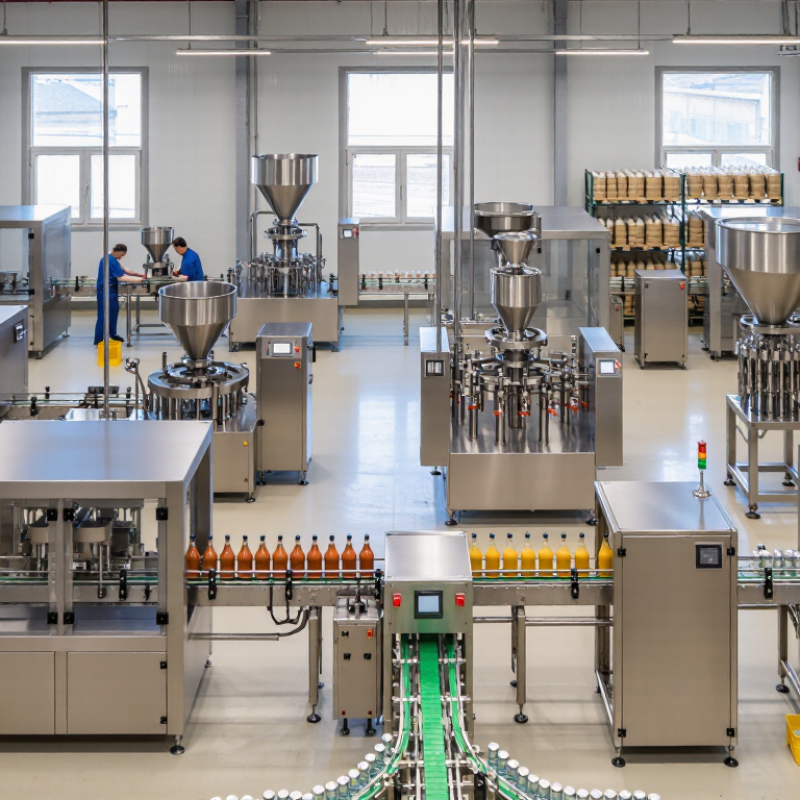
10 Best Industrial Filling Machines for 2026

What Industrial Filling Machines Do and Where They Are Used

What Industrial Filling Machines Do and Where They Are Used

Industrial filling machines dispense measured quantities of products into bottles, jars, cans, pouches, or other containers. Depending on the product, they may use gravity, pumps, pistons, or timed flow. Some handle thin liquids, while others manage thicker products such as creams or sauces. They help maintain consistent fill levels and reduce repetitive manual work. A tidy fill matters.

These machines are used in food and beverage plants, cosmetic production, household-product manufacturing, and pharmaceutical facilities. A beverage line may fill hundreds of bottles per minute, while a small-batch operation may prioritize quick changeovers. Product behavior matters: foam, particles, viscosity, and temperature can all affect accuracy. The container also needs to sit securely beneath the filling nozzle.

Tips: Match the filling method to the product, not just the container. Test with the actual material and packaging before setting production speeds. Check fill weights, seals, and nozzle cleanliness during routine runs. Small drips can become costly waste.

A fast machine is not always the best fit. Operators should consider cleaning time, adjustment needs, and how often products change. Even well-selected equipment needs careful setup; real production conditions can be less predictable than a test run.

How Industrial Filling Machines Work

Industrial filling machines coordinate container movement, liquid measurement, and nozzle timing. A conveyor brings bottles or cans beneath a filling head. Sensors confirm each container is in position, then a controller opens a valve or starts a pump. The nozzle lowers or seals against the opening to reduce splashing. Small details matter. A tilted bottle can disrupt the fill.

The measurement method depends on the product. Gravity fillers use liquid level and flow control, while piston systems push a measured volume through each nozzle. Flowmeters track liquid moving through a pipe; load-cell systems measure container weight. Thick products may need larger passages or gentle agitation. Temperature also changes how some liquids flow, so the same settings may not work across a full shift.

After filling, valves close and the nozzles retract before containers move to capping or packing. Operators check fill levels, inspect seals, and clean product-contact parts between runs. In practice, accuracy is not automatic. Foam, worn seals, or a slow sensor can cause uneven fills, even when the control panel looks fine. Calibration records help reveal drift, but they do not replace watching the machine run.

Main Types of Industrial Filling Machines

Industrial filling machines are selected by product behavior, container shape, and fill target, not speed alone. A thin liquid flows differently from a thick sauce, while powder may bridge above an outlet. Gravity fillers handle free-flowing liquids with simple, steady operation. They are less suitable when a product’s viscosity changes significantly.

Piston fillers use a measured chamber to dispense thicker products, such as creams or dressings. Pump fillers move products through tubing and can accommodate varied flow rates.

For bottles filled to a consistent visible level, overflow fillers return excess liquid to a holding tank. Net-weight systems weigh each container during filling, which helps control product quantity when density varies.

Each method has limits.

Auger fillers meter powders and granules with a rotating screw. Dust, particle size, and moisture can affect accuracy, so test with the actual product. Check changeover time, cleanability, and how easily operators can adjust settings. A machine that performs well in a short trial may behave differently across a full shift. Small trials matter. And specifications alone are not enough. Observe nozzle drips, foam, and container movement on the line; these details can expose issues that a brochure misses.

How to Evaluate Industrial Filling Machines for 2026

In 2026, evaluating industrial filling machines starts with the product, not the brochure. Record its viscosity, temperature, foaming behavior, and any particles. Then test with the actual container and closure. Details matter. A machine that fills water cleanly may struggle with a thick sauce or a narrow bottle neck.

Compare verified fill accuracy, line speed, and changeover time under realistic conditions. Ask for a test using your own product, containers, and target fill volumes. Watch for drips, splashing, and inconsistent fills across several cycles. A brief demonstration is not enough. Not on paper. Request results from a sustained run, and note what adjustments operators had to make.

Check how easily parts can be accessed for cleaning and routine maintenance. Ask which components wear out, how long replacements typically take to obtain, and what technical support is available. Review controls and records too: operators should be able to spot a drift in fill volume without digging through confusing menus. Total cost includes installation, training, downtime, and consumables, not just the purchase price. I would still question any forecast that assumes perfect uptime; real production has interruptions. Choose equipment that fits your current line and leaves room for a sensible increase in capacity.

10 Best Industrial Filling Machines for 2026

For 2026, the best industrial filling machine depends on the product, container, and required output—not a universal ranking. Compare piston, overflow, gravity, pressure, vacuum, net-weight, volumetric, auger, rotary, and aseptic systems. Each handles different needs, from thick sauces and powders to foaming liquids. Grand View Research estimated the global filling machine market at USD 6.6 billion in 2023 and projected a 4.8% compound annual growth rate through 2030. That forecast signals investment, but it does not guarantee a machine will suit your line.

Match the filler to real production conditions. Test the actual product at operating temperature, then measure fill accuracy across several containers. Watch for drips, foam, slow changeovers, and cleaning access. A neat specification sheet can still mislead. I would also check whether the quoted speed holds during routine stops, not only in a short demonstration. Those details affect usable output and product loss.

Tips: Bring your own product and containers to a factory acceptance test. Record fill-weight variation, changeover time, and cleaning steps. Ask for results across a full shift; one good run is not enough.

Copyright 2025 Fluidra S.A. | Created by BCM Marketing Agencia Privacy Policy Legal note | Cookie policy |

Technical cookies are strictly necessary for our website to work and you can navigate through it. These types of cookies are those that, for example, allow us to identify you, give you access to certain restricted parts of the page if necessary, or remember different options or services already selected by you, such as your privacy preferences. Therefore, they are activated by default, your authorization not being necessary in this regard. Through the configuration of your browser, you can block or alert the presence of this type of cookies, although such blocking will affect the proper functioning of the different functionalities of our website.


The analysis cookies allow us to study the navigation of the users of our website in general (for example, which sections of the page are the most visited, which services are used most and if they work correctly, etc.). From the statistical information on navigation on our website, we can improve both the operation of the page itself and the different services it offers. Therefore, these cookies do not have an advertising purpose, but only serve to make our website work better, adapting to our users in general. By activating them you will contribute to this continuous improvement. You can enable or disable these cookies by checking the corresponding box, being disabled by default.


Functionality cookies allow us to remember your preferences, to personalize certain characteristics and general options of our website, every time you access it (for example, the language in which the information is presented to you, the sections marked as favorites, your browser type, etc.) Therefore, this type of cookies does not have an advertising purpose, but by activating them you will improve the functionality of the website (for example, adapting to your type of browser) and the customization of it based on your preferences (for example, by presenting the information in the language that you have chosen in previous occasions), which will contribute to the ease, usability and comfort of our page during your navigation. You can enable or disable these cookies by checking the corresponding box, being disabled by default.


Advertising cookies allow us to manage the advertising spaces included in our website based on criteria such as the content shown or the frequency in which the ads are displayed. For example, if you have been shown the same ad several times on our website, and you have not shown a personal interest by clicking on it, it will not appear again. In summary, by activating this type of cookies, the advertising shown on our website will be more useful and diverse, and less repetitive. You can enable or disable these cookies by checking the corresponding box, being disabled by default.


Behavioral advertising cookies allow us to obtain information based on the observation of your browsing habits and behaviors on the web, in order to show you advertising content that best suits your personal tastes and interests. To understand it in a very simple way, we will give you a fictitious example: if your last searches on the web were related to suspense literature, we would show you advertising about suspense books. Therefore, activating this type of cookies, the advertising that we show you on our website will not be generic, but will be oriented to your searches, tastes and interests, therefore adjusting exclusively to you. You can enable or disable these cookies by checking the corresponding box, being disabled by default.
To understand it in a very simple way, we will give you a fictitious example: if your last searches on the web were related to suspense literature, we would show you advertising about suspense books. Therefore, activating this type of cookies, the advertising that we show you on our website will not be generic, but will be oriented to your searches, tastes and interests, therefore adjusting exclusively to you. You can enable or disable these cookies by checking the corresponding box, being disabled by default.

SAVE

We use our own and third-party cookies to ensure the proper functioning of the website and to analyse our services, improve your experience on our website and show you advertisements related to your interests according to profiling based on your browsing habits (e.g. websites visited). You can accept all cookies by clicking "ACCEPT" or set or reject them by clicking here. If you would like to know more about the use of cookies, please see our COOKIE POLICY.


ACCEPT ALL
Reject no essentials


