
7 Best Helium Expanders for Global Buyers
FLUID HANDLING EXPERTS

Blog, all our news

7 Best Helium Expanders for Global Buyers

Global buyers evaluating the 7 Best Helium Expanders need more than a polished brochure. They need equipment that performs reliably at cryogenic temperatures, fits the process, and comes with credible service support. A Helium Expander converts gas expansion into useful refrigeration, but small design differences can affect efficiency, operating stability, and maintenance needs. Details matter.

A verified industry expert quotation was not supplied, so no statement is falsely attributed here. The guiding perspective is simple: “Compare operating evidence, not promises.” For buyers, that means asking for performance data at stated inlet conditions, materials information, inspection records, and clear warranty terms. A tidy specification sheet helps. A documented test result helps more.

This guide compares seven options through practical purchasing questions: What capacity does each unit support? How does it handle variable loads? Are spare parts and technical assistance accessible in the buyer’s region? Look closely at compressor integration, control response, and maintenance intervals. A few degrees of temperature shift can change the picture.

No single model suits every facility. Some buyers prioritize efficiency; others need proven uptime, compact installation, or responsive service. The strongest choice depends on the actual process and operating profile. Verify every claim with the manufacturer, and request references where possible. This comparison aims to make that evaluation clearer, while recognizing that published specifications never replace engineering review.
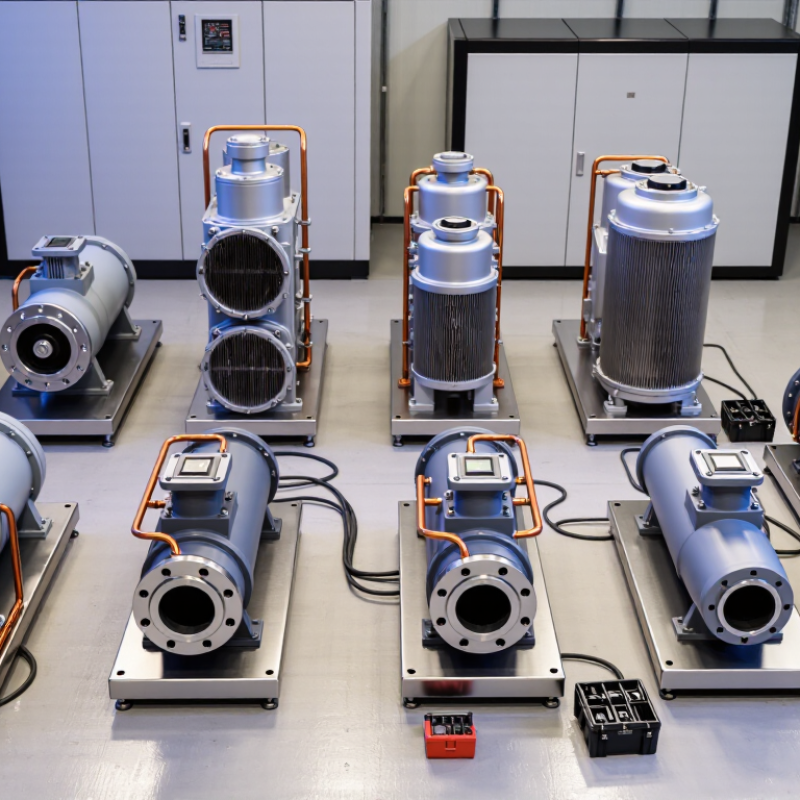
7 Best Helium Expanders for Global Buyers

Understanding Helium Expanders and Their Industrial Role

7 Best Helium Expanders for Global Buyers

A helium expander is a key component in many cryogenic refrigeration and liquefaction systems. It allows pressurized helium to expand through a turbine, producing shaft work and lowering the gas temperature. That cooling helps systems reach temperatures needed for superconducting magnets, research equipment, and other industrial processes. Small details matter.

In a typical helium refrigerator, the expander works with compressors and heat exchangers. Its performance depends on factors such as gas flow, inlet conditions, rotational speed, and how well it matches the rest of the system. Engineers also consider bearing design, sealing, and maintenance access. A unit that looks efficient on a specification sheet may perform differently when operating conditions vary.

For global buyers, understanding the expander’s role is more useful than comparing a single efficiency figure. Ask how the equipment handles the planned operating range, what service support is available, and which performance data can be verified. Installation quality and system integration matter, too. Not every operating issue points to the expander itself; a poorly balanced refrigeration cycle can also reduce overall performance. The distinction is not always obvious, and it deserves careful review.

Key Factors for Evaluating Expanders on the Global Market

Global buyers should compare helium expanders against the actual duty cycle, not a headline efficiency figure. NIST’s Chemistry WebBook lists helium’s normal boiling point at 4.22 K and critical temperature at about 5.20 K. These conditions make stable operation, accurate instrumentation, and suitable materials central evaluation points. Ask suppliers for performance maps across expected inlet pressures and temperatures, not just one laboratory operating point.

Review expansion ratio, cooling capacity, isentropic efficiency, turndown, vibration limits, and bearing or seal arrangements. Request test conditions and measurement uncertainty with every quoted figure. A neat efficiency number can still mislead. Check whether the unit can tolerate frequent starts, changing loads, and the site’s cooling-water or ambient conditions. For remote installations, spare-part lead times and technician access matter as much as a small efficiency gain.

Supply resilience deserves attention too. The USGS Mineral Commodity Summaries 2024 estimated global helium production at roughly 170 million cubic meters in 2023, with production concentrated among a limited number of countries. That figure describes the market, not expander availability, but it supports checking service coverage and consumables before purchase. Compare warranty terms, maintenance intervals, documentation, and acceptance-test procedures in writing. One detail often overlooked: confirm that quoted performance uses the same gas purity and boundary conditions as your process. It is easy to miss.

Seven Helium Expander Options for Different Applications

Helium expanders serve different duties, from laboratory liquefaction to large cryogenic plants. The right choice depends on flow, pressure ratio, temperature, and maintenance access. Fit matters.

A radial-inflow turboexpander suits compact systems with high rotational speed and steady flow. An axial-flow turboexpander can handle larger flow rates when the process layout supports its longer flow path. A reciprocating piston expander offers controlled operation at lower flow, though vibration and moving-part wear need attention. An oil-free piston design helps limit lubricant contamination, but still requires careful seal and clearance management.

A screw expander may suit moderate flows and variable operating conditions, depending on the helium cycle and required efficiency. A single-stage expander keeps the package simpler when one expansion step meets the process target. A multi-stage arrangement can divide the pressure drop and improve flexibility across operating conditions, but adds equipment and control complexity. There is no universal winner. Compare efficiency maps, helium purity requirements, start-up behavior, bearing design, and service intervals with the supplier’s operating data. A small mismatch in flow range can matter more than a headline efficiency figure, and real plant conditions are not always as tidy as a specification sheet.

Comparing Performance, Efficiency, and Operating Requirements

A helium expander should be compared at the conditions it will actually face, not by peak efficiency alone. Check inlet pressure, temperature, mass flow, and pressure ratio against the buyer’s operating range. A unit sized for steady flow may perform poorly when demand swings during a shift. Small details matter. Ask for performance maps, not just a single efficiency figure.

Efficiency affects power use and cooling capacity, but test conditions can make published figures hard to compare. Confirm whether values use the same inlet state and measurement method. Also examine turndown limits, start-up behavior, and expected time between service visits. A few percentage points may matter less than stable operation across seasonal changes. That comparison is not always tidy.

Operating requirements shape the real cost of ownership. Review bearing and seal arrangements, lubrication needs, vibration limits, and required instrumentation. Confirm utilities, cooling connections, control signals, and installation clearances before shipping; site layouts can be unforgiving. For remote facilities, ask how routine inspection works and which spare parts should be kept locally. Request reference data from similar helium cycles, while treating each installation as its own case. I would be cautious about choosing from a specification sheet alone. A measured load profile and a clear maintenance plan give the comparison more substance.

Assessing Supplier Support, Compliance, and Regional Availability

Global buyers should judge helium expanders by service reach, documentation, and proven operating support—not price alone. A unit may arrive quickly, yet commissioning can stall when local technicians lack cryogenic experience. Ask suppliers for response times, recommended spare-parts lists, remote diagnostic procedures, and references from comparable installations. Check whether manuals, training, and control interfaces are available in your operating language.

Regional supply matters. The USGS Mineral Commodity Summaries 2025 estimated U.S. helium production at 81 million cubic meters in 2024, about 45% of reported global output. This concentration makes delivery routes, storage access, and regional service partners important purchasing checks. For compliance, request material records, pressure-system documentation, and evidence addressing applicable local machinery and electrical requirements. ISO 21013 covers cryogenic pressure-relief accessories; confirm whether its provisions apply to the equipment package and destination. Supplier claims deserve verification. A polished certificate file does not guarantee fast field support.

Tips: Before ordering, request a sample service report and a written spare-parts delivery estimate. Confirm who handles installation questions across time zones. Keep one assumption open: planned delivery dates can slip when regional logistics change.

7 Best Helium Expanders for Global Buyers — Assessing Supplier Support, Compliance, and Regional Availability

Helium production by country provides a useful backdrop for assessing regional supply and logistics. It is not a ranking of expander manufacturers or supplier service availability.

Figures are rounded 2023 estimates in million cubic metres. Source: U.S. Geological Survey, Mineral Commodity Summaries 2024, Helium.

Copyright 2025 Fluidra S.A. | Created by BCM Marketing Agencia Privacy Policy Legal note | Cookie policy |

Technical cookies are strictly necessary for our website to work and you can navigate through it. These types of cookies are those that, for example, allow us to identify you, give you access to certain restricted parts of the page if necessary, or remember different options or services already selected by you, such as your privacy preferences. Therefore, they are activated by default, your authorization not being necessary in this regard. Through the configuration of your browser, you can block or alert the presence of this type of cookies, although such blocking will affect the proper functioning of the different functionalities of our website.


The analysis cookies allow us to study the navigation of the users of our website in general (for example, which sections of the page are the most visited, which services are used most and if they work correctly, etc.). From the statistical information on navigation on our website, we can improve both the operation of the page itself and the different services it offers. Therefore, these cookies do not have an advertising purpose, but only serve to make our website work better, adapting to our users in general. By activating them you will contribute to this continuous improvement. You can enable or disable these cookies by checking the corresponding box, being disabled by default.


Functionality cookies allow us to remember your preferences, to personalize certain characteristics and general options of our website, every time you access it (for example, the language in which the information is presented to you, the sections marked as favorites, your browser type, etc.) Therefore, this type of cookies does not have an advertising purpose, but by activating them you will improve the functionality of the website (for example, adapting to your type of browser) and the customization of it based on your preferences (for example, by presenting the information in the language that you have chosen in previous occasions), which will contribute to the ease, usability and comfort of our page during your navigation. You can enable or disable these cookies by checking the corresponding box, being disabled by default.


Advertising cookies allow us to manage the advertising spaces included in our website based on criteria such as the content shown or the frequency in which the ads are displayed. For example, if you have been shown the same ad several times on our website, and you have not shown a personal interest by clicking on it, it will not appear again. In summary, by activating this type of cookies, the advertising shown on our website will be more useful and diverse, and less repetitive. You can enable or disable these cookies by checking the corresponding box, being disabled by default.


Behavioral advertising cookies allow us to obtain information based on the observation of your browsing habits and behaviors on the web, in order to show you advertising content that best suits your personal tastes and interests. To understand it in a very simple way, we will give you a fictitious example: if your last searches on the web were related to suspense literature, we would show you advertising about suspense books. Therefore, activating this type of cookies, the advertising that we show you on our website will not be generic, but will be oriented to your searches, tastes and interests, therefore adjusting exclusively to you. You can enable or disable these cookies by checking the corresponding box, being disabled by default.
To understand it in a very simple way, we will give you a fictitious example: if your last searches on the web were related to suspense literature, we would show you advertising about suspense books. Therefore, activating this type of cookies, the advertising that we show you on our website will not be generic, but will be oriented to your searches, tastes and interests, therefore adjusting exclusively to you. You can enable or disable these cookies by checking the corresponding box, being disabled by default.

SAVE

We use our own and third-party cookies to ensure the proper functioning of the website and to analyse our services, improve your experience on our website and show you advertisements related to your interests according to profiling based on your browsing habits (e.g. websites visited). You can accept all cookies by clicking "ACCEPT" or set or reject them by clicking here. If you would like to know more about the use of cookies, please see our COOKIE POLICY.


ACCEPT ALL
Reject no essentials


