
10 Best Gummy Making Machines for Your Business?
FLUID HANDLING EXPERTS

Blog, all our news

10 Best Gummy Making Machines for Your Business?

The global gummy category is expanding beyond traditional confectionery. Fortune Business Insights reports continued growth in gummy products through 2032, driven by supplements, functional ingredients, and convenient portion formats. Grand View Research also identifies gummies as a fast-growing segment within the broader nutraceutical market.

That growth creates pressure on manufacturers. A reliable Gummy Making Machine must deliver consistent weight, shape, texture, and color across thousands of pieces. It should also support accurate depositing, controlled cooking temperatures, hygienic material handling, and efficient cooling. Small errors become expensive quickly. A one-gram filling variation can affect product cost, labeling accuracy, and customer trust.

PMMI industry reports repeatedly highlight automation, labor efficiency, and flexible production as major packaging concerns. These priorities also influence gummy production equipment. A small startup may need compact changeovers, while a large factory may prioritize continuous output and automated cleaning. Neither option is universally best. It depends on recipe viscosity, mold design, batch size, staffing, and facility layout.

This guide compares ten leading machines for business use. Each option is considered through practical criteria, including output capacity, temperature control, sanitation access, maintenance demands, and technical support. Food safety remains essential. Buyers should verify applicable GMP, HACCP, FDA, or regional requirements before purchase.

No machine is perfect.

A polished specification sheet can still hide difficult cleaning procedures or costly replacement parts. That is why real operating details matter. The best Gummy Making Machine is not always the fastest model. It is the machine that fits your product, budget, workforce, and long-term production goals.
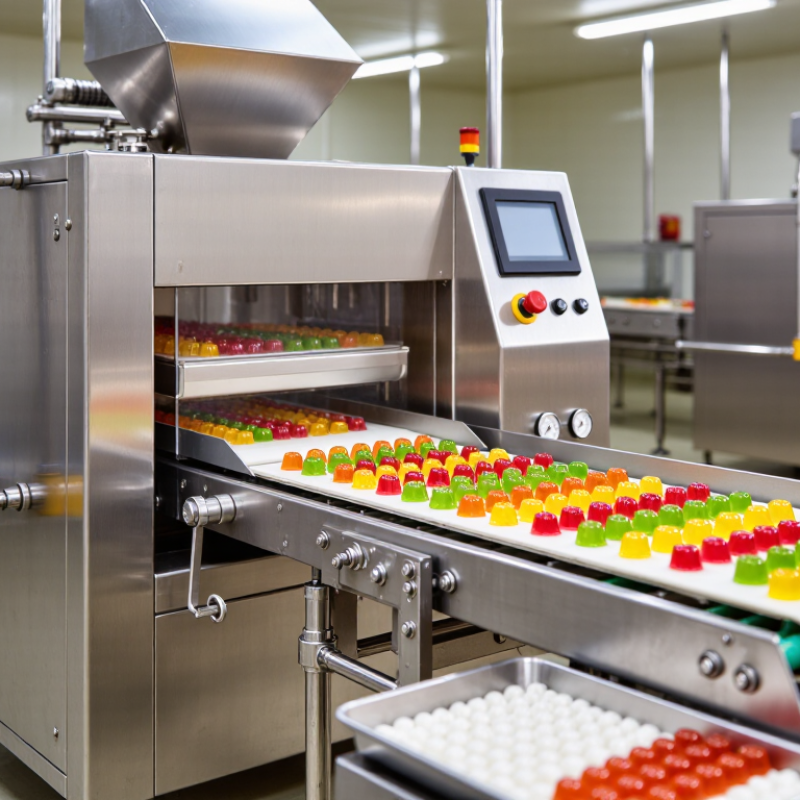
10 Best Gummy Making Machines for Your Business?

What to Consider When Choosing a Gummy Making Machine

What to Consider When Choosing a Gummy Making Machine

Gummy demand is growing, but growth alone should not decide your equipment purchase. Grand View Research valued the global gummy market at about $19.1 billion in 2023 and projected a 12.6% annual growth rate through 2030. That pressure can make high-speed machinery attractive. However, a machine must match your actual batch size, recipe viscosity, and production schedule. A compact depositor may outperform a larger system when orders remain unpredictable.

Check the dosing range, heating control, mold changeover, and cooling capacity. A reliable machine should maintain consistent piece weight across long runs. Ask for measured output, not only advertised speed. PMMI’s 2024 industry research highlights automation, flexible equipment, and labor efficiency as major packaging priorities. Those priorities also matter in gummy production. Still, automation cannot fix poor formulation control. A warm room, uneven syrup temperature, or weak cleaning routine can create sticking and waste.

Hygiene deserves close attention. Look for food-contact surfaces, tool-free access, documented cleaning procedures, and clear allergen controls. Verify whether operators can inspect pumps and nozzles without dismantling half the line. That detail matters during a midnight sanitation check. Calculate total ownership cost, including molds, utilities, maintenance, training, and rejected batches. I would also request a live trial with your own formulation. Sales demonstrations often use easier recipes. That is where careful buyers should remain skeptical.

10 Best Gummy Making Machines for Your Business? - What to Consider When Choosing a Gummy Making Machine

A practical comparison of common gummy production machine configurations, capacities, and selection factors.

Rank Machine Type Typical Output Gummy Weight Range Depositing Method Heating & Control Automation Level Best For Important Considerations
1 Servo Depositing Gummy Line 200–600 kg/hour 1–20 g per piece Servo-driven piston depositor Multi-zone cooking and temperature control High; recipe settings and speed can be stored Large-scale commercial production Requires substantial floor space, utilities, trained operators, and a properly designed starchless or molded cooling system.
2 Continuous Starchless Gummy Line 150–500 kg/hour 2–15 g per piece Depositor into reusable molds Inline syrup cooking, mixing, and cooling High; automated conveying and mold handling Clean-label and high-throughput facilities Reduces starch handling but normally has higher initial cost and stricter requirements for mold temperature and release control.
3 Rotary Depositing Machine 80–250 kg/hour 1–10 g per piece Rotary multi-nozzle depositor Heated hopper with controlled agitation Medium to high Small and medium production runs Offers a compact footprint and consistent piece weight; confirm mold-change time and compatibility with high-viscosity recipes.
4 Servo Gummy Depositor 60–200 kg/hour 0.5–8 g per piece Precision servo piston or gear pump Jacketed hopper, usually 40–90°C operating range Medium to high Vitamin, pectin, gelatin, and functional gummies Select a pump and nozzle design that minimizes shear, foaming, and air inclusion in sensitive formulations.
5 Batch Cooker and Depositor System 40–150 kg/hour 1–15 g per piece Semi-automatic piston depositing Steam, electric, or thermal-oil batch kettle Medium Startups, test kitchens, and flexible recipes Lower investment and easy recipe changes, but output depends heavily on cooking consistency and operator workflow.
6 Small-Batch Tabletop Depositor 10–50 kg/hour 0.5–10 g per piece Manual or pneumatic piston Small heated hopper or jacketed cylinder Low to medium Product development and limited production Compact and economical, but filling accuracy, operator fatigue, and changeover speed should be carefully evaluated.
7 Depositor with Rope or Extrusion Attachment 30–120 kg/hour 1–25 g per piece Extrusion, roping, and cutting Heated feed system with adjustable speed Medium Ropes, strips, bites, and novelty shapes Provides product-format flexibility, but cutting accuracy and cooling control can vary with recipe temperature and viscosity.
8 Multi-Color and Multi-Flavor Depositor 50–180 kg/hour 1–12 g per piece Two- or three-stream synchronized depositing Independent heated product paths Medium to high Layered, striped, and filled gummy products Requires accurate synchronization, separate sanitation procedures, and recipe compatibility across all product streams.
9 Gummy Molding and Cooling Line 80–300 kg/hour 1–20 g per piece Depositing into silicone, metal, or starch molds Controlled cooling tunnel or conditioning room Medium to high Facilities focused on shape retention and fast demolding Cooling capacity, humidity, mold release, and demolding timing directly affect surface quality and yield.
10 Integrated Gummy Line with Oil-Coating and Packaging 100–400 kg/hour 1–20 g per piece Automatic depositing, demolding, and conveying Centralized temperature and line-speed control High End-to-end production with reduced manual handling Confirm compatibility between the depositor, coating drum, metal detector, checkweigher, and packaging equipment before purchase.
Selection note: Actual capacity depends on recipe viscosity, gelatin or pectin concentration, depositing temperature, mold size, cooling time, piece weight, and the number of production lanes. Request a sample run and confirm sanitation, electrical, utility, and food-contact requirements before making a purchase.

The 10 Best Gummy Making Machines for Business Use

The 10 Best Gummy Making Machines for Business Use

Choosing the best gummy making machine depends on production volume, recipe texture, and available floor space. A tabletop depositor suits small confectionery kitchens. A pneumatic depositor offers steady portions with simple controls. A servo-driven depositor improves accuracy during longer production runs. A rotary molding machine supports faster, repeated shapes. A starch molding machine works well for traditional textures. A starchless machine reduces powder handling and cleanup. A silicone-mold depositor helps businesses test new designs. A continuous cooking-and-depositing line saves labor at higher volumes. A cooling tunnel protects shape and surface finish. An integrated packaging line improves output after cooling.

Real production experience shows that speed is not the only measure. A machine should maintain temperature within a narrow range. It should also handle sugar, pectin, gelatin alternatives, acids, and natural colors without unstable results. Food-contact surfaces need easy access, smooth welds, and documented cleaning procedures. Operators should check deposit weight throughout each shift. Small errors become expensive across thousands of pieces.

Do not ignore training. Even an advanced machine can produce sticky, uneven gummies when humidity changes. Energy use, spare parts, mold replacement, and service response deserve careful comparison. A compact machine may look economical, yet limited capacity can restrict future growth. That assumption needs testing. Trial batches, sanitation records, and realistic labor estimates provide stronger evidence than a showroom demonstration.

How Different Gummy Machines Compare by Production Capacity

Gummy making machines vary widely in production capacity, so equipment selection should match daily demand. Small tabletop machines often produce 5 to 20 kilograms per hour. They suit test batches, local orders, and limited product ranges. Semi-automatic systems may reach 30 to 80 kilograms per hour. They usually need an operator to fill molds, monitor temperatures, and remove finished gummies. Industrial lines can exceed 100 kilograms per hour, depending on mold size, depositing speed, and cooling equipment.

Capacity is not only a speed number. A machine with 24 cavities may produce more pieces per cycle than one with 12 cavities. However, larger gummies reduce the number of pieces per kilogram. Cooling time also affects the real output. A continuous cooling tunnel keeps production moving, while a cabinet system may require more manual handling. My early estimates were too optimistic. Cleaning, flavor changes, and small stoppages reduced usable output by nearly 15 percent.

Businesses should compare advertised capacity with saleable production from a real trial. Record output during a full shift, including setup and cleaning. A 50-kilogram-per-hour rating may deliver only 35 kilograms in routine operation. Check whether one worker can manage the depositor safely and consistently. For a growing operation, modular equipment may be wiser than an oversized line. It allows capacity to increase without replacing every production stage. Maintenance access matters, too. A blocked nozzle or poorly cooled tray can stop the entire workflow.

Key Features, Costs, and Maintenance Requirements

Choosing the 10 best gummy making machines requires more than comparing output speed. A practical review should examine dosing accuracy, heating control, mold compatibility, and operator safety. Machines with servo-driven depositors usually produce more consistent pieces. Quick-change molds also reduce downtime between flavors and shapes. Ask for production samples before purchasing.

Entry-level tabletop machines often cost about $2,000 to $8,000. Semi-automatic systems may range from $10,000 to $40,000. Fully automated lines can exceed $50,000, depending on cooling, filling, and packaging equipment. These figures are estimates, not quotations. Installation, shipping, electrical work, and training can add significant expense. A low purchase price may hide expensive manual labor.

Maintenance should be measured in minutes, not promises. Operators need daily cleaning access around hoppers, nozzles, pumps, and conveyor surfaces. Food-grade seals and stainless-steel contact parts simplify sanitation. Weekly checks should include temperature sensors, belts, lubrication points, and deposit weight accuracy. Keep spare seals and nozzles on site. Small parts often stop production.

Energy use matters too. Insulated heating tanks can reduce waste during long shifts. Still, some machines require specialized technicians, which can delay repairs. That weakness is easy to overlook. Request maintenance schedules, replacement-part prices, warranty limits, and service response times in writing. The most suitable machine is not always the fastest; it should match your batch size, staff skills, available floor space, and realistic budget.

How to Select the Right Machine for Your Production Goals

Selecting the right gummy making machine starts with your production goals, not its advertised speed. A small startup may need 20–50 kilograms per hour, while a contract manufacturer may require several hundred. IMARC Group valued the global gummy market at about USD 20.4 billion in 2023. Its report also forecasts continued growth through 2032. Demand is rising, but buying oversized equipment can waste capital and floor space.

Review the complete process. Check cooking capacity, depositing accuracy, mold flexibility, cooling time, and demolding performance. Servo-controlled depositors can improve portion consistency, but they may increase maintenance complexity. Stainless steel construction, tool-free access, and documented cleaning procedures support safer production. The machine should also match your recipe. High-pectin gummies, gelatin formulas, and sugar-free products can behave differently during depositing. A machine that performs well in one trial may struggle after formulation changes. I have seen buyers focus on hourly output and underestimate changeover time.

Tips: Request a live trial using your actual recipe. Measure yield, weight variation, cleaning time, and restart losses. Ask for factory acceptance records and operator training details. PMMI industry reports repeatedly identify labor efficiency and automation as major packaging priorities. Still, automation does not remove every production problem. A practical purchase plan includes spare parts, service response, electrical requirements, and future expansion. Leave room for honest testing, because laboratory results rarely equal a busy production shift.

Copyright 2025 Fluidra S.A. | Created by BCM Marketing Agencia Privacy Policy Legal note | Cookie policy |

Technical cookies are strictly necessary for our website to work and you can navigate through it. These types of cookies are those that, for example, allow us to identify you, give you access to certain restricted parts of the page if necessary, or remember different options or services already selected by you, such as your privacy preferences. Therefore, they are activated by default, your authorization not being necessary in this regard. Through the configuration of your browser, you can block or alert the presence of this type of cookies, although such blocking will affect the proper functioning of the different functionalities of our website.


The analysis cookies allow us to study the navigation of the users of our website in general (for example, which sections of the page are the most visited, which services are used most and if they work correctly, etc.). From the statistical information on navigation on our website, we can improve both the operation of the page itself and the different services it offers. Therefore, these cookies do not have an advertising purpose, but only serve to make our website work better, adapting to our users in general. By activating them you will contribute to this continuous improvement. You can enable or disable these cookies by checking the corresponding box, being disabled by default.


Functionality cookies allow us to remember your preferences, to personalize certain characteristics and general options of our website, every time you access it (for example, the language in which the information is presented to you, the sections marked as favorites, your browser type, etc.) Therefore, this type of cookies does not have an advertising purpose, but by activating them you will improve the functionality of the website (for example, adapting to your type of browser) and the customization of it based on your preferences (for example, by presenting the information in the language that you have chosen in previous occasions), which will contribute to the ease, usability and comfort of our page during your navigation. You can enable or disable these cookies by checking the corresponding box, being disabled by default.


Advertising cookies allow us to manage the advertising spaces included in our website based on criteria such as the content shown or the frequency in which the ads are displayed. For example, if you have been shown the same ad several times on our website, and you have not shown a personal interest by clicking on it, it will not appear again. In summary, by activating this type of cookies, the advertising shown on our website will be more useful and diverse, and less repetitive. You can enable or disable these cookies by checking the corresponding box, being disabled by default.


Behavioral advertising cookies allow us to obtain information based on the observation of your browsing habits and behaviors on the web, in order to show you advertising content that best suits your personal tastes and interests. To understand it in a very simple way, we will give you a fictitious example: if your last searches on the web were related to suspense literature, we would show you advertising about suspense books. Therefore, activating this type of cookies, the advertising that we show you on our website will not be generic, but will be oriented to your searches, tastes and interests, therefore adjusting exclusively to you. You can enable or disable these cookies by checking the corresponding box, being disabled by default.
To understand it in a very simple way, we will give you a fictitious example: if your last searches on the web were related to suspense literature, we would show you advertising about suspense books. Therefore, activating this type of cookies, the advertising that we show you on our website will not be generic, but will be oriented to your searches, tastes and interests, therefore adjusting exclusively to you. You can enable or disable these cookies by checking the corresponding box, being disabled by default.

SAVE

We use our own and third-party cookies to ensure the proper functioning of the website and to analyse our services, improve your experience on our website and show you advertisements related to your interests according to profiling based on your browsing habits (e.g. websites visited). You can accept all cookies by clicking "ACCEPT" or set or reject them by clicking here. If you would like to know more about the use of cookies, please see our COOKIE POLICY.


ACCEPT ALL
Reject no essentials


