
10 Best Forged Structural Parts Suppliers for Global Buyers
FLUID HANDLING EXPERTS

Blog, all our news

10 Best Forged Structural Parts Suppliers for Global Buyers

Selecting reliable Forged Structural Parts suppliers requires more than comparing prices or browsing polished websites. Global buyers need evidence of process control, material knowledge, inspection discipline, and consistent delivery. A forged bracket may look simple, yet its grain flow, heat treatment, and machining accuracy can determine whether a bridge connection, excavator arm, or industrial frame performs safely under repeated loads.

Dr. Thomas Altan, a widely recognized forging specialist, stated, “Forging is the oldest metal forming process known to man.” His observation still matters today. Modern suppliers combine that long manufacturing tradition with simulation software, automated presses, ultrasonic testing, and digital traceability. The strongest companies can explain their steel grades clearly. They can also provide mill certificates, heat-treatment records, dimensional reports, and practical samples before full production begins.

This guide reviews ten Forged Structural Parts suppliers serving international buyers. It considers forging capacity, engineering support, quality systems, export experience, customization, and after-sales communication. Supplier certifications are useful, but they are not the whole story. A certificate cannot reveal every production delay or weak technical response. Buyers should ask direct questions about tooling ownership, minimum order quantities, inspection methods, and packaging for ocean transport.

Some evaluations remain imperfect. Public information changes, and capabilities may differ between factories and trading offices. Therefore, this list should support deeper verification, not replace it. Request current documents. Check references. If possible, inspect production samples before committing to large orders. Small details often expose large risks.
10 Best Forged Structural Parts Suppliers for Global Buyers

What Forged Structural Parts Are and Why Global Buyers Need Them

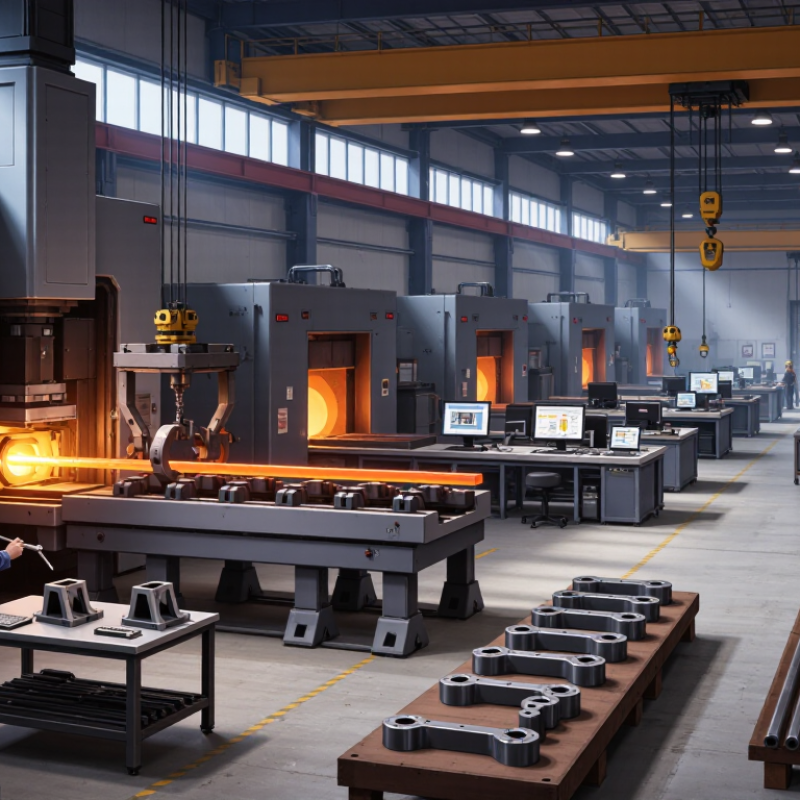
Forged structural parts are load-bearing components shaped under controlled heat and pressure. Unlike cast pieces, forging can refine the metal’s grain flow. This often improves strength, fatigue resistance, and impact performance. Typical examples include brackets, clevises, flanges, lifting links, connecting rods, and heavy-duty joints. They may support frames, machinery, transport systems, and energy equipment.

Global buyers need these parts when failure could cause costly downtime or safety concerns. A reliable supplier should explain the steel grade, forging temperature, heat treatment, dimensional tolerances, and inspection method. In my experience, clear manufacturing records matter as much as the finished surface. Buyers should request material certificates, hardness results, ultrasonic testing where suitable, and sample measurements. Small details matter. However, forging is not automatically perfect. Poor die design, uneven cooling, or weak process control can create defects. Supplier claims should be checked against independent inspection when the application is critical.

Tips: Define loads, operating temperatures, drawings, and acceptance criteria before requesting quotations. Ask how the supplier controls traceability from raw billet to final shipment. Review production samples, not only polished photographs. Confirm packaging for long-distance transport, especially where moisture and impact are possible. A lower price may look attractive, but rework, delays, and field replacement can cost far more. Allow room for technical discussion; some specifications need revision after practical review.

10 Best Forged Structural Parts Suppliers for Global Buyers

What Forged Structural Parts Are and Why Global Buyers Need Them

Forged structural parts are load-bearing components shaped by compressive force, usually through hot or cold forging. Common examples include shafts, hubs, flanges, lifting links, brackets, connectors, and heavy-duty fittings. Forging can improve grain flow, toughness, and resistance to fatigue compared with many cast or machined alternatives.

How to read the chart: Material density affects component weight, transportation cost, handling requirements, and the final strength-to-weight strategy. Steel and nickel alloys are commonly selected for high-load structural applications, while aluminum and titanium alloys can reduce weight where their strength, corrosion resistance, and cost requirements are suitable. Values are representative room-temperature densities; the exact figure varies by alloy composition and product specification.

How to Evaluate Forged Structural Parts Suppliers

Choosing forged structural parts suppliers requires more than comparing prices. Review their experience with load-bearing components, material grades, and demanding production environments. Ask for records showing similar parts, production volumes, and failure-prevention methods. A polished website is not proof.

Inspect the supplier’s quality system in practical detail. Check forging temperature controls, die maintenance, heat-treatment charts, dimensional reports, and non-destructive testing procedures. Request sample inspection data, not only certificates. Reliable suppliers can explain how they trace each batch from raw billet to final shipment. Their measurement equipment should have current calibration records. Small gaps matter.

Communication reveals operational maturity. Ask how engineers handle drawing changes, tolerances, packaging, and delivery risks. A capable supplier will identify unclear specifications before production begins. Visit the facility when possible, and observe material storage, worker training, and finished-part protection. Photos can hide problems.

I learned this the hard way: one supplier provided excellent samples but inconsistent production records. The mistake was trusting the sample too quickly.

Evaluate capacity honestly, including backup equipment and subcontracting controls. Confirm that commercial terms, inspection rights, and applicable standards are documented clearly. A dependable partnership grows from evidence, direct questions, and willingness to challenge convenient answers.

The 10 Best Forged Structural Parts Suppliers for Global Buyers

The 10 Best Forged Structural Parts Suppliers for Global Buyers

Choosing the ten best forged structural parts suppliers requires more than comparing prices. Buyers should examine forging capacity, material traceability, heat-treatment records, and dimensional inspection methods. The World Steel Association’s October 2024 outlook estimated global steel demand at about 1.75 billion tonnes in 2024. This scale increases pressure on suppliers to control raw-material consistency and delivery risk. Reliable suppliers should provide mill certificates, ultrasonic testing results, and lot-level identification. Clear evidence matters.

Strong candidates usually operate modern presses, controlled furnaces, and calibrated coordinate-measuring equipment. Their quality systems should align with ISO 9001, while automotive or aerospace projects may require additional sector certifications. Ask for sample inspection plans. Also, review nonconformance records instead of accepting only polished presentations. Experience has taught many buyers that a perfect brochure proves very little. A supplier can pass an audit and still struggle with tooling changes, packaging, or communication across time zones.

Global buyers should compare the ten shortlisted suppliers using the same scorecard. Measure technical capability, annual capacity, export experience, engineering support, corrective-action speed, and total landed cost. The OECD’s Steel Outlook 2024 highlights continuing uncertainty in industrial demand and trade conditions. Flexible production therefore has practical value. Still, low cost can hide weak process control. That lesson is easy to forget. Supplier rankings should be reviewed after pilot orders, destructive testing, and real delivery performance, not created from website claims alone.

10 Best Forged Structural Parts Suppliers for Global Buyers

Rank Supplier Code Primary Region Structural Forging Scope Common Materials Typical Unit Weight Production Process Quality Framework Indicative Lead Time Best Fit
1 Supplier A East Asia Heavy equipment frames, connecting lugs, clevises and load-bearing brackets Carbon steel, low-alloy steel, stainless steel 10–500 kg Open-die and closed-die forging; heat treatment; CNC machining ISO 9001-based quality system; dimensional, hardness and ultrasonic inspection 8–16 weeks High-volume industrial programs
2 Supplier B South Asia Construction machinery links, hinge components, pins and structural arms Medium-carbon steel, alloy steel, stainless steel 2–250 kg Drop forging; induction hardening; shot blasting; machining Material traceability; tensile testing; magnetic-particle inspection 6–14 weeks Cost-sensitive OEM sourcing
3 Supplier C Western Europe Railway, lifting and energy-sector structural forgings Low-alloy steel, stainless steel, nickel-based alloys 20–1,000 kg Open-die forging; controlled cooling; rough and finish machining ISO 9001; EN 10204 inspection documentation; ultrasonic testing 10–20 weeks Safety-critical applications
4 Supplier D North America Mining, oilfield and heavy-transport structural components Carbon steel, alloy steel, corrosion-resistant steel 25–750 kg Closed-die and open-die forging; heat treatment; dimensional verification ISO 9001-based controls; process qualification; NDT options 8–18 weeks Large, rugged components
5 Supplier E Central Europe Automotive and industrial chassis forgings, arms and brackets Micro-alloy steel, carbon steel, heat-treatable alloy steel 0.5–80 kg Precision closed-die forging; trimming; automated inspection IATF-style production controls; PPAP support; capability studies 10–22 weeks Repeat production volumes
6 Supplier F Southeast Asia Marine fittings, deck hardware, support brackets and machinery parts Stainless steel, carbon steel, duplex stainless steel 1–150 kg Closed-die forging; solution annealing; passivation; machining Chemical analysis; corrosion-resistance testing; dye-penetrant inspection 7–15 weeks Corrosion-exposed structures
7 Supplier G Eastern Europe Hydraulic equipment bodies, structural couplings and machine supports Carbon steel, alloy steel, stainless steel 5–300 kg Drop forging; normalizing; quenching and tempering; CNC machining ISO 9001 controls; hardness mapping; dimensional and surface inspection 8–17 weeks Medium-volume machinery projects
8 Supplier H Middle East Pipeline supports, pressure-equipment forgings and industrial mounting parts Low-alloy steel, stainless steel, nickel-bearing steel 10–400 kg Open-die forging; heat treatment; ultrasonic and radiographic inspection options Material certificates; welding and NDT coordination; traceability records 10–20 weeks Energy and process industries
9 Supplier I Latin America Agricultural machinery parts, trailer couplings and general structural forgings Carbon steel, medium-alloy steel, stainless steel 1–200 kg Closed-die forging; trimming; heat treatment; protective coating Batch traceability; tensile and hardness testing; visual inspection 8–16 weeks Agricultural and transport equipment
10 Supplier J Oceania Mining, lifting and infrastructure-repair structural components High-strength alloy steel, carbon steel, stainless steel 15–600 kg Open-die forging; controlled heat treatment; repair machining ISO 9001-based procedures; ultrasonic, magnetic-particle and dimensional testing 10–22 weeks Low-volume heavy-duty orders

Note: Supplier identities are intentionally anonymized. Lead times, weight ranges and inspection capabilities are indicative industry-screening figures; buyers should confirm material grades, tooling requirements, certifications, production capacity and delivery schedules directly before placing an order.

Comparing Supplier Capabilities, Quality, and Certifications

When comparing forged structural parts suppliers, buyers should examine production capability beyond equipment lists. A supplier may own a large press, yet lack stable die control or experienced process engineers. Ask for forging capacity, maximum part dimensions, material grades, heat-treatment ranges, and machining tolerances. Shop-floor evidence matters. Review press maintenance logs, furnace charts, and sample inspection reports.

Quality systems provide a stronger comparison point. ISO 9001 certification shows an established management framework, but it does not prove perfect product quality. Check the certificate scope, expiry date, and issuing organization. For automotive or demanding industrial work, additional process standards may be relevant. Confirm whether nondestructive testing follows recognized procedures, with qualified personnel and calibrated equipment. Ultrasonic testing, magnetic particle inspection, tensile tests, and impact tests should match the drawing and material specification.

Traceability should reach each heat number, forging batch, and final inspection record. Reliable suppliers can explain what happens when a dimension fails or a hardness result falls outside limits. That answer reveals practical experience. Visit the facility when possible. Look for labeled material racks, controlled quarantine areas, and clear traveler documents. Paperwork can look excellent while production discipline remains uneven. This is an uncomfortable gap, but global buyers should not ignore it. Ask for recent corrective-action examples, not only polished certificates. Suppliers that disclose limitations may deserve more confidence than those promising flawless performance.

How to Select the Right Supplier for Your Project

Selecting a forged structural parts supplier requires more than comparing prices. Review their experience with your part geometry, steel grade, load conditions, and production volume. Ask for sample inspection reports, heat-number traceability, and records from ultrasonic or magnetic testing. A reliable supplier should explain forging capacity, heat treatment controls, machining tolerances, and packaging methods in clear language.

Request a small trial order before approving full production. Check whether dimensions match the drawing, whether certificates match the delivered material, and whether protective packaging prevents rust during ocean transport. An on-site audit can reveal practical details, such as furnace calibration, tool storage, and how rejected parts are isolated. A polished website can still hide weak process control. That possibility deserves attention.

Tips: Compare at least three qualified suppliers. Confirm their inspection equipment and calibration dates. Ask how they manage design changes and urgent replacements. Check communication speed across different time zones. Clarify payment terms, delivery responsibilities, and export documents before signing. Do not accept vague promises about “premium quality.” Require measurable standards, agreed tolerances, and written corrective actions. Experienced buyers sometimes overlook packaging, yet a damaged machined surface can delay assembly for weeks. Supplier selection is not perfectly predictable; even a careful evaluation may miss a hidden weakness. Build review points into the project.

Copyright 2025 Fluidra S.A. | Created by BCM Marketing Agencia Privacy Policy Legal note | Cookie policy |

Technical cookies are strictly necessary for our website to work and you can navigate through it. These types of cookies are those that, for example, allow us to identify you, give you access to certain restricted parts of the page if necessary, or remember different options or services already selected by you, such as your privacy preferences. Therefore, they are activated by default, your authorization not being necessary in this regard. Through the configuration of your browser, you can block or alert the presence of this type of cookies, although such blocking will affect the proper functioning of the different functionalities of our website.


The analysis cookies allow us to study the navigation of the users of our website in general (for example, which sections of the page are the most visited, which services are used most and if they work correctly, etc.). From the statistical information on navigation on our website, we can improve both the operation of the page itself and the different services it offers. Therefore, these cookies do not have an advertising purpose, but only serve to make our website work better, adapting to our users in general. By activating them you will contribute to this continuous improvement. You can enable or disable these cookies by checking the corresponding box, being disabled by default.


Functionality cookies allow us to remember your preferences, to personalize certain characteristics and general options of our website, every time you access it (for example, the language in which the information is presented to you, the sections marked as favorites, your browser type, etc.) Therefore, this type of cookies does not have an advertising purpose, but by activating them you will improve the functionality of the website (for example, adapting to your type of browser) and the customization of it based on your preferences (for example, by presenting the information in the language that you have chosen in previous occasions), which will contribute to the ease, usability and comfort of our page during your navigation. You can enable or disable these cookies by checking the corresponding box, being disabled by default.


Advertising cookies allow us to manage the advertising spaces included in our website based on criteria such as the content shown or the frequency in which the ads are displayed. For example, if you have been shown the same ad several times on our website, and you have not shown a personal interest by clicking on it, it will not appear again. In summary, by activating this type of cookies, the advertising shown on our website will be more useful and diverse, and less repetitive. You can enable or disable these cookies by checking the corresponding box, being disabled by default.


Behavioral advertising cookies allow us to obtain information based on the observation of your browsing habits and behaviors on the web, in order to show you advertising content that best suits your personal tastes and interests. To understand it in a very simple way, we will give you a fictitious example: if your last searches on the web were related to suspense literature, we would show you advertising about suspense books. Therefore, activating this type of cookies, the advertising that we show you on our website will not be generic, but will be oriented to your searches, tastes and interests, therefore adjusting exclusively to you. You can enable or disable these cookies by checking the corresponding box, being disabled by default.
To understand it in a very simple way, we will give you a fictitious example: if your last searches on the web were related to suspense literature, we would show you advertising about suspense books. Therefore, activating this type of cookies, the advertising that we show you on our website will not be generic, but will be oriented to your searches, tastes and interests, therefore adjusting exclusively to you. You can enable or disable these cookies by checking the corresponding box, being disabled by default.

SAVE

We use our own and third-party cookies to ensure the proper functioning of the website and to analyse our services, improve your experience on our website and show you advertisements related to your interests according to profiling based on your browsing habits (e.g. websites visited). You can accept all cookies by clicking "ACCEPT" or set or reject them by clicking here. If you would like to know more about the use of cookies, please see our COOKIE POLICY.


ACCEPT ALL
Reject no essentials


