
10 Best Explosion Proof LED Floodlights for Industrial Use?
FLUID HANDLING EXPERTS

Blog, all our news

10 Best Explosion Proof LED Floodlights for Industrial Use?

Industrial lighting has to do more than brighten a work area. In facilities handling flammable gases, vapors, or combustible dust, equipment selection must match the site’s classified environment. An explosion-proof led floodlight can support safer visibility, but its label alone does not prove it suits every application. Details matter.

The International Energy Agency’s efficient-lighting analysis estimates that lighting accounts for about 15% of global electricity use. That figure makes energy efficiency relevant to industrial operating costs, alongside reliability and maintenance. Yet a high lumen rating can still mislead. Beam distribution, mounting height, ambient temperature, ingress protection, and certified hazardous-area ratings all affect real performance. A fixture that looks powerful on paper may leave shadows around a loading bay or run hotter than expected.

This guide compares 10 explosion-proof LED floodlights for industrial use, focusing on practical specifications rather than marketing claims. We consider light output, construction, thermal management, service life, and certification details that buyers should verify against their site requirements. The U.S. Department of Energy’s 2020 U.S. Lighting Market Characterization offers useful context on changing lighting technology and adoption; however, product-level performance still depends on testing and installation conditions. No single model fits every plant. Even this shortlist has limits: published specifications may not reflect years of vibration, dust, or harsh weather. Check manufacturer documentation and consult a qualified lighting or safety professional before choosing equipment.
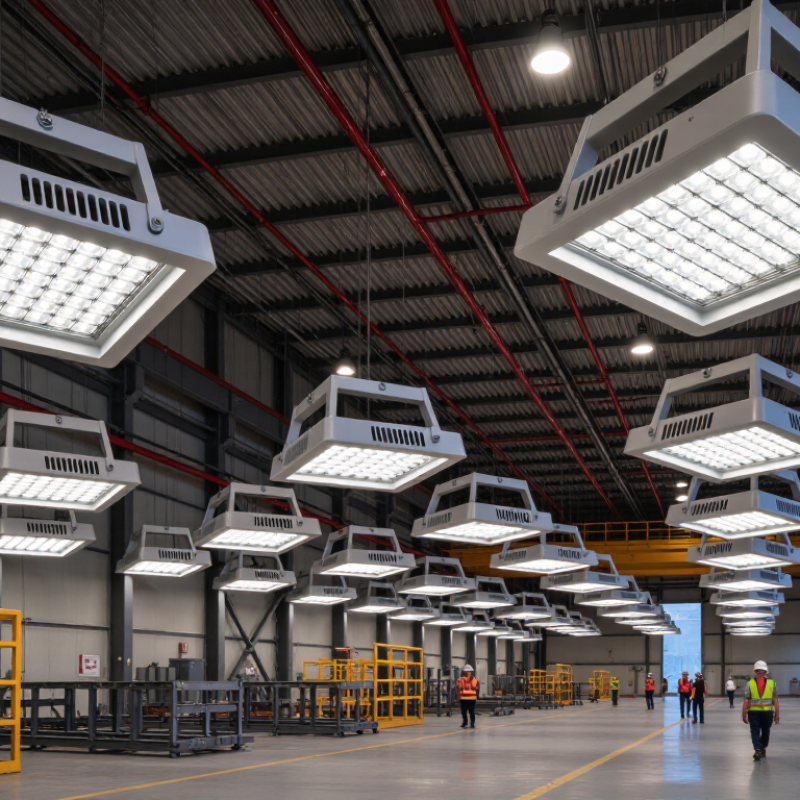
10 Best Explosion Proof LED Floodlights for Industrial Use?

What Explosion-Proof LED Floodlights Are and How They Work

An explosion-proof LED floodlight is built for locations where flammable gas, vapor, or dust may be present. Its enclosure is designed to contain an ignition inside the fixture and limit flame or hot gases from reaching the surrounding atmosphere. The term can mislead. It does not mean the light prevents explosions or survives every blast. Sealed joints, strong housings, and carefully designed cable entries help manage risk. The LEDs produce light with less heat than many older lamps, but the driver and other components still generate heat.

Inside, an LED driver converts incoming power into the current the diodes need. Reflectors or lenses shape that light into a broad beam, useful across tank areas, loading bays, and processing floors. Fixture selection depends on the actual hazard, ambient temperature, mounting height, and required beam pattern. A bright floodlight can still leave dark patches behind pipes or equipment. Small detail, big consequence. Check the fixture’s markings and temperature rating against the site conditions, and have qualified personnel assess installation and maintenance. Dust buildup, damaged seals, or a poor cable entry can undermine protection. Ratings matter, but real-world inspection matters too.

Explosion-Proof LED Floodlights: Hazardous-Area Zones at a Glance

Approximate annual duration for which an explosive gas atmosphere may be present in each IEC zone.

Zone 0 indicates continuous, frequent, or long-duration presence; Zone 1 indicates occasional presence during normal operation; and Zone 2 indicates presence that is unlikely during normal operation and, if it occurs, lasts only briefly. The ranges are simplified IEC guidance for gas hazards, not floodlight performance ratings. Select a certified luminaire suitable for the site’s zone, gas group, temperature class, and ambient conditions.

Key Criteria for Choosing Industrial Explosion-Proof Floodlights

Choosing an industrial explosion-proof floodlight starts with the hazard, not the wattage. Confirm the site’s classified zone, gas or dust group, and temperature class against the luminaire’s certification. Check ambient-temperature limits, too; a fitting rated for a cool indoor bay may not suit a hot process area. The U.S. Department of Energy’s 2020 U.S. Lighting Market Characterization reported that LEDs made up about 48% of installed U.S. lighting. That adoption figure is useful context, not proof that any LED is suitable for a hazardous location.

Next, match the beam angle to the task. A narrow beam can brighten a loading lane, while a wide beam reduces dark gaps around machinery. Review lumen output, glare, mounting height, and emergency-lighting needs together. Check housing materials, ingress protection, corrosion resistance, and thermal management for the actual site conditions. A high lumen rating looks reassuring, but it cannot replace verified photometric data or a valid certification. I would also question any specification that omits test conditions.

Tips: Ask for the certificate and photometric file before purchase. Compare the markings with the site documents, and verify local requirements with a qualified safety professional. Inspect cable entries and seals during maintenance; small defects matter.

Ten Explosion-Proof LED Floodlights Compared by Features and Use

Choosing among ten explosion-proof LED floodlight types starts with the task, not the wattage. A compact, low-output unit suits walkways; a wide-beam model covers loading yards. Narrow-beam optics reach high work areas, while an adjustable-bracket light aims at changing work zones. A low-profile fixture fits tight ceilings. A corrosion-resistant housing is useful near washdown areas. Check the actual material and rating.

For mobile maintenance, compare portable units with fixed-mounted lights and confirm their approved installation conditions. Emergency-backup models add light during power loss, but runtime matters. Sensor-controlled versions can reduce unnecessary operation. High-output models cover broad sites, though glare and heat need attention. A ten-light comparison should record certified protection markings, beam angle, lumen output, ambient-temperature limits, mounting method, and service access. Ratings vary by location and hazard classification.

Tips: Match the fixture’s certification to the site’s documented area classification; do not infer suitability from “explosion-proof” wording alone. Inspect the lens and seals, and check that replacement parts preserve the rated assembly. It’s easy to overlook glare. A quick mock-up at mounting height can reveal dark patches before installation.

Matching Floodlight Types to Hazardous Industrial Environments

Matching a floodlight to a hazardous area starts with identifying the material present. Gas and vapor zones need luminaires certified for the specific zone, gas group, and temperature class. Combustible-dust areas require dust-ignition protection and sealed housings that limit dust entry. The distinction matters. A fixture suitable for a solvent vapor may not suit a grain-processing room.

In wet washdown areas, check the ingress-protection rating, gasket design, and corrosion resistance; a dusty warehouse may need a different housing and beam angle. IEC 60079-10-1 and IEC 60079-10-2 provide frameworks for classifying explosive gas and dust atmospheres. NFPA’s report, Structure Fires in Industrial and Manufacturing Properties, recorded an annual average of 37,910 fires at such properties from 2011 to 2015, with $1.2 billion in direct property damage. The report does not attribute those fires to lighting, but it underlines why site-specific risk assessment matters. Confirm the fixture’s certification against the area classification, then consider mounting height, glare, and maintenance access. A narrow beam can leave shadows behind pipework. That detail is easy to miss.

Installation, Certification, and Maintenance Considerations

Installation begins with the site classification, not the fixture’s wattage. Confirm that the luminaire’s certification matches the specific gas or dust group, temperature class, and ambient range. Certificates are not interchangeable. An approval for one area or enclosure type may not cover another. Before wiring, isolate the circuit and check the nameplate, cable-entry size, and approved gland or conduit arrangement. Use specified fasteners and bonding points; never drill or alter a flameproof enclosure in the field. That shortcut can compromise protection. Mount the unit where beams clear tanks, walkways, and maintenance access, then aim it to limit glare and dark pockets.

Commissioning should include documented checks of wiring, seals, specified tightening torque, and operating temperature. Keep certificate records and installation drawings with the maintenance file. During inspections, look for cracked lenses, loose brackets, corrosion, blocked cooling surfaces, and damaged cable entries. Clean with compatible materials; harsh solvents can cloud optical covers or weaken seals. Always isolate power before opening an enclosure, and follow certified instructions for reassembly. Do not assume a lamp that still lights is safe. That assumption is easy to make. After repairs or layout changes, reassess hazardous-area suitability and required illumination. Set inspection intervals for dust, vibration, washdown, and operating hours, not a calendar borrowed from another site.

Copyright 2025 Fluidra S.A. | Created by BCM Marketing Agencia Privacy Policy Legal note | Cookie policy |

Technical cookies are strictly necessary for our website to work and you can navigate through it. These types of cookies are those that, for example, allow us to identify you, give you access to certain restricted parts of the page if necessary, or remember different options or services already selected by you, such as your privacy preferences. Therefore, they are activated by default, your authorization not being necessary in this regard. Through the configuration of your browser, you can block or alert the presence of this type of cookies, although such blocking will affect the proper functioning of the different functionalities of our website.


The analysis cookies allow us to study the navigation of the users of our website in general (for example, which sections of the page are the most visited, which services are used most and if they work correctly, etc.). From the statistical information on navigation on our website, we can improve both the operation of the page itself and the different services it offers. Therefore, these cookies do not have an advertising purpose, but only serve to make our website work better, adapting to our users in general. By activating them you will contribute to this continuous improvement. You can enable or disable these cookies by checking the corresponding box, being disabled by default.


Functionality cookies allow us to remember your preferences, to personalize certain characteristics and general options of our website, every time you access it (for example, the language in which the information is presented to you, the sections marked as favorites, your browser type, etc.) Therefore, this type of cookies does not have an advertising purpose, but by activating them you will improve the functionality of the website (for example, adapting to your type of browser) and the customization of it based on your preferences (for example, by presenting the information in the language that you have chosen in previous occasions), which will contribute to the ease, usability and comfort of our page during your navigation. You can enable or disable these cookies by checking the corresponding box, being disabled by default.


Advertising cookies allow us to manage the advertising spaces included in our website based on criteria such as the content shown or the frequency in which the ads are displayed. For example, if you have been shown the same ad several times on our website, and you have not shown a personal interest by clicking on it, it will not appear again. In summary, by activating this type of cookies, the advertising shown on our website will be more useful and diverse, and less repetitive. You can enable or disable these cookies by checking the corresponding box, being disabled by default.


Behavioral advertising cookies allow us to obtain information based on the observation of your browsing habits and behaviors on the web, in order to show you advertising content that best suits your personal tastes and interests. To understand it in a very simple way, we will give you a fictitious example: if your last searches on the web were related to suspense literature, we would show you advertising about suspense books. Therefore, activating this type of cookies, the advertising that we show you on our website will not be generic, but will be oriented to your searches, tastes and interests, therefore adjusting exclusively to you. You can enable or disable these cookies by checking the corresponding box, being disabled by default.
To understand it in a very simple way, we will give you a fictitious example: if your last searches on the web were related to suspense literature, we would show you advertising about suspense books. Therefore, activating this type of cookies, the advertising that we show you on our website will not be generic, but will be oriented to your searches, tastes and interests, therefore adjusting exclusively to you. You can enable or disable these cookies by checking the corresponding box, being disabled by default.

SAVE

We use our own and third-party cookies to ensure the proper functioning of the website and to analyse our services, improve your experience on our website and show you advertisements related to your interests according to profiling based on your browsing habits (e.g. websites visited). You can accept all cookies by clicking "ACCEPT" or set or reject them by clicking here. If you would like to know more about the use of cookies, please see our COOKIE POLICY.


ACCEPT ALL
Reject no essentials


