
What Is the Best Emergency EV Charger in 2026?
FLUID HANDLING EXPERTS

Blog, all our news

What Is the Best Emergency EV Charger in 2026?

An unexpected battery warning can turn a routine drive into a stressful wait on a cold shoulder or in a dim parking lot. The best Emergency Ev Charger in 2026 should offer practical help without promising more than it can deliver. Drivers need to know whether a unit works with their vehicle, how it connects to a power source, and how much charging it can realistically provide. A compact cable may fit neatly in a trunk, but it cannot replace a roadside charging station or a suitable household outlet. Small details matter.

This guide looks at emergency charging options through clear, useful criteria: vehicle compatibility, charging speed, portability, safety features, durability, and ease of use. It also considers real-world limits, such as outlet access, weather exposure, and the time needed to add meaningful range. Portable chargers may help in a pinch, yet charging can be slow, and conditions vary. There is no universal winner. The right choice depends on your car, typical routes, and backup plan. Before buying, check the manufacturer’s specifications and your vehicle manual rather than relying on a headline speed or a broad compatibility claim. A charger can be reassuring equipment, but it is not magic—and some product details deserve a closer look.
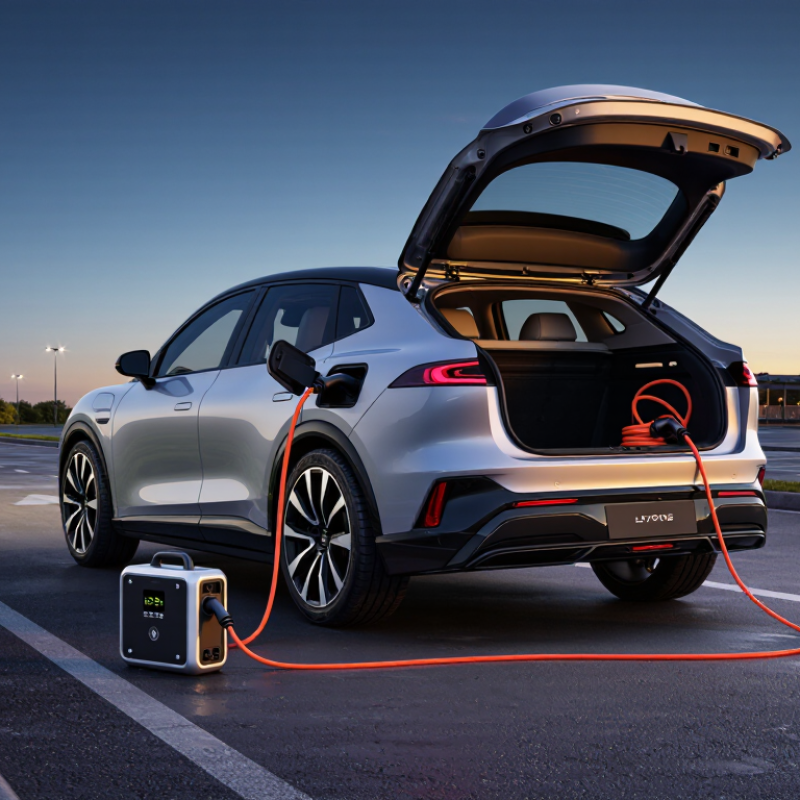
What Is the Best Emergency EV Charger in 2026?

Define Emergency EV Chargers: Level 1 Delivers About 2–5 Miles of Range per Hour

An emergency EV charger is a portable way to add power when a faster charging station is unavailable. Level 1 charging uses a compatible household outlet and typically adds about 2–5 miles of driving range per hour. That rate varies with the vehicle, outlet, battery condition, and temperature. Small gains matter. After ten hours, a driver might recover roughly 20–50 miles, though charging losses can reduce the total.

This makes Level 1 useful for getting home, reaching a public charger, or covering a short daily commute—not for quickly filling a nearly empty battery. Not quickly, though. A cold night or a shared electrical circuit can slow charging further. Before plugging in, check that the outlet is in good condition and follow the vehicle and charger instructions. Avoid relying on a loose or damaged connection; warmth, discoloration, or a burning smell are reasons to stop. The setup is simple, but it still deserves attention. In an emergency, even a few added miles may help, yet the practical choice depends on how far the next safe charging point is and how long the vehicle can remain plugged in.

What Is the Best Emergency EV Charger in 2026? Emergency EV chargers provide a short-term way to add energy when a vehicle is low on charge. Level 1 charging typically delivers about 2–5 miles of range per hour.
Charging option Typical power and supply Approximate range added Most useful for Important limitations
Level 1 portable charger Usually a standard 120 V household outlet; commonly about 1.4 kW at 12 A. About 2–5 miles per hour, depending on the vehicle and conditions. Adding enough charge overnight or gaining a few miles from a safe, grounded outlet. Slow charging; the outlet and circuit must be suitable for continuous use. Avoid damaged outlets or extension cords unless the equipment instructions explicitly allow them.
Level 2 portable charger Typically uses a 208–240 V supply; power varies by the charger, circuit, and vehicle. Often about 10–30 miles per hour, with substantial variation. Faster charging where a compatible 240 V outlet or charging circuit is available. Requires the correct outlet, circuit capacity, and connector. An adapter cannot make an incompatible or undersized circuit safe.
Public DC fast charger Commercial direct-current equipment, commonly rated from about 50 kW to over 150 kW; some sites provide higher-rated units. May add roughly 100–200 miles in 20–30 minutes on a compatible vehicle, but actual results vary widely. Getting a stranded or low-battery vehicle enough charge to continue a journey quickly. Not a home-portable charger. Charging speed depends on vehicle limits, battery temperature, battery state of charge, and station availability.
Battery power station with an AC outlet Output depends on the power station; the vehicle’s portable charger must also be compatible with its outlet and power capacity. Usually limited; a small power station may provide only a very small amount of driving range. Low-power backup needs when no grid outlet is available and the equipment is explicitly rated for the load. Many units cannot supply the sustained power required by an EV charger. Check continuous output, grounding, and vehicle charging compatibility before relying on one.
Roadside recovery or mobile charging service Depends on the service vehicle and equipment; some services provide a limited charge, while others tow the vehicle. Varies by service and vehicle; confirm the expected charge or destination before dispatch. When no safe power source or accessible charging station is available. Coverage, response time, and charging capability vary by location. Towing may be the practical option if charging is unavailable.
Practical takeaway: A Level 1 portable charger is a useful low-speed backup when a suitable outlet is available. For urgent range recovery, a compatible public DC fast charger or roadside assistance is generally more practical. Range estimates are approximate and vary with vehicle efficiency, speed, temperature, terrain, and battery condition.

Compare Charging Options: Level 2 Adds 10–30 Miles per Hour; DC Fast Charging Is Faster

What Is the Best Emergency EV Charger in 2026?

In an emergency, charging speed matters more than a cable’s advertised power. The U.S. Department of Energy’s Alternative Fuels Data Center estimates that Level 2 charging typically adds 10–20 miles of range per hour. Actual results vary with the vehicle, charger, and battery conditions. Some setups may approach 30 miles per hour. That gap matters. A portable Level 2 charger can help when a compatible outlet is available, but it is not a quick roadside fix if the battery is nearly empty.

DC fast charging is faster, but requires a compatible public station. The DOE says these stations can add roughly 100–200 miles in about 30 minutes, depending on the vehicle and charging conditions. The International Energy Agency’s Global EV Outlook 2024 reports that public charging points grew by more than 40% worldwide in 2023, with fast chargers expanding particularly quickly. Still, peak speed does not last throughout a session. Cold weather, a nearly full battery, or a vehicle’s charging limit can slow the process. I would not plan an emergency around the best-case number. Check route access and connector compatibility before relying on either option.

What Is the Best Emergency EV Charger in 2026?

Approximate driving range added during a 30-minute charging stop

Level 2 typically adds about 10–30 miles per hour, or roughly 5–15 miles in 30 minutes. DC fast charging can add substantially more—approximately 50–150 miles in a 30-minute session under suitable conditions. Actual range added varies with the vehicle, charger, battery level, temperature, and charging speed.

Check Connector Fit: Match J1772, CCS, or NACS to the Vehicle

An emergency EV charger is useful only when its connector matches your car’s inlet and the available power source. J1772 is commonly used for AC charging. CCS adds two larger contacts below a J1772-style section for DC fast charging. NACS has a different plug shape and can support AC or DC, depending on the vehicle and equipment. Similar-looking names do not guarantee compatibility.

Check the owner’s manual and the inlet before choosing a charger. A portable emergency unit often provides AC charging, not DC fast charging, so a CCS plug alone does not make it a rapid charger. Confirm the connector type, voltage, and supported charging rate. If you plan to use an adapter, verify that your vehicle supports that specific connection and charging direction. Adapters are not universal.

A small flashlight helps when checking the inlet at night. Look for the shape and contact arrangement, then compare them with the charger’s vehicle-side plug. That matters. It is easy to focus on charging speed and overlook fit; I would double-check both before packing a unit in the trunk. A charger that fits but cannot deliver power from your available outlet may still leave you waiting.

Assess Emergency Readiness: Verify Power, Weather Rating, and Safety Certifications

What Is the Best Emergency EV Charger in 2026?
Assess Emergency Readiness: Verify Power, Weather Rating, and Safety Certifications

An emergency charger is only useful if its output fits the situation. The U.S. Department of Energy’s Alternative Fuels Data Center estimates Level 1 charging adds about 2–5 miles of range per hour, while Level 2 adds roughly 10–30. Check the charger’s rated amperage, required outlet, and your vehicle’s charging limit before packing it. A higher rating cannot help if the available circuit cannot safely support it. Small detail, big difference.

Weather claims need close reading. Look for a stated enclosure rating, such as NEMA 3R or an applicable IP rating, and check what it actually protects against. Rain resistance does not automatically mean safe submersion or use with a wet connector. AAA’s 2019 cold-weather testing found that electric-vehicle range fell by an average of 41% at 20°F when cabin heating was used. That makes dependable charging more important in winter, though the result varies by vehicle and conditions.

Safety documentation matters as much as advertised power. Check for certification to relevant standards, such as UL 2594 for EV supply equipment, from a recognized testing organization. Inspect the cable, plug, and strain relief; cracked insulation is a reason not to use the unit. I would also verify compatibility at home, not during a roadside delay. It is easy to overlook outlet condition. A qualified electrician can assess a circuit that feels warm or shows damage.

Choose the Best Charger: Balance Range Recovery, Portability, Cost, and Compatibility

What Is the Best Emergency EV Charger in 2026?

The best emergency EV charger is the one that solves your likely problem, not the one with the biggest number on its box. A compact charger may fit neatly beneath the trunk floor, but deliver only a modest range boost during a short stop. Check your vehicle’s connector and charging limits before buying. Then compare charging speed with the power source you can actually access. A fast charger cannot help much if the available outlet is limited. Cost matters, too: adapters or a dedicated electrical installation can change the real price.

Tips: Test the charger at home before an emergency. Confirm the cable reaches comfortably, and keep the relevant vehicle instructions nearby. A quick test can reveal awkward surprises.

Think in miles recovered, not just charging hours. For example, a few hours near a household outlet may provide enough energy to reach a dependable charging location, but the result varies with the vehicle, outlet, and conditions. Portable units offer flexibility; higher-output options can be heavier and cost more. I’d avoid paying extra for speed your usual power source cannot support. There is no perfect choice, and that’s worth admitting. Check connector fit, cable length, power requirements, and safe operating guidance before relying on any charger.

Copyright 2025 Fluidra S.A. | Created by BCM Marketing Agencia Privacy Policy Legal note | Cookie policy |

Technical cookies are strictly necessary for our website to work and you can navigate through it. These types of cookies are those that, for example, allow us to identify you, give you access to certain restricted parts of the page if necessary, or remember different options or services already selected by you, such as your privacy preferences. Therefore, they are activated by default, your authorization not being necessary in this regard. Through the configuration of your browser, you can block or alert the presence of this type of cookies, although such blocking will affect the proper functioning of the different functionalities of our website.


The analysis cookies allow us to study the navigation of the users of our website in general (for example, which sections of the page are the most visited, which services are used most and if they work correctly, etc.). From the statistical information on navigation on our website, we can improve both the operation of the page itself and the different services it offers. Therefore, these cookies do not have an advertising purpose, but only serve to make our website work better, adapting to our users in general. By activating them you will contribute to this continuous improvement. You can enable or disable these cookies by checking the corresponding box, being disabled by default.


Functionality cookies allow us to remember your preferences, to personalize certain characteristics and general options of our website, every time you access it (for example, the language in which the information is presented to you, the sections marked as favorites, your browser type, etc.) Therefore, this type of cookies does not have an advertising purpose, but by activating them you will improve the functionality of the website (for example, adapting to your type of browser) and the customization of it based on your preferences (for example, by presenting the information in the language that you have chosen in previous occasions), which will contribute to the ease, usability and comfort of our page during your navigation. You can enable or disable these cookies by checking the corresponding box, being disabled by default.


Advertising cookies allow us to manage the advertising spaces included in our website based on criteria such as the content shown or the frequency in which the ads are displayed. For example, if you have been shown the same ad several times on our website, and you have not shown a personal interest by clicking on it, it will not appear again. In summary, by activating this type of cookies, the advertising shown on our website will be more useful and diverse, and less repetitive. You can enable or disable these cookies by checking the corresponding box, being disabled by default.


Behavioral advertising cookies allow us to obtain information based on the observation of your browsing habits and behaviors on the web, in order to show you advertising content that best suits your personal tastes and interests. To understand it in a very simple way, we will give you a fictitious example: if your last searches on the web were related to suspense literature, we would show you advertising about suspense books. Therefore, activating this type of cookies, the advertising that we show you on our website will not be generic, but will be oriented to your searches, tastes and interests, therefore adjusting exclusively to you. You can enable or disable these cookies by checking the corresponding box, being disabled by default.
To understand it in a very simple way, we will give you a fictitious example: if your last searches on the web were related to suspense literature, we would show you advertising about suspense books. Therefore, activating this type of cookies, the advertising that we show you on our website will not be generic, but will be oriented to your searches, tastes and interests, therefore adjusting exclusively to you. You can enable or disable these cookies by checking the corresponding box, being disabled by default.

SAVE

We use our own and third-party cookies to ensure the proper functioning of the website and to analyse our services, improve your experience on our website and show you advertisements related to your interests according to profiling based on your browsing habits (e.g. websites visited). You can accept all cookies by clicking "ACCEPT" or set or reject them by clicking here. If you would like to know more about the use of cookies, please see our COOKIE POLICY.


ACCEPT ALL
Reject no essentials



