
7 Best Edge Stress Meters for Global Buyers?
FLUID HANDLING EXPERTS

Blog, all our news

7 Best Edge Stress Meters for Global Buyers?

Choosing the right edge stress meter is not simply a matter of comparing prices. Global buyers need dependable readings, practical support, and clear evidence of measurement quality. This guide examines seven leading instruments for glass processors, fabricators, laboratories, and quality-control teams.

An edge stress meter should reveal more than a number on a screen. It should help operators identify compression levels, tension risks, and uneven tempering near the glass edge. Important details include optical sensitivity, measurement range, calibration stability, repeatability, software clarity, and compatibility with different glass thicknesses. A sturdy case also matters when the instrument moves between production lines or overseas facilities.

Glass-science expert James E. Shelby has emphasized, “The strength of glass is controlled by flaws.” That principle remains practical today. Small edge defects can become visible failure points during cutting, transport, or installation. The best instruments make those risks easier to investigate.

No ranking is perfect. A premium edge stress meter may offer excellent accuracy but require specialist training. A simpler model may suit routine inspections, yet provide fewer export-service options. Buyers should question impressive specifications. Real factory conditions are often dusty, rushed, and inconsistent.

This comparison considers measurement performance, user experience, documentation, after-sales service, and value for international purchasing teams. It also recognizes regional concerns, including calibration access, replacement parts, language support, and electrical compatibility. The final choice should fit the actual workflow, not just the brochure. Small differences can matter.
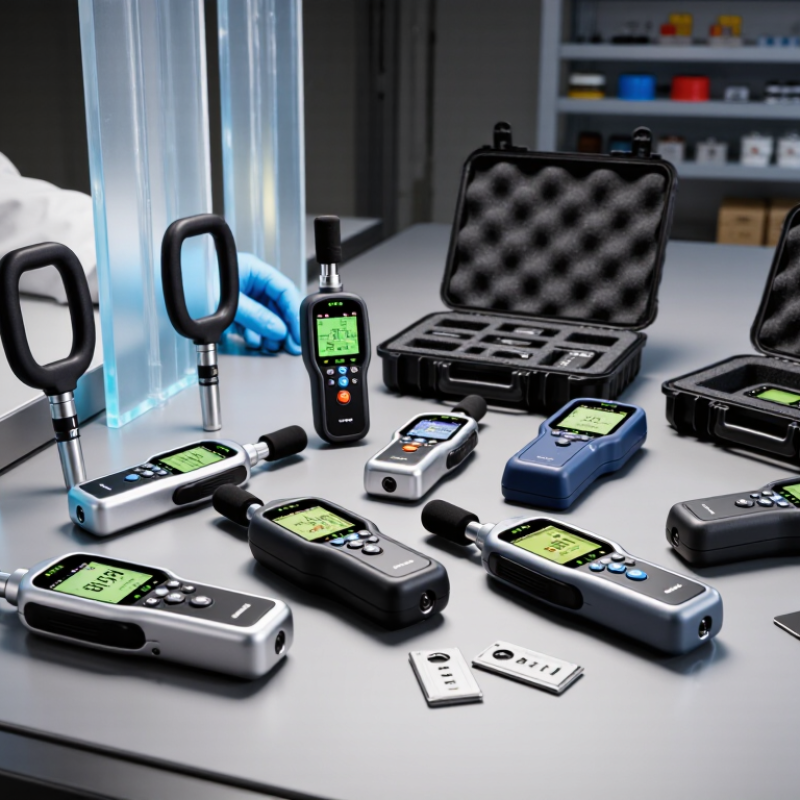
7 Best Edge Stress Meters for Global Buyers?

Define Edge-Stress Meters: Surface Compression, Edge Tension, and MPa Readings

Edge stress meters help buyers judge whether processed glass carries a safe residual-stress profile. They do not simply measure “strength.” They estimate surface compression and edge tension, usually through optical analysis or controlled mechanical sensing. Surface compression describes the protective compressive layer near the glass surface. Edge tension reflects tensile stress inside or around the treated edge.

MPa readings make results easier to compare across factories and inspection sites. Higher surface compression often indicates stronger tempered glass, but the number needs context. Glass thickness, treatment method, edge finishing, and measurement position can change the result. A reliable meter should show repeatable readings, support calibration checks, and record temperature and sample details. Clear software helps reduce operator mistakes.

I have found that a stable reading matters more than an impressive reading. One test point is not enough. Measure several locations, especially near corners and cut edges. The surface may show good compression while an edge carries excessive tension. That difference can expose weak processing. I once trusted a single MPa value too quickly; later measurements showed uneven treatment across the same panel. It was a useful correction. For global buyers comparing seven leading meter options, prioritize measurement depth, edge access, calibration support, data export, and clear uncertainty information. A device that explains its limits is often more dependable than one promising extreme precision.

7 Best Edge-Stress Meter Profiles for Global Buyers

Typical glass-stress measurement envelopes are shown in MPa for seven common applications. Surface compression and edge compression are reported as positive compressive stress, while edge/central tension represents tensile stress. Values are indicative engineering ranges; actual readings depend on glass chemistry, thickness, tempering process, and measurement method.

For global purchasing, choose a meter whose calibrated range covers the target MPa envelope, with suitable optical access for the glass thickness and edge geometry. Thermally strengthened glass commonly falls below 100 MPa surface compression, while chemically strengthened cover glass can exceed 400 MPa.

Apply ASTM C1048 and EN 12150 Requirements to Global Glass Testing

For global buyers, the best edge stress meter is not simply the most sensitive instrument. It must support repeatable checks against ASTM C1048 and EN 12150. These standards address heat-treated flat glass, including strength, fragmentation, and visual quality requirements. A suitable meter reveals compressive stress near the glass edge, where poor tempering or grinding damage may begin.

Look for calibrated optics, stable light, clear stress units, and adapters for different thicknesses. The instrument should measure curved or narrow edges when the production line requires them. Ask for calibration records traceable to recognized references.

Verify the software’s reporting format before purchase. A useful report records glass thickness, test location, operator, temperature, and measured value. Small details matter.

Do not treat one reading as proof of compliance. Edge geometry, coatings, scratches, and surface cleanliness can affect results. ASTM C1048 and EN 12150 may require more than an edge reading, so buyers should match the meter with the complete inspection plan.

In practice, compare several points around each lite and retain images when possible. Results can vary. That deserves attention. A cheaper meter may appear adequate during a demonstration, yet fail repeatability checks later. Request a sample test, inspect the raw output, and train operators before approving a global purchase.

Compare 7 Best Meters by MPa Range, Resolution, Accuracy, and Calibration

Choosing among the seven best edge stress meters requires more than comparing prices. Their useful differences appear in MPa range, resolution, accuracy, and calibration control. For tempered glass, many instruments cover approximately 0–200 MPa, while specialized units extend beyond that range. A 0.1 MPa resolution sounds impressive, but it may not improve decisions if accuracy is only ±5% of full scale. Check the complete specification.

ASTM C1279 ASTM C1279 addresses measuring residual stress in glass, while EN 12150-1 defines performance requirements for thermally toughened safety glass. These standards support practical testing, but they do not make every meter equivalent. Compare whether the instrument measures edge compression directly or estimates it through optical readings. Ask about repeatability at 20, 50, and 100 MPa. Small differences matter near acceptance limits. They really do.

Calibration deserves equal attention. NIST Technical Note 1297 recommends reporting measurement uncertainty with defined Type A and Type B contributions. ISO/IEC Guide 98-3 also treats uncertainty as part of credible measurement, not decoration. A reliable meter should provide traceable calibration records, reference samples, and a clear recalibration interval. Monthly verification is useful in busy production areas. Still, operators can introduce alignment errors, dirty contact surfaces, or unstable lighting. I have seen “accurate” readings change after cleaning the glass. That weakness should be admitted. Compare seven meters using the same glass samples, temperature, operator, and calibration reference.

Assess Optical Methods, Probe Designs, Software, and Repeatability Data

7 Best Edge Stress Meters for Global Buyers?
Choosing an edge stress meter requires more than comparing measurement ranges. Optical methods should match the material, edge shape, and production environment. Photoelastic systems can reveal stress through polarized light, while other optical approaches may suit coated or curved surfaces. Ask for details about wavelength, calibration targets, and performance on tinted glass. A clear optical path matters. Dust can distort results.
Probe design affects daily usability. A compact probe can reach narrow edges, but limited contact area may reduce stability. Non-contact designs protect delicate surfaces, although alignment can become difficult on uneven edges. Check the supported thickness range, working distance, and fixture options.
Software should display stress values clearly and record operator, sample, date, and calibration history. Exportable files help laboratories compare results across locations. Yet software screenshots are not repeatability evidence.
Tips: Request repeatability and reproducibility data from several operators. Review results at low, medium, and high stress levels. Confirm the test method, sample temperature, and acceptance limits. Ask whether uncertainty is reported, not hidden. A small variation may be acceptable, but unexplained variation deserves investigation. I would also test real production samples before purchase. A polished demonstration can miss edge chips, coatings, or curved profiles. That weakness is easy to overlook. Global buyers should compare service response, training materials, and regional calibration support. Claims sound useful, but traceable records matter more.

Choose Global Models by Certifications, Support, Warranty, and Total Cost

7 Best Edge Stress Meters for Global Buyers?

The best edge stress meter is not always the most expensive model. Global buyers should verify certification, calibration, service access, warranty terms, and total cost. For glass testing, compatibility with ASTM C1048 and EN 12150 can support safer purchasing decisions. ISO/IEC 17025 calibration evidence is also valuable, especially when measurements affect production release. The 2022 ISO Survey recorded more than one million ISO 9001 certificates worldwide, showing how widely formal quality systems are used. However, certification alone does not prove measurement accuracy.

Support can decide the real cost. Ask whether remote diagnosis, replacement sensors, operating manuals, and local training are available. A 24-month warranty sounds strong, but exclusions may cover batteries, lamps, software, or calibration. Calculate shipping, import duties, annual recalibration, downtime, and technician travel. Gartner’s 2023 supply chain research highlighted continuing pressure from disruption and recovery costs. That matters when one unavailable meter can delay a full production line. A cheap purchase can become expensive quickly.

Tips: Request a sample calibration report before ordering. Compare measurement repeatability, not only the displayed range. Check language options and regional service times. Keep one spare sensor if testing is continuous. I would also ask for repair pricing in writing. Buyers often overlook this detail. A perfect global model rarely exists.

Article Source:

Copyright 2025 Fluidra S.A. | Created by BCM Marketing Agencia Privacy Policy Legal note | Cookie policy |

Technical cookies are strictly necessary for our website to work and you can navigate through it. These types of cookies are those that, for example, allow us to identify you, give you access to certain restricted parts of the page if necessary, or remember different options or services already selected by you, such as your privacy preferences. Therefore, they are activated by default, your authorization not being necessary in this regard. Through the configuration of your browser, you can block or alert the presence of this type of cookies, although such blocking will affect the proper functioning of the different functionalities of our website.


The analysis cookies allow us to study the navigation of the users of our website in general (for example, which sections of the page are the most visited, which services are used most and if they work correctly, etc.). From the statistical information on navigation on our website, we can improve both the operation of the page itself and the different services it offers. Therefore, these cookies do not have an advertising purpose, but only serve to make our website work better, adapting to our users in general. By activating them you will contribute to this continuous improvement. You can enable or disable these cookies by checking the corresponding box, being disabled by default.


Functionality cookies allow us to remember your preferences, to personalize certain characteristics and general options of our website, every time you access it (for example, the language in which the information is presented to you, the sections marked as favorites, your browser type, etc.) Therefore, this type of cookies does not have an advertising purpose, but by activating them you will improve the functionality of the website (for example, adapting to your type of browser) and the customization of it based on your preferences (for example, by presenting the information in the language that you have chosen in previous occasions), which will contribute to the ease, usability and comfort of our page during your navigation. You can enable or disable these cookies by checking the corresponding box, being disabled by default.


Advertising cookies allow us to manage the advertising spaces included in our website based on criteria such as the content shown or the frequency in which the ads are displayed. For example, if you have been shown the same ad several times on our website, and you have not shown a personal interest by clicking on it, it will not appear again. In summary, by activating this type of cookies, the advertising shown on our website will be more useful and diverse, and less repetitive. You can enable or disable these cookies by checking the corresponding box, being disabled by default.


Behavioral advertising cookies allow us to obtain information based on the observation of your browsing habits and behaviors on the web, in order to show you advertising content that best suits your personal tastes and interests. To understand it in a very simple way, we will give you a fictitious example: if your last searches on the web were related to suspense literature, we would show you advertising about suspense books. Therefore, activating this type of cookies, the advertising that we show you on our website will not be generic, but will be oriented to your searches, tastes and interests, therefore adjusting exclusively to you. You can enable or disable these cookies by checking the corresponding box, being disabled by default.
To understand it in a very simple way, we will give you a fictitious example: if your last searches on the web were related to suspense literature, we would show you advertising about suspense books. Therefore, activating this type of cookies, the advertising that we show you on our website will not be generic, but will be oriented to your searches, tastes and interests, therefore adjusting exclusively to you. You can enable or disable these cookies by checking the corresponding box, being disabled by default.

SAVE

We use our own and third-party cookies to ensure the proper functioning of the website and to analyse our services, improve your experience on our website and show you advertisements related to your interests according to profiling based on your browsing habits (e.g. websites visited). You can accept all cookies by clicking "ACCEPT" or set or reject them by clicking here. If you would like to know more about the use of cookies, please see our COOKIE POLICY.


ACCEPT ALL
Reject no essentials


