
Best Color Dosing Machine Manufacturers in China
FLUID HANDLING EXPERTS

Blog, all our news

Best Color Dosing Machine Manufacturers in China

China has a broad manufacturing base for equipment used in plastics, coatings, textiles, and other color-sensitive production. This guide introduces leading Color Dosing Machine manufacturers and the practical factors buyers can use to compare them. A dosing system may meter masterbatch, pigment, or liquid colorant, but its suitability depends on the material and production process.

Look beyond a product photo. Ask about dosing accuracy, output range, material compatibility, calibration, and how the unit connects with existing equipment. Details matter. A clear specification sheet and a witnessed test can help confirm whether a machine performs as described. Request sample results using your own material when possible, and check what cleaning and maintenance involve. Small design choices can affect daily operation.

Manufacturer comparisons should also cover customization, spare-parts availability, technical support, delivery arrangements, and communication during installation. Not every line needs the same setup. A machine designed for one resin or production speed may not suit another. That takes patience. Buyers should verify claims directly with the supplier and review drawings, manuals, and test records before making a decision. I would still treat any shortlist as a starting point, not a guarantee; operating conditions can change the results. The sections ahead explain what to assess when comparing Chinese suppliers, so purchasing decisions can rest on evidence rather than a polished catalogue alone.
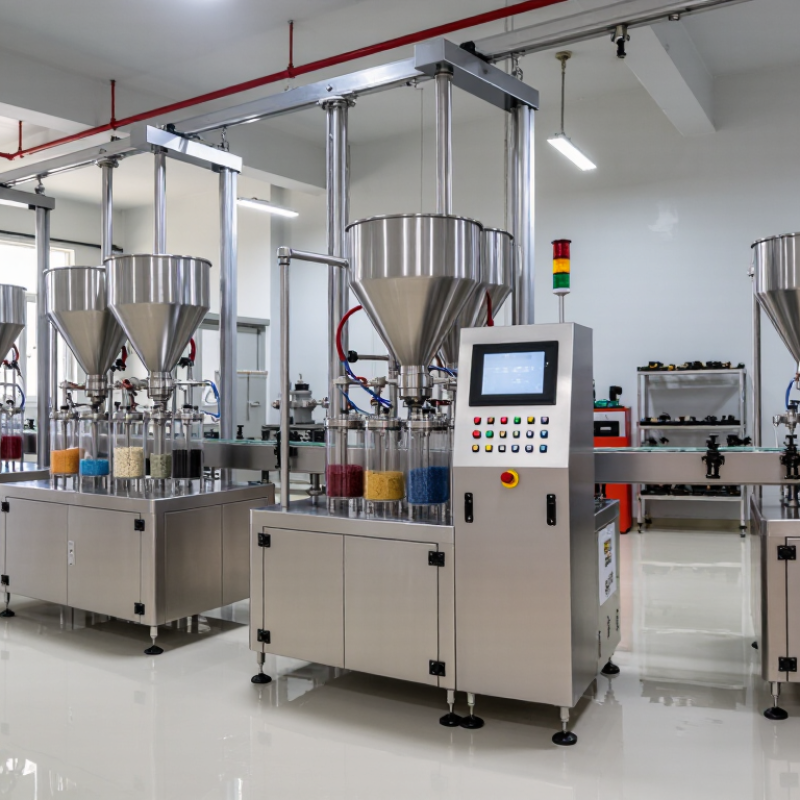
Best Color Dosing Machine Manufacturers in China

What Color Dosing Machines Do and How They Work

Color dosing machines meter concentrated pigment, or masterbatch, into base polymer before extrusion or injection molding. Their job is precise: keep color consistent without wasting concentrate. Plastics Europe’s 2024 report, Plastics – the Fast Facts, estimates that global plastics production reached 413.8 million tonnes in 2023. That scale makes repeatable material control important, although each production line needs its own settings.

A volumetric unit feeds colorant with a rotating screw at a set speed. It is simple, but assumes the material flows evenly. A gravimetric unit uses load cells to track weight loss and adjust feed rate against the resin throughput. In practice, operators set a recipe, check the feeder, then confirm the blend at the machine. The target may be only a small percentage of the resin flow.

Calibration matters. A dusty hopper, bridging pellets, or leftover color in a feed throat can shift the result. Small details count. A feeder can display the right rate while the molded part still shows streaks. That gap is easy to underestimate. Regular weigh checks and trial parts help reveal it, but color matching also depends on resin, temperature, mixing, and lighting during inspection.

Types of Color Dosing Machines Used in Industry

Color dosing machines meter pigments or masterbatch into a polymer stream during production. The main types are volumetric feeders and gravimetric feeders. Volumetric units use a screw or rotating disc to deliver a set volume per cycle. They are often compact and straightforward to operate. However, changing bulk density can affect the actual color dose.

Gravimetric machines measure material by weight, often using load cells or loss-in-weight control. This helps maintain a consistent dosing ratio when resin flow or pigment density varies. In injection molding, a small feeder mounted above the machine may dose color directly into the throat. Extrusion lines can use continuous dosing to keep color steady along a long product run. The setup matters. Poor calibration can still cause streaks.

Liquid color dosing systems pump concentrated color into the resin stream. They can suit processes where liquid pigments disperse well and dust control is a concern. Some plants also use batch dosing equipment for pre-mixing larger quantities before production. Each type has trade-offs in cleaning time, accuracy, throughput, and material compatibility. A practical selection starts with the polymer, required color tolerance, and production rate. Operators should test the dose during a real run; lab settings do not always match the factory floor.

One detail is easy to miss: a feeder may meter accurately while the final color still varies because mixing is uneven.

How to Evaluate Chinese Color Dosing Machine Manufacturers

Best Color Dosing Machine Manufacturers in China

How to Evaluate Chinese Color Dosing Machine Manufacturers

Choosing a supplier requires more than comparing brochure accuracy or quoted cycle time. Ask how accuracy was measured, with which resin and concentrate, and whether the test was repeatable. Request a sample run using your own material. Watch the hopper, screw, and control screen during startup; bridging or unstable feeding can distort a short trial. Keep the test record.

Review engineering fit, not just specifications. Confirm the machine suits your molding or extrusion line, required throughput, and available floor space. Ask for calibration steps, spare-part lead times, wiring diagrams, and support hours. A capable manufacturer should explain how bulk density, pellet shape, or color loading affects dosing. Vague answers matter. So does service.

Look for evidence of quality controls, such as inspection sheets, component traceability, and documented acceptance tests. If possible, speak with a customer whose process resembles yours and ask about downtime after installation. Compare warranty exclusions carefully. Some details hide in plain sight. A factory visit may help, but it cannot replace a witnessed test under realistic conditions. Leave room for doubt: color consistency also depends on material handling, operator habits, and process settings. Put performance limits and test conditions in writing before purchase.

Leading Color Dosing Machine Manufacturers in China

Leading color dosing machine manufacturers in China are best judged by how clearly they handle real production requirements. A reliable supplier should explain dosing accuracy, repeatability, hopper capacity, and compatibility with the customer’s raw materials. Ask how calibration is performed and what happens when pigment flow changes. Consistency matters. Practical demonstrations using similar materials can reveal more than a polished specification sheet.

Manufacturing quality also depends on details such as sealed connections, accessible cleaning points, and stable control settings. Request inspection records, component information, and examples of commissioning support before comparing prices. Ask for evidence. A supplier’s response to a difficult technical question can show how its engineering team works.

Not always. Some differences only become clear after installation, so clarify spare-part availability and troubleshooting procedures in writing. Buyers should check whether the machine fits their line speed and batch size, rather than choosing the largest or most automated model.

Even careful testing has limits: material behavior may vary between trials and full production. A candid manufacturer will discuss those uncertainties instead of promising perfect results.

Applications and Trends in Color Dosing Technology

Best Color Dosing Machine Manufacturers in China

Applications and Trends in Color Dosing Technology

Color dosing systems meter pigments and additives into plastics during injection molding, extrusion, film production, and fiber spinning. Accurate feeding helps maintain shade consistency when resin batches or production speeds change. Plastics Europe’s Plastics—The Fast Facts 2024 reports that global plastics production reached 413.8 million tonnes in 2023, underscoring the scale of processing where repeatable dosing matters. On a factory floor, operators still need to check screw feeding, hopper flow, and calibration; a precise controller cannot fix material bridging.

A clear trend is gravimetric dosing paired with recipe control, which adjusts feed rates as output changes. Systems are also being adapted for recycled feedstock, where bulk density and color can vary. The OECD’s Global Plastics Outlook reports that 353 million tonnes of plastic waste were generated in 2019, and only 9% was ultimately recycled. Better dosing can support more consistent blends, but it cannot remove variation in incoming material. Not a cure-all. Closed-loop checks and regular trials remain important.

Tips: Test the actual pigment and resin together before full production. Record dose settings, line speed, and color readings for each batch. Recheck after material or temperature changes.

Copyright 2025 Fluidra S.A. | Created by BCM Marketing Agencia Privacy Policy Legal note | Cookie policy |

Technical cookies are strictly necessary for our website to work and you can navigate through it. These types of cookies are those that, for example, allow us to identify you, give you access to certain restricted parts of the page if necessary, or remember different options or services already selected by you, such as your privacy preferences. Therefore, they are activated by default, your authorization not being necessary in this regard. Through the configuration of your browser, you can block or alert the presence of this type of cookies, although such blocking will affect the proper functioning of the different functionalities of our website.


The analysis cookies allow us to study the navigation of the users of our website in general (for example, which sections of the page are the most visited, which services are used most and if they work correctly, etc.). From the statistical information on navigation on our website, we can improve both the operation of the page itself and the different services it offers. Therefore, these cookies do not have an advertising purpose, but only serve to make our website work better, adapting to our users in general. By activating them you will contribute to this continuous improvement. You can enable or disable these cookies by checking the corresponding box, being disabled by default.


Functionality cookies allow us to remember your preferences, to personalize certain characteristics and general options of our website, every time you access it (for example, the language in which the information is presented to you, the sections marked as favorites, your browser type, etc.) Therefore, this type of cookies does not have an advertising purpose, but by activating them you will improve the functionality of the website (for example, adapting to your type of browser) and the customization of it based on your preferences (for example, by presenting the information in the language that you have chosen in previous occasions), which will contribute to the ease, usability and comfort of our page during your navigation. You can enable or disable these cookies by checking the corresponding box, being disabled by default.


Advertising cookies allow us to manage the advertising spaces included in our website based on criteria such as the content shown or the frequency in which the ads are displayed. For example, if you have been shown the same ad several times on our website, and you have not shown a personal interest by clicking on it, it will not appear again. In summary, by activating this type of cookies, the advertising shown on our website will be more useful and diverse, and less repetitive. You can enable or disable these cookies by checking the corresponding box, being disabled by default.


Behavioral advertising cookies allow us to obtain information based on the observation of your browsing habits and behaviors on the web, in order to show you advertising content that best suits your personal tastes and interests. To understand it in a very simple way, we will give you a fictitious example: if your last searches on the web were related to suspense literature, we would show you advertising about suspense books. Therefore, activating this type of cookies, the advertising that we show you on our website will not be generic, but will be oriented to your searches, tastes and interests, therefore adjusting exclusively to you. You can enable or disable these cookies by checking the corresponding box, being disabled by default.
To understand it in a very simple way, we will give you a fictitious example: if your last searches on the web were related to suspense literature, we would show you advertising about suspense books. Therefore, activating this type of cookies, the advertising that we show you on our website will not be generic, but will be oriented to your searches, tastes and interests, therefore adjusting exclusively to you. You can enable or disable these cookies by checking the corresponding box, being disabled by default.

SAVE

We use our own and third-party cookies to ensure the proper functioning of the website and to analyse our services, improve your experience on our website and show you advertisements related to your interests according to profiling based on your browsing habits (e.g. websites visited). You can accept all cookies by clicking "ACCEPT" or set or reject them by clicking here. If you would like to know more about the use of cookies, please see our COOKIE POLICY.


ACCEPT ALL
Reject no essentials


