
What Are the Best CNC Metal Parts Suppliers in 2026?
FLUID HANDLING EXPERTS

Blog, all our news

What Are the Best CNC Metal Parts Suppliers in 2026?

Choosing the best Cnc Metal Parts suppliers in 2026 takes more than comparing hourly rates. A bright aluminum housing may look flawless, yet hide burrs around a threaded hole or drift beyond its tolerance after anodizing. Strong suppliers explain how they control these details. They share inspection plans, material certifications, machining capabilities, and realistic lead times. Ask for evidence, not polished promises.

Quality expert W. Edwards Deming wrote, “Quality comes not from inspection, but from improvement of the production process.” That principle matters when comparing CNC shops. Look for clear process controls, calibrated measuring equipment, and documented responses to nonconforming parts. Also check whether the supplier can handle your specific alloy, part geometry, order volume, and finishing needs. A shop suited to a prototype may struggle with repeat production. And a low quote can leave out tooling, finishing, or inspection costs.

Details matter. A lot. This guide compares suppliers using practical criteria: machining range, quality systems, communication, delivery performance, and total cost. It also considers what buyers can verify before placing an order, from sample-part measurements to production documentation. No supplier is perfect, and a website alone cannot prove consistent performance. Treat rankings as a starting point, then confirm capabilities against your drawings and requirements.
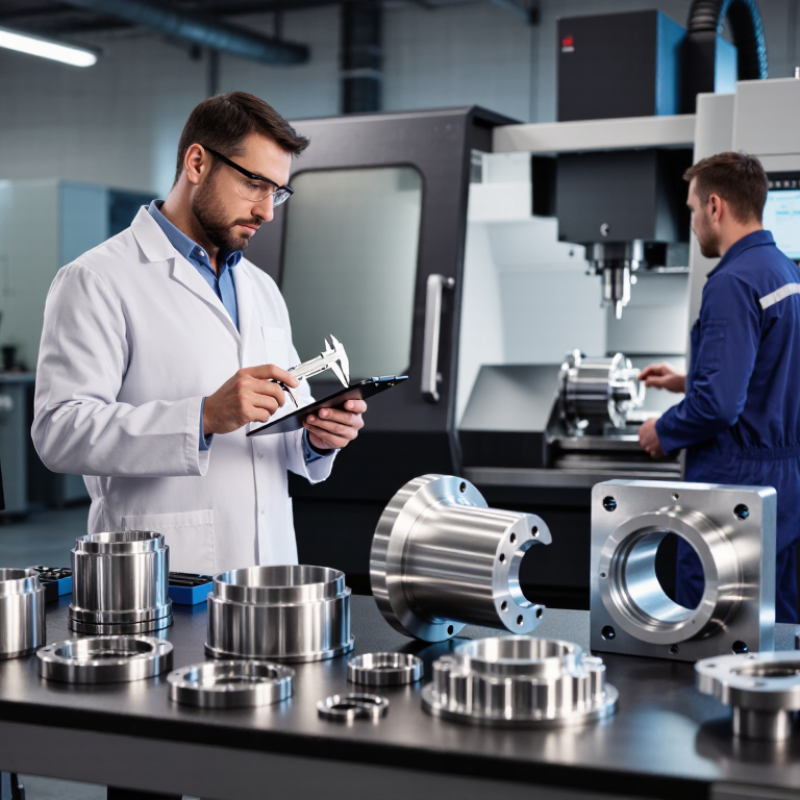
What Are the Best CNC Metal Parts Suppliers in 2026?

What CNC Metal Parts Suppliers Do

CNC metal parts suppliers turn engineering drawings into inspected components. Their work often starts with design-for-manufacturing feedback: checking tolerances, hole access, wall thickness, and tool paths before cutting begins. They source metals such as aluminum, stainless steel, or brass, then use milling or turning to shape stock. A capable supplier also manages deburring, surface finishing, dimensional checks, and packaging. Small details matter. A sharp internal corner may need redesign because a cutting tool cannot reach it cleanly.

Supplier quality is more than a polished sample. Buyers should ask how the supplier verifies critical dimensions, records material grades, and handles out-of-spec parts. Inspection may involve calipers, micrometers, or coordinate-measuring machines, depending on the tolerance and part geometry. Grand View Research estimated the global CNC machine market at about US$101.22 billion in 2024. That figure describes equipment-market scale, not supplier performance; it is useful context, not proof of quality.

Suppliers may also coordinate prototypes, production batches, secondary operations, and shipping schedules. Clear feedback matters when a drawing leaves a feature ambiguous. A supplier can flag the risk, but the customer still needs to approve design changes. Even a tidy CAD model can hide a practical problem. That is easy to overlook. Ask for inspection records and a first-article review when dimensions are critical, while recognizing that documentation alone cannot replace sound process control.

What CNC Metal Parts Suppliers Do: Common Metals by Density

CNC metal parts suppliers machine a range of metals to make components for different applications. This chart compares the approximate densities of common CNC materials; actual values vary slightly by alloy and specification.

Approximate typical densities at room temperature. Density is one material property to consider when selecting a metal; it does not indicate supplier quality or machining capability.

How CNC Machining Produces Metal Components

CNC machining produces metal components by removing material from a solid workpiece. The process begins with a CAD model that defines dimensions, holes, slots, and curved surfaces. CAM software converts that geometry into toolpaths and machine instructions. An operator then secures the metal blank, selects cutting tools, and checks the setup. Small details matter. A poorly clamped part can shift during cutting and affect its final dimensions.

During milling, rotating cutters remove material as the workpiece or tool moves along programmed axes. Turning uses a spinning workpiece and a fixed cutting tool, making it suitable for cylindrical parts such as shafts and bushings. Cutting speed, feed rate, and tool choice vary with the metal. Aluminum often cuts differently from stainless steel. Coolant can reduce heat and help clear chips, but it does not fix every setup problem. Tool wear still needs attention.

After machining, technicians may deburr edges, clean the part, and inspect critical features with gauges or coordinate-measuring equipment. A hole can look correct yet fall outside its tolerance. That is why inspection plans should identify which dimensions matter most and how they will be measured. A reliable supplier can share material records, inspection results, and details about its machining process. Even then, drawings sometimes leave room for interpretation; clarifying those points before production can prevent avoidable rework.

Which Capabilities Matter When Comparing Suppliers

When comparing CNC metal parts suppliers in 2026, start with the drawing, not the machine list. A five-axis mill sounds impressive, but it matters only if it can meet your geometry and tolerance requirements. Ask for sample inspection reports showing actual measurements, datum references, and measurement equipment. For a bracket with a 0.02 mm bore tolerance, request evidence from a comparable job. Small detail, big signal. Confirm which alloys the shop routinely cuts, how it monitors tool wear, and whether material certificates follow each lot. A polished capability sheet is not proof.

Look beyond machining. Reliable suppliers explain design-for-manufacturing changes, deburring, finishing, and packaging before quoting. Ask how they handle first-article approval, nonconforming parts, and repeat orders; clear records make revisions easier. Can the supplier move from ten prototypes to several hundred parts without changing inspection frequency? Request lead-time assumptions and a realistic plan for busy periods. Communication matters, too. A capable engineer will flag a thin wall or awkward setup early, even if that complicates the quote. No shop is perfect, and a quick sample does not guarantee a smooth production run. It is easy to overlook who reviews the inspection records until a measurement needs explaining.

How to Assess Quality, Lead Times, and Total Cost

A reliable CNC metal parts supplier should prove quality with records, not broad promises. Ask for a sample inspection report showing measured dimensions against your drawing, including critical hole locations and flatness. Confirm how material grade is verified and whether the supplier can share traceability documents. For a new part, a first-article inspection can reveal drawing issues before the full batch runs. Small details matter. A polished sample alone cannot show how consistently a supplier will hold tolerances across hundreds of parts.

Lead times deserve the same scrutiny. Request separate estimates for engineering review, material procurement, machining, finishing, inspection, and shipping. Ask what could delay each stage, especially for unusual alloys or tight tolerances. A quoted date is useful only when the supplier explains its assumptions. Get updates at agreed milestones, and clarify how schedule changes are handled. I have seen short estimates look attractive until finishing or inspection was treated as an afterthought.

Compare total cost, not just the unit price. Include setup charges, tooling, finishing, packaging, freight, and any inspection fees. Check whether the quote assumes one production run or several releases. A low price may also reflect looser inspection, so match the quote to your actual drawing requirements. That adds up. Leave room for uncertainty; early estimates can miss small costs, and buyers should challenge them before approving production.

How to Choose a CNC Metal Parts Supplier in 2026

Choosing a CNC metal parts supplier in 2026 starts with the part, not the price. Share a clear drawing, material grade, annual volume, and critical dimensions. A polished quote can still hide assumptions. Ask which tolerances are routine and which require extra setups or inspection. For a machined aluminum housing, for example, confirm how the supplier will check the bore and flatness. Good records matter.

Review the supplier’s quality process before approving production. Request sample inspection reports and ask how measuring tools are calibrated. Check whether material certificates can be traced to the delivered batch. If the part is safety-critical, agree on inspection criteria and acceptance limits in writing. Small gaps in documentation can create large delays.

Then evaluate communication and production fit. Can the team explain a tool-access issue or suggest a simpler feature without changing function? Ask about lead times for prototypes and repeat orders, plus how schedule changes are handled. A low quote may omit finishing, packaging, or inspection costs. Compare the full scope, not just the unit price. And trust the details. One awkward question now is better than a box of unusable parts later.

Copyright 2025 Fluidra S.A. | Created by BCM Marketing Agencia Privacy Policy Legal note | Cookie policy |

Technical cookies are strictly necessary for our website to work and you can navigate through it. These types of cookies are those that, for example, allow us to identify you, give you access to certain restricted parts of the page if necessary, or remember different options or services already selected by you, such as your privacy preferences. Therefore, they are activated by default, your authorization not being necessary in this regard. Through the configuration of your browser, you can block or alert the presence of this type of cookies, although such blocking will affect the proper functioning of the different functionalities of our website.


The analysis cookies allow us to study the navigation of the users of our website in general (for example, which sections of the page are the most visited, which services are used most and if they work correctly, etc.). From the statistical information on navigation on our website, we can improve both the operation of the page itself and the different services it offers. Therefore, these cookies do not have an advertising purpose, but only serve to make our website work better, adapting to our users in general. By activating them you will contribute to this continuous improvement. You can enable or disable these cookies by checking the corresponding box, being disabled by default.


Functionality cookies allow us to remember your preferences, to personalize certain characteristics and general options of our website, every time you access it (for example, the language in which the information is presented to you, the sections marked as favorites, your browser type, etc.) Therefore, this type of cookies does not have an advertising purpose, but by activating them you will improve the functionality of the website (for example, adapting to your type of browser) and the customization of it based on your preferences (for example, by presenting the information in the language that you have chosen in previous occasions), which will contribute to the ease, usability and comfort of our page during your navigation. You can enable or disable these cookies by checking the corresponding box, being disabled by default.


Advertising cookies allow us to manage the advertising spaces included in our website based on criteria such as the content shown or the frequency in which the ads are displayed. For example, if you have been shown the same ad several times on our website, and you have not shown a personal interest by clicking on it, it will not appear again. In summary, by activating this type of cookies, the advertising shown on our website will be more useful and diverse, and less repetitive. You can enable or disable these cookies by checking the corresponding box, being disabled by default.


Behavioral advertising cookies allow us to obtain information based on the observation of your browsing habits and behaviors on the web, in order to show you advertising content that best suits your personal tastes and interests. To understand it in a very simple way, we will give you a fictitious example: if your last searches on the web were related to suspense literature, we would show you advertising about suspense books. Therefore, activating this type of cookies, the advertising that we show you on our website will not be generic, but will be oriented to your searches, tastes and interests, therefore adjusting exclusively to you. You can enable or disable these cookies by checking the corresponding box, being disabled by default.
To understand it in a very simple way, we will give you a fictitious example: if your last searches on the web were related to suspense literature, we would show you advertising about suspense books. Therefore, activating this type of cookies, the advertising that we show you on our website will not be generic, but will be oriented to your searches, tastes and interests, therefore adjusting exclusively to you. You can enable or disable these cookies by checking the corresponding box, being disabled by default.

SAVE

We use our own and third-party cookies to ensure the proper functioning of the website and to analyse our services, improve your experience on our website and show you advertisements related to your interests according to profiling based on your browsing habits (e.g. websites visited). You can accept all cookies by clicking "ACCEPT" or set or reject them by clicking here. If you would like to know more about the use of cookies, please see our COOKIE POLICY.


ACCEPT ALL
Reject no essentials


