
How to Find the Best CNC Custom Machining in China?
FLUID HANDLING EXPERTS

Blog, all our news

How to Find the Best CNC Custom Machining in China?

Finding the right Cnc Custom Machining partner in China takes more than comparing prices. A large manufacturing base creates many options, but it also makes supplier evaluation essential. The World Bank’s World Development Indicators report that manufacturing value added accounted for about 26.2% of China’s GDP in 2023. That figure describes the country’s industrial scale, not the quality of any individual machine shop. Keep that distinction in mind.

Taiichi Ohno, a Toyota production engineer and lean-manufacturing pioneer, is often quoted as saying, “Without standards, there can be no improvement.” The principle applies to custom machining: ask how a supplier controls dimensions, materials, and inspection records. Request a sample inspection report, material traceability documents, and clear answers about achievable tolerances. A polished website is not enough. A sample part can reveal burrs, surface marks, or fit issues that a sales conversation may miss.

This guide focuses on practical checks for comparing Chinese suppliers, from drawing review and communication to quality systems, lead times, and shipping plans. Look for evidence, not promises. If a shop cannot explain how it measures a critical feature, pause and ask again. I would not treat any single certificate or low quote as a guarantee; real confidence comes from consistent process records and a well-defined trial order. The right partner should make technical risks easier to see, not harder.
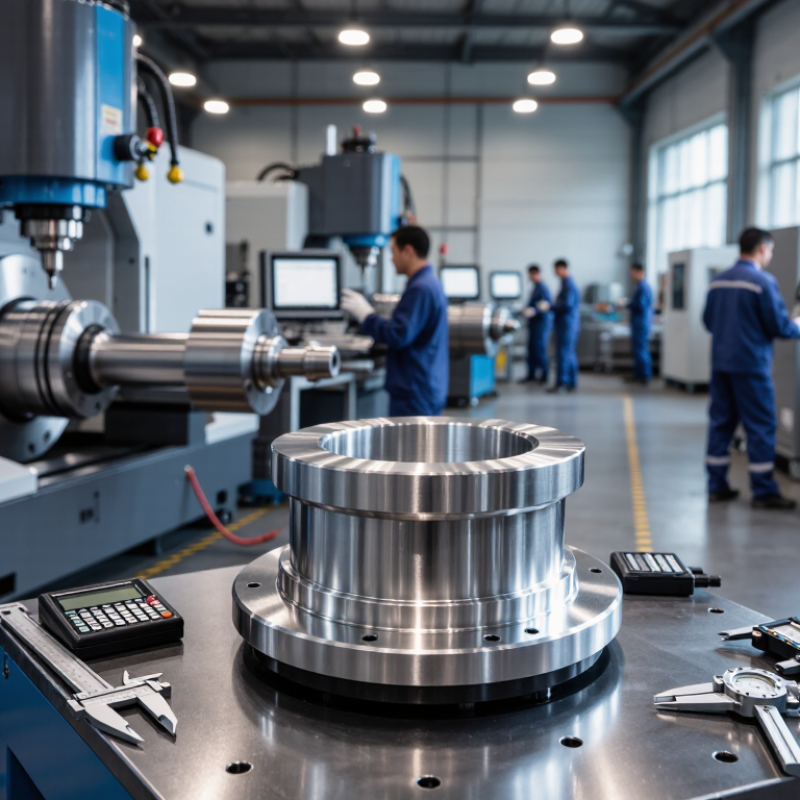
How to Find the Best CNC Custom Machining in China?

Define the Part: Material, Tolerances, Finish, Volume, and ISO 2768 Class

A useful CNC quote starts with a clear part definition, not a vague drawing. Name the material and grade, then note whether stock condition or grain direction matters. A 6061 aluminum bracket may need a different setup from a stainless-steel sensor mount. Specify critical dimensions, datums, and tolerances on the drawing. Keep noncritical features practical; overly tight tolerances can add machining and inspection time. Small details matter.

Describe surface finish with a measurable target, such as Ra, and identify areas that must remain untouched. State the expected quantity, including prototype and repeat-order volumes. Setup costs are spread differently across ten parts and ten thousand. Choose an ISO 2768 class for untoleranced dimensions, but do not use it instead of explicit tolerances on fit-critical features. Confirm that the supplier understands the class and drawing revision. Even a careful drawing may leave an edge break unclear; that is easy to overlook.

Tips: Send a 3D model with a dimensioned drawing. Mark threads, edge breaks, finish zones, and inspection points. Keep it measurable. Ask which dimensions will receive documented inspection. If a tolerance is uncertain, flag it for review rather than guessing. A little ambiguity can become scrap.

How to Find the Best CNC Custom Machining in China?

Define the Part: Material, Tolerances, Finish, Volume, and ISO 2768 Class

ISO 2768-1 specifies general tolerances for untoleranced linear dimensions. This chart shows the permitted deviations, in millimetres, for classes f (fine), m (medium), c (coarse), and v (very coarse). Use specific drawing tolerances where a feature requires tighter control; tolerance class alone does not define material, surface finish, or production volume.

Verify Quality Systems: ISO 9001:2015 Certification and Process Controls

How to Find the Best CNC Custom Machining in China?

Verify Quality Systems: ISO 9001:2015 Certification and Process Controls

An ISO 9001:2015 certificate is a useful starting point, not a guarantee of flawless parts. The ISO Survey 2022 reported more than 1.2 million valid ISO 9001 certificates across 189 countries and economies. That scale shows how widely the standard is used; it does not show how well a specific machine shop controls tolerances. Ask to see the certificate’s scope, site address, expiry date, and issuing body. Confirm that CNC machining is covered, not just an unrelated office or trading operation.

Then look at the work behind the paperwork. For a precision shaft, ask how the shop controls material batches, tool wear, drawing revisions, and measurement equipment. Request a sample inspection report with actual dimensions and tolerances, not only a blank form. Check whether operators record first-piece results and how supervisors respond when measurements drift. Traceability matters. A part number should lead back to its material lot and inspection records.

A polished manual can hide weak daily habits. Paper is not proof. Ask how nonconforming parts are isolated and whether corrective actions are checked for effectiveness. If possible, compare records from different production dates and review a sample part independently. I would still treat a certificate as one piece of evidence; even a strong system can miss a problem, especially after a drawing change or rushed setup.

Assess Machine Capability: 3-, 4-, and 5-Axis Machining for Complex Parts

When sourcing custom machining in China, match the machine’s axes to the part’s geometry, not just its advertised capabilities. A three-axis mill suits flat plates, pockets, and features accessible from above. Each additional side may require repositioning, which can introduce alignment errors and add setup time. Ask how the shop locates the part after each move.

A clear datum plan matters.

Small holes on several faces, for example, may need careful probing to stay aligned.

Four-axis machining adds rotation, helping produce features around a part’s circumference with fewer setups. Five-axis machines can tilt and rotate the tool or workpiece, reaching angled surfaces and compound shapes. This can reduce handling, but it does not guarantee tighter tolerances or lower cost. More axes also demand sound programming, stable workholding, and suitable inspection.

Request a proposed setup plan for your actual drawing, including critical dimensions and surface finishes. Ask how those features will be measured after machining. A polished capability sheet is not enough.

Even an experienced supplier may need to revise its approach when thin walls flex or a tool cannot reach a deep corner.

The useful question is not “How many axes?” but “How will this geometry be made and verified?”

Review Inspection Data: First-Article Reports and Cpk ≥ 1.33 for Key Features

A first-article inspection report should connect measured parts to the exact drawing revision and material specification. Check that it lists actual readings, nominal dimensions, tolerances, inspection date, and measurement equipment. For a machined aluminum housing, the report might show bore diameter, hole spacing, and flatness—not just a pass stamp. Small details matter. Missing units or unclear feature numbers make results hard to verify.

Cpk ≥ 1.33 is a useful capability target for critical features, but it needs context. Cpk compares process variation with specification limits, and its value is meaningful only when the process is reasonably stable and the data are collected consistently. Ask how many parts were measured, when they were sampled, and whether the readings represent normal production. A single strong result does not prove every batch will perform the same way.

Review the raw readings alongside the summary. If a bore is close to its upper tolerance, check whether tool wear or temperature could shift later parts. Cpk does not replace dimensional inspection or clear acceptance criteria. A tidy report can still leave questions unanswered. Request clarification when sample size, calibration status, or feature selection is missing; that small follow-up may reveal whether the supplier understands the process or simply knows how to format a report.

Compare Total Cost and Delivery: Tooling, Lead Time, Shipping, and Risk

A low unit price can hide expensive tooling or slow delivery. Compare the full cost of getting accepted parts to your door, not just the machining line. Ask whether the quote includes fixtures, cutting tools, setup, inspection gauges, and first-article checks. Clarify who owns custom tooling and what replacement costs might look like. Small omissions add up.

Lead time should start from a defined event, such as drawing approval or deposit receipt. Request separate dates for material sourcing, machining, inspection, and dispatch. A four-week promise means little if it excludes queue time or rework. Ask about capacity, especially for tight tolerances or special finishes. Even then, estimates can shift.

Shipping changes the calculation. Compare air and sea freight, insurance, customs handling, packaging, and delivery to your facility. Heavy parts may need a sturdy crate; machined faces need caps and corrosion protection. Check how defects, shortages, and transit damage are handled, including replacement costs. Keep a buffer for a late shipment. It may feel overly cautious, but a spreadsheet cannot predict every delay.

How to Find the Best CNC Custom Machining in China? — Compare Total Cost and Delivery: Tooling, Lead Time, Shipping, and Risk

Use these indicative planning ranges to compare quotes, not as guaranteed service levels. Actual cost and timing depend on part geometry, material, tolerances, finish, order quantity, destination, and customs processing. Request a dated, part-specific quote.

Comparison Factor Typical Planning Range or Basis What to Include in the Comparison Questions to Verify
CNC setup and programming Usually quoted as a one-time setup, programming, or fixture charge; there is no universal rate. Standard CNC work generally does not require dedicated production molds. Separate one-time charges from the per-part price. Check whether setup costs are repeated for revisions or later batches. Are CAM programming, workholding, first-article inspection, and setup included? Who owns any custom fixture?
Material and machining Quoted per part or batch. Material grade, stock size, machining time, part complexity, and order quantity are major cost drivers. Compare quotes using the same drawing revision, material specification, quantity, tolerances, and finish requirements. Will the supplier provide material certificates when required? Are scrap, deburring, and secondary operations included?
Sampling and first article Allow roughly 1–3 weeks for a typical first sample after drawings and specifications are approved; complex parts or outside processes may take longer. Include sample charges, inspection, shipping, and the time needed for approval and any correction cycle. Will production wait for written sample approval? What inspection report and measurement method will be supplied?
Production lead time A common planning allowance is about 2–4 weeks after approval for a straightforward batch; complex parts, special materials, and finishing can extend this. Confirm the start point of the quoted lead time and whether it covers machining, finishing, inspection, and packing. Is the schedule based on available material and confirmed machine capacity? How are delays communicated?
Air shipping International transit is often planned at approximately 3–10 business days, before allowing for customs clearance or local delivery. Compare the carrier quote using shipment weight, dimensions, destination, service level, fuel surcharges, and delivery terms. Is the quote express courier or air freight? Who pays duties, taxes, brokerage, and any remote-area charges?
Sea shipping Port-to-port transit is commonly planned at approximately 20–40 days on many international routes; port handling, customs, and inland delivery add time. Check whether the shipment is less-than-container-load or full-container-load and include origin, destination, handling, and delivery charges. Is the quoted transit port-to-port or door-to-door? What are the estimated port and customs handling times?
Quality and specification risk No universal cost or time allowance applies. Risk depends on tolerance difficulty, material traceability, inspection coverage, and process control. Price the required inspection level and define acceptance criteria before production; include the cost and schedule impact of rework or replacement. Can the supplier provide a first-article report, material records, and agreed dimensional inspection results?
Communication and change risk Allow time for drawing clarification, revision approval, and written confirmation of changes; unclear specifications can create rework and schedule delays. Use one controlled drawing revision and document tolerances, datums, surface finish, packaging, and inspection requirements. Who approves engineering changes, and will changes be confirmed in writing before machining continues?
Landed-cost comparison Calculate for the same quantity and delivery destination; a low unit price alone does not show the full purchase cost. Include parts, setup, finishing, inspection, packaging, freight, insurance if needed, duties, taxes, brokerage, and expected rework exposure. Are the Incoterms, named place, currency, quote validity, payment terms, and all exclusions clearly stated?
Compare total landed cost: part price + setup and finishing + inspection and packaging + freight and insurance + duties, taxes, and brokerage + expected quality-related costs. Compare the total delivery timeline separately, from drawing approval through delivery to your door.
Copyright 2025 Fluidra S.A. | Created by BCM Marketing Agencia Privacy Policy Legal note | Cookie policy |

Technical cookies are strictly necessary for our website to work and you can navigate through it. These types of cookies are those that, for example, allow us to identify you, give you access to certain restricted parts of the page if necessary, or remember different options or services already selected by you, such as your privacy preferences. Therefore, they are activated by default, your authorization not being necessary in this regard. Through the configuration of your browser, you can block or alert the presence of this type of cookies, although such blocking will affect the proper functioning of the different functionalities of our website.


The analysis cookies allow us to study the navigation of the users of our website in general (for example, which sections of the page are the most visited, which services are used most and if they work correctly, etc.). From the statistical information on navigation on our website, we can improve both the operation of the page itself and the different services it offers. Therefore, these cookies do not have an advertising purpose, but only serve to make our website work better, adapting to our users in general. By activating them you will contribute to this continuous improvement. You can enable or disable these cookies by checking the corresponding box, being disabled by default.


Functionality cookies allow us to remember your preferences, to personalize certain characteristics and general options of our website, every time you access it (for example, the language in which the information is presented to you, the sections marked as favorites, your browser type, etc.) Therefore, this type of cookies does not have an advertising purpose, but by activating them you will improve the functionality of the website (for example, adapting to your type of browser) and the customization of it based on your preferences (for example, by presenting the information in the language that you have chosen in previous occasions), which will contribute to the ease, usability and comfort of our page during your navigation. You can enable or disable these cookies by checking the corresponding box, being disabled by default.


Advertising cookies allow us to manage the advertising spaces included in our website based on criteria such as the content shown or the frequency in which the ads are displayed. For example, if you have been shown the same ad several times on our website, and you have not shown a personal interest by clicking on it, it will not appear again. In summary, by activating this type of cookies, the advertising shown on our website will be more useful and diverse, and less repetitive. You can enable or disable these cookies by checking the corresponding box, being disabled by default.


Behavioral advertising cookies allow us to obtain information based on the observation of your browsing habits and behaviors on the web, in order to show you advertising content that best suits your personal tastes and interests. To understand it in a very simple way, we will give you a fictitious example: if your last searches on the web were related to suspense literature, we would show you advertising about suspense books. Therefore, activating this type of cookies, the advertising that we show you on our website will not be generic, but will be oriented to your searches, tastes and interests, therefore adjusting exclusively to you. You can enable or disable these cookies by checking the corresponding box, being disabled by default.
To understand it in a very simple way, we will give you a fictitious example: if your last searches on the web were related to suspense literature, we would show you advertising about suspense books. Therefore, activating this type of cookies, the advertising that we show you on our website will not be generic, but will be oriented to your searches, tastes and interests, therefore adjusting exclusively to you. You can enable or disable these cookies by checking the corresponding box, being disabled by default.

SAVE

We use our own and third-party cookies to ensure the proper functioning of the website and to analyse our services, improve your experience on our website and show you advertisements related to your interests according to profiling based on your browsing habits (e.g. websites visited). You can accept all cookies by clicking "ACCEPT" or set or reject them by clicking here. If you would like to know more about the use of cookies, please see our COOKIE POLICY.


ACCEPT ALL
Reject no essentials


