
China Best Mini Final Drive Supplier for Global Buyers?
FLUID HANDLING EXPERTS

Blog, all our news

China Best Mini Final Drive Supplier for Global Buyers?

Choosing the China best Mini Final Drive supplier for global buyers requires more than comparing online prices. A reliable supplier must prove engineering capability, production consistency, and after-sales responsibility. The right unit should match the excavator’s weight, hydraulic flow, pressure, travel speed, and mounting dimensions.

Dr. Manfred Ivantysyn, a recognized expert in hydrostatic transmissions, stated, “Efficiency, reliability, and controllability must be considered together.” This principle applies directly to every Mini Final Drive selection. A compact drive may look suitable in a catalogue, yet poor torque matching can cause overheating, weak travel performance, or premature gear wear. Small details matter. Inspect the planetary gears, shaft seals, bearing arrangement, hydraulic motor, and brake system. Ask for load-test records, dimensional drawings, material information, and operating limits. Factory photographs are useful, but they are not enough.

Experienced buyers should also review communication speed, spare-parts availability, warranty terms, and export packaging. A supplier that answers technical questions clearly usually offers stronger project support. Still, no supplier is perfect. Even an established Chinese manufacturer may deliver inconsistent quality without strict inspection procedures. This point deserves attention.

A credible Mini Final Drive manufacturer should explain its tolerances, testing methods, and corrective actions openly. Independent verification can reduce uncertainty. Samples should be tested under realistic working conditions, including muddy sites, repeated starts, and long travel cycles. The best choice is not always the lowest quotation. It is the supplier that combines verified performance, transparent documentation, and dependable support after delivery.
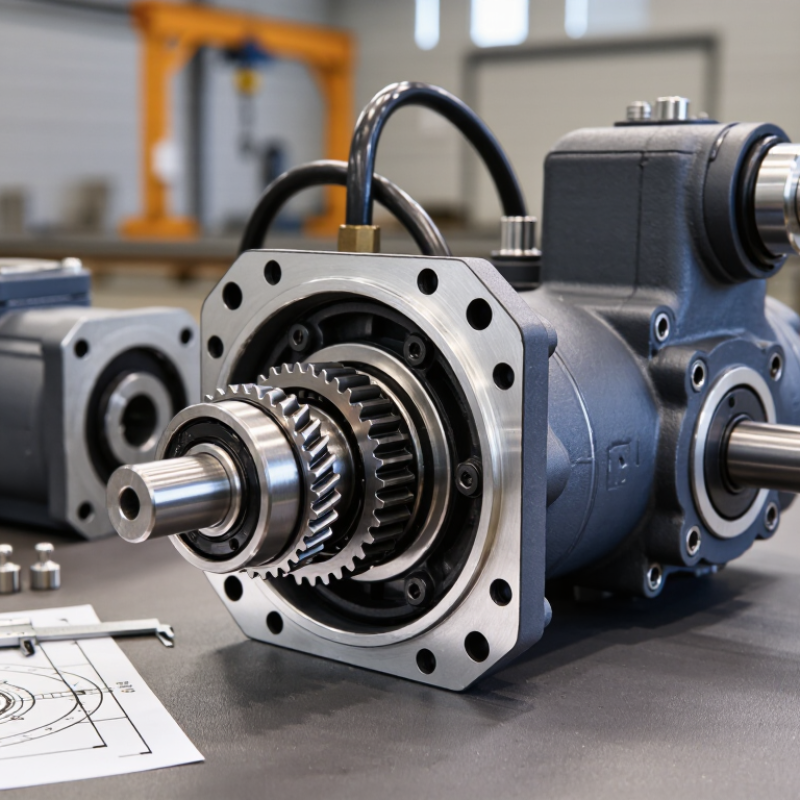
China Best Mini Final Drive Supplier for Global Buyers?

Mini Final Drive Basics: Planetary Gears, Hydraulic Motors, and 80–350 bar

A mini final drive combines a hydraulic motor with a compact planetary gearbox. The hydraulic motor converts oil flow into rotary motion. The planetary stage then multiplies torque inside a short, strong housing. Sun, planet, and ring gears share the load more evenly than a simple gear pair. This design suits mini excavators, tracked carriers, and compact construction equipment. I have found that alignment and bearing support often matter as much as rated torque. Small housing, serious load.

The typical hydraulic range is about 80–350 bar, but pressure alone cannot define performance. At 80 bar, the drive may deliver smooth movement with modest torque. Near 350 bar, heat, sealing, and gear stress become much more demanding. Actual selection depends on motor displacement, oil flow, duty cycle, and reduction ratio. Pressure is not everything. Flow determines speed, while displacement strongly affects torque. A correctly sized case drain can also protect the motor during continuous operation. Poor oil cleanliness remains an easy way to shorten service life.

Reliable evaluation requires more than a catalog rating. Check continuous pressure, peak pressure, allowable flow, thermal limits, and mounting dimensions. Ask for test conditions, not only maximum figures. I once treated peak pressure as a working rating. The result was excessive heat during repeated travel cycles. That mistake was expensive. Suppliers should explain filtration requirements, recommended oil viscosity, and inspection intervals clearly. Clear test data matters. A practical trial under real load can reveal vibration, leakage, and slow speed control before shipment.

China Best Mini Final Drive Supplier for Global Buyers? - Mini Final Drive Basics: Planetary Gears, Hydraulic Motors, and 80–350 bar
System Element Primary Function Typical Technical Range Hydraulic Pressure Output Characteristics Common Applications Buyer Selection Considerations
Hydraulic Motor Converts hydraulic flow and pressure into rotary motion for the planetary reduction stage. Displacement: approximately 8–80 cm³/rev for compact track and wheel-drive units; speed commonly 20–300 rpm after reduction. 80–350 bar
Continuous and peak ratings vary by motor design.
High starting torque, reversible rotation, and controllable speed through hydraulic flow. Mini excavators, tracked carriers, compact drilling equipment, access platforms, and small agricultural machines. Match displacement, rated pressure, flow requirement, shaft configuration, and mounting interface with the hydraulic circuit.
Planetary Gear Set Reduces motor speed while multiplying torque in a compact and coaxial arrangement. Typical reduction ratios: 4:1–100:1, often achieved with one to three planetary stages. Indirectly exposed to hydraulic pressure through motor-generated torque; gear rating must exceed the required output load. High torque density, balanced load distribution, and compact packaging. Final drives, winches, slewing mechanisms, conveyors, and compact mobile machinery. Check ratio, allowable radial load, peak torque, shock-load capacity, gear material, and heat-treatment method.
Sun Gear Transfers input torque from the hydraulic motor into the planetary gears. Usually manufactured from alloy steel with hardened or carburized tooth surfaces. Not pressure-rated independently; torque capacity is determined by gear geometry and material strength. Influences starting torque capacity, noise level, and overall gear-train durability. All planetary final-drive assemblies. Confirm tooth profile, surface hardness, backlash control, and compatibility with the motor output shaft.
Planet Gears and Carrier Share transmitted torque across multiple gears and deliver reduced-speed output through the carrier. Commonly three or four planet gears per stage; forged or machined steel carriers are widely used. Torque and bearing loads increase as hydraulic pressure and motor displacement rise. Improves load sharing and enables a shorter, higher-capacity drive package. Track drives, compact wheel drives, crawler equipment, and low-speed hydraulic power units. Evaluate planet-pin diameter, bearing support, carrier stiffness, load sharing, and serviceability.
Ring Gear Provides the internal gear teeth that guide the planetary gears and complete the reduction stage. Typically uses internal spur or helical teeth; housing-integrated or separately mounted designs are common. Pressure is converted into mechanical tooth load through the motor and reduction stages. Controls gear-stage strength, noise, efficiency, and housing compactness. Compact final drives, crawler undercarriages, and hydraulic travel systems. Inspect internal tooth hardness, concentricity, mounting accuracy, and resistance to impact loading.
Output Shaft or Hub Transmits final reduced torque to a sprocket, wheel hub, drum, or other driven component. Output speed commonly 10–150 rpm; torque may range from approximately 500 to 20,000 N·m in mini and compact equipment. Mechanical output is governed by motor displacement, pressure differential, gear ratio, and efficiency. Low speed with high usable torque and controlled directional operation. Rubber tracks, steel tracks, wheels, augers, winch drums, and compact conveyors. Specify shaft or flange dimensions, bolt pattern, maximum radial and axial loads, and required brake interface.
Multi-Disc Parking Brake Holds the machine when hydraulic pressure is removed and may provide emergency stopping depending on system design. Usually spring-applied and hydraulically released; holding capacity depends on disc count and friction design. Release pressure is commonly much lower than the main motor working pressure, often around 15–35 bar. Fail-safe holding function during parking, transport, or hydraulic power loss. Mini excavators, tracked carriers, aerial work platforms, and mobile drilling machines. Confirm static holding torque, release pressure, brake-release circuit, residual pressure limits, and thermal requirements.
Housing, Bearings, and Seals Supports rotating components, retains lubricant, protects the gear train, and resists external contamination. Common housing materials include ductile iron or high-strength cast steel; oil-bath lubrication is widely used. Hydraulic ports and internal seals must withstand the specified motor pressure and case-drain conditions. Determines leakage resistance, bearing life, heat dissipation, and protection from water or dust. Outdoor construction, mining support, agricultural, forestry, and material-handling equipment. Check sealing arrangement, ingress protection, bearing rating, lubricant specification, drain-port position, and operating temperature.
Hydraulic Circuit Requirements Supplies clean hydraulic oil at the required flow and pressure while managing direction, braking, and case drainage. Filtration commonly targets approximately ISO 4406 18/16/13 or cleaner, subject to the motor manufacturer’s specification. System operating range may be 80–350 bar; relief-valve settings must protect the complete drive. Flow controls speed; pressure differential controls available torque. Open-circuit and closed-circuit mobile hydraulic systems. Verify pump flow, relief settings, return-line back pressure, oil viscosity, filtration, flushing procedure, and hose sizing.
Performance and Efficiency Describes how effectively hydraulic input is converted into mechanical output under operating load. Overall mechanical-hydraulic efficiency is commonly about 65–90%, depending on speed, pressure, ratio, temperature, and wear. Higher pressure can increase torque but also raises heat generation and component stress. Actual output torque is lower than theoretical torque because of volumetric, mechanical, and gear losses. Duty-cycle-sensitive mobile equipment and compact industrial machinery. Use continuous and intermittent ratings separately; allow margin for shock loads, incline operation, and high ambient temperature.
Maintenance and Installation Preserves gear, bearing, seal, and motor life throughout the service interval. Typical checks include oil level, leakage, mounting bolts, hose condition, contamination, and operating temperature. Depressurize the hydraulic system before installation, removal, inspection, or hose maintenance. Correct alignment and clean oil reduce noise, heat, wear, and premature failure. All mobile and compact hydraulic-drive equipment. Follow the specified oil grade, break-in procedure, tightening torque, flushing method, storage conditions, and replacement interval.

Core Specifications: Torque, Speed, Displacement, and ISO 6336 Gear Ratings

China Best Mini Final Drive Supplier for Global Buyers?

For global buyers, torque, speed, and displacement should be checked together. A high torque figure alone can mislead. Output torque depends on pressure, displacement, mechanical efficiency, and duty cycle. For hydraulic drives, speed roughly follows flow divided by displacement. Field testing still matters. Small errors in flow assumptions can create overheating, weak travel, or poor braking response.

ISO 6336 offers a structured method for evaluating cylindrical gear strength. ISO 6336-2 addresses surface durability, while ISO 6336-3 examines tooth bending strength. These calculations support supplier comparisons, but they are not a complete reliability guarantee. Planetary layouts also require careful load-sharing and bearing analysis. The U.S. Department of Energy reports that motor-driven systems consume about 70% of industrial electricity in the United States. Efficient gearing can therefore reduce operating losses, especially in equipment running many hours daily. Yet published efficiency figures may use different test conditions. That deserves scrutiny.

Tips: Request rated and peak torque separately. Confirm continuous speed, maximum speed, displacement, oil viscosity, and operating temperature. Ask for ISO 6336 calculation reports, not only a certificate. Check whether test data reflects real load cycles. A compact drive may fit perfectly but fail early under shock loading. In my experience, buyers often compare numbers without matching the duty profile. That is the weak point.

Supplier Verification: ISO 9001 Systems, Load Tests, and Leak-Test Records

China Best Mini Final Drive Supplier for Global Buyers?

Supplier Verification: ISO 9001 Systems, Load Tests, and Leak-Test Records

Global buyers should verify a mini final drive supplier beyond brochures and price quotations. An ISO 9001 certificate is useful, but its scope, validity, and audit history require careful checking. Ask for documented procedures covering incoming materials, machining, assembly, inspection, and corrective actions. Records tell the story. In practical sourcing work, traceability often reveals more than a polished presentation.

Load-test evidence should identify the tested model, serial number, torque, speed, temperature, and test duration. Confirm that instruments were calibrated recently. Request sample data from several production batches, not only one successful unit. A credible supplier can explain failure limits and corrective measures clearly. Do not guess.

Leak-test records deserve equal attention. Ask whether testing covers seals, housings, ports, and final assemblies. The report should show test pressure, holding time, measured loss, acceptance criteria, operator, and date. Photos or an onsite witness can strengthen verification, but neither replaces complete records.

Tips: Compare three recent reports with shipment documents. Check serial numbers and batch codes. If signatures, dates, or acceptance limits are missing, pause the order. Some suppliers keep excellent systems but inconsistent shop-floor discipline. That weakness needs honest discussion and follow-up auditing.

Global Compliance: ISO 4413 Hydraulics, CE Marking, RoHS, and Traceability

China Best Mini Final Drive Supplier for Global Buyers?

For global buyers, selecting a mini final drive supplier requires more than comparing torque, speed, and price. Compliance should enter the engineering discussion early. A capable supplier should explain its hydraulic design clearly. Ask about pressure control, hose routing, fluid cleanliness, and safe maintenance access. ISO 4413 provides a practical framework for reducing hydraulic risks. Request design reviews, pressure-test records, and clear installation instructions. Real experience matters. So does honest communication when a design needs revision.

CE marking should match the finished product, its technical file, and applicable European requirements. It should never be treated as a decorative label. RoHS evidence should identify restricted substances in relevant components and materials. Traceability adds another layer of reliability. Each drive should connect to a production batch, inspection record, and component history. Serial plates, inspection dates, and calibrated test equipment make investigations faster. Documentation can look complete while one missing revision date causes confusion.

Tips: Ask for sample compliance documents before placing a large order. Verify that serial numbers remain readable after painting and cleaning. Check whether test records match the delivered configuration. Confirm who updates the technical file after design changes. Keep a small pilot order. It may reveal packaging, labeling, or communication problems that a factory presentation hides.

Buyer Selection Matrix: Warranty, Lead Time, MOQ, Incoterms, and Spare Parts

China Best Mini Final Drive Supplier for Global Buyers?

Buyer Selection Matrix: Warranty, Lead Time, MOQ, Incoterms, and Spare Parts

Selecting a mini final drive supplier requires more than comparing unit prices. In procurement reviews, I score warranty terms, lead time, MOQ, Incoterms, and spare-parts support together. A clear warranty should state coverage, operating limits, inspection duties, and response times. “One-year warranty” is not enough. Ask what happens after installation.

Lead time needs evidence. Request production schedules, testing dates, and shipping estimates in writing. A supplier may quote seven days, but casting delays can extend delivery. We once focused too heavily on the fastest promise. That was a mistake. MOQ also affects risk. A low MOQ suits trials, while larger projects may require stable batch pricing and consistent specifications.

Incoterms must match your logistics experience and cash flow. Confirm who handles export clearance, inland transport, insurance, and destination charges. Spare parts deserve equal attention. Ask for seal kits, bearings, gear sets, drawings, and part numbers. Check whether replacement parts remain available for several years. Keep records.

A practical matrix can assign scores from one to five, with written evidence beside every score. Supplier audits, sample testing, and reference checks strengthen the decision. Still, documents may not reveal every production problem. Recheck critical details before payment and shipment. Reliability is built through repeated verification.

Copyright 2025 Fluidra S.A. | Created by BCM Marketing Agencia Privacy Policy Legal note | Cookie policy |

Technical cookies are strictly necessary for our website to work and you can navigate through it. These types of cookies are those that, for example, allow us to identify you, give you access to certain restricted parts of the page if necessary, or remember different options or services already selected by you, such as your privacy preferences. Therefore, they are activated by default, your authorization not being necessary in this regard. Through the configuration of your browser, you can block or alert the presence of this type of cookies, although such blocking will affect the proper functioning of the different functionalities of our website.


The analysis cookies allow us to study the navigation of the users of our website in general (for example, which sections of the page are the most visited, which services are used most and if they work correctly, etc.). From the statistical information on navigation on our website, we can improve both the operation of the page itself and the different services it offers. Therefore, these cookies do not have an advertising purpose, but only serve to make our website work better, adapting to our users in general. By activating them you will contribute to this continuous improvement. You can enable or disable these cookies by checking the corresponding box, being disabled by default.


Functionality cookies allow us to remember your preferences, to personalize certain characteristics and general options of our website, every time you access it (for example, the language in which the information is presented to you, the sections marked as favorites, your browser type, etc.) Therefore, this type of cookies does not have an advertising purpose, but by activating them you will improve the functionality of the website (for example, adapting to your type of browser) and the customization of it based on your preferences (for example, by presenting the information in the language that you have chosen in previous occasions), which will contribute to the ease, usability and comfort of our page during your navigation. You can enable or disable these cookies by checking the corresponding box, being disabled by default.


Advertising cookies allow us to manage the advertising spaces included in our website based on criteria such as the content shown or the frequency in which the ads are displayed. For example, if you have been shown the same ad several times on our website, and you have not shown a personal interest by clicking on it, it will not appear again. In summary, by activating this type of cookies, the advertising shown on our website will be more useful and diverse, and less repetitive. You can enable or disable these cookies by checking the corresponding box, being disabled by default.


Behavioral advertising cookies allow us to obtain information based on the observation of your browsing habits and behaviors on the web, in order to show you advertising content that best suits your personal tastes and interests. To understand it in a very simple way, we will give you a fictitious example: if your last searches on the web were related to suspense literature, we would show you advertising about suspense books. Therefore, activating this type of cookies, the advertising that we show you on our website will not be generic, but will be oriented to your searches, tastes and interests, therefore adjusting exclusively to you. You can enable or disable these cookies by checking the corresponding box, being disabled by default.
To understand it in a very simple way, we will give you a fictitious example: if your last searches on the web were related to suspense literature, we would show you advertising about suspense books. Therefore, activating this type of cookies, the advertising that we show you on our website will not be generic, but will be oriented to your searches, tastes and interests, therefore adjusting exclusively to you. You can enable or disable these cookies by checking the corresponding box, being disabled by default.

SAVE

We use our own and third-party cookies to ensure the proper functioning of the website and to analyse our services, improve your experience on our website and show you advertisements related to your interests according to profiling based on your browsing habits (e.g. websites visited). You can accept all cookies by clicking "ACCEPT" or set or reject them by clicking here. If you would like to know more about the use of cookies, please see our COOKIE POLICY.


ACCEPT ALL
Reject no essentials



