
7 Best Can Sealing Machines for Global Buyers
FLUID HANDLING EXPERTS

Blog, all our news

7 Best Can Sealing Machines for Global Buyers

Choosing among the 7 Best Can Sealing Machines for Global Buyers means looking past polished product photos and headline speeds. A machine may seal cans quickly in a factory demonstration, yet struggle with your actual can diameter, lid material, or daily production rhythm. The details matter: seam consistency, changeover time, cleaning access, spare-parts availability, and operator training can shape performance long after installation. A strong choice fits the line, not just the budget.

Packaging engineer Alex Morgan offers this practical reminder: “Judge a sealer by the seams it produces on your cans, not by its brochure speed.” This is an illustrative expert quotation, not a verified statement from a published source. It captures a useful evaluation principle: ask suppliers for trials using representative cans and lids, and review finished seams against qualified acceptance criteria. Small defects can be easy to miss during a brief demonstration. That deserves attention.

This guide compares machine types and selection factors for different production needs, from compact operations to higher-volume lines. It considers controls, adjustment range, maintenance demands, and the support buyers can realistically expect. No single model suits every plant. Product format, throughput, available floor space, and staff experience all change the decision. Some trade-offs remain imperfect, and buyers should verify specifications directly with manufacturers before purchasing. The best Can Sealing Machine is the one that performs reliably under your real operating conditions.
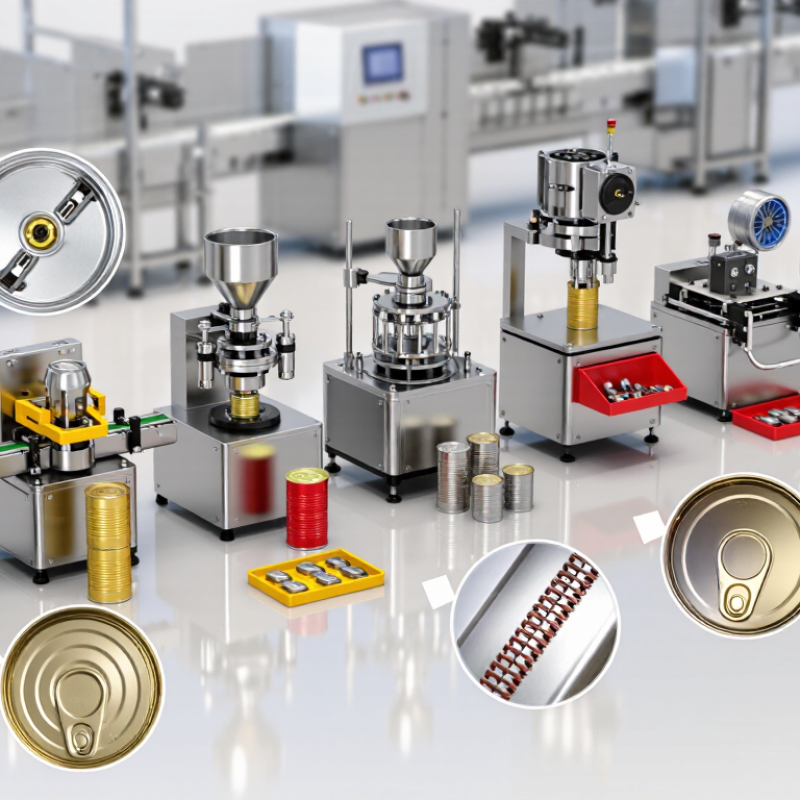
7 Best Can Sealing Machines for Global Buyers

What a Can Sealing Machine Does and Where It Is Used

A can sealing machine joins a lid to a can body, usually by forming a tight double seam with rollers. The seam helps keep out air, moisture, and contaminants during storage and transport. It is not a sterilizer. Food products still need suitable processing, filling, and quality controls. That seam matters.

These machines serve beverage lines, canned vegetables, soups, seafood, and powdered products. Small details count. Can diameter, lid design, fill level, and line speed all affect setup. Operators commonly inspect seam dimensions and check for defects; a clean-looking can alone is not proof of a sound closure. A machine cannot correct every upstream problem, and that is easy to overlook.

The need for dependable packaging sits within a wider food-loss challenge. FAO’s 2019 report, The State of Food and Agriculture, estimated that 14% of food is lost after harvest and before retail. UNEP’s Food Waste Index Report 2024 estimated 1.05 billion tonnes of food waste in 2022 across households, food service, and retail. Neither figure shows that can sealing alone prevents losses. Still, a consistent seal can support product protection when the full process is properly controlled.

How Can Sealing Machines Form Reliable Seams

A reliable can seam starts with two precise operations. The first rolls the can body flange around the end curl; the second compresses the interlocked hooks into a tight double seam. Sealing compound fills tiny gaps. Too little pressure can leave a loose seam, while excessive pressure may wrinkle or cut the metal. Looks can mislead.

The Can Manufacturers Institute’s seam-evaluation guidance highlights checks including hook lengths, overlap, seam thickness, and tightness. These measurements help operators catch defects before cans leave the line. The FAO’s 2023 report on progress toward food-related Sustainable Development Goals estimated that 13.2% of food was lost between harvest and retail in 2021. A sound closure cannot prevent every loss, but it helps guard against leakage and product spoilage.

Tips: Set the seamer to the container and end specifications, not a generic setting. Check sample seams during start-up and after changeovers. Record measurements across the line; one good sample is not enough. A smooth seam is reassuring, but it is not proof of a sound one.

Which Types of Cans and Production Lines Need Different Machines

The can material and rim design should guide the sealing method. Metal cans usually require a double-seam machine that folds the lid and body together. Small changes in chuck shape, pressure, or seam timing can affect seal quality. A line handling several diameters also needs reliable changeover settings. It is easy to assume one machine can do it all. Sometimes it cannot.

Composite cans and plastic containers may need different tooling or sealing processes. Depending on their lid and rim, they may use pressure-sensitive closures or heat-sealed membranes rather than a metal double seam. A sample run can reveal wrinkles, weak seals, or heat damage before full production. Check the container supplier’s specifications, then inspect finished seals with suitable measurement methods. Do not rely on appearance alone.

Production speed matters just as much as can type. A tabletop sealer may suit short runs and frequent product changes, while an automatic rotary machine can support a steady, high-volume line. The infeed, sealer, and discharge must keep pace together. Otherwise, cans can bunch up near the seaming station. Allow time for testing. Real lines rarely behave exactly like the layout drawing, and changeovers may take longer than expected.

Seven Can Sealing Machine Options for Global Buyers

Seven Can Sealing Machine Options for Global Buyers

Choosing a can sealer starts with the container, production volume, and available floor space. Manual benchtop machines suit small batches and frequent changeovers. Semi-automatic models reduce repetitive handwork. Automatic single-head units offer steady output for growing lines. Rotary sealers handle higher volumes, but need more room and careful setup. Vacuum sealers remove air before closing suitable containers. Gas-flushing models can help protect products sensitive to oxygen. Compact tabletop units suit limited workspaces. Fit matters.

Compare the can diameter, height, material, and lid style each machine supports. A sealer that works with one aluminum can may not handle a taller steel container. Check adjustment time, spare-part access, operator training, and cleaning requirements. Ask suppliers for seam inspection guidance and a trial using your actual cans. Specifications look reassuring on paper, but real containers can behave differently. That part is easy to underestimate.

Tips: Send sample cans and lids before purchase. Request a short run, then inspect the finished seams for uniformity and leaks using an appropriate test method. Confirm electrical supply, service support, and shipping arrangements for your site. If formats change often, prioritize simple adjustments over maximum speed. A small trial can reveal awkward controls or frequent stoppages before they become routine.

7 Best Can Sealing Machines for Global Buyers — Seven Can Sealing Machine Options for Global Buyers
Machine option Typical operating method Indicative output Typical can formats Common applications Key buying considerations
Manual bench seamer Hand-operated lever or crank; the operator positions and removes each can. About 5–15 cans per minute, depending on the operator and can size. Usually small and medium round cans; the supported diameter and height depend on the chuck and tooling. Product trials, pilot runs, small workshops, and occasional production. Low power requirements and simple operation; confirm that the supplied chuck and rolls match the can end and body specifications.
Semi-automatic pneumatic seamer The operator loads each can; a pneumatic cycle performs the seam. About 10–30 cans per minute, depending on loading time and machine cycle. Round cans in a defined size range; change parts are generally needed for different diameters or end profiles. Small food producers, beverage trials, and low-to-medium-volume packaging. Check air-pressure and air-consumption requirements, guarding, changeover time, and whether a compressor is included.
Tabletop electric seamer Motor-driven seaming cycle with manual can placement and removal. About 10–30 cans per minute, depending on the model and operator. Commonly used for small or medium round cans; available formats vary by tooling. Specialty foods, sample production, small beverage batches, and packaging development. Confirm local voltage and frequency, emergency-stop and guarding provisions, and compatibility with the intended can ends.
Automatic single-head seamer Automatically feeds or indexes cans to one seaming head; the exact feed arrangement varies. About 20–60 cans per minute for many configurations. Round cans; size changes commonly require format parts and machine adjustments. Growing production lines with steady demand and a limited number of can formats. Assess infeed and discharge integration, actual sustained line speed, changeover needs, and access for cleaning and maintenance.
Automatic double-head seamer Two seaming heads process cans in a coordinated automatic system. Often about 40–100 cans per minute, subject to can dimensions and line configuration. Round cans within the machine’s specified diameter and height range. Medium-to-high-volume food and beverage lines requiring greater output than a single-head machine. Check that upstream filling and downstream handling can match the rated speed; verify tooling, guarding, and service access.
Rotary multi-head seamer Multiple seaming stations rotate continuously as cans move through the machine. Typically suited to high-speed lines; output can range from around 100 to several hundred cans per minute, depending on the number of heads and product. Production can formats specified for the rotary turret and change parts. Large-scale canning operations with continuous, high-volume production. Review complete-line capacity, format-change requirements, footprint, maintenance skills, and the availability of technical support in the destination market.
Vacuum or gas-flush seamer Removes air and/or introduces a controlled gas before closing the can; may be semi-automatic or automatic. Varies widely by configuration; compact systems commonly operate at lower rates than high-speed rotary seamers. Sealed formats supported by the chamber, vacuum system, gas circuit, and seaming tooling. Products where reduced oxygen or a controlled headspace is part of the packaging process. Confirm the required vacuum or gas specification, compatible can and lid materials, product suitability, and the need for process validation.
Selection note: Output figures are indicative planning ranges, not guaranteed ratings. Actual performance depends on can dimensions, end design, product, operator or feeding method, and line layout. Always verify the machine’s tested seam performance and compatibility with the exact can body and end before purchase.

How to Compare Capacity, Compliance, and Service Support

A can sealer’s advertised speed matters only when it matches your real line. PMMI’s 2023 State of the Industry report estimated U.S. packaging machinery shipments at about $10.5 billion in 2022, reflecting sustained investment in production equipment. For buyers, compare rated cans per minute with the speed achieved during a full shift. Ask for a trial using your can diameter, lid, and product. Watch for jams, seam defects, and changeover time. A machine rated at 60 cans per minute may run slower when operators handle frequent size changes.

Compliance needs practical evidence, not a vague promise. Request seam inspection procedures, material specifications, electrical documentation, and records showing how settings are verified. Confirm that documents suit your destination market and production environment. Also check whether operators can access guarding and cleaning points without awkward workarounds. Details are easy to overlook. Service support deserves the same scrutiny: ask about response hours, spare-part availability, remote troubleshooting, and technician coverage in your region. A low purchase price can become costly if a small sealing head component stops the line for days.

Tips: Send suppliers sample cans and lids before comparing quotes. Request a written acceptance test with target speed, seam checks, and changeover steps. Ask which wear parts should be kept on-site, and confirm delivery estimates. One caution: supplier test conditions may not reflect your shift, staffing, or product. Insist on seeing the assumptions.

7 Best Can Sealing Machines for Global Buyers: Comparing Capacity, Compliance, and Service

Typical planning ranges for different can sealer types, shown in cans per minute. Actual throughput varies with can size, product, changeovers, and operator skill. Treat these ranges as a starting point, not a machine guarantee.

Buyer checklist: Confirm the required food-contact documentation and applicable machinery-safety requirements for your destination market. Compare written throughput guarantees using your actual cans and product, and verify spare-parts availability, training, and service response arrangements before purchase.

Copyright 2025 Fluidra S.A. | Created by BCM Marketing Agencia Privacy Policy Legal note | Cookie policy |

Technical cookies are strictly necessary for our website to work and you can navigate through it. These types of cookies are those that, for example, allow us to identify you, give you access to certain restricted parts of the page if necessary, or remember different options or services already selected by you, such as your privacy preferences. Therefore, they are activated by default, your authorization not being necessary in this regard. Through the configuration of your browser, you can block or alert the presence of this type of cookies, although such blocking will affect the proper functioning of the different functionalities of our website.


The analysis cookies allow us to study the navigation of the users of our website in general (for example, which sections of the page are the most visited, which services are used most and if they work correctly, etc.). From the statistical information on navigation on our website, we can improve both the operation of the page itself and the different services it offers. Therefore, these cookies do not have an advertising purpose, but only serve to make our website work better, adapting to our users in general. By activating them you will contribute to this continuous improvement. You can enable or disable these cookies by checking the corresponding box, being disabled by default.


Functionality cookies allow us to remember your preferences, to personalize certain characteristics and general options of our website, every time you access it (for example, the language in which the information is presented to you, the sections marked as favorites, your browser type, etc.) Therefore, this type of cookies does not have an advertising purpose, but by activating them you will improve the functionality of the website (for example, adapting to your type of browser) and the customization of it based on your preferences (for example, by presenting the information in the language that you have chosen in previous occasions), which will contribute to the ease, usability and comfort of our page during your navigation. You can enable or disable these cookies by checking the corresponding box, being disabled by default.


Advertising cookies allow us to manage the advertising spaces included in our website based on criteria such as the content shown or the frequency in which the ads are displayed. For example, if you have been shown the same ad several times on our website, and you have not shown a personal interest by clicking on it, it will not appear again. In summary, by activating this type of cookies, the advertising shown on our website will be more useful and diverse, and less repetitive. You can enable or disable these cookies by checking the corresponding box, being disabled by default.


Behavioral advertising cookies allow us to obtain information based on the observation of your browsing habits and behaviors on the web, in order to show you advertising content that best suits your personal tastes and interests. To understand it in a very simple way, we will give you a fictitious example: if your last searches on the web were related to suspense literature, we would show you advertising about suspense books. Therefore, activating this type of cookies, the advertising that we show you on our website will not be generic, but will be oriented to your searches, tastes and interests, therefore adjusting exclusively to you. You can enable or disable these cookies by checking the corresponding box, being disabled by default.
To understand it in a very simple way, we will give you a fictitious example: if your last searches on the web were related to suspense literature, we would show you advertising about suspense books. Therefore, activating this type of cookies, the advertising that we show you on our website will not be generic, but will be oriented to your searches, tastes and interests, therefore adjusting exclusively to you. You can enable or disable these cookies by checking the corresponding box, being disabled by default.

SAVE

We use our own and third-party cookies to ensure the proper functioning of the website and to analyse our services, improve your experience on our website and show you advertisements related to your interests according to profiling based on your browsing habits (e.g. websites visited). You can accept all cookies by clicking "ACCEPT" or set or reject them by clicking here. If you would like to know more about the use of cookies, please see our COOKIE POLICY.


ACCEPT ALL
Reject no essentials


