
2026 Best BESS Connector Types for Energy Storage Systems
FLUID HANDLING EXPERTS

Blog, all our news

2026 Best BESS Connector Types for Energy Storage Systems

Choosing a Bess Connector is not just a matter of matching cable size. In an energy storage system, each connection must suit its electrical load, installation method, environment, and maintenance plan. A poor match can increase resistance, complicate servicing, or create avoidable risks. Details matter.

This guide compares common connector types used across battery energy storage systems, including bolted terminals, busbar connections, plug-in interfaces, and connectors for auxiliary or communication circuits. Their roles differ. High-current DC paths have different requirements from low-voltage monitoring connections. Enclosure space, vibration, temperature, moisture exposure, and access for inspection can also influence the choice. Product specifications and system design should guide any final selection.

There is no single connector that is best for every BESS. A compact plug-in design may speed assembly, while a bolted connection may better suit a fixed, serviceable installation. That sounds tidy. Real projects are messier. Cable routing, installer access, and future replacement needs can shift the decision. This overview focuses on practical selection factors, including current and voltage ratings, contact protection, compatible conductor sizes, and manufacturer guidance. It is not a substitute for a qualified engineering review. Readers should verify that each component matches the complete system design and applicable standards before installation. A connector can look robust on a drawing and still prove awkward to inspect in a crowded cabinet. That detail deserves a second look.
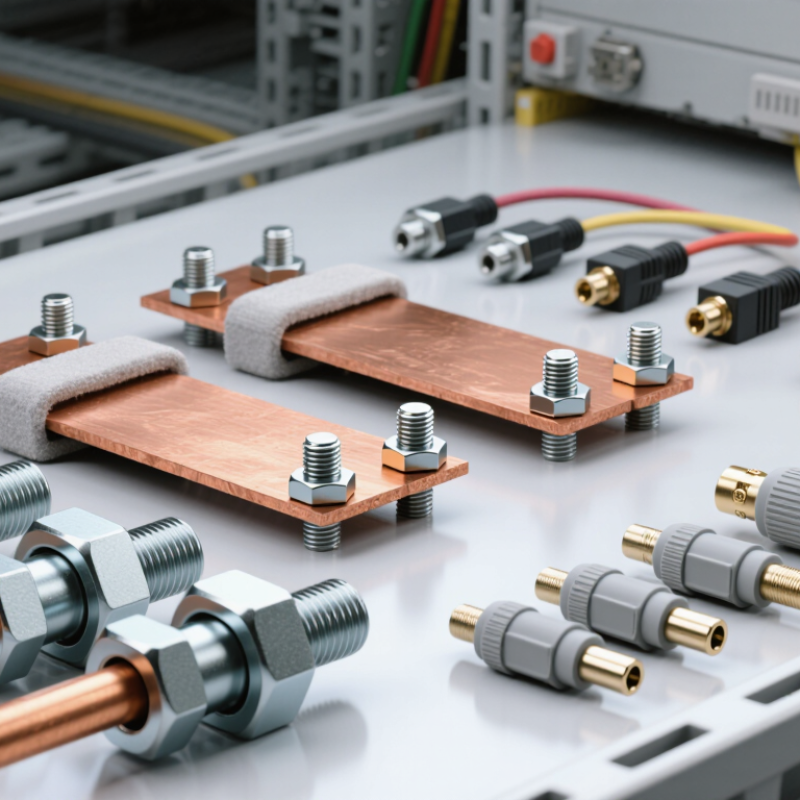
2026 Best BESS Connector Types for Energy Storage Systems

Understanding BESS Connectors and Their Role in Energy Storage Systems

A battery energy storage system relies on connectors to carry power and keep components communicating. Inside a cabinet, high-current DC connections link battery modules to racks, busbars, or conversion equipment. These interfaces must handle expected current and voltage without excessive heating. A loose joint can create resistance, and resistance can produce heat. Small details matter. Contact material, cable size, fastening method, and enclosure protection all influence performance.

BEss Connector types include bolted cable lugs, busbar connections, and plug-in power interfaces. Auxiliary connectors carry signals for temperature sensors, voltage monitoring, and control circuits. They do different jobs, so they should not be selected by appearance alone. Engineers check rated current, voltage, temperature range, polarity, touch protection, and resistance to vibration or moisture. Clear labeling also helps technicians avoid confusing power and signal cables during installation or service. Keep connections accessible.

Selection depends on the system layout and maintenance plan. A compact plug-in interface may simplify module replacement, while a bolted joint can suit a fixed, high-current connection. Neither choice is automatically better. A tidy specification can still miss real installation conditions, such as limited tool access or cable movement. Those details deserve review before equipment is built.

2026 Best BESS Connector Types for Energy Storage Systems: Understanding BESS Connectors and Their Role

Connector Type Typical BESS Location Primary Role Key Selection Considerations Common Advantages Important Limitations
Bolted busbar connection Battery racks, DC combiner assemblies, and high-current equipment interfaces Creates a low-resistance, mechanically secured path between conductive busbars or terminals. Current capacity, conductor material, joint surface preparation, bolt torque, temperature rise, insulation, and access for inspection. Suitable for high-current fixed installations; straightforward to inspect and maintain when properly designed. Requires controlled assembly and adequate clearance. Incorrect torque or contaminated contact surfaces can increase resistance and heating.
High-current plug-in connector Battery modules, rack interfaces, and removable power assemblies Provides a separable power connection where equipment may need to be installed, replaced, or serviced. Rated current and voltage, touch protection, keying, mating-cycle rating, contact resistance, temperature range, and connection sequence. Can simplify modular assembly and replacement compared with hard-wired connections. Must be matched to the application and correctly mated. Not every plug-in design is suitable for load breaking or energized disconnection.
Battery module interconnect Between cells or modules within a battery pack or rack Connects series and parallel battery elements to form the required electrical configuration. Pack architecture, current path, vibration, thermal expansion, insulation, polarity protection, and assembly tolerances. Supports compact and repeatable battery assembly when designed for the specific module layout. Compatibility is often specific to the battery design; incorrect polarity or assembly can create serious electrical hazards.
Cable lug and terminal connection Battery cables, inverter terminals, DC distribution, and grounding points Terminates a conductor for attachment to a stud, terminal, or busbar. Conductor size and material, lug material, crimp tooling, stud dimensions, corrosion protection, and strain relief. Widely used and adaptable to many fixed cable connections. Requires the correct lug, cable, and crimping process. Poor termination can cause loosening, excessive resistance, or overheating.
Control and signal connector Battery management system, rack controllers, sensors, and system communication links Carries low-voltage control, monitoring, sensing, or communication signals. Pin assignment, signal type, shielding, ingress protection, locking method, cable routing, and electrical separation from power circuits. Enables monitoring, control, diagnostics, and communication between BESS subsystems. Signal integrity can be affected by noise, incorrect pinouts, poor shielding, or unsuitable cable routing.
Protective earth and bonding connection Battery enclosures, racks, cabinets, and other exposed conductive structures Connects conductive parts to the protective earthing and bonding network as required by the system design. Applicable electrical codes, fault-current path, conductor sizing, corrosion resistance, continuity, and mechanical security. Supports electrical safety by providing a designed path for fault current and bonding exposed metalwork. It is a safety-critical connection and must be installed and verified according to applicable codes and project requirements.
DC disconnect or switch connection interface Battery disconnects, service isolation points, and DC distribution equipment Connects battery conductors to switching or isolation equipment used to manage and isolate DC circuits. DC voltage and current ratings, polarity, fault-current withstand, switching duty, enclosure rating, and isolation procedure. Can provide a defined isolation point for system operation and maintenance when appropriately specified. Switching capability depends on the device rating and design. A connector or terminal alone should not be assumed to provide safe load-break isolation.

Selection note: Connector ratings and suitability depend on the battery chemistry, system voltage, current, enclosure, environment, installation method, and applicable standards. Confirm project-specific requirements with the equipment documentation and qualified electrical engineering review.

Key Electrical and Mechanical Requirements for BESS Connectors

A BESS connector must carry high current reliably while remaining safe through repeated operating cycles. Match its voltage and current ratings to the system’s actual operating range, including expected temperature rise. Low contact resistance matters: even a small increase can create local heating at a heavily loaded connection. Check insulation, creepage distances, polarity protection, and short-circuit performance against the equipment design. Ratings alone are not enough.

Mechanical details matter just as much. A positive locking mechanism helps prevent loose connections during vibration or maintenance. Strain relief should keep cable weight from pulling on contacts, while seals must suit the enclosure’s exposure to dust and moisture.

Small details count.

Verify that cable size, terminal type, and approved crimping tools match the connector specification. In the field, a rushed or uneven crimp can be hard to spot, yet it may raise resistance over time. Review mating-cycle limits and temperature performance, too. A checklist can still miss a real installation issue, so inspect sample assemblies and confirm fit before scaling up.

Common BESS Connector Types and Their Applications

Common BESS connector types serve different points in the energy path. Bolted busbar joints connect cells, modules, and racks where current is high and connections remain fixed. Crimped cable lugs suit inverter links and DC feeders, especially where flexible cables must absorb vibration. Modular plug-in power connectors can speed rack installation and replacement, but their voltage, current, and touch-protection ratings must match the system. Small parts matter.

Auxiliary circuits use terminal blocks or circular connectors for temperature sensors, contactors, and control wiring. Ethernet or fiber-optic connections carry monitoring data between battery racks and control equipment; fiber can help limit electrical interference over longer runs. The IEA’s Batteries and Secure Energy Transitions report records 42 GW of battery storage additions in the power sector during 2023, underscoring the rapid scale-up behind these connection choices. For every interface, engineers should check conductor size, polarity, fault-current capability, enclosure protection, and thermal rise. A connector that fits neatly may still loosen after repeated heat cycles. That detail is easy to underestimate. Service procedures should also specify isolation and inspection before a connection is handled.

Comparing Connector Performance, Compatibility, and Safety

BESS connector selection affects current flow, maintenance access, and fault prevention. Bolted busbar joints can handle high currents when properly sized and torqued, but they need clear access for inspection. Plug-in high-current connectors support faster module replacement. Their locking features and contact ratings must match the system. Threaded studs offer a straightforward connection, though repeated servicing can wear threads or damage terminals. No type wins in every installation.

Tips: Check rated current, voltage, conductor size, and operating temperature together. Confirm polarity keying, touch protection, and enclosure sealing. A connector that fits physically may still be electrically unsuitable. Small details matter.

Compatibility also depends on vibration, humidity, and expected service cycles. Review the connector maker’s test data, then verify the complete assembly under realistic load conditions. Watch for heating at contact points during commissioning; a small temperature rise can reveal poor contact or incorrect torque. Inspect seals and locking mechanisms after installation. A clean datasheet helps, but it cannot replace careful assembly checks. In practice, cable routing can also strain a connector more than expected, especially in crowded racks. That detail is easy to miss.

How to Select, Install, and Maintain BESS Connectors in 2026

Selecting BESS connectors starts with the system layout. Bolted busbar joints suit fixed, high-current connections, while crimped cable lugs support flexible routing. Touch-safe plug-in connectors can simplify modular battery sections. Match each type to the rated DC voltage and current, cable size, operating temperature, enclosure protection, and expected vibration. Check polarity, keying, and mating-cycle limits too. Small details matter.

Installation needs the correct cable preparation, approved crimping tools, and the specified torque for bolted terminals. Keep contact surfaces clean and dry, and never connect or disconnect a live circuit unless the equipment is specifically designed for it. Follow the system maker’s procedures and use qualified personnel. A clean-looking joint can still run hot. That is easy to miss. During scheduled maintenance, inspect for discoloration, corrosion, cracked insulation, and loose hardware. Use thermal checks under suitable operating conditions to help identify abnormal heating, then investigate before tightening or replacing anything. Record findings and corrective work; a simple log can reveal recurring connection problems. Safety procedures deserve a second look, especially when access is crowded.

2026 Best BESS Connector Types for Energy Storage Systems

Typical DC bus voltage examples help frame connector selection. Actual system voltages vary by design.

Bolted cable lugs and busbar joints are common choices for fixed, serviceable connections; touch-safe plug-in connectors can simplify modular battery connections. Select connectors by the system’s maximum DC voltage, continuous and peak current, fault-current withstand, cable size, environmental rating, and applicable standards. The voltage values shown are representative examples, not universal specifications—verify the equipment datasheets and project requirements.

Article Source:

Copyright 2025 Fluidra S.A. | Created by BCM Marketing Agencia Privacy Policy Legal note | Cookie policy |

Technical cookies are strictly necessary for our website to work and you can navigate through it. These types of cookies are those that, for example, allow us to identify you, give you access to certain restricted parts of the page if necessary, or remember different options or services already selected by you, such as your privacy preferences. Therefore, they are activated by default, your authorization not being necessary in this regard. Through the configuration of your browser, you can block or alert the presence of this type of cookies, although such blocking will affect the proper functioning of the different functionalities of our website.


The analysis cookies allow us to study the navigation of the users of our website in general (for example, which sections of the page are the most visited, which services are used most and if they work correctly, etc.). From the statistical information on navigation on our website, we can improve both the operation of the page itself and the different services it offers. Therefore, these cookies do not have an advertising purpose, but only serve to make our website work better, adapting to our users in general. By activating them you will contribute to this continuous improvement. You can enable or disable these cookies by checking the corresponding box, being disabled by default.


Functionality cookies allow us to remember your preferences, to personalize certain characteristics and general options of our website, every time you access it (for example, the language in which the information is presented to you, the sections marked as favorites, your browser type, etc.) Therefore, this type of cookies does not have an advertising purpose, but by activating them you will improve the functionality of the website (for example, adapting to your type of browser) and the customization of it based on your preferences (for example, by presenting the information in the language that you have chosen in previous occasions), which will contribute to the ease, usability and comfort of our page during your navigation. You can enable or disable these cookies by checking the corresponding box, being disabled by default.


Advertising cookies allow us to manage the advertising spaces included in our website based on criteria such as the content shown or the frequency in which the ads are displayed. For example, if you have been shown the same ad several times on our website, and you have not shown a personal interest by clicking on it, it will not appear again. In summary, by activating this type of cookies, the advertising shown on our website will be more useful and diverse, and less repetitive. You can enable or disable these cookies by checking the corresponding box, being disabled by default.


Behavioral advertising cookies allow us to obtain information based on the observation of your browsing habits and behaviors on the web, in order to show you advertising content that best suits your personal tastes and interests. To understand it in a very simple way, we will give you a fictitious example: if your last searches on the web were related to suspense literature, we would show you advertising about suspense books. Therefore, activating this type of cookies, the advertising that we show you on our website will not be generic, but will be oriented to your searches, tastes and interests, therefore adjusting exclusively to you. You can enable or disable these cookies by checking the corresponding box, being disabled by default.
To understand it in a very simple way, we will give you a fictitious example: if your last searches on the web were related to suspense literature, we would show you advertising about suspense books. Therefore, activating this type of cookies, the advertising that we show you on our website will not be generic, but will be oriented to your searches, tastes and interests, therefore adjusting exclusively to you. You can enable or disable these cookies by checking the corresponding box, being disabled by default.

SAVE

We use our own and third-party cookies to ensure the proper functioning of the website and to analyse our services, improve your experience on our website and show you advertisements related to your interests according to profiling based on your browsing habits (e.g. websites visited). You can accept all cookies by clicking "ACCEPT" or set or reject them by clicking here. If you would like to know more about the use of cookies, please see our COOKIE POLICY.


ACCEPT ALL
Reject no essentials


