
Best Bearing Steel for High Performance Applications?
FLUID HANDLING EXPERTS

Blog, all our news

Best Bearing Steel for High Performance Applications?

When it comes to high performance applications, the choice of Bearing Steel is crucial. Renowned expert Dr. James L. McCoy, a leading metallurgist, once stated, “The right bearing steel can make or break a machine’s performance.” This highlights the importance of selecting appropriate materials for bearings used in demanding environments.

Bearing steel is engineered for strength, durability, and resistance to wear. High-quality bearing steels often contain specific alloying elements that enhance these properties. However, not all bearing steels are equal. Variations in composition can lead to different performance outcomes. Some steels may corrode quickly, while others excel in load-bearing capacity. Choosing the right type means understanding the specific requirements of the application.

While advancements have been made in bearing steel technology, challenges remain. Manufacturers must continuously adapt to new demands. Innovations in coating and treatment processes aim to prolong the life of bearings. However, the industry faces difficulties aligning these technologies with cost-effectiveness. As the market evolves, the quest for the best bearing steel continues, necessitating ongoing research and development.
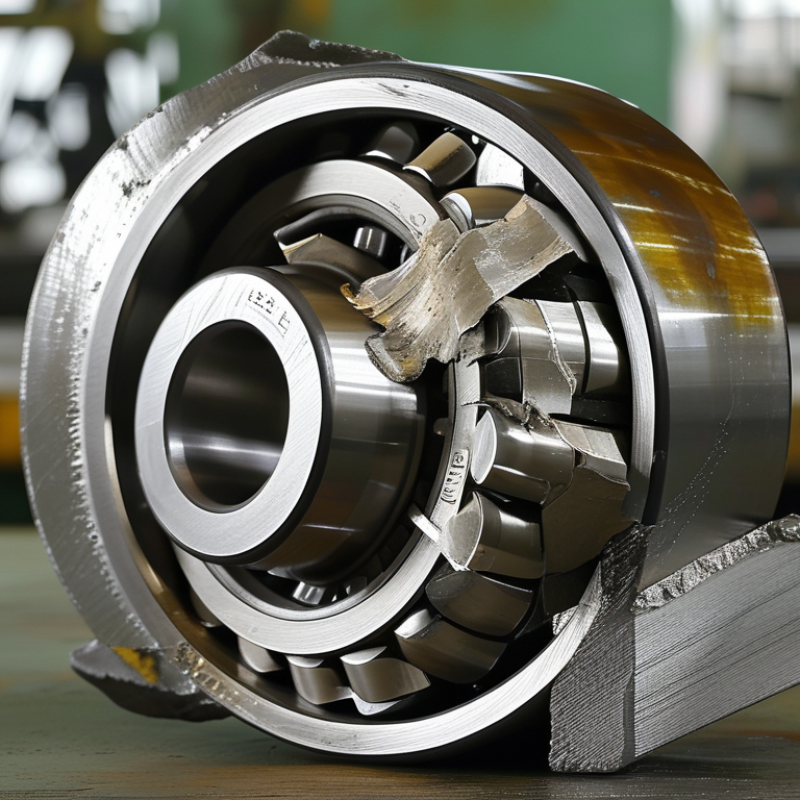
Best Bearing Steel for High Performance Applications?

Types of Bearing Steel Used in High Performance Applications

When it comes to high-performance applications, the type of bearing steel used is crucial. Commonly, bearing steels are categorized into several types, primarily based on composition and treatment. AISI 52100 is a popular choice for its excellent hardness and wear resistance. This alloy, composed mainly of chromium and carbon, offers a good balance of toughness and fatigue strength. According to industry reports, AISI 52100 exhibits a hardness range of 60-64 HRC after quenching and tempering.

Another noteworthy type is AISI 440C, known for its corrosion resistance. This stainless steel alloy is used in environments where moisture and chemicals pose risks. Data suggests that AISI 440C achieves hardness levels between 58-62 HRC, making it suitable for various demanding applications. Users should consider the specific operating environment when choosing the right steel. Misapplications can lead to premature wear and failure.

Tool steels also find their place in advanced bearings. These materials provide exceptional performance under shock loads. However, they often require precise heat treatment, which can be a challenge. Some applications saw increased defects due to inadequate processing. This indicates that not every steel type fits all scenarios. It’s essential to conduct thorough research and testing to ensure optimal performance in high-stress environments.

Best Bearing Steel for High Performance Applications

Type of Bearing Steel Chemical Composition Properties Applications
AISI 52100 C: 0.95-1.05%, Cr: 1.30-1.60% High hardness, good wear resistance, and toughness Ball bearings, roller bearings, and high-speed applications
AISI 440C C: 0.95-1.20%, Cr: 16.0-18.0% Excellent corrosion resistance, high hardness High temperature applications, marine environments
AISI 630 C: 0.07%, Cr: 17.0-19.0%, Ni: 8.0-10.0% Good hardness, excellent corrosion resistance Aerospace, automotive, and chemical processing
AISI M50 C: 0.50-0.60%, Cr: 4.00-5.00%, Mo: 1.00-2.00% High fatigue resistance, good wear resistance Aerospace applications, high-load bearing
AISI 9Cr18Mo C: 0.95%, Cr: 17.0-19.0%, Mo: 1.0% Excellent hardness, wear resistance, and corrosion resistance High-performance bearings, industrial applications

Properties of High Performance Bearing Steel

When selecting bearing steel for high-performance applications, key properties must be considered. High-performance bearing steel typically features superior hardness and wear resistance. According to a report by the American Society for Metals, ideal bearing steels exhibit Rockwell hardness ratings of at least 60 HRC. This hardness contributes to prolonged life and consistent performance.

Furthermore, low thermal expansion is crucial in high-performance settings. Strain can degrade functionality. Reports indicate that high-performance steels maintain dimensional stability within a temperature range of -40°C to 150°C. This stability is vital in applications where precision is critical, such as in aerospace or automotive industries. Not all bearing steels meet this requirement, which can lead to failures in extreme conditions.

Toughness is another important property. High-performance steel must withstand shock loads and heavy loads without deformation. Industry studies show that impact toughness values of 20 Joules and higher are preferable. However, achieving this toughness often involves trade-offs in other mechanical properties. As a result, engineers face challenges in balancing the different characteristics to suit specific applications.

Factors Influencing Bearing Steel Selection

Selecting the right bearing steel is crucial for high-performance applications. Several key factors play a vital role in this decision. One important aspect is hardness, which directly affects the fatigue life of the steel. According to a report by the American Society of Mechanical Engineers, hardened steel can improve wear resistance by up to 30%. However, selecting overly hard materials may lead to brittleness issues.

Corrosion resistance is another critical factor. In environments where moisture or chemicals are prevalent, bearing steels with added alloying elements can be beneficial. Research from the International Journal of Tribology suggests that stainless steels can provide significant advantages in these applications. However, they may be less suitable under extreme loads, requiring careful consideration.

Manufacturing processes can also influence the performance of bearing steel. Different heat treatment methods, such as quenching and tempering, can result in varied outcomes. A study published in the Journal of Materials Science revealed that improperly heat-treated steels may suffer from premature failure. Thus, understanding the heat treatment is essential for anyone involved in this field.

Heat Treatment Processes for Enhanced Performance

Heat treatment processes significantly enhance the performance of bearing steels used in high-performance applications. The selection of the right heat treatment method can improve hardness, wear resistance, and toughness. For instance, studies show that quenching and tempering can increase hardness levels by up to 60 HRC, which is critical for longevity in demanding environments.

Different heat treatment processes yield varying results. Martensitic transformation is essential to achieve optimal hardness. To illustrate, the use of induction hardening can drastically improve the surface properties of bearing steels. This method focuses on heating a localized area rapidly, leading to minimal distortion. Research indicates that materials treated this way exhibit nearly double the fatigue life compared to non-heat treated counterparts.

However, not every process is without its challenges. Overheating can lead to undesirable microstructural changes, affecting overall performance. Additionally, achieving uniform hardness throughout the component's surface is often problematic. Some methods may require further refinements, like cryogenic treatment, to optimize results. As the industry evolves, addressing these imperfections remains vital for advancing bearing steel applications.

Applications of Bearing Steel in Various Industries

Bearing steel plays a vital role in various industries due to its unique properties. These steels offer high wear resistance and excellent load-bearing capacity. In the automotive industry, bearing steel is essential for the performance of engines and transmissions. According to a report by the American Iron and Steel Institute, the demand for high-performance bearing steel has increased steadily, with a projected growth rate of 6.2% annually.

In aerospace applications, bearing steel is crucial for components that must endure extreme conditions. Turbine engines, for instance, rely on high-quality bearing materials that can withstand high temperatures and pressures. The Materials Park Research Institute notes that the aerospace sector consumes approximately 25% of the global bearing steel market. This significant figure underscores the importance of selecting the right materials for manufacturing.

However, not all bearing steels are created equal. Variances in composition and treatment can affect performance reliability. Some studies pointed out that improperly treated steel can lead to premature failure in bearings. The friction and heat generated during operation can wear down materials faster than expected. Thus, ongoing research and development are vital to improving steel grades and treatment processes, ensuring they meet rigorous industry standards.

Best Bearing Steel for High Performance Applications

Copyright 2025 Fluidra S.A. | Created by BCM Marketing Agencia Privacy Policy Legal note | Cookie policy |

Technical cookies are strictly necessary for our website to work and you can navigate through it. These types of cookies are those that, for example, allow us to identify you, give you access to certain restricted parts of the page if necessary, or remember different options or services already selected by you, such as your privacy preferences. Therefore, they are activated by default, your authorization not being necessary in this regard. Through the configuration of your browser, you can block or alert the presence of this type of cookies, although such blocking will affect the proper functioning of the different functionalities of our website.


The analysis cookies allow us to study the navigation of the users of our website in general (for example, which sections of the page are the most visited, which services are used most and if they work correctly, etc.). From the statistical information on navigation on our website, we can improve both the operation of the page itself and the different services it offers. Therefore, these cookies do not have an advertising purpose, but only serve to make our website work better, adapting to our users in general. By activating them you will contribute to this continuous improvement. You can enable or disable these cookies by checking the corresponding box, being disabled by default.


Functionality cookies allow us to remember your preferences, to personalize certain characteristics and general options of our website, every time you access it (for example, the language in which the information is presented to you, the sections marked as favorites, your browser type, etc.) Therefore, this type of cookies does not have an advertising purpose, but by activating them you will improve the functionality of the website (for example, adapting to your type of browser) and the customization of it based on your preferences (for example, by presenting the information in the language that you have chosen in previous occasions), which will contribute to the ease, usability and comfort of our page during your navigation. You can enable or disable these cookies by checking the corresponding box, being disabled by default.


Advertising cookies allow us to manage the advertising spaces included in our website based on criteria such as the content shown or the frequency in which the ads are displayed. For example, if you have been shown the same ad several times on our website, and you have not shown a personal interest by clicking on it, it will not appear again. In summary, by activating this type of cookies, the advertising shown on our website will be more useful and diverse, and less repetitive. You can enable or disable these cookies by checking the corresponding box, being disabled by default.


Behavioral advertising cookies allow us to obtain information based on the observation of your browsing habits and behaviors on the web, in order to show you advertising content that best suits your personal tastes and interests. To understand it in a very simple way, we will give you a fictitious example: if your last searches on the web were related to suspense literature, we would show you advertising about suspense books. Therefore, activating this type of cookies, the advertising that we show you on our website will not be generic, but will be oriented to your searches, tastes and interests, therefore adjusting exclusively to you. You can enable or disable these cookies by checking the corresponding box, being disabled by default.
To understand it in a very simple way, we will give you a fictitious example: if your last searches on the web were related to suspense literature, we would show you advertising about suspense books. Therefore, activating this type of cookies, the advertising that we show you on our website will not be generic, but will be oriented to your searches, tastes and interests, therefore adjusting exclusively to you. You can enable or disable these cookies by checking the corresponding box, being disabled by default.

SAVE

We use our own and third-party cookies to ensure the proper functioning of the website and to analyse our services, improve your experience on our website and show you advertisements related to your interests according to profiling based on your browsing habits (e.g. websites visited). You can accept all cookies by clicking "ACCEPT" or set or reject them by clicking here. If you would like to know more about the use of cookies, please see our COOKIE POLICY.


ACCEPT ALL
Reject no essentials



