
10 Best Automatic Circuit Recloser Suppliers Worldwide
FLUID HANDLING EXPERTS

Blog, all our news

10 Best Automatic Circuit Recloser Suppliers Worldwide

Distribution utilities face a demanding mix of aging assets, rising electricity use, and increasingly complex feeder conditions. Automatic Circuit Reclosers help isolate temporary faults, restore service, and limit the reach of interruptions. They are not a cure-all. Poor coordination can create problems rather than prevent them.

The scale of grid investment makes equipment selection especially important. The International Energy Agency’s 2023 report, Electricity Grids and Secure Energy Transitions, estimates that more than 80 million kilometres of grids must be added or refurbished by 2040 to meet climate and energy goals. That is a vast undertaking. For utilities, choosing a recloser involves more than comparing rated voltage or interrupting capacity. Control options, communications, environmental protection, service support, and compatibility with existing protection schemes also matter.

Distribution engineer Thomas A. Short, author of Electric Power Distribution Handbook, emphasizes through his technical work a practical principle: reclosers must coordinate with the protection devices around them. This is a paraphrase, not a verbatim quotation. It is worth saying plainly. No product specification replaces sound system engineering. The suppliers reviewed here serve different markets and offer different strengths, from established global portfolios to specialized control and monitoring capabilities. This guide compares ten worldwide suppliers to help readers assess product range, application fit, and support. The comparison has limits; local operating conditions can change the best choice.
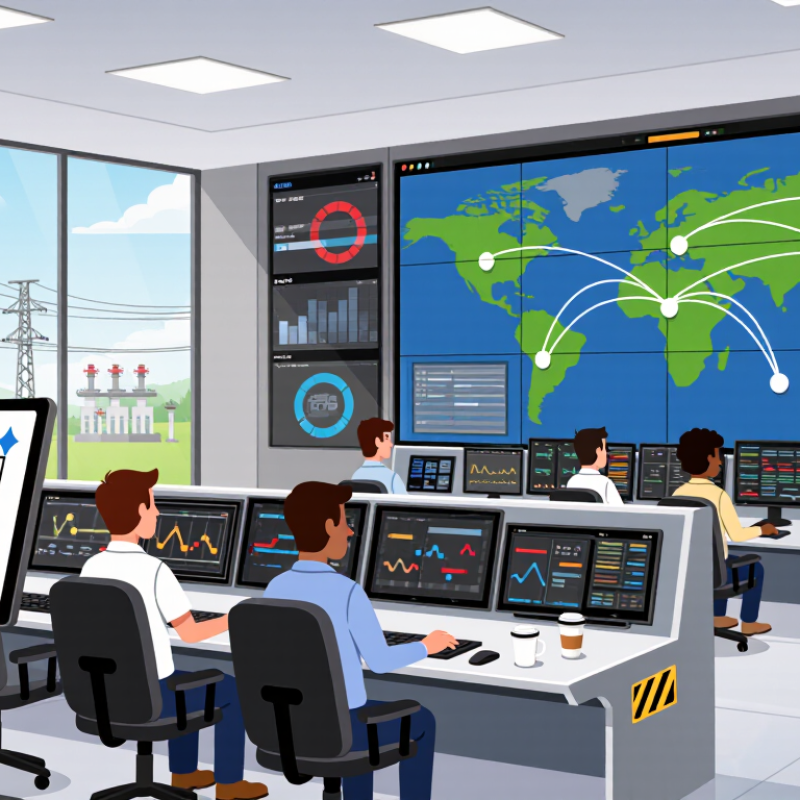
10 Best Automatic Circuit Recloser Suppliers Worldwide

What Is an Automatic Circuit Recloser and How Does It Work?

An automatic circuit recloser is a protective switching device used on power distribution lines. It detects abnormal current, opens its contacts, then closes them again after a brief pause. That pause can let a temporary fault disappear. A branch brushing a line in strong wind, for example, may move away before the next attempt. The interruption is often brief. Customers may notice a flicker, not a long outage.

Inside the unit, current sensors send measurements to a protection controller. When current exceeds configured limits, the controller commands the interrupter to trip. The recloser may make several attempts, with timed intervals between them. If the fault remains, it locks open and signals the operator.

A persistently damaged cable should not be repeatedly energized. Settings must coordinate with nearby fuses and other protective devices, or an unnecessary outage can spread.

Field checks matter: technicians inspect contacts, control power, insulation, and event records. A recloser is not self-explanatory. Its operation depends on correct settings, sound installation, and regular testing. Even a well-designed unit cannot identify every fault cause, so engineering review and reliable supplier information remain important.

How to Evaluate Automatic Circuit Recloser Suppliers

A dependable automatic circuit recloser supplier should understand the network where the equipment will operate. Start with the application, not the catalog. Confirm system voltage, available fault current, insulation requirements, and expected operating sequences. Ask how the proposed unit performs under local temperature, humidity, and installation conditions. A unit that fits a specification sheet may still be awkward to commission.

Request documented factory test results, clear performance ratings, and traceable quality records. Check whether protection settings can be configured and verified by qualified staff. Ask for wiring diagrams, commissioning instructions, and practical maintenance guidance. These details matter when a technician is working in a substation with limited time and incomplete site records. Small omissions can cause delays.

Supplier evaluation should include service after delivery. Who answers technical questions, and how quickly can replacement parts be supplied? Ask for training options and examples of troubleshooting support, without treating testimonials as proof. It is easy to focus on purchase price and miss lifecycle needs. Even a thorough review has limits: published data cannot reveal every installation challenge, so request a technical discussion around the actual project and identify assumptions that still need checking.

Ten Leading Automatic Circuit Recloser Suppliers Worldwide

Ten leading automatic circuit recloser suppliers worldwide are best compared by performance, not brochure claims. Buyers should check rated voltage, fault-interruption capacity, insulation design, control options, and documented type tests. IEC 62271-111 and IEEE C37.60 provide useful reference points for evaluating recloser requirements. Field evidence matters. Ask for service-life records, spare-parts availability, and support response times in the regions where equipment will operate.

The International Energy Agency’s 2023 report, Electricity Grids and Secure Energy Transitions, says annual grid investment needs to rise above US$600 billion by 2030. It also estimates that over 80 million kilometres of grids must be added or refurbished by 2040. That expansion increases demand for dependable protection on rural feeders, industrial connections, and distribution networks exposed to storms. A recloser’s value is practical: it can restore supply after temporary faults, while isolating persistent ones.

A useful global shortlist should include suppliers with independently verifiable testing, clear configuration data, and technicians familiar with local network conditions. Compare operating temperature limits and control-battery behaviour, too; small details can matter during a cold morning outage. Supplier rankings rarely capture these differences. A lower-cost unit may fit a simple feeder, but not a remote site where a delayed repair means hours without power. The uncomfortable part is that public data rarely supports a precise worldwide ranking, so buyers should verify each claim against project references and test documentation.

Automatic Circuit Reclosers: Common Rated-Voltage Classes

A technical snapshot for comparing products from automatic circuit recloser suppliers worldwide.

The chart shows representative rated-voltage classes commonly specified for medium-voltage reclosers: 15.5 kV, 27 kV, and 38 kV. These are equipment ratings, not exact system voltages; available ratings and specifications vary by product and applicable standard.

How Supplier Offerings Differ by Technology and Region

Automatic recloser suppliers differ less by catalog size than by the grid problems they solve. Urban networks often prioritize compact vacuum interrupters, remote control, and precise coordination with downstream fuses. Rural feeders may need weather-resistant housings, wider voltage options, and communications suited to sparse infrastructure. Small details matter. They can determine whether crews make repeated site visits.

Regional utility specifications shape protection curves, insulation levels, pole interfaces, and communications requirements. The IEA’s Electricity 2024 report forecasts average global electricity demand growth of 3.4% annually from 2024 to 2026. Its 2023 Grids and Secure Energy Transitions report says annual grid investment must rise from about USD 330 billion to more than USD 600 billion by 2030. These figures suggest growing pressure for grid automation, but they do not prove recloser demand in every market. That comparison is imperfect. Import costs, local service capacity, and spare-part availability may outweigh a longer feature list. Buyers should compare tested interruption ratings, operating temperature ranges, control options, and maintenance needs against actual feeder data. Paper specifications can mislead.

10 Best Automatic Circuit Recloser Suppliers Worldwide - How Supplier Offerings Differ by Technology and Region

An anonymized, region-based market comparison—not a ranked list of named suppliers. Voltage classes and features below describe common network requirements and product configurations; actual availability varies by model and supplier.

Regional supplier profile Common network voltage classes Typical recloser technology Control and integration considerations Typical application or buying priority
1. North America Distribution systems commonly use 15–38 kV-class equipment, depending on the network. Outdoor pole-mounted vacuum reclosers are widely used; single- and three-phase configurations are available in the market. Check applicable ANSI/IEEE requirements, protection-setting flexibility, and the utility’s SCADA protocol requirements. Overhead feeder protection, sectionalizing, and utility distribution automation.
2. Europe Medium-voltage distribution commonly includes 10–20 kV networks, with other classes used by country. Vacuum interruption is common in current MV designs. IEC 62271-111 covers AC automatic circuit reclosers within its stated scope. Confirm IEC conformity, utility-specific protection practices, and required communications interfaces. Compact MV networks and feeder automation where local grid-code compliance is central.
3. China Common distribution classes include 10 kV and 20 kV; higher MV classes are also used in some networks. Vacuum-interruption outdoor reclosers are a common modern configuration; exact ratings are model-dependent. Evaluate local type-test documentation, protection functions, and compatibility with the utility’s automation system. Urban and rural distribution feeders with a focus on local standards and network integration.
4. India 11 kV and 33 kV are widely used distribution voltage levels; 22 kV is also used in some areas. Vacuum reclosers are available for overhead distribution applications, with ratings selected for the local system. Check utility specifications, environmental ratings, protection coordination, and remote-monitoring requirements. Long rural feeders and distribution networks where fast fault isolation can improve service continuity.
5. Japan 6.6 kV is a common distribution voltage; other voltage levels are used in particular network segments. Compact, outdoor vacuum equipment is a common modern approach for distribution switching and protection. Assess utility-specific requirements, equipment footprint, protection settings, and communications interfaces. Space-conscious distribution installations and networks requiring dependable remote operation.
6. South Korea 22.9 kV is a widely used distribution voltage level. Vacuum-interruption reclosers are a common choice for MV overhead feeder protection. Compare control functions, remote-operation capability, and compliance with local utility specifications. Distribution automation and rapid fault isolation on overhead feeders.
7. Brazil and Latin America Distribution systems use a range of MV levels, including 13.8 kV and 34.5 kV in some networks. Outdoor vacuum reclosers are commonly specified for overhead feeders; exact system ratings vary by country and utility. Confirm local certification, climatic suitability, protection coordination, and available communications options. Rural and extensive overhead networks where remote control and feeder segmentation are valuable.
8. Australia and New Zealand Common MV distribution classes include 11 kV and 22 kV; 33 kV is also used in some networks. Outdoor vacuum reclosers are widely used for overhead distribution and remote feeder locations. Verify network-specific standards, remote-control requirements, and protection settings used for local operating conditions. Long rural feeders and remote assets; utilities may require settings suited to local vegetation and fire-risk policies.
9. Middle East 13.8 kV and 33 kV are among the MV classes used in regional distribution networks. Outdoor vacuum equipment is available across relevant MV ratings; enclosure and insulation choices depend on site conditions. Pay particular attention to ambient-temperature ratings, dust protection, corrosion exposure, and utility-approved tests. Substations and overhead feeders exposed to high temperatures, dust, or coastal environments.
10. Africa and Southeast Asia 11 kV, 22 kV, and 33 kV are common distribution classes across many networks, with local variation. Outdoor vacuum reclosers are used for overhead MV protection; product selection depends on fault levels and network design. Check humidity, lightning exposure, service access, spare-parts support, communications availability, and local standards. Rural, tropical, and developing distribution networks where ruggedness and maintainability can be key selection factors.

Selection note: Compare rated voltage, continuous current, short-circuit interruption rating, insulation level, operating sequence, control functions, communications, environmental ratings, and applicable standards against the exact product datasheet and utility specification.

How to Choose a Supplier for Your Network Requirements

Selecting an automatic circuit recloser supplier starts with the network, not the catalogue. Confirm operating voltage, maximum fault current, insulation level, and the required trip-and-reclose sequence. These values should match actual protection studies, not rough estimates.

Details matter. A unit installed on a windy rural feeder may face different environmental demands from one in a compact urban substation. Ask for clear ratings, dimensional drawings, and test documentation that correspond to the proposed configuration. Check whether the controls can communicate with your existing protection and monitoring systems.

Supplier support is part of the technical decision. Ask how commissioning assistance, replacement parts, and maintenance guidance are handled, and request realistic delivery and service-response expectations. A low purchase price can become costly if specialized components take weeks to obtain.

Not every requirement will be obvious at the quotation stage. Even a careful shortlist can miss a field constraint, so have engineering and operations teams review the specification together. Compare suppliers using the same criteria, including warranty terms, operating limits, and documentation quality. If answers are vague, ask for written clarification before ordering. That small pause can prevent a mismatch between the recloser and the network it must protect.

Copyright 2025 Fluidra S.A. | Created by BCM Marketing Agencia Privacy Policy Legal note | Cookie policy |

Technical cookies are strictly necessary for our website to work and you can navigate through it. These types of cookies are those that, for example, allow us to identify you, give you access to certain restricted parts of the page if necessary, or remember different options or services already selected by you, such as your privacy preferences. Therefore, they are activated by default, your authorization not being necessary in this regard. Through the configuration of your browser, you can block or alert the presence of this type of cookies, although such blocking will affect the proper functioning of the different functionalities of our website.


The analysis cookies allow us to study the navigation of the users of our website in general (for example, which sections of the page are the most visited, which services are used most and if they work correctly, etc.). From the statistical information on navigation on our website, we can improve both the operation of the page itself and the different services it offers. Therefore, these cookies do not have an advertising purpose, but only serve to make our website work better, adapting to our users in general. By activating them you will contribute to this continuous improvement. You can enable or disable these cookies by checking the corresponding box, being disabled by default.


Functionality cookies allow us to remember your preferences, to personalize certain characteristics and general options of our website, every time you access it (for example, the language in which the information is presented to you, the sections marked as favorites, your browser type, etc.) Therefore, this type of cookies does not have an advertising purpose, but by activating them you will improve the functionality of the website (for example, adapting to your type of browser) and the customization of it based on your preferences (for example, by presenting the information in the language that you have chosen in previous occasions), which will contribute to the ease, usability and comfort of our page during your navigation. You can enable or disable these cookies by checking the corresponding box, being disabled by default.


Advertising cookies allow us to manage the advertising spaces included in our website based on criteria such as the content shown or the frequency in which the ads are displayed. For example, if you have been shown the same ad several times on our website, and you have not shown a personal interest by clicking on it, it will not appear again. In summary, by activating this type of cookies, the advertising shown on our website will be more useful and diverse, and less repetitive. You can enable or disable these cookies by checking the corresponding box, being disabled by default.


Behavioral advertising cookies allow us to obtain information based on the observation of your browsing habits and behaviors on the web, in order to show you advertising content that best suits your personal tastes and interests. To understand it in a very simple way, we will give you a fictitious example: if your last searches on the web were related to suspense literature, we would show you advertising about suspense books. Therefore, activating this type of cookies, the advertising that we show you on our website will not be generic, but will be oriented to your searches, tastes and interests, therefore adjusting exclusively to you. You can enable or disable these cookies by checking the corresponding box, being disabled by default.
To understand it in a very simple way, we will give you a fictitious example: if your last searches on the web were related to suspense literature, we would show you advertising about suspense books. Therefore, activating this type of cookies, the advertising that we show you on our website will not be generic, but will be oriented to your searches, tastes and interests, therefore adjusting exclusively to you. You can enable or disable these cookies by checking the corresponding box, being disabled by default.

SAVE

We use our own and third-party cookies to ensure the proper functioning of the website and to analyse our services, improve your experience on our website and show you advertisements related to your interests according to profiling based on your browsing habits (e.g. websites visited). You can accept all cookies by clicking "ACCEPT" or set or reject them by clicking here. If you would like to know more about the use of cookies, please see our COOKIE POLICY.


ACCEPT ALL
Reject no essentials


