
10 Best Aluminum Profiles Suppliers for Global Buyers
FLUID HANDLING EXPERTS

Blog, all our news

10 Best Aluminum Profiles Suppliers for Global Buyers

Choosing an Aluminum Profiles supplier is rarely just a price comparison. Buyers must consider alloy options, dimensional tolerances, surface finishes, production capacity, and delivery reliability. A profile that looks suitable in a catalog may not fit an assembly without further machining. Small differences matter.

This guide introduces 10 suppliers serving buyers across international markets. It highlights practical factors such as product range, customization, quality documentation, and export experience. These details can help purchasing teams prepare better questions before requesting quotations. Still, supplier claims deserve careful review. No list can replace sample testing, technical discussions, and checks on current lead times.

A dependable partner should explain its capabilities clearly and respond with specific information. Ask about minimum order quantities, packaging for long-distance transport, and how dimensional inspections are performed. Request drawings or samples when tolerances are critical. Simple, but important. Some buyers may value fast prototyping; others need consistent batches for ongoing construction or manufacturing projects. The best fit depends on the application, not a single ranking. This overview offers a starting point, while recognizing that publicly available information may be incomplete or change over time. Verify specifications directly before making a purchasing decision.
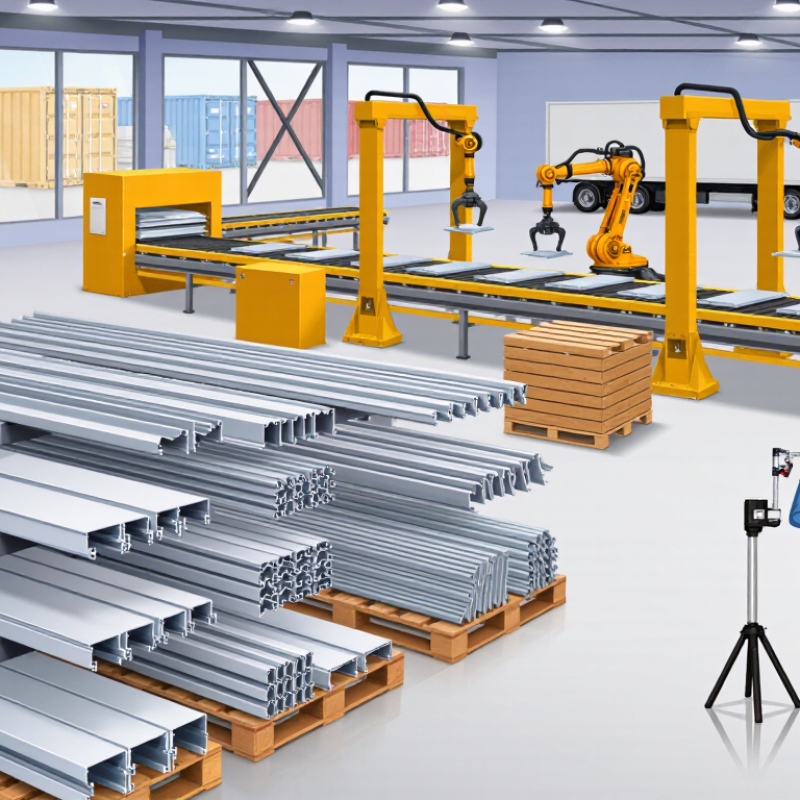
10 Best Aluminum Profiles Suppliers for Global Buyers

What Aluminum Profiles Are and Why Global Buyers Source Them

Aluminum profiles are shaped sections produced by pushing heated alloy through a die. Their cross-sections can form window frames, machine rails, curtain-wall supports, or heat sinks. A small change in wall thickness can affect weight, stiffness, and machining time. Details matter. Alloy and temper also influence strength, finish, and how reliably a profile can be cut or drilled.

Global buyers source profiles because extrusion can create complex shapes in repeatable lengths, reducing the need to assemble many separate parts. The USGS Mineral Commodity Summaries 2024 estimated global primary aluminum production at about 70 million metric tons in 2023. That figure describes raw metal, not finished profiles, but it reflects the scale of the material supply base. Buyers can compare suppliers on tooling capability, production capacity, dimensional control, and shipping options. Still, a large industry does not guarantee a suitable section or consistent batches.

Profiles are lightweight and generally resist corrosion, making them useful in buildings, transport equipment, and industrial systems. Performance depends on alloy, surface treatment, and exposure conditions; “aluminum” alone is not a complete specification. Ask for alloy and temper details, tolerances, finish requirements, inspection records, and protective packing. A neat drawing can hide a poor fit. Sample checks help, though they cannot prove every production run will match.

Key Factors for Evaluating Aluminum Profile Suppliers

When evaluating aluminum profile suppliers, match their equipment to the section you need. Ask about alloy and temper options, extrusion limits, dimensional tolerances, and surface treatments. A precise drawing helps reveal whether a supplier can hold critical wall thicknesses and slot dimensions. Request inspection records from comparable production runs, not just a general quality statement. Details matter.

Tips: Send a sample drawing and ask for a tolerance review before requesting a large quote. Check how defects are recorded, how samples are approved, and who handles technical questions. A clear answer is useful; a vague promise is not.

Production capacity matters, but so does consistency. Ask how the supplier manages die maintenance, batch identification, and checks for straightness or finish variation. For overseas shipments, confirm packaging protects long profiles from bending, scratches, and moisture during transit. Also review realistic lead times and the process for reporting damage or shortages. Certifications can support an assessment, but verify their scope and dates rather than treating them as proof of every capability. Even experienced suppliers may miss a detail, so document agreed tolerances, finishes, and inspection criteria. A small pilot order can expose gaps before they affect a larger project.

Ten Leading Aluminum Profile Suppliers for Global Buyers

Ten leading aluminum profile suppliers for global buyers should be compared on more than price. The International Aluminium Institute reported approximately 70.6 million tonnes of primary aluminum production in 2023. This figure shows the scale of the upstream industry, not the quality of any individual supplier. Buyers should check alloy options, extrusion tolerances, surface finishes, tooling charges, and delivery history. Ask for inspection records and sample profiles that match the intended application.

A practical shortlist of ten suppliers should include manufacturers with clear technical documentation and responsive engineering support. Compare their ability to hold dimensions across long runs, protect profiles during shipping, and provide consistent packaging. Request details on quality controls, such as documented inspection procedures, rather than relying on a certificate alone. Small gaps matter. A slightly uneven coating can become obvious across a long row of window frames. I would also allow time for sample approval; rushing this step can create avoidable rework.

Tips: Send the same drawing and finish specification to every candidate. Ask each supplier to state tolerances, lead time, minimum order quantity, and packaging method in writing. Then compare the answers side by side. Some details may still be unclear, so confirm them before placing a production order.

Comparing Supplier Capabilities, Certifications, and Service

Choosing an aluminum profile supplier is less about a polished catalog and more about repeatable control. Ask how the supplier manages alloy grades, extrusion tolerances, surface treatment, and batch traceability. A capable team should explain where dimensional checks happen and share inspection records, not just promise “tight tolerances.” For designs with narrow slots or thin walls, request a trial profile before approving a large order. Small deviations can complicate assembly.

Tips: Check that certificates are current, issued to the manufacturing site, and relevant to your requirements. Ask for material test reports and clarify which tests apply to each profile. A certificate helps, but it does not replace product-specific inspection. Details matter.

Compare service through concrete questions. Can the supplier review drawings, flag difficult features, and confirm realistic lead times? Ask how profiles are protected during shipping; a few scratches on a brushed finish may create rework. Also confirm minimum order quantities, packaging options, and the process for handling nonconforming parts. Not every supplier will fit every project. Keep a written comparison, but leave room for judgment: a responsive engineer can be valuable, though one good call is not proof of consistent support.

How to Assess and Select a Supplier for Your Project

Assess a supplier against the drawing, not a polished catalogue. Confirm alloy, temper, dimensional tolerances, finish, and required test documents before comparing quotations. Ask how the supplier controls die wear and records batch changes. Small gaps matter. A profile that looks right may still fail during assembly.

Capacity and environmental evidence also deserve scrutiny. The International Aluminium Institute projected that global aluminium demand could rise by about 40% by 2030 in its industry outlook. The IEA has reported that aluminium production contributes roughly 3% of global direct industrial CO2 emissions. Ask suppliers for recent production-capacity data and evidence supporting recycled-content or emissions claims; marketing language alone is weak proof. Check whether certificates match the actual alloy and production batch.

Request samples made with the proposed tooling, then measure critical dimensions and inspect cut ends, surface finish, and packaging. Ask for realistic lead times, minimum order quantities, tooling ownership terms, and a clear process for handling defects. Compare landed cost, not just the price per metre. A small trial order can reveal packing damage or inconsistent tolerances before a larger commitment. I would still leave room for judgment: supplier audits can miss problems, and one good sample proves little about every future batch.

Copyright 2025 Fluidra S.A. | Created by BCM Marketing Agencia Privacy Policy Legal note | Cookie policy |

Technical cookies are strictly necessary for our website to work and you can navigate through it. These types of cookies are those that, for example, allow us to identify you, give you access to certain restricted parts of the page if necessary, or remember different options or services already selected by you, such as your privacy preferences. Therefore, they are activated by default, your authorization not being necessary in this regard. Through the configuration of your browser, you can block or alert the presence of this type of cookies, although such blocking will affect the proper functioning of the different functionalities of our website.


The analysis cookies allow us to study the navigation of the users of our website in general (for example, which sections of the page are the most visited, which services are used most and if they work correctly, etc.). From the statistical information on navigation on our website, we can improve both the operation of the page itself and the different services it offers. Therefore, these cookies do not have an advertising purpose, but only serve to make our website work better, adapting to our users in general. By activating them you will contribute to this continuous improvement. You can enable or disable these cookies by checking the corresponding box, being disabled by default.


Functionality cookies allow us to remember your preferences, to personalize certain characteristics and general options of our website, every time you access it (for example, the language in which the information is presented to you, the sections marked as favorites, your browser type, etc.) Therefore, this type of cookies does not have an advertising purpose, but by activating them you will improve the functionality of the website (for example, adapting to your type of browser) and the customization of it based on your preferences (for example, by presenting the information in the language that you have chosen in previous occasions), which will contribute to the ease, usability and comfort of our page during your navigation. You can enable or disable these cookies by checking the corresponding box, being disabled by default.


Advertising cookies allow us to manage the advertising spaces included in our website based on criteria such as the content shown or the frequency in which the ads are displayed. For example, if you have been shown the same ad several times on our website, and you have not shown a personal interest by clicking on it, it will not appear again. In summary, by activating this type of cookies, the advertising shown on our website will be more useful and diverse, and less repetitive. You can enable or disable these cookies by checking the corresponding box, being disabled by default.


Behavioral advertising cookies allow us to obtain information based on the observation of your browsing habits and behaviors on the web, in order to show you advertising content that best suits your personal tastes and interests. To understand it in a very simple way, we will give you a fictitious example: if your last searches on the web were related to suspense literature, we would show you advertising about suspense books. Therefore, activating this type of cookies, the advertising that we show you on our website will not be generic, but will be oriented to your searches, tastes and interests, therefore adjusting exclusively to you. You can enable or disable these cookies by checking the corresponding box, being disabled by default.
To understand it in a very simple way, we will give you a fictitious example: if your last searches on the web were related to suspense literature, we would show you advertising about suspense books. Therefore, activating this type of cookies, the advertising that we show you on our website will not be generic, but will be oriented to your searches, tastes and interests, therefore adjusting exclusively to you. You can enable or disable these cookies by checking the corresponding box, being disabled by default.

SAVE

We use our own and third-party cookies to ensure the proper functioning of the website and to analyse our services, improve your experience on our website and show you advertisements related to your interests according to profiling based on your browsing habits (e.g. websites visited). You can accept all cookies by clicking "ACCEPT" or set or reject them by clicking here. If you would like to know more about the use of cookies, please see our COOKIE POLICY.


ACCEPT ALL
Reject no essentials


