
What Is the Best 358 Fence from China?
FLUID HANDLING EXPERTS

Blog, all our news

What Is the Best 358 Fence from China?

Choosing the best 358 fence from China requires more than comparing prices or browsing product photos. This security barrier uses narrow mesh openings, often around 76.2 by 12.7 millimeters, to resist climbing and forced passage. However, specifications can vary between suppliers. Wire diameter, panel tolerance, weld strength, coating thickness, and post design deserve close attention. Small differences matter.

Perimeter-security consultant Mark Ellison says, “A 358 fence is only as strong as its weakest installation detail.” That practical view should guide every buying decision. A reliable Chinese manufacturer should provide clear drawings, material declarations, weld-testing records, and consistent samples. Hot-dip galvanizing or a suitable powder-coated finish can improve outdoor durability, especially near humid or coastal areas. Yet coating claims should be verified, not simply accepted.

Look closely.

The best 358 fence is usually the one supported by disciplined production and careful project matching. A factory may offer attractive steel grades, but poor welding can weaken the whole panel. Likewise, a strong panel may perform badly with undersized posts, shallow foundations, or unsuitable fixings. These details are easy to overlook during online sourcing. I would also admit one limitation: no supplier can be judged from a catalog alone. Independent inspection, sample approval, and realistic delivery checks remain necessary. This introduction examines Chinese 358 fence manufacturers through those practical measures, while considering durability, customization, installation support, documentation, and total project value. The goal is not to name the cheapest option. It is to identify the most dependable choice for a specific site, environment, and security requirement.
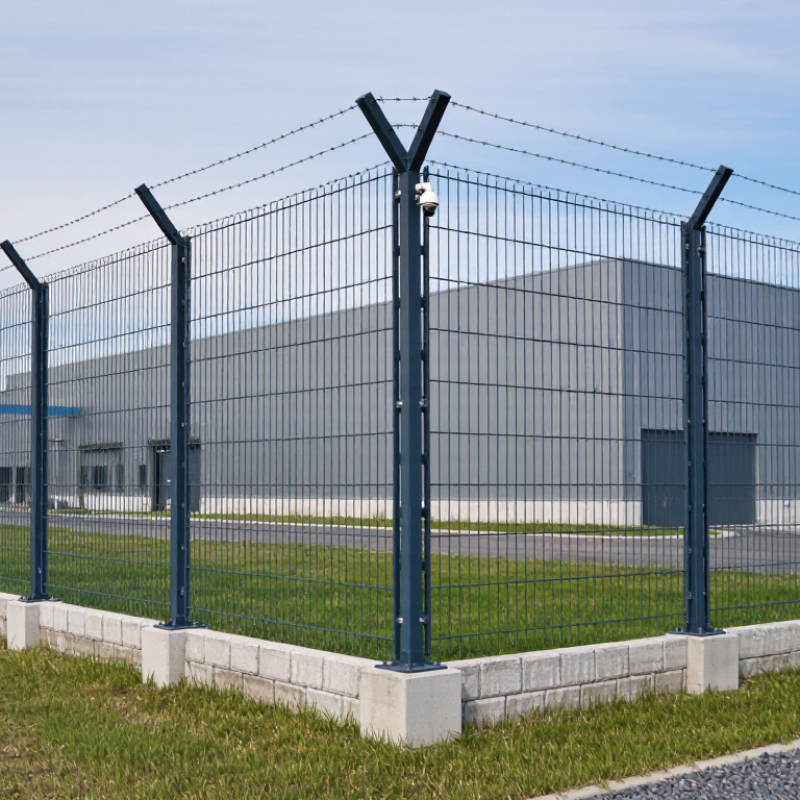
What Is the Best 358 Fence from China?

What Is a 358 Fence and How Does It Work?

What Is a 358 Fence and How Does It Work?

A 358 fence is a welded security panel with openings of about 76.2 by 12.7 millimeters. The name refers to its traditional three-inch by half-inch mesh and heavy wire construction. It is difficult to climb because fingers and toes cannot easily grip the narrow spaces. Cutting also takes more time than cutting ordinary chain-link fencing. It is dense. That detail matters.

The system normally includes steel panels, support posts, clamps, and access gates. Panels attach to the posts with tamper-resistant fixings, creating a continuous barrier around sites, warehouses, utilities, or transport facilities. Hot-dip galvanizing or a zinc-rich coating helps resist rust. A powder-coated surface can add color and another protective layer. Correct post spacing is important. Poor alignment can create gaps and weaken the whole installation.

When choosing the best 358 fence from China, inspect more than photographs and price. Request exact wire diameter, mesh measurements, coating thickness, weld quality, and material certificates. Check whether the supplier can provide samples before production. Packaging also deserves attention, because damaged coatings may rust during sea transport. In my view, a slightly higher specification is often safer than a cheaper panel. Still, no fence is maintenance-free. Even well-made systems need checks for loose clamps, impact damage, and corrosion. I would also verify local installation requirements, since product quality alone does not guarantee a reliable boundary.

What Is the Best 358 Fence from China?

A 358 fence is a high-security welded mesh fence named after its nominal 3 × 0.5 inch mesh opening and 8-gauge wire. The small opening makes it difficult to climb or cut, while the welded steel structure provides a strong perimeter barrier.

How it works: Compared with common security mesh patterns, the 358 design uses a much narrower vertical opening. This limits footholds and handholds, reduces tool access, and improves resistance to climbing and cutting. The figures shown are nominal mesh dimensions in millimeters.

Which Standards Define a High-Quality 358 Fence from China?

What Is the Best 358 Fence from China?

The best 358 fence is not defined by its country of origin. It is defined by measurable performance. A high-quality panel normally uses 76.2 mm by 12.7 mm openings, creating a dense anti-climb mesh. The specification should clearly state wire diameter, panel size, post thickness, and dimensional tolerances. Vague descriptions create avoidable problems.

EN 10223-7 can help assess welded steel mesh fencing requirements. BS 1722-14 is also relevant for open mesh steel panel fences. For hot-dip galvanizing, ISO 1461 provides coating requirements for fabricated steel products. These references should match the project environment. Coastal sites may need stronger corrosion protection than inland locations. Salt-spray results can support evaluation, but they should not replace coating thickness measurements.

Production evidence matters as much as printed standards. Ask for mill certificates, welding inspection records, galvanizing reports, and batch traceability. A reliable factory should measure mesh openings with calibrated tools, not visual judgment. Welds should remain firm when panels are handled and loaded. Sharp wire ends are unacceptable. I would also inspect corner posts and fixing clips, because weak accessories can undermine a strong panel. Certificates alone are not proof. An independent pre-shipment inspection may reveal uneven coating, bent wires, or missing fasteners. Specifications can still be imperfect, so reviewing site conditions and installation methods remains necessary.

What Materials and Designs Make a 358 Fence More Secure?

What Is the Best 358 Fence from China?

A secure 358 fence starts with correctly specified materials. The usual panel uses low-carbon steel wire, welded into 76.2 by 12.7 millimetre apertures. Its narrow openings resist footholds and limit tool access. An 8-gauge wire, commonly about 4 millimetres thick, adds useful rigidity. However, wire size alone does not prove performance.

Coating quality matters outdoors. ISO 1461:2022 indicates a minimum zinc coating thickness of 55 micrometres for steel between 3 and 6 millimetres thick. Buyers should request coating-test results, not rely on photographs. Hot-dip galvanizing, followed by a suitable polymer coating, can improve corrosion protection in wet or coastal locations. Welds must remain fully covered. Exposed weld points become early failure areas.

Design details often decide the real security level. Rigid panels should use closely spaced posts, tamper-resistant fixings, and anti-lift brackets. The foundation should prevent panel movement after repeated pushing. A projecting top section may discourage climbing, but it should not replace controlled access and lighting. LPS 1175 test reports assess resistance against defined tools and attack durations. Mesh size alone cannot claim an equivalent rating. This is where many product descriptions become too confident.

Chinese suppliers can provide strong 358 fencing, but inspection remains essential. Check wire diameter, aperture tolerance, zinc mass, weld integrity, and panel flatness before shipment. One overlooked issue is gate alignment. A strong panel with a weak gate is still a weak perimeter.

What Is the Best 358 Fence from China? - What Materials and Designs Make a 358 Fence More Secure?

Evaluation Dimension Typical 358 Fence Specification Security Benefit Practical Selection Guidance
Mesh aperture Approximately 76.2 × 12.7 mm, commonly called 358 mesh The narrow 12.7 mm opening makes it difficult to insert fingers, tools, or climbing footholds. Check the actual aperture with a ruler or inspection report, especially where tighter tolerances are required.
Wire diameter Usually about 4.0 mm horizontal and vertical wires Thicker welded wires improve resistance to cutting, bending, and impact compared with lighter mesh. Confirm whether the stated diameter is measured before or after coating, because coating can affect the final measurement.
Base steel Low-carbon steel wire formed into rigid welded panels Welded intersections create a stable panel that is harder to deform than loosely woven wire. Ask for consistent wire diameter, straightness, weld quality, and visible absence of cracked or incomplete welds.
Welded joint quality Uniform resistance-welded intersections across the full panel Strong, regular welds prevent localized separation and reduce opportunities for cutting through the panel. Inspect sample panels for regular spacing, firm intersections, and no loose wires or burn-through marks.
Corrosion protection Hot-dip galvanized steel, or galvanized steel with an additional organic coating Zinc protects exposed steel from corrosion; an additional coating can provide another barrier and improve appearance. For coastal or industrial locations, request coating details, surface preparation requirements, and a corrosion-protection test report.
Panel height Common project heights include approximately 1.8 m, 2.0 m, 2.4 m, and 3.0 m A taller panel increases the physical barrier and makes climbing more difficult when combined with suitable toppings. Select height according to the site risk assessment, local planning rules, and required foundation capacity.
Panel width Often approximately 2.5 m to 3.0 m per panel A rigid panel with fewer unsupported spans can improve alignment and reduce movement under load. Match panel width to post spacing and consider transport, handling, and the number of joints in the fence line.
Post profile Commonly rectangular hollow sections, square posts, or specialized roll-formed profiles A correctly sized post resists bending and helps maintain panel rigidity during attempted intrusion. Evaluate post thickness, section size, embedment depth, and foundation design together rather than judging the panel alone.
Panel-to-post fixing Security bolts, tamper-resistant fasteners, or protected clamp systems Protected fixings reduce the possibility of removing panels with standard hand tools from the outside. Prefer fasteners located on the secure side or covered by anti-tamper caps and check replacement availability.
Fence top design Plain top, angled extension, rotating anti-climb system, or security topping where permitted A suitable topping increases the effective height and discourages climbing over the fence. Check safety regulations, legal restrictions, and maintenance requirements before adding sharp or rotating components.
Bottom clearance Normally kept as small as practical for the terrain, often around 50–100 mm on level ground A low clearance limits crawling beneath the fence and reduces opportunities to lift the panel. Use stepped or raked installation on uneven ground while maintaining the specified security clearance.
Gate integration Welded mesh swing or sliding gates with matching narrow-aperture infill A weak gate can undermine an otherwise secure perimeter; matching infill maintains consistent protection. Use protected hinges, a suitable locking system, anti-lift devices, and controlled access hardware where required.
Visibility and surveillance Narrow welded mesh that preserves clear visual lines through the perimeter The open construction supports CCTV observation, lighting coverage, and security patrol visibility. Avoid nearby objects, landscaping, or structures that create climbing aids or concealment zones.
Installation quality Accurate post alignment, secure foundations, consistent panel overlaps, and protected cut edges Correct installation prevents gaps, loose panels, leaning posts, and premature corrosion at modified areas. Require installation drawings, foundation details, torque requirements, and a final inspection checklist.
Quality documentation Material certificates, dimensional inspection records, coating reports, and weld-quality checks Independent or traceable documentation helps verify that the supplied fence matches the specified security design. Compare samples, drawings, and test records with the purchase specification before production and shipment.

Note: Actual performance depends on wire diameter, steel grade, coating system, post design, fixings, foundations, installation quality, and the complete perimeter-security system.

How to Evaluate Chinese 358 Fence Manufacturers and Quality

What Is the Best 358 Fence from China?

The best 358 fence is not defined by the lowest quotation. It is defined by consistent mesh, tested steel, and controlled production. A standard 358 panel usually has 76.2 × 12.7 mm openings. The wire diameter should match the approved specification, often around 4 mm. Small deviations can affect climbing resistance and installation accuracy.

China remains a major steel manufacturing center. The World Steel Association reported China produced about 1,005 million tonnes of crude steel in 2024. This supports broad material availability, but it does not guarantee fence quality. Buyers should request mill certificates, coating results, weld-shear tests, and dimensional inspection records. ISO 1461 guidance can help assess hot-dip galvanized coatings. For welded security mesh, ASTM F2781 offers useful testing principles, although project requirements may differ.

Tips: Ask for samples from current production, not only showroom pieces. Measure ten mesh openings with calipers. Check wire diameter after coating. Inspect welds for dark burn marks, loose joints, and uneven spacing. Request a factory video showing welding, galvanizing, cutting, and packing. A certificate alone is not proof. I have seen attractive samples hide inconsistent batch quality. That is why third-party inspection remains worthwhile, especially for large orders. Evaluate packaging too; bent panels create installation delays and unexpected costs.

How to Choose the Best 358 Fence for Your Project

What Is the Best 358 Fence from China?

Choosing the best 358 fence starts with the project, not the factory. Define the site’s security level, fence height, ground condition, and expected service life. A typical 358 mesh uses narrow 76.2 by 12.7 millimeter openings. These openings make footholds and handholds difficult. Check the wire diameter carefully. Some suppliers describe a panel as 358, although the wire is lighter than expected.

Ask for technical drawings, material specifications, and recent inspection records. The panel should have consistent spacing, straight welds, and clean edges. Hot-dip galvanizing can improve corrosion resistance, while powder coating adds color and another protective layer. However, coating quality depends on surface preparation. A thick finish alone proves little. Request coating-thickness data and a sample panel before placing a large order.

Posts, clamps, gates, and foundations deserve equal attention. A strong panel can still fail when posts are too thin or poorly anchored. Confirm post dimensions, base-plate details, fastener grade, and drainage arrangements. Also review loading methods and export packaging. Bent corners often appear after careless handling, not during production. Compare samples in daylight. Measure them yourself. I have found that small measurement errors can create costly installation delays. Allow space for local construction tolerances, because drawings rarely match every site perfectly. Choose a supplier that answers technical questions clearly, accepts reasonable inspection, and provides traceable production documents. Reliability shows in details.

Article Source:

Copyright 2025 Fluidra S.A. | Created by BCM Marketing Agencia Privacy Policy Legal note | Cookie policy |

Technical cookies are strictly necessary for our website to work and you can navigate through it. These types of cookies are those that, for example, allow us to identify you, give you access to certain restricted parts of the page if necessary, or remember different options or services already selected by you, such as your privacy preferences. Therefore, they are activated by default, your authorization not being necessary in this regard. Through the configuration of your browser, you can block or alert the presence of this type of cookies, although such blocking will affect the proper functioning of the different functionalities of our website.


The analysis cookies allow us to study the navigation of the users of our website in general (for example, which sections of the page are the most visited, which services are used most and if they work correctly, etc.). From the statistical information on navigation on our website, we can improve both the operation of the page itself and the different services it offers. Therefore, these cookies do not have an advertising purpose, but only serve to make our website work better, adapting to our users in general. By activating them you will contribute to this continuous improvement. You can enable or disable these cookies by checking the corresponding box, being disabled by default.


Functionality cookies allow us to remember your preferences, to personalize certain characteristics and general options of our website, every time you access it (for example, the language in which the information is presented to you, the sections marked as favorites, your browser type, etc.) Therefore, this type of cookies does not have an advertising purpose, but by activating them you will improve the functionality of the website (for example, adapting to your type of browser) and the customization of it based on your preferences (for example, by presenting the information in the language that you have chosen in previous occasions), which will contribute to the ease, usability and comfort of our page during your navigation. You can enable or disable these cookies by checking the corresponding box, being disabled by default.


Advertising cookies allow us to manage the advertising spaces included in our website based on criteria such as the content shown or the frequency in which the ads are displayed. For example, if you have been shown the same ad several times on our website, and you have not shown a personal interest by clicking on it, it will not appear again. In summary, by activating this type of cookies, the advertising shown on our website will be more useful and diverse, and less repetitive. You can enable or disable these cookies by checking the corresponding box, being disabled by default.


Behavioral advertising cookies allow us to obtain information based on the observation of your browsing habits and behaviors on the web, in order to show you advertising content that best suits your personal tastes and interests. To understand it in a very simple way, we will give you a fictitious example: if your last searches on the web were related to suspense literature, we would show you advertising about suspense books. Therefore, activating this type of cookies, the advertising that we show you on our website will not be generic, but will be oriented to your searches, tastes and interests, therefore adjusting exclusively to you. You can enable or disable these cookies by checking the corresponding box, being disabled by default.
To understand it in a very simple way, we will give you a fictitious example: if your last searches on the web were related to suspense literature, we would show you advertising about suspense books. Therefore, activating this type of cookies, the advertising that we show you on our website will not be generic, but will be oriented to your searches, tastes and interests, therefore adjusting exclusively to you. You can enable or disable these cookies by checking the corresponding box, being disabled by default.

SAVE

We use our own and third-party cookies to ensure the proper functioning of the website and to analyse our services, improve your experience on our website and show you advertisements related to your interests according to profiling based on your browsing habits (e.g. websites visited). You can accept all cookies by clicking "ACCEPT" or set or reject them by clicking here. If you would like to know more about the use of cookies, please see our COOKIE POLICY.


ACCEPT ALL
Reject no essentials


