
Global aluminum demand is growing, and die decisions now affect more than press output. The International Aluminium Institute’s 2023 report projects demand could rise from 86 million tonnes in 2020 to nearly 119 million tonnes by 2030. That growth puts pressure on buyers to specify dies carefully, especially when suppliers, alloys, and production sites span several countries.
An Aluminum Extrusion Die shapes metal flow under heat and pressure. Small design choices can leave visible marks: uneven wall thickness, surface lines, or profiles that drift out of tolerance. A low purchase price may look attractive. Then comes rework. Sometimes, the real cost is hidden in setup time and rejected profiles.
This guide presents seven practical checks for global buyers, from alloy and profile complexity to steel selection, cooling, tolerances, and supplier support. It also considers how to review trial runs and communicate changes across time zones. The details matter. One caution: I could not verify a named expert’s published quotation specific to extrusion-die purchasing, so I will not invent one. Instead, use the cited demand forecast as context, and confirm technical claims against drawings, trial data, and supplier records. A careful review is not perfect every time. It can still prevent costly surprises.
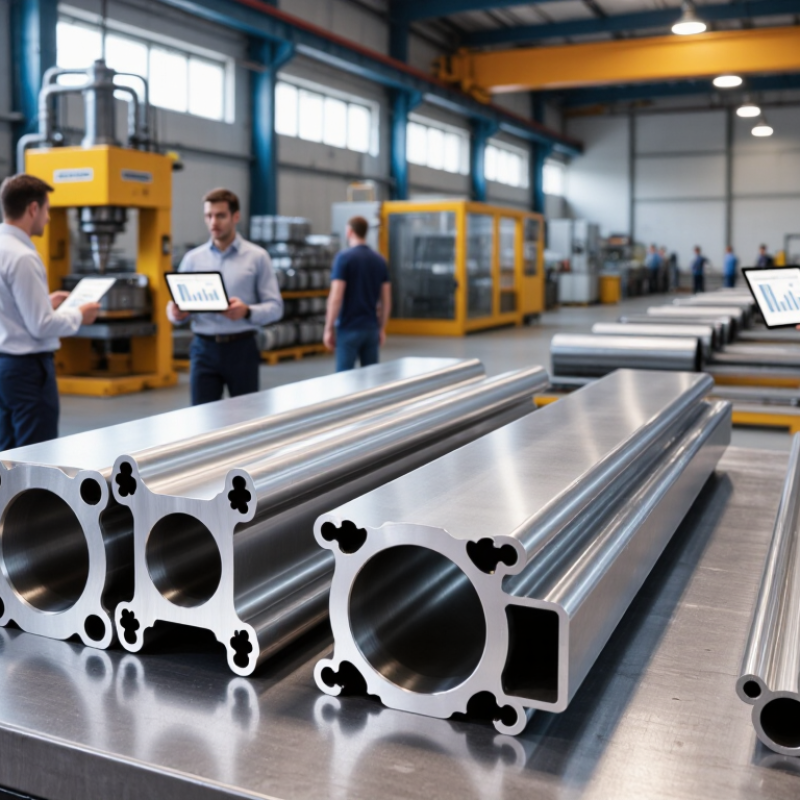
An Extrusion Die is more than a shaped opening. It meters hot aluminum as a press forces a billet through the die. The bearing land—the narrow surface after the opening—helps balance metal flow and profile dimensions. In hollow profiles, mandrels and bridges form internal cavities. A thin window frame and a thick structural channel may need very different flow control.
Scale matters. The International Aluminium Institute reported about 70.6 million tonnes of global primary aluminum production in 2023. That figure is not extrusion output, but it shows the material’s industrial reach. Die design also affects scrap: uneven flow can leave one wall thick and another undersized. Small differences count. The IAI notes that recycling aluminum uses up to 95% less energy than producing primary metal, making clean, recoverable process scrap valuable.
In practice, the first die rarely behaves exactly as the drawing predicts. Engineers review profile corners, wall thickness, bearing lengths, and press capacity before cutting tool steel. A sharp internal corner can restrict flow; a longer bearing may slow a faster region. Trial runs then reveal what simulations missed. This is where experience helps, though adjustments can still involve judgment. Temperature drift and billet variation may change the result. A useful die balances profile accuracy with stable production, not just visual complexity.

A reliable extrusion die starts with the alloy, not just the profile drawing. Different alloys flow at different rates, and that affects pressure, surface finish, and dimensional stability. A harder alloy may need a different bearing design than a softer one. Even a small change in billet temperature can shift the result.
Profile geometry matters just as much. Thick and thin sections in one shape rarely fill at the same speed. Die openings, bearing lengths, and feeder pockets help balance metal flow. For a hollow profile, bridge placement and weld-chamber design also influence strength and appearance. Small details matter.
Tolerances should be realistic for the alloy, dimensions, and production process. A long, narrow feature may bow more than a compact section, even when both meet the drawing’s nominal dimensions. Buyers can ask how critical dimensions will be measured, and whether samples will be checked after cooling. The first die is rarely perfect. That is worth planning for. Trial runs may reveal uneven flow or slight twist, and adjustments can take time. Sharing clear drawings, alloy specifications, and tolerance priorities early gives the die designer better information. It also helps prevent a late argument over what “close enough” means.
An extrusion die’s service life depends on more than its drawing and quoted steel grade. Ask which tool steel is used, and request a material certificate that identifies the heat or batch. Cleanliness and consistent composition matter because inclusions can become weak points under repeated pressure.
Small details matter. A hardness number alone is not enough; ask where it was measured and whether several points were checked across the die.
Heat treatment affects both wear resistance and toughness. Ask about the process, tempering steps, and how distortion is checked afterward. A die that is too soft may wear quickly, while excessive hardness can increase chipping risk. The right balance depends on the profile, alloy, and production conditions, so one specification will not fit every order.
Ask for records. Manufacturing quality deserves the same scrutiny: inspect critical dimensions, bearing lengths, surface finish, and alignment. Request inspection reports and, when practical, review a sample die or production trial.
Polishing marks, rough edges, or inconsistent dimensions can affect metal flow. Supplier paperwork is useful, but it does not replace clear measurements. Even experienced buyers can overlook a small mismatch between the drawing and the inspection plan.
7 Aluminum Extrusion Die Tips for Global Buyers
Compare Supplier Expertise, Pricing, and Delivery Capabilities
A capable die supplier should explain how its design matches your alloy, profile shape, and press capacity. Ask for sample inspection reports, die-trial records, and examples of how the team corrects twist or uneven wall thickness. Details matter. A polished capability deck is not proof of consistent production; request evidence from comparable profiles. The USGS Mineral Commodity Summaries 2024 estimated global primary aluminum production at 70 million metric tons in 2023. That scale makes material availability relevant, but it does not guarantee suitable extrusion capacity at a particular supplier.
Compare total cost, not just the die quotation. Separate design, tooling, trial runs, revisions, packaging, and freight. Ask what triggers extra charges and how many correction cycles are included. A low initial price may not stay low. Still, supplier cost breakdowns can be imperfect, so confirm assumptions in writing and compare equivalent specifications.
Delivery estimates should show distinct dates for design approval, die completion, trial extrusion, and shipment. Ask whether the supplier has a confirmed press slot and a realistic plan for rework. UNCTAD’s Review of Maritime Transport 2024 notes that over 80% of world trade by volume moves by sea, making port schedules and transit buffers worth checking. Request recent on-time delivery performance, not just a standard lead-time promise. Even then, one missed detail can disrupt the schedule.
| # | Buyer Tip | Expertise to Compare | Pricing to Check | Delivery Evidence | Useful Request |
|---|---|---|---|---|---|
| 1 | Match experience to profile complexity | Ask about comparable solid, hollow, or multi-cavity profiles, alloy, dimensions, and press conditions. Die design depends on these requirements. | Compare quotes for the same drawing revision, material assumptions, and scope; a complex profile may require more design and machining work. | Request a project schedule showing design review, manufacturing, inspection, and trial milestones. | Send a controlled drawing and ask the supplier to identify design risks before quoting. |
| 2 | Check design and simulation capability | Confirm how the supplier reviews metal flow, bearing design, weld chambers for hollow profiles, and likely distortion or dimensional risks. | Clarify whether engineering, revisions, and simulation are included or charged separately. | Ask when design approval is needed and how revisions affect the committed schedule. | Request a sample design-review report or a written list of assumptions and open questions. |
| 3 | Verify tool steel and heat-treatment controls | Specify the proposed tool-steel grade and ask for material traceability and heat-treatment records. Die performance also depends on operating conditions and maintenance. | Compare steel grade, heat treatment, coating if applicable, and included documentation—not price alone. | Check whether material certification and inspection records are available before dispatch. | Request the material certificate and heat-treatment specification for the quoted die. |
| 4 | Compare quality checks and acceptance criteria | Look for documented dimensional inspection and a clear process for evaluating trial extrusions against agreed profile tolerances. | Identify whether inspection, trial support, correction work, and final reporting are included in the price. | Confirm the inspection stage, report format, and approval points in the schedule. | Agree in writing on the drawing revision, measurement method, and acceptance criteria. |
| 5 | Compare total cost, not just die price | Assess technical support for first trials, correction cycles, and maintenance guidance, since these can affect overall project cost. | Separate tooling, engineering, sampling, revisions, packaging, freight, duties, and taxes where applicable. Costs vary by design and destination. | Check whether trial and correction activities are scheduled and whether they add time or cost. | Request an itemized quote with exclusions, payment terms, and quote validity. |
| 6 | Validate production capacity and lead time | Ask what equipment and process controls will be used for the specific die, and whether capacity is available during the requested period. | Compare price and lead time together; there is no universal lead time because design, workload, and approval cycles differ. | Request dated milestones and written notice procedures for schedule changes. | Ask for a project-specific schedule, not an undated standard estimate. |
| 7 | Plan international shipping and after-sales support | Confirm support for technical questions, revisions, and troubleshooting across time zones, plus clear ownership of design files and tooling. | Compare packaging, freight terms, insurance, customs responsibilities, and any post-delivery service charges. | Check packing method, dispatch documentation, tracking, and the named party responsible for each shipping step. | Request written shipping terms, support contacts, and the tooling-ownership terms before placing the order. |
Note: Die pricing and delivery schedules are project-specific. Compare suppliers using the same drawing revision, technical scope, acceptance criteria, and shipping basis; obtain binding details in a written quotation.
Before approving an aluminum extrusion die, plan a sample run around the profile’s real requirements. Check dimensions, wall thickness, surface finish, and straightness with suitable gauges. A sample that looks clean may still twist after cooling. Details matter. Record billet alloy, temperature, press speed, and quench conditions so the trial can be repeated. Change one variable at a time when possible; otherwise, the cause of a defect can be hard to identify.
Die maintenance should be part of the production plan, not an emergency response. After each run, inspect bearing surfaces for wear and clean out residue using methods suited to the die material. Keep dated records of repairs, polishing, and extrusion hours. A small change in bearing length can affect metal flow. It is tempting to delay inspection when orders are urgent, but that choice can make later corrections more complicated. We have to admit that maintenance schedules are easy to overlook.
For global support, agree on response times, technical contacts, and the files needed for troubleshooting before shipment. Clear photos, profile drawings, alloy details, and press data help remote teams understand a problem faster. Confirm how spare parts will be identified and packed, and whether instructions use consistent units. Time zones can slow a simple question. A written support plan cannot prevent every delay, but it gives both sides a practical starting point.
Plan sample testing, die maintenance, and global support with a clear verification checklist.
This planning checklist groups 11 verification points: sample testing covers dimensions, alloy and temper, surface finish, and fit; die maintenance covers material records, repair history, and spare inserts; global support covers export documents, packaging and shipping terms, response coverage, and replacement lead time. Counts describe this checklist, not an industry benchmark.

Cepex is the brand for the fluid handling market belonging to the Fluidra group. One of the leading european manufacturer of valves and fittings in thermoplastic materials.
Dedicated to the swimming pool, irrigation and industrial markets, we distribute our products worldwide with the Fluidra commercial network and presence in 46 countries with 136 sales branches.


