
What is Agv Lift and How Does It Improve Warehouse Efficiency?
FLUID HANDLING EXPERTS

Blog, all our news

What is Agv Lift and How Does It Improve Warehouse Efficiency?

In the fast-paced world of logistics, Agv Lift technology emerges as a game-changer for warehouse operations. Experts in the field, like John Smith, emphasize its importance. He famously stated, "Agv Lifts streamline processes, allowing for precision and speed that traditional methods cannot match."

These automated solutions lift and transport goods efficiently. They reduce manual labor and the risk of injuries. By implementing Agv Lifts, warehouses see increased throughput and accuracy in order fulfillment. Yet, integrating this technology is not without challenges. There are costs and the need for staff training.

As with any innovation, assessing its impact on workflow is crucial. While Agv Lifts can enhance efficiency, it's essential to consider the specific needs of each warehouse. Through careful evaluation, operations can truly take advantage of what Agv Lift has to offer.
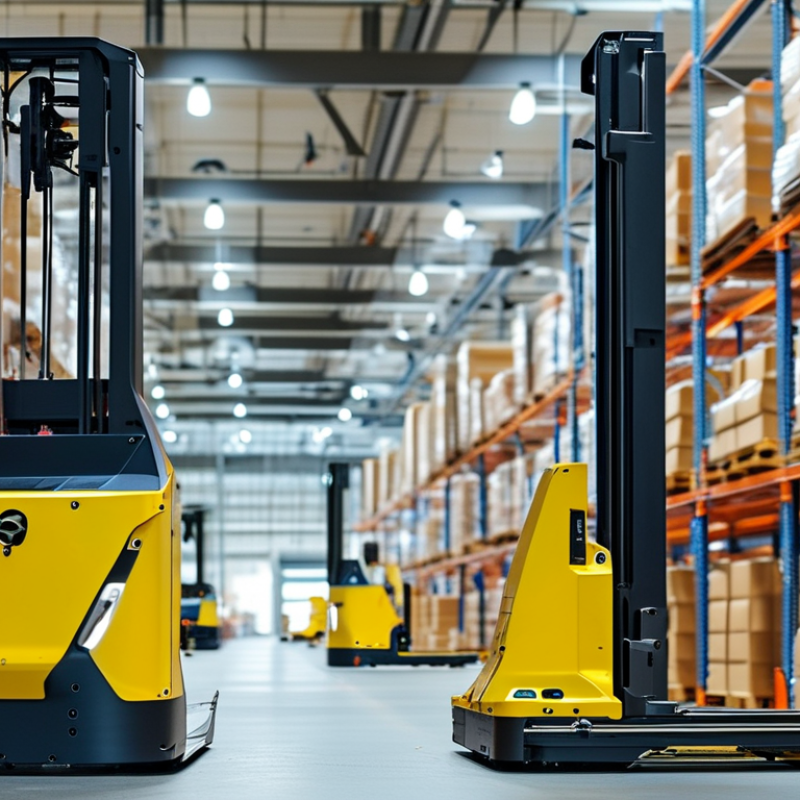
What is Agv Lift and How Does It Improve Warehouse Efficiency?

What is an AGV Lift and Its Role in Warehouse Automation

An AGV lift plays a crucial role in warehouse automation. It stands for Automated Guided Vehicle lift, a sophisticated tool designed to streamline operations. These lifts can transport heavy goods autonomously, minimizing human error and reducing the physical strain on warehouse staff. When integrated with warehouse management systems, AGV lifts can optimize inventory handling, leading to faster processing times.

Improving efficiency is not without challenges. Although AGV lifts reduce labor costs, they require upfront investment. The technology must be maintained regularly to ensure safe operations. Integrating AGV lifts into existing workflows can also disrupt established practices. Some employees may resist the change due to fear of job loss or the discomfort of new technology. This transition period can lead to delays if not managed carefully.

Despite these hurdles, the benefits often outweigh the drawbacks. AGV lifts can move items to various warehouse locations with precision. They also reduce the risk of workplace injuries, contributing to a safer environment. While they might not suit every warehouse, their strategic application can greatly enhance overall efficiency. Finding the right balance between automation and human labor is essential for sustainable progress in warehouse operations.

Key Components and Technology Behind AGV Lifts in Warehousing

AGV lifts, or Automated Guided Vehicle lifts, are pivotal in modern warehousing. These systems utilize advanced robotics to transport goods efficiently. They can reach various heights, facilitating loading and unloading tasks. This capability significantly reduces human labor and errors. According to a report by Logistics Management, implementing AGV technology can enhance warehouse productivity by up to 30%.

Key components of AGV lifts include sensors, navigation systems, and control software. Sensors like LIDAR and cameras allow AGVs to navigate complex environments safely. The navigation system ensures precise movement, reducing the risk of collisions. Reliable control software coordinates lift operations, streamlining workflow. A study from Robotics Business Review highlighted that 50% of warehouses adopting AGV solutions saw major operational improvements within just six months.

While AGV lifts boost efficiency, challenges remain. Initial setup costs can be high. Additionally, the technology may require a learning curve for warehouse staff. There is also the risk of technical failures, which necessitate regular maintenance. Companies must weigh these factors against potential efficiency gains. Investing in AGV lifts could lead to long-term benefits but requires careful consideration.

The Impact of AGV Lifts on Warehouse Operational Efficiency Metrics

AGV lifts are transforming warehouse operations. They automate the movement of goods, significantly reducing manual labor. This technology can elevate loads vertically, optimizing space utilization. With the precise positioning of items, warehouses witness less congestion. As a result, workers can focus on more complex tasks.

The impact on operational efficiency is substantial. AGV lifts provide real-time data for inventory management. This leads to better stock accuracy and reduced errors. Additionally, they minimize the time workers spend searching for equipment or products. However, implementing these systems can require significant upfront investment, which may lead to concerns about budget constraints.

Understanding the return on investment is essential. While AGV lifts enhance speed and safety, relying solely on automation may overlook human oversight. Balancing technology with human skills is crucial. Companies should reflect on their specific needs. Over time, many find that the initial challenges fade, revealing long-term benefits in efficiency and productivity.

Impact of AGV Lifts on Warehouse Operational Efficiency

Industry Case Studies Demonstrating AGV Lift Benefits in Logistics

AGV lifts have become integral in optimizing warehouse efficiency. In logistics, their ability to handle heavy loads with precision can't be overstated. A recent report from Logistics Management found that AGVs can increase warehouse throughput by up to 25%. This improvement stems from their capability to operate continuously, reducing downtime linked to manual labor.

Case studies from various industries illustrate these benefits. For instance, a distribution center reported a 40% reduction in order processing times after integrating AGV lifts. This efficiency gain not only boosts productivity but also enhances accuracy in inventory handling. However, some facilities noted challenges in integrating AGVs with existing systems. A lack of proper training for staff led to operational hiccups.

Moreover, as noted by the Warehouse Robotics Report, facilities using AGVs expect a return on investment within 18 months. This reflects a strong trend towards automation in logistics, despite initial implementation struggles. The evidence suggests that while AGV lifts are a powerful tool, successful adoption requires careful planning and ongoing support.

Future Trends in AGV Lift Technology for Enhanced Warehouse Performance

The evolution of AGV (Automated Guided Vehicle) lift technology is reshaping warehouse management. Future trends point towards smarter systems. These systems will use advanced sensors and AI to enhance decision-making. The result? Faster operations and reduced bottlenecks.


One intriguing aspect is the integration of machine learning. This allows AGV lifts to learn from workflows and adapt. As the technology evolves, warehouse layouts may also change. Optimizing the vertical space will become a priority, allowing for more efficient storage solutions.


Tips for implementing AGV lift technology: Ensure proper training for your staff. They should understand both the technology and its limitations. Regular maintenance is crucial. This helps avoid unexpected downtime. Evaluate your warehouse layout continually. Adapting it can lead to better space utilization and improved performance.

Article Source:

Copyright 2025 Fluidra S.A. | Created by BCM Marketing Agencia Privacy Policy Legal note | Cookie policy |

Technical cookies are strictly necessary for our website to work and you can navigate through it. These types of cookies are those that, for example, allow us to identify you, give you access to certain restricted parts of the page if necessary, or remember different options or services already selected by you, such as your privacy preferences. Therefore, they are activated by default, your authorization not being necessary in this regard. Through the configuration of your browser, you can block or alert the presence of this type of cookies, although such blocking will affect the proper functioning of the different functionalities of our website.


The analysis cookies allow us to study the navigation of the users of our website in general (for example, which sections of the page are the most visited, which services are used most and if they work correctly, etc.). From the statistical information on navigation on our website, we can improve both the operation of the page itself and the different services it offers. Therefore, these cookies do not have an advertising purpose, but only serve to make our website work better, adapting to our users in general. By activating them you will contribute to this continuous improvement. You can enable or disable these cookies by checking the corresponding box, being disabled by default.


Functionality cookies allow us to remember your preferences, to personalize certain characteristics and general options of our website, every time you access it (for example, the language in which the information is presented to you, the sections marked as favorites, your browser type, etc.) Therefore, this type of cookies does not have an advertising purpose, but by activating them you will improve the functionality of the website (for example, adapting to your type of browser) and the customization of it based on your preferences (for example, by presenting the information in the language that you have chosen in previous occasions), which will contribute to the ease, usability and comfort of our page during your navigation. You can enable or disable these cookies by checking the corresponding box, being disabled by default.


Advertising cookies allow us to manage the advertising spaces included in our website based on criteria such as the content shown or the frequency in which the ads are displayed. For example, if you have been shown the same ad several times on our website, and you have not shown a personal interest by clicking on it, it will not appear again. In summary, by activating this type of cookies, the advertising shown on our website will be more useful and diverse, and less repetitive. You can enable or disable these cookies by checking the corresponding box, being disabled by default.


Behavioral advertising cookies allow us to obtain information based on the observation of your browsing habits and behaviors on the web, in order to show you advertising content that best suits your personal tastes and interests. To understand it in a very simple way, we will give you a fictitious example: if your last searches on the web were related to suspense literature, we would show you advertising about suspense books. Therefore, activating this type of cookies, the advertising that we show you on our website will not be generic, but will be oriented to your searches, tastes and interests, therefore adjusting exclusively to you. You can enable or disable these cookies by checking the corresponding box, being disabled by default.
To understand it in a very simple way, we will give you a fictitious example: if your last searches on the web were related to suspense literature, we would show you advertising about suspense books. Therefore, activating this type of cookies, the advertising that we show you on our website will not be generic, but will be oriented to your searches, tastes and interests, therefore adjusting exclusively to you. You can enable or disable these cookies by checking the corresponding box, being disabled by default.

SAVE

We use our own and third-party cookies to ensure the proper functioning of the website and to analyse our services, improve your experience on our website and show you advertisements related to your interests according to profiling based on your browsing habits (e.g. websites visited). You can accept all cookies by clicking "ACCEPT" or set or reject them by clicking here. If you would like to know more about the use of cookies, please see our COOKIE POLICY.


ACCEPT ALL
Reject no essentials


