
7 Tips for Choosing JS Concrete Mixer Manufacturers
FLUID HANDLING EXPERTS

Blog, all our news

7 Tips for Choosing JS Concrete Mixer Manufacturers

Choosing reliable Js Concrete Mixer Manufacturers requires more than comparing prices or browsing polished product photos. A mixer may look impressive in a showroom, yet struggle beside a dusty construction site. The right decision depends on production capacity, drum design, engine performance, maintenance access, and long-term support. Small details matter.

As concrete equipment consultant Martin H. Schmid states, “A mixer earns its value through consistent batches, simple maintenance, and dependable support.” This principle should guide every supplier review. Ask how long the manufacturer has served international projects. Request technical drawings, load specifications, safety documentation, and real customer references. A trustworthy company should answer clearly, not hide behind vague promises. That is practical evidence of expertise.

The seven tips in this guide examine factory experience, material quality, mixing efficiency, customization, after-sales service, spare-parts availability, and total ownership cost. They also encourage direct inspection, when possible. Look at welds, access doors, control panels, and discharge systems. Speak with operators who use similar mixers daily. Their comments often reveal problems brochures ignore.

Do not assume the cheapest quotation saves money. Frequent downtime can consume an entire project margin. Still, even experienced buyers can misjudge a supplier after one successful conversation. That weakness deserves attention. Verify claims across documents, references, and on-site performance. Reliable Js Concrete Mixer Manufacturers welcome careful questions. They understand that trust is built batch by batch, not promised in a sales email. This approach helps buyers choose equipment that performs steadily under real working conditions.
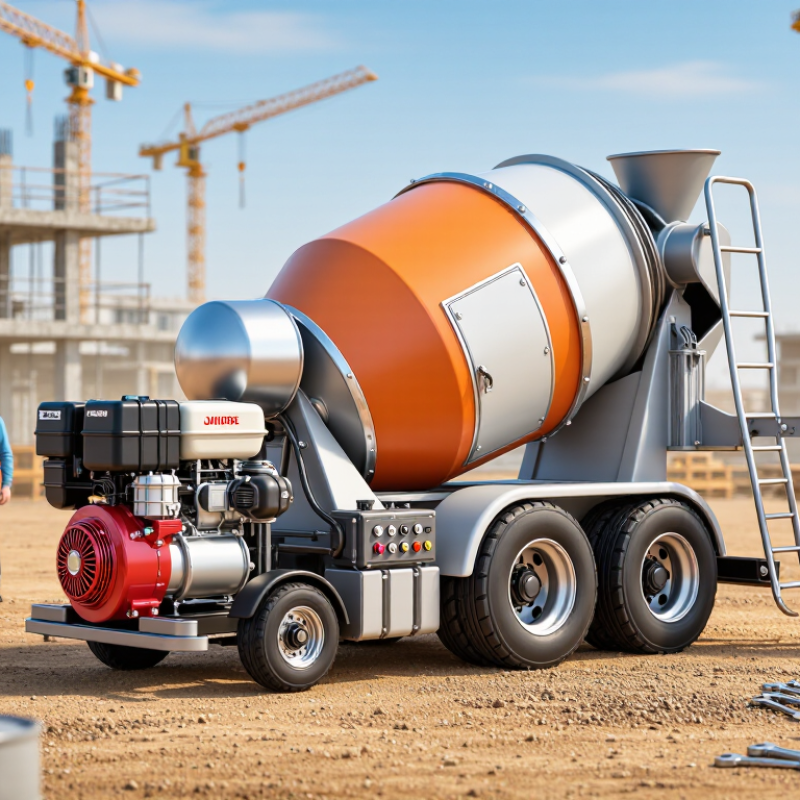
7 Tips for Choosing JS Concrete Mixer Manufacturers

Understanding JS Concrete Mixer Types and Production Standards

JS concrete mixers are commonly built with twin horizontal shafts and synchronized paddles. This design suits commercial batching, precast work, and demanding construction projects. It creates strong circulation, but material quality still depends on moisture, aggregate size, and loading order.

When comparing manufacturers, ask which JS mixer type matches your production rhythm. Smaller models may fit compact sites, while larger units require stronger foundations and reliable feeding systems. Inspect paddle shape, shaft seals, discharge gates, and replaceable wear plates. These parts face constant abrasion. A polished brochure is not proof. Request test records showing mixing time, discharge consistency, noise levels, and emergency-stop performance.

Production standards deserve close attention. Check whether the factory controls steel grades, welding procedures, shaft alignment, and gearbox assembly through documented inspections. Dimensional checks should be recorded before painting, not guessed afterward. Ask for load testing and trial operation with realistic aggregate. A clean workshop helps, but it cannot replace evidence. I have seen well-finished machines hide uneven welds beneath fresh coating. That mistake is expensive. Review maintenance manuals, spare-part drawings, and warranty terms in clear language. Also verify whether the manufacturer can adapt liners, voltage, and control systems to your site conditions. Some choices look efficient on paper, yet create daily cleaning problems. Leave room for doubt.

Evaluating Manufacturer Experience, Certifications, and Quality Control

7 Tips for Choosing JS Concrete Mixer Manufacturers

When choosing a JS concrete mixer manufacturer, examine experience beyond the company brochure. Ask for installation records, production years, and references from similar climates. The Global Cement and Concrete Association reports that more than 14 billion cubic meters of concrete are produced annually worldwide. Small design weaknesses can therefore create significant downtime.

Certifications deserve careful checking. ISO 9001 registration indicates a documented quality-management system, but it does not guarantee mixer performance. Request the certificate number, issuing body, and audit scope. Also review welding procedures, material certificates, calibration records, and factory acceptance-test results. For electrical and mechanical safety, verify compliance with the standards required in your target market. CE marking, for example, should include traceable technical documentation. A logo alone proves very little.

Quality control should be visible on the production floor. Inspect shaft alignment, blade clearance, gearbox testing, and drum or liner thickness. Ask how rejected parts are recorded and corrected. The ISO Survey 2023 identifies ISO 9001 as the most widely adopted quality standard, yet implementation quality still varies between factories. A manufacturer should provide batch-test data, load-test procedures, and spare-parts lead times. Request a video of a full-load trial. Better still, visit the factory.

Be demanding. That may feel inconvenient. A common mistake is trusting polished samples instead of measurable evidence. The best supplier can explain failures, not hide them.

Comparing Mixer Performance, Capacity, and Technical Specifications

7 Tips for Choosing JS Concrete Mixer Manufacturers

When comparing JS concrete mixer manufacturers, start with measurable mixing performance. Ask for batch test results, not polished claims. Check mixing uniformity, discharge time, and concrete slump consistency. A reliable mixer should blend cement, aggregate, water, and additives without visible dry pockets. Twin-shaft torque also matters when the mix contains stiff aggregate. I once focused too much on motor power and overlooked discharge speed. That mistake affected the entire production schedule.

Capacity needs careful reading. A listed 2 cubic meter capacity may describe drum volume, not usable output. Confirm the effective batch volume, cycle duration, and hourly production under real conditions. Compare shaft speed, motor rating, reducer efficiency, and shaft sealing design. Higher speed is not always better. It can increase wear or create unnecessary material buildup. Request noise readings and energy data, if available. Small details matter.

Technical specifications should match the working environment. Review inlet size, liner thickness, wear-resistant material, cleaning access, and emergency controls. Ask whether the manufacturer provides drawings, installation guidance, and spare-parts lists. Factory acceptance tests can reveal vibration, uneven discharge, or abnormal bearing temperature. Documentation builds confidence, but field references are more convincing. Some specifications still look incomplete, so question unclear tolerances and maintenance intervals. A responsive engineering team is often more valuable than impressive figures.

Reviewing Customization, Safety Features, and After-Sales Support

Customization should begin with your mix and site, not a glossy catalog. Ask JS concrete mixer manufacturers about drum capacity, discharge height, motor power, and control options. A narrow construction entrance may require a compact frame or adjustable outlet. In cold or dusty areas, sealed electrical cabinets and stronger protective coatings can prevent repeated failures. Request drawings before production. Small measurements matter.

Safety features deserve a physical inspection, not only a checklist. Look for guards around belts, emergency-stop buttons, overload protection, and stable access platforms. Ask whether the mixer supports safe cleaning and maintenance without exposed moving parts. Request factory test records, wiring diagrams, and clear operating instructions. If a supplier avoids technical questions, be careful. Cheap equipment can become expensive after one preventable shutdown.

After-sales support often reveals the manufacturer’s real reliability. Confirm warranty coverage, response times, installation guidance, and spare-parts availability in writing. Ask who will train operators and how faults are diagnosed remotely. A useful supplier should provide practical videos, maintenance schedules, and replacement-part drawings. Speak with recent users when possible. Their experiences may expose delays that sales brochures hide. I would not judge support by promises alone. Response speed sounds minor, until concrete is waiting in the drum. One weakness remains: even a well-built mixer depends on disciplined daily checks, and suppliers cannot correct every careless habit.

7 Tips for Choosing JS Concrete Mixer Manufacturers

This 100-point evaluation framework helps buyers compare concrete mixer manufacturers without relying on brand names. Safety features and after-sales support receive strong weighting because they directly affect operator protection, equipment uptime, maintenance response, and long-term operating costs. Customization, mixing performance, durability, documentation, and delivery capability complete the assessment.

Assessing Pricing, Delivery Terms, and Long-Term Operating Value

7 Tips for Choosing JS Concrete Mixer Manufacturers

The lowest quotation rarely shows the complete purchasing cost. Compare mixer prices with motor quality, wear-part access, installation support, and warranty coverage. Ask for an itemized quotation, not a rounded total. Ask for evidence. I usually check the mixing cycle, discharge time, and expected output under realistic site conditions. Cheap is not cheap when a worn liner stops production.

Delivery terms deserve equal attention. Confirm manufacturing lead time, inspection procedures, packing details, and responsibility for transport damage. The contract should define penalties for avoidable delays, although penalties alone cannot repair a missed construction schedule. Request production photos and serial records before shipment. These details make supplier communication more accountable. Keep a small time buffer. Delays still happen.

Long-term operating value depends on more than daily capacity. Review electricity consumption, grease points, cleaning access, spare-part prices, and technician response times. A mixer that saves ten minutes per batch may reduce labor costs for years. However, projected savings can be overstated. Test the calculation with your own batch volume and local power rates. I once trusted a promising efficiency estimate and ignored cleaning labor. That assumption failed. Speak with current users about breakdown frequency, not just machine performance. Reliable manufacturers provide manuals, training, and clear maintenance schedules. Their technical claims should match field records and measurable operating data.

Copyright 2025 Fluidra S.A. | Created by BCM Marketing Agencia Privacy Policy Legal note | Cookie policy |

Technical cookies are strictly necessary for our website to work and you can navigate through it. These types of cookies are those that, for example, allow us to identify you, give you access to certain restricted parts of the page if necessary, or remember different options or services already selected by you, such as your privacy preferences. Therefore, they are activated by default, your authorization not being necessary in this regard. Through the configuration of your browser, you can block or alert the presence of this type of cookies, although such blocking will affect the proper functioning of the different functionalities of our website.


The analysis cookies allow us to study the navigation of the users of our website in general (for example, which sections of the page are the most visited, which services are used most and if they work correctly, etc.). From the statistical information on navigation on our website, we can improve both the operation of the page itself and the different services it offers. Therefore, these cookies do not have an advertising purpose, but only serve to make our website work better, adapting to our users in general. By activating them you will contribute to this continuous improvement. You can enable or disable these cookies by checking the corresponding box, being disabled by default.


Functionality cookies allow us to remember your preferences, to personalize certain characteristics and general options of our website, every time you access it (for example, the language in which the information is presented to you, the sections marked as favorites, your browser type, etc.) Therefore, this type of cookies does not have an advertising purpose, but by activating them you will improve the functionality of the website (for example, adapting to your type of browser) and the customization of it based on your preferences (for example, by presenting the information in the language that you have chosen in previous occasions), which will contribute to the ease, usability and comfort of our page during your navigation. You can enable or disable these cookies by checking the corresponding box, being disabled by default.


Advertising cookies allow us to manage the advertising spaces included in our website based on criteria such as the content shown or the frequency in which the ads are displayed. For example, if you have been shown the same ad several times on our website, and you have not shown a personal interest by clicking on it, it will not appear again. In summary, by activating this type of cookies, the advertising shown on our website will be more useful and diverse, and less repetitive. You can enable or disable these cookies by checking the corresponding box, being disabled by default.


Behavioral advertising cookies allow us to obtain information based on the observation of your browsing habits and behaviors on the web, in order to show you advertising content that best suits your personal tastes and interests. To understand it in a very simple way, we will give you a fictitious example: if your last searches on the web were related to suspense literature, we would show you advertising about suspense books. Therefore, activating this type of cookies, the advertising that we show you on our website will not be generic, but will be oriented to your searches, tastes and interests, therefore adjusting exclusively to you. You can enable or disable these cookies by checking the corresponding box, being disabled by default.
To understand it in a very simple way, we will give you a fictitious example: if your last searches on the web were related to suspense literature, we would show you advertising about suspense books. Therefore, activating this type of cookies, the advertising that we show you on our website will not be generic, but will be oriented to your searches, tastes and interests, therefore adjusting exclusively to you. You can enable or disable these cookies by checking the corresponding box, being disabled by default.

SAVE

We use our own and third-party cookies to ensure the proper functioning of the website and to analyse our services, improve your experience on our website and show you advertisements related to your interests according to profiling based on your browsing habits (e.g. websites visited). You can accept all cookies by clicking "ACCEPT" or set or reject them by clicking here. If you would like to know more about the use of cookies, please see our COOKIE POLICY.


ACCEPT ALL
Reject no essentials


