
7 Tips for Buying Aluminum Perfume Bottles
FLUID HANDLING EXPERTS

Blog, all our news

7 Tips for Buying Aluminum Perfume Bottles

Choosing an Aluminum Perfume Bottle involves more than comparing shapes, colors, and wholesale prices. The right container protects fragrance quality, supports brand presentation, and performs reliably during storage and transport. A thoughtful buyer should examine the metal grade, interior coating, valve system, capacity, and supplier documentation before placing an order.

This guide shares seven practical tips for evaluating a Perfume Bottle Aluminum product. Each tip reflects common packaging checks used by fragrance brands, filling teams, and product developers. Look closely at the bottle’s seams. Inspect the spray pattern. Ask whether the inner lining resists alcohol-based formulas and essential oils. These details matter when a bottle sits in a warm warehouse or travels inside a handbag.

Do not trust appearance alone.

A polished finish can hide weak threads or an unreliable pump. Request samples, test the closure repeatedly, and compare the bottle with your actual formula. Small differences in viscosity may affect spraying, even when two perfumes seem similar. Supplier experience also deserves attention. Review material certificates, leak-test results, production capacity, and replacement policies. Clear answers are reassuring; vague promises are not.

Sustainability should be considered carefully, too. Aluminum is lightweight, durable, and commonly recyclable, but its environmental value depends on sourcing, manufacturing, coatings, and recycling access. Marketing claims can oversimplify this point. Buyers should question them.

The best choice may not be the cheapest or most decorative bottle. It should balance protection, usability, appearance, compliance, and long-term supply stability. Careful testing takes time, but it can prevent disappointing returns and damaged customer trust.
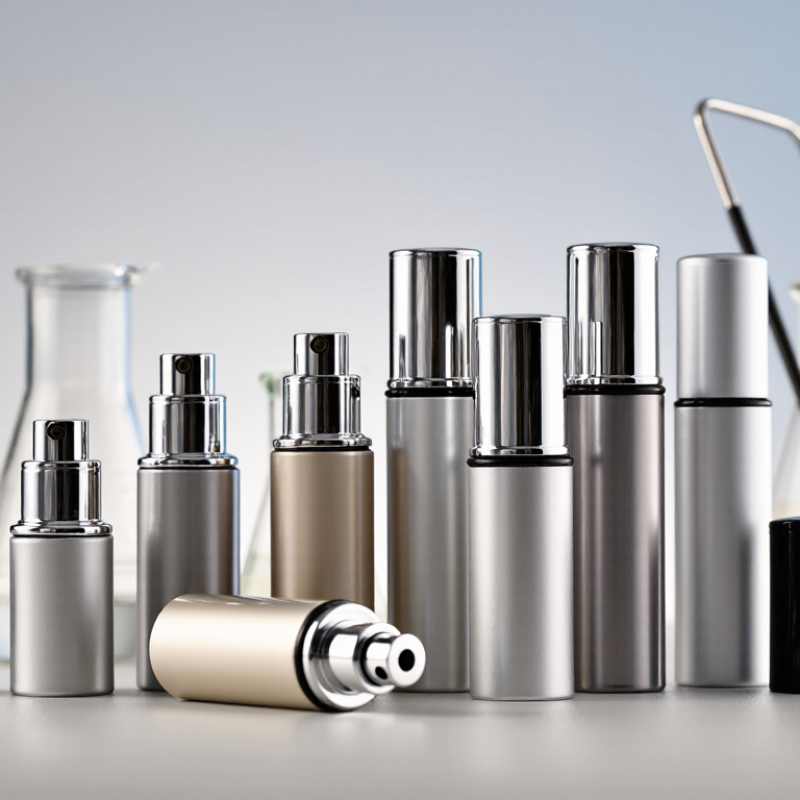
7 Tips for Buying Aluminum Perfume Bottles

Define Your Bottle Requirements and Intended Use

Before buying aluminum perfume bottles, define the product requirements precisely. Start with the filling volume, such as 30, 50, or 100 milliliters. Then choose the dispensing system: crimp necks suit traditional atomizers, while screw threads simplify replacement and small-batch testing. Measure the neck finish carefully. A small mismatch can cause leakage, poor spray performance, or a loose collar.

Consider the formula, too. Alcohol-based perfumes may react differently with exposed aluminum, seals, and internal coatings. Ask suppliers for compatibility testing, including storage at high temperature and repeated spraying. Check wall thickness, surface treatment, color consistency, and decoration durability. A bottle may look excellent under showroom lights but reveal scratches during transport. That detail is often missed.

Sustainability also needs a practical definition. The International Aluminium Institute reports that recycling aluminum requires about 5% of the energy used for primary production, saving roughly 95%. However, recyclability does not excuse excessive material use. The Ellen MacArthur Foundation’s circular packaging guidance stresses designing for recovery and reducing unnecessary components. Request recycled-content data, coating information, and production traceability. Confirm whether the pump, cap, and bottle can be separated easily. Test the full package. It may still fail. Adjust the closure, label adhesive, or internal lining before placing a large order.

Evaluate Aluminum Quality, Safety, and Protective Coatings

7 Tips for Buying Aluminum Perfume Bottles

Evaluate Aluminum Quality, Safety, and Protective Coatings

When evaluating aluminum perfume bottles, inspect the alloy specification, wall thickness, and production tolerance. Thin walls may dent during filling, transport, or daily handling. Ask whether the aluminum is suitable for cosmetic packaging. Recycled content can be acceptable, but it should be controlled and traceable. Inspect the neck closely. Uneven threads, sharp edges, or a loose crimp may indicate weak manufacturing control. Check the surface under bright light for pinholes, stains, and inconsistent polishing. A perfect shine can still hide problems.

Aluminum is not automatically compatible with perfume formulas. Alcohol, fragrance oils, and water may react with exposed metal over time. The inner lacquer or coating should be designed for the formula, not only for appearance. Request coating composition details, adhesion results, and batch-specific safety documents. Ask for leakage, drop, temperature-cycle, and compatibility testing. Fill a sample and store it for several weeks. Check for odor changes, cloudiness, peeling, corrosion, or pressure around the closure. Do not rely on one quick inspection. I have sometimes trusted a smooth finish too early. That was a useful mistake. A reliable supplier should explain coating controls, inspection methods, and traceability without avoiding technical questions.

Compare Bottle Designs, Closures, and Dispensing Systems

When buying aluminum perfume bottles, compare the bottle design before admiring its finish. A lightweight cylindrical bottle suits travel and fits efficiently in cartons. A thicker, squared profile feels more premium but may increase material use and shipping weight. Grand View Research valued the global perfume market at USD 50.85 billion in 2022, with continued growth expected through 2030. That growth makes practical packaging choices more important.

Closures affect both protection and user experience. Screw caps are easy to replace and inspect, while crimped closures can create a cleaner, tamper-resistant appearance. Snap-on caps save assembly time, but poor tolerances may cause looseness. Test each closure after heat, vibration, and repeated opening. Small leaks are expensive.

Dispensing systems deserve close comparison. A fine-mist pump should produce an even spray without wet spots on the skin. A roll-on system offers controlled application, though its ball may collect residue. The International Aluminium Institute reports that about 75% of all aluminum ever produced remains in use, supporting aluminum’s long service life and recyclability. However, mixed materials can complicate recovery. Springs, coatings, plastic dip tubes, and decorative layers should be assessed separately. I would not assume a heavier bottle is better. Sometimes it only feels better. Check wall thickness, valve consistency, corrosion resistance, and compatibility with the fragrance formula through real aging tests.

Check Capacity, Customization Options, and Brand Compatibility

7 Tips for Buying Aluminum Perfume Bottles

Check the stated capacity first, but do not trust the number alone. A bottle marked 50 ml may hold less after adding the inner coating. Ask for usable capacity, overflow capacity, and measurement tolerance. Compare its height, diameter, and neck size with your filling equipment. A small mismatch can slow production. Request technical drawings before approving a purchase.

Examine customization options carefully. Aluminum can support colored finishes, matte textures, embossing, labels, and printed graphics. Confirm whether the finish is suitable for your fragrance formula and storage conditions. Also check cap, pump, collar, and dip-tube compatibility. These parts should match the bottle neck securely. Test several samples. I once focused too much on the surface design and overlooked a loose pump connection. That mistake changed the schedule.

Brand compatibility means more than matching colors. The bottle should fit your visual identity, packaging dimensions, filling process, and customer experience. Ask about decoration accuracy, coating consistency, batch control, and replacement parts. Request samples from different production lots when possible. Review leak tests, spray performance, and drop resistance with a qualified supplier. Do not accept vague tolerances. A practical checklist helps, although it may miss unusual issues. Leave room for real testing, because attractive samples can behave differently during mass production.

7 Tips for Buying Aluminum Perfume Bottles - Check Capacity, Customization Options, and Brand Compatibility

Tip Buying Dimension Typical Data or Options What to Check Before Buying Practical Verification
1 Bottle Capacity 10 ml, 30 ml, 50 ml, 75 ml, and 100 ml are common formats. Choose the capacity according to the product position. Small sizes suit samples, travel products, and discovery sets, while 50–100 ml formats are more suitable for regular-use perfumes. Compare the stated nominal capacity with the required fill volume and leave suitable headspace for filling and closure fitting.
2 Aluminum Grade and Inner Protection Common options include aluminum containers with an internal lacquer, coating, or compatible liner. Select an interior treatment that is suitable for alcohol-based fragrance, essential oils, or other ingredients in the formula. Request compatibility information and perform a storage test using the actual fragrance formula before mass production.
3 Closure and Neck Compatibility Typical closures include screw caps, crimp pumps, fine-mist sprayers, and roll-on fittings. Make sure the bottle neck, thread, crimp profile, dip tube, gasket, and actuator are designed as one matching system. Check neck dimensions, closure torque or crimp specifications, leakage performance, and spray output with assembled samples.
4 Customization Options Available treatments may include anodizing, colored coating, embossing, debossing, screen printing, labeling, and laser marking. Choose finishes that support the desired appearance while remaining resistant to rubbing, fragrance contact, and normal handling. Review a physical decoration sample for color consistency, logo placement, adhesion, scratch resistance, and readability.
5 Shape, Dimensions, and Ergonomics Common shapes include cylindrical, rectangular, oval, and compact travel formats; dimensions vary by capacity and closure. Confirm that the bottle is comfortable to hold, stable when placed upright, and suitable for the intended carton or gift set. Measure height, diameter or width, base stability, total height with closure, and available label or decoration area.
6 Leak, Pressure, and Surface Performance Performance checks should cover leakage, closure security, coating adhesion, corrosion resistance, and transport handling. Select a construction that can withstand filling, storage, shipment, temperature variation, and repeated opening and closing when applicable. Conduct upright and inverted leak tests, vibration or transport simulation, temperature cycling, and surface inspection after testing.
7 Quantity, Sampling, and Compliance Documents Samples should be evaluated before confirming the production quantity, packaging method, and delivery schedule. Confirm minimum order quantity, sample lead time, production tolerance, packing configuration, inspection criteria, and applicable packaging requirements. Approve a signed sample or specification sheet and retain test records for capacity, dimensions, decoration, closure fit, and leakage results.

Assess Suppliers, Pricing, Sustainability, and Purchase Terms

7 Tips for Buying Aluminum Perfume Bottles

Assess the supplier before discussing price. Request factory photos, production capacity, quality certificates, and recent inspection records. Ask for samples with your actual fragrance formula. Aluminum can react with acidic or alcohol-based liquids if the inner coating is unsuitable. Check wall thickness, neck dimensions, spray fit, surface finish, and leakage results. I once treated a low unit price as a clear saving. It was not. Defective pumps created costly rework.

Compare total cost, not only the bottle price. Include tooling, coating, decoration, cartons, freight, testing, and rejected units. Ask whether the quotation covers the cap and pump. Confirm currency, minimum order quantity, payment stages, and quotation validity. London Metal Exchange aluminum prices can change daily, so fixed pricing needs a clear time limit. Use a written purchase agreement. Define acceptable defects, replacement duties, delivery dates, and ownership of molds.

Sustainability also needs evidence. The International Aluminium Institute reports that recycling aluminum can save up to 95% of the energy used for primary production. Ask about recycled content, scrap recovery, coating chemistry, and recycling guidance. Request supporting records, not broad green claims. Confirm whether the bottle can enter local recycling systems after removing pumps and coatings. A smaller order may reduce excess inventory, although its unit cost can rise. Review the trade-off carefully. References: International Aluminium Institute, Aluminium Recycling; London Metal Exchange, Aluminium Contract Specifications.

Copyright 2025 Fluidra S.A. | Created by BCM Marketing Agencia Privacy Policy Legal note | Cookie policy |

Technical cookies are strictly necessary for our website to work and you can navigate through it. These types of cookies are those that, for example, allow us to identify you, give you access to certain restricted parts of the page if necessary, or remember different options or services already selected by you, such as your privacy preferences. Therefore, they are activated by default, your authorization not being necessary in this regard. Through the configuration of your browser, you can block or alert the presence of this type of cookies, although such blocking will affect the proper functioning of the different functionalities of our website.


The analysis cookies allow us to study the navigation of the users of our website in general (for example, which sections of the page are the most visited, which services are used most and if they work correctly, etc.). From the statistical information on navigation on our website, we can improve both the operation of the page itself and the different services it offers. Therefore, these cookies do not have an advertising purpose, but only serve to make our website work better, adapting to our users in general. By activating them you will contribute to this continuous improvement. You can enable or disable these cookies by checking the corresponding box, being disabled by default.


Functionality cookies allow us to remember your preferences, to personalize certain characteristics and general options of our website, every time you access it (for example, the language in which the information is presented to you, the sections marked as favorites, your browser type, etc.) Therefore, this type of cookies does not have an advertising purpose, but by activating them you will improve the functionality of the website (for example, adapting to your type of browser) and the customization of it based on your preferences (for example, by presenting the information in the language that you have chosen in previous occasions), which will contribute to the ease, usability and comfort of our page during your navigation. You can enable or disable these cookies by checking the corresponding box, being disabled by default.


Advertising cookies allow us to manage the advertising spaces included in our website based on criteria such as the content shown or the frequency in which the ads are displayed. For example, if you have been shown the same ad several times on our website, and you have not shown a personal interest by clicking on it, it will not appear again. In summary, by activating this type of cookies, the advertising shown on our website will be more useful and diverse, and less repetitive. You can enable or disable these cookies by checking the corresponding box, being disabled by default.


Behavioral advertising cookies allow us to obtain information based on the observation of your browsing habits and behaviors on the web, in order to show you advertising content that best suits your personal tastes and interests. To understand it in a very simple way, we will give you a fictitious example: if your last searches on the web were related to suspense literature, we would show you advertising about suspense books. Therefore, activating this type of cookies, the advertising that we show you on our website will not be generic, but will be oriented to your searches, tastes and interests, therefore adjusting exclusively to you. You can enable or disable these cookies by checking the corresponding box, being disabled by default.
To understand it in a very simple way, we will give you a fictitious example: if your last searches on the web were related to suspense literature, we would show you advertising about suspense books. Therefore, activating this type of cookies, the advertising that we show you on our website will not be generic, but will be oriented to your searches, tastes and interests, therefore adjusting exclusively to you. You can enable or disable these cookies by checking the corresponding box, being disabled by default.

SAVE

We use our own and third-party cookies to ensure the proper functioning of the website and to analyse our services, improve your experience on our website and show you advertisements related to your interests according to profiling based on your browsing habits (e.g. websites visited). You can accept all cookies by clicking "ACCEPT" or set or reject them by clicking here. If you would like to know more about the use of cookies, please see our COOKIE POLICY.


ACCEPT ALL
Reject no essentials


