
7 Tips for Choosing Metal Cladding Sheets?
FLUID HANDLING EXPERTS

Blog, all our news

7 Tips for Choosing Metal Cladding Sheets?

Choosing Metal Cladding Sheets is not merely a matter of colour, price, or visual appeal. The right decision must consider alloy, thickness, coating, profile, fire performance, drainage, and installation conditions. A sheet that looks flawless in a showroom may corrode beside a coastal road. It may also amplify rain noise or buckle under thermal movement.

As architectural authority Ludwig Mies van der Rohe famously said, “God is in the details.” That principle remains valuable when evaluating cladding systems. Small details matter. Check the substrate, fastener compatibility, joint design, and ventilation cavity before approving a sample. A beautiful panel cannot compensate for poor water management. Experienced contractors often identify risks that product brochures barely mention.

These seven tips will help readers compare Metal Cladding Sheets with greater confidence. They cover material selection, protective finishes, dimensions, performance ratings, supplier reliability, installation quality, and long-term maintenance. The discussion also considers practical conditions, such as salt air, heavy snowfall, strong sunlight, and frequent temperature changes.

Some choices are not obvious. A thicker sheet is not always the strongest solution. A premium coating may also be unnecessary for a sheltered interior wall. This is where careful questioning becomes essential. Ask for test reports, warranty terms, maintenance guidance, and project references. Confirm local building requirements with qualified professionals.

There is no universal “best” sheet. The best option depends on the building, climate, budget, and installer’s skill. That reality can make selection slower. It can also prevent expensive mistakes.
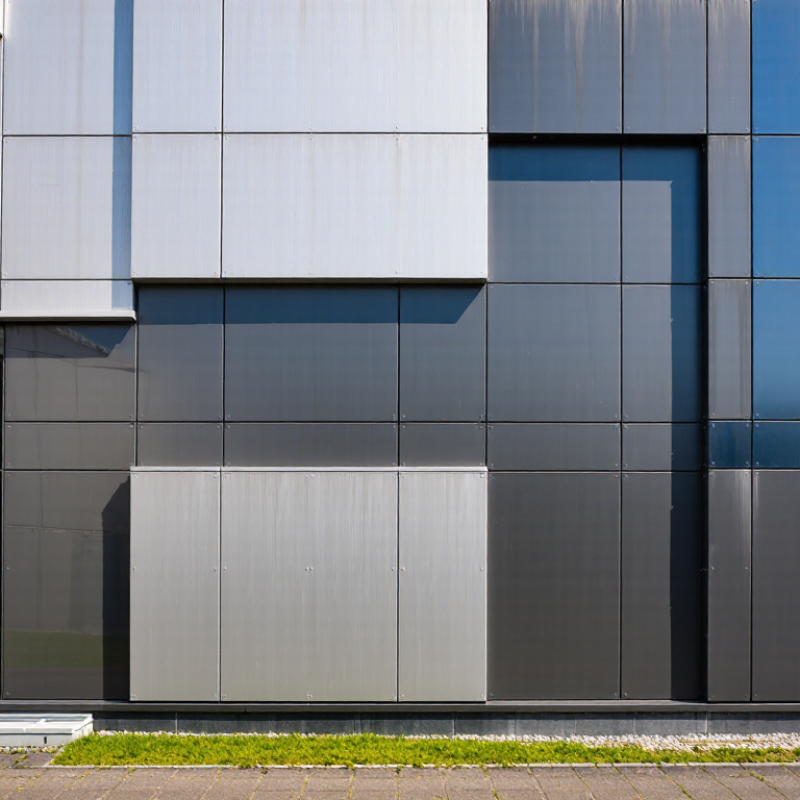
7 Tips for Choosing Metal Cladding Sheets?

Define the Project’s Performance and Design Requirements

When choosing metal cladding sheets, begin with the building’s actual demands, not a finish sample. A coastal wall may face salt spray, strong wind, and driving rain. An inland warehouse may need heat control, impact resistance, and easy cleaning. Write these conditions down before comparing profiles or colors. It sounds basic, yet teams often choose appearance first and solve performance later. That reversal can create expensive changes.

Set measurable targets for thermal, acoustic, fire, moisture, and structural performance. Check the required insulation value, wind-load resistance, drainage path, and joint movement with a qualified building professional. Sheet thickness alone does not prove durability. The support system, fasteners, coatings, and installation quality matter just as much. I have seen an attractive panel fail visually because uneven framing telegraphed through the surface. Small details become obvious in afternoon light.

Design requirements should include viewing distance, panel direction, shadow lines, replacement access, and future cleaning. Ask whether the chosen finish will hide dust, scratches, or oil marks. Glossy surfaces can look sharp on a sample and harsh across a large elevation. Mock up a full-size section when the project is important. Review it in daylight and after rain. Leave room to reconsider. A reliable specification should state approved tolerances, inspection steps, and maintenance expectations, without relying on vague promises.

Compare Metal Types, Coatings, and Weather Resistance

7 Tips for Choosing Metal Cladding Sheets

Compare the metal with the climate, not only the appearance. Aluminum resists corrosion and reduces structural load, while steel usually offers greater stiffness and impact strength. Zinc and copper develop protective patinas, but their colors change over time. Check sheet thickness, span, fastener compatibility, and thermal movement. Thin panels can oil-can in strong sunlight. I learned this after a visually attractive sample performed poorly on a windy project.

Match the coating to exposure conditions. PVDF coatings generally provide stronger color retention than basic polyester coatings, while anodized aluminum offers a hard, stable surface. Ask for accelerated weathering results, coating thickness, adhesion testing, and salt-spray data. Salt spray alone is not enough. ISO 9223 corrosion categories help classify atmospheric risk, especially near coastlines or industrial areas. Review ASTM water-penetration testing, then inspect laps, corners, and penetrations.

Use energy and lifecycle data when comparing options. The International Aluminium Institute reports that recycled aluminum requires about 5% of the energy used for primary aluminum. UNEP’s 2024 Global Status Report states that buildings consumed 32% of global energy and produced 34% of energy-related carbon dioxide emissions in 2022. Those figures make durable, recyclable cladding more relevant. Still, recycled content does not excuse weak detailing. Request environmental product declarations, maintenance records, color-change limits, and realistic service-life assumptions. Forecasts can be wrong. Allow room for that.

7 Tips for Choosing Metal Cladding Sheets? - Compare Metal Types, Coatings, and Weather Resistance
Tip Key Selection Question Metal Type Comparison Recommended Coating or Finish Weather-Resistance Considerations Best-Suited Applications
1 Match the metal to the environment Will the sheets be exposed to coastal salt, industrial pollution, high humidity, or normal inland conditions? Aluminum: naturally corrosion-resistant and lightweight.
Galvanized steel: strong and economical, with zinc protection.
Stainless steel: highly corrosion-resistant, but usually more costly.
Use metallic zinc protection for steel; choose aluminum or stainless steel where long-term corrosion exposure is a major concern. Excellent for coastal: Aluminum / Stainless steel
Good for inland: Galvanized steel
Commercial façades, marine-side buildings, industrial facilities, and residential exteriors.
2 Compare strength and weight Does the project require low structural weight, high impact resistance, or long panel spans? Steel: generally offers higher stiffness and impact resistance.
Aluminum: approximately one-third the density of steel, reducing panel weight.
Stainless steel: strong and durable, but heavier than aluminum.
Use factory-finished sheet with a coating system suitable for forming and installation; verify the panel profile and thickness with the structural design. Stronger sheets can better resist dents and wind pressure, while lighter sheets can reduce handling and supporting-frame loads. High-traffic façades, soffits, roof edges, curtain-wall features, and lightweight renovation projects.
3 Choose the right coating system How much protection is needed against ultraviolet radiation, moisture, abrasion, and color fading? Coating performance depends on the substrate, pretreatment, primer, and topcoat—not only on the metal itself. PVDF: strong color and gloss retention for demanding exterior exposure.
Silicone-modified polyester: good exterior performance for many general applications.
Polyester: commonly used for standard exposure and budget-sensitive projects.
Excellent: High-UV or severe exposure
Good: Typical exterior exposure
Moderate: Lower-demand locations
Color-critical façades, institutional buildings, retail exteriors, warehouses, and residential cladding.
4 Check weather and UV resistance Will the cladding face strong sunlight, freeze-thaw cycles, heavy rain, snow, or high winds? Metal sheets do not normally absorb water, but exposed cut edges, joints, fasteners, and damaged coatings can become vulnerable. Specify a tested exterior coating, compatible sealants, corrosion-resistant fasteners, and correctly detailed flashing. Review resistance to chalking, fading, corrosion, wind-driven rain, and temperature movement. Product performance should be supported by applicable test data. High-rise façades, sunny elevations, cold climates, storm-exposed walls, and buildings with large panel areas.
5 Evaluate maintenance and service life How often can the façade be inspected and cleaned, and what maintenance access is available? Aluminum and stainless steel: can provide long service with suitable detailing.
Coated steel: requires protection of scratches, cut edges, and fastener areas.
Choose a durable finish with clear cleaning instructions. Avoid incompatible cleaners and prevent contact between dissimilar metals where galvanic corrosion may occur. Regular washing can remove salt and pollutants. Prompt repair of scratches and damaged coating helps preserve corrosion protection. Hard-to-access façades, transport buildings, coastal properties, and projects with low maintenance budgets.
6 Verify fire and building-code requirements Does the wall assembly need a specific fire classification, reaction-to-fire rating, or non-combustibility performance? The metal sheet is only one part of the wall system. Core material, insulation, air barriers, joints, and cavity design can significantly affect fire performance. Use a tested and approved complete assembly rather than relying solely on the sheet’s metal composition. Confirm compliance with local regulations, tested system limits, cavity-barrier requirements, and installation details before purchase. High-rise buildings, public facilities, schools, healthcare projects, and buildings subject to strict fire regulations.
7 Inspect installation compatibility Are the substrate, fasteners, joints, movement allowances, and drainage details compatible with the selected sheet? Different metals can react when directly connected in the presence of moisture. Thermal expansion also varies by material and panel length. Use compatible fasteners, isolating washers or membranes where required, approved sealants, and manufacturer-specified edge and joint treatments. Correct laps, ventilation, drainage, flashing, and movement joints reduce water penetration, staining, buckling, and premature corrosion. Rainscreen façades, insulated panels, standing-seam systems, ventilated cladding, and complex architectural envelopes.
Note: Actual performance depends on sheet thickness, alloy or steel grade, coating specification, fabrication quality, local climate, installation details, and the complete wall assembly. Always confirm project requirements against applicable building codes and tested system data.

Select the Right Sheet Profile, Thickness, and Panel Size

7 Tips for Choosing Metal Cladding Sheets

Choosing metal cladding starts with the sheet profile, thickness, and panel size. A deeper trapezoidal profile usually improves spanning capacity and drainage. Shallow profiles may suit sheltered walls with closely spaced supports. On exposed elevations, check wind pressure, fastener spacing, and local code requirements. Do not guess.

Thickness must match the substrate, span, impact risk, and corrosion environment. Common steel cladding often ranges from 0.60 to 1.00 millimeters, but thinner sheets can deform during installation. Aluminum normally requires a different thickness because its stiffness is lower. Ask for yield strength, coating class, and verified test data, not only a gauge number. ASCE/SEI 7-22 provides wind-load methods that help engineers calculate realistic design pressures.

Panel size affects joints, handling, thermal movement, and visual alignment. Long panels reduce horizontal seams but may need slotted fixings and expansion allowances. Large sheets also demand better lifting control. The 2023 Global Status Report for Buildings and Construction reports that buildings produced about 37% of global energy-related and process CO2 emissions in 2022. Better detailing can reduce air leakage and unnecessary replacement. I once underestimated site access, and oversized panels arrived damaged. Measure twice. Review the roof pitch, support spacing, delivery route, and maintenance access before approving the final cut length.

Evaluate Installation Methods, Compatibility, and Maintenance Needs

Choosing metal cladding sheets involves more than comparing colors and prices. On real projects, installation method, substrate compatibility, and future maintenance often decide performance. Start by matching the sheet profile to the fixing system and building structure. Measure twice. Some profiles need concealed clips, while others rely on exposed fasteners and sealed laps. Confirm the installer can manage movement, drainage, and edge detailing before ordering material. Poor sequencing can trap water behind otherwise durable panels.

Compatibility deserves a site-specific check. Review the substrate, insulation, vapor control layer, fasteners, sealants, and nearby metals. Different metals may create galvanic corrosion when moisture bridges them. Check thermal expansion allowances, especially on long elevations facing strong sunlight. Allow movement. An experienced installer should verify tolerances rather than forcing sheets into alignment. I have seen attractive panels fail because a supporting wall was uneven. That mistake was avoidable, but drawings alone did not reveal it.

Maintenance needs should influence the choice before installation begins. Ask how dirt, salt, scratches, and standing water will affect the finish. Specify safe cleaning methods and inspection intervals for joints, coatings, flashings, and fixings. Accessible panels reduce disruption during repairs. Details matter. Still, maintenance plans are often too optimistic. A practical schedule should reflect local weather, building height, and available access equipment. Keep spare sheets only when storage conditions protect their coating and shape. Record these checks in the project file before the first sheet is lifted.

Verify Suppliers, Product Standards, Costs, and Warranty Coverage

7 Tips for Choosing Metal Cladding Sheets

Tip 1: Verify the supplier before comparing prices. Request factory details, recent project references, test reports, and material traceability records. A polished website proves very little. Ask who controls quality when production becomes busy.

Tip 2: Check the product standard carefully. Confirm the metal grade, coating thickness, fire performance, corrosion resistance, and dimensional tolerances. Match these details with your project specifications. Samples can help, but they cannot replace certified documents. Tip 3: Compare complete costs, not sheet prices alone. Include delivery, fasteners, cutting, support rails, installation, maintenance, and expected replacement. A cheaper panel may require more site labor. That difference is easy to miss.

Tip 4: Read the warranty line by line. Check its duration, covered defects, finish limitations, installation conditions, and claim procedure. Ask whether coastal exposure, pollution, or color fading changes the coverage. Tip 5: Confirm who pays for removal and reinstallation. Some warranties cover replacement materials only. That can create an unpleasant surprise.

Tip 6: Inspect sample edges, joints, protective film, and surface consistency under daylight. Small flaws may become obvious across a large façade. Tip 7: Put every promise in writing, including delivery dates and approved tolerances. I used to treat warranty length as the strongest signal. It is not always. Clear exclusions and responsive technical support often matter more.

Copyright 2025 Fluidra S.A. | Created by BCM Marketing Agencia Privacy Policy Legal note | Cookie policy |

Technical cookies are strictly necessary for our website to work and you can navigate through it. These types of cookies are those that, for example, allow us to identify you, give you access to certain restricted parts of the page if necessary, or remember different options or services already selected by you, such as your privacy preferences. Therefore, they are activated by default, your authorization not being necessary in this regard. Through the configuration of your browser, you can block or alert the presence of this type of cookies, although such blocking will affect the proper functioning of the different functionalities of our website.


The analysis cookies allow us to study the navigation of the users of our website in general (for example, which sections of the page are the most visited, which services are used most and if they work correctly, etc.). From the statistical information on navigation on our website, we can improve both the operation of the page itself and the different services it offers. Therefore, these cookies do not have an advertising purpose, but only serve to make our website work better, adapting to our users in general. By activating them you will contribute to this continuous improvement. You can enable or disable these cookies by checking the corresponding box, being disabled by default.


Functionality cookies allow us to remember your preferences, to personalize certain characteristics and general options of our website, every time you access it (for example, the language in which the information is presented to you, the sections marked as favorites, your browser type, etc.) Therefore, this type of cookies does not have an advertising purpose, but by activating them you will improve the functionality of the website (for example, adapting to your type of browser) and the customization of it based on your preferences (for example, by presenting the information in the language that you have chosen in previous occasions), which will contribute to the ease, usability and comfort of our page during your navigation. You can enable or disable these cookies by checking the corresponding box, being disabled by default.


Advertising cookies allow us to manage the advertising spaces included in our website based on criteria such as the content shown or the frequency in which the ads are displayed. For example, if you have been shown the same ad several times on our website, and you have not shown a personal interest by clicking on it, it will not appear again. In summary, by activating this type of cookies, the advertising shown on our website will be more useful and diverse, and less repetitive. You can enable or disable these cookies by checking the corresponding box, being disabled by default.


Behavioral advertising cookies allow us to obtain information based on the observation of your browsing habits and behaviors on the web, in order to show you advertising content that best suits your personal tastes and interests. To understand it in a very simple way, we will give you a fictitious example: if your last searches on the web were related to suspense literature, we would show you advertising about suspense books. Therefore, activating this type of cookies, the advertising that we show you on our website will not be generic, but will be oriented to your searches, tastes and interests, therefore adjusting exclusively to you. You can enable or disable these cookies by checking the corresponding box, being disabled by default.
To understand it in a very simple way, we will give you a fictitious example: if your last searches on the web were related to suspense literature, we would show you advertising about suspense books. Therefore, activating this type of cookies, the advertising that we show you on our website will not be generic, but will be oriented to your searches, tastes and interests, therefore adjusting exclusively to you. You can enable or disable these cookies by checking the corresponding box, being disabled by default.

SAVE

We use our own and third-party cookies to ensure the proper functioning of the website and to analyse our services, improve your experience on our website and show you advertisements related to your interests according to profiling based on your browsing habits (e.g. websites visited). You can accept all cookies by clicking "ACCEPT" or set or reject them by clicking here. If you would like to know more about the use of cookies, please see our COOKIE POLICY.


ACCEPT ALL
Reject no essentials


