
7 Carbon Filament Buying Tips for Global Buyers
FLUID HANDLING EXPERTS

Blog, all our news

7 Carbon Filament Buying Tips for Global Buyers

Buying Carbon Filament for global production requires more than comparing spool prices. Fiber length, reinforcement percentage, nozzle wear, moisture control, and printer compatibility can change the final part dramatically. A glossy product page rarely shows the complete picture.

The global carbon-fiber market was valued at approximately USD 4.7 billion in 2023, according to MarketsandMarkets’ Carbon Fiber Market report. The same report projects strong growth through 2028. Meanwhile, the Wohlers Report 2024 identifies material performance, process reliability, and application qualification as continuing priorities in additive manufacturing. These figures show opportunity, but they do not guarantee a successful purchase. A low-cost spool may absorb moisture during ocean transport. A hardened nozzle may still fail after several kilograms of abrasive material.

Greg Mark, founder of Markforged, has described the value of printed composites in practical terms: “The strength of 3D printing is the ability to make parts that are optimized for their application.” That principle matters when selecting Carbon Filament. Buyers should examine datasheets, test methods, batch consistency, storage packaging, and technical support. Ask for tensile data under clearly stated conditions. Check whether the figures apply to printed specimens or molded samples.

Small details matter. A sealed bag is not the same as controlled drying. A high fiber percentage is not automatically better. Frankly, some supplier claims remain difficult to compare. This guide offers seven buying tips for global buyers, while recognizing one uncomfortable truth: material data can look precise and still hide important assumptions.
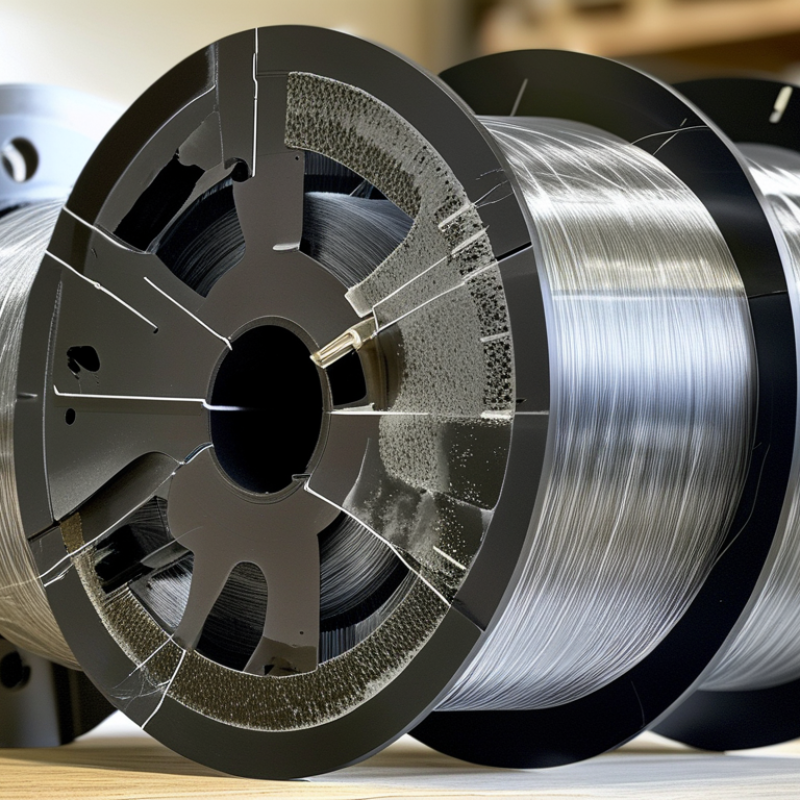
7 Carbon Filament Buying Tips for Global Buyers

Classify the Filament by Polymer, Fiber Content, and ASTM D638 Strength Data

7 Carbon Filament Buying Tips for Global Buyers

Tip 1: Identify the base polymer before comparing carbon content. PLA, PETG, nylon, and PEEK behave differently during printing and service. Polymer choice affects heat resistance, moisture absorption, shrinkage, and chemical stability.

Tip 2: Check whether fiber content is reported by weight or volume. A label stating 15% carbon fiber by weight cannot be compared directly with 15% by volume.

Tip 3: Ask for the fiber length and form. Short fibers improve stiffness, while continuous fibers require different equipment and design methods.

Tip 4: Request ASTM D638 tensile data, not only a marketing strength number. Check tensile strength, tensile modulus, elongation, specimen type, and test speed. Test direction matters greatly because printed layers create anisotropy.

Tip 5: Confirm the testing condition. Temperature, humidity, drying treatment, nozzle size, layer height, and build orientation can change the result. A dry nylon sample may perform very differently after moisture exposure. One careless comparison can distort the purchase decision.

Tip 6: Match the ASTM D638 data with your actual part direction. A strong longitudinal result may not represent vertical performance.

Tip 7: Request recent lot records and a technical data sheet. I once treated identical fiber percentages as equal, but their polymer grades differed. That was a poor assumption. Buyers should also inspect surface finish, spool consistency, and nozzle wear during trials. A small pilot print with measured coupons often reveals more than a polished sales chart.

Compare 10–20 wt% Carbon Fiber Loading for Stiffness and Printability

7 Carbon Filament Buying Tips for Global Buyers

Carbon fiber loading changes stiffness, flow, and print reliability. At 10 wt%, filament usually offers a practical balance between rigidity and extrusion stability. At 15 wt%, parts become noticeably stiffer, but layer bonding may weaken. At 20 wt%, stiffness can improve further, although nozzle wear, clogging, and rough surfaces become stronger concerns. Results depend on fiber length, polymer type, and compounding quality.

Tip: Ask for tensile, flexural, and impact data tested under recognized ASTM or ISO methods. Do not trust stiffness claims alone. The Wohlers Report 2024 valued the global additive manufacturing market at 20.035 billion US dollars in 2023, showing why consistent material data matters for international purchasing. Yet, market growth does not guarantee consistent filament quality. I have seen similar loading percentages print very differently.

Tip: Request a small sample before buying in bulk. Test a thin wall, a 20% infill beam, and a long bridge. A 10 wt% grade may suit detailed components and smaller nozzles. A 20 wt% grade may suit brackets, jigs, or load-bearing prototypes. Still, stronger is not always better. Excess fiber can create brittle edges and poor interlayer strength.

Check fiber dispersion, diameter tolerance, moisture guidance, and recommended nozzle size. Compare spool weight carefully. A higher fiber percentage can increase stiffness, but it may reduce printability and raise maintenance costs. That trade-off deserves a real trial.

Verify 1.75 or 2.85 mm Diameter Within the Industry’s ±0.05 mm Tolerance

7 Carbon Filament Buying Tips for Global Buyers

Verify 1.75 or 2.85 mm Diameter Within the Industry’s ±0.05 mm Tolerance

Carbon-filled filament must match your printer’s feed path. The common nominal sizes are 1.75 mm and 2.85 mm. A supplier’s listing alone is not enough. Request a dimensional report for the exact production lot, not a general product sheet.

Measure samples at several points along the spool. Use a calibrated micrometer or a suitable non-contact gauge. Apply light pressure, because carbon-filled polymer can flatten during measurement. Check two perpendicular directions at each point. Record the smallest and largest readings. For 1.75 mm filament, acceptable readings generally range from 1.70 to 1.80 mm. For 2.85 mm filament, the range is usually 2.80 to 2.90 mm.

One reading can mislead you. Carbon fibers may create slight surface texture. I have seen measurements change when the tool touched a rough section. Inspect at least three spool locations, including the beginning, middle, and end. Keep the filament at stable room temperature before testing. Heat and moisture can affect the polymer’s dimensions.

Ask for calibration records and lot traceability. Also confirm whether the reported tolerance applies to average diameter or every measured point. That detail matters. A supplier may report an average within ±0.05 mm while individual sections drift beyond it. This weakness is easy to miss. A simple incoming inspection plan can prevent feeding resistance, under-extrusion, and costly print failures across multiple markets.

Choose Hardened Nozzles and 0.6 mm+ Diameters to Reduce Abrasive Wear

Carbon-filled filament can turn a standard brass nozzle into a worn, uneven opening surprisingly quickly. The fibers act like fine sand, especially during long prints. Choose a hardened nozzle when purchasing for regular abrasive materials. Hardened steel is a practical option, while carbide offers greater wear resistance for demanding production use.

Diameter matters too. A 0.6 mm or larger nozzle usually handles carbon-filled filament more reliably than a 0.4 mm nozzle. The wider path reduces clogging risk and lowers back pressure. It also makes layer lines slightly more visible. That trade-off may be acceptable for brackets, tools, and functional prototypes. Check the printer’s hotend capacity before buying. A large nozzle cannot compensate for weak heat transfer.

Do not judge wear by appearance alone. Measure the nozzle opening with a gauge, or compare extrusion width against a fresh nozzle. Uneven walls, thin corners, and inconsistent infill can signal abrasion. My early assumption was that hardened nozzles solved every problem. They did not. Poor filament storage, excessive retraction, and low printing temperatures still caused failures. Look for a smooth internal bore, accurate diameter, and clear material guidance from the supplier. Keep a spare nozzle ready. Small savings can become costly downtime.

7 Carbon Filament Buying Tips for Global Buyers - Choose Hardened Nozzles and 0.6 mm+ Diameters to Reduce Abrasive Wear

Tip Buying Dimension Recommended Specification Why It Matters Buyer Verification Checklist
1 Fiber Content and Form Select a filament with a clearly stated carbon-fiber loading, fiber type, and chopped-fiber format. Common reinforced polymers include PLA, PETG, ABS, ASA, nylon, and polycarbonate. Carbon fiber can improve stiffness and dimensional stability, but higher reinforcement levels may increase brittleness, reduce layer adhesion, and raise printing difficulty. Request the technical data sheet, polymer base, nominal fiber percentage, fiber length or form, tensile modulus, tensile strength, and elongation values. Compare results using the same test standard.
2 Nozzle Material Use a hardened steel, tungsten-carbide, or other wear-resistant nozzle. Avoid relying on a standard brass nozzle for repeated carbon-fiber printing. Carbon fibers are abrasive and can enlarge a soft brass or copper nozzle, changing extrusion flow and dimensional accuracy over time. Confirm the nozzle material, internal diameter, wear-resistance information, replacement availability, and compatibility with the printer’s hot end and temperature range.
3 Nozzle Diameter Choose a hardened nozzle of 0.6 mm or larger for regular use. A 0.4 mm nozzle may be suitable for carefully selected short-fiber materials, but it generally needs more maintenance. A larger opening reduces the likelihood of fiber-related restriction and lowers the effect of abrasive wear. It can also improve flow reliability, although very fine detail may decrease. Check the recommended minimum diameter, permitted layer height, extrusion width, expected flow rate, and whether the slicer profile supports the selected nozzle size.
4 Filament Diameter and Tolerance For a nominal 1.75 mm filament, look for a published diameter tolerance such as ±0.05 mm or tighter, subject to the supplier’s measurement method. The same principle applies to 2.85 mm filament. Diameter variation changes volumetric flow and can cause under-extrusion, over-extrusion, surface inconsistency, or feeding problems. Ask for measurement records from multiple points along the spool, ovality information, net filament weight, and packaging controls that prevent deformation during transport.
5 Drying and Moisture Control Buy moisture-sealed packaging and confirm the supplier’s drying instructions. Hygroscopic bases such as nylon and polycarbonate require especially careful drying and storage. Moisture can cause steam, popping, rough surfaces, weak layers, inconsistent extrusion, and reduced mechanical performance during printing. Verify the seal type, desiccant inclusion, recommended drying temperature and time, moisture target if available, and whether the spool can be stored in a dry box after opening.
6 Processing Window and Printer Requirements Select material-specific settings rather than one universal profile. Many engineering carbon-fiber filaments require a heated bed, stable hot-end temperature, and sometimes an enclosed or heated build environment. The polymer matrix, not the carbon fiber alone, determines the principal temperature and environmental requirements. Incorrect settings can cause warping, poor bonding, or thermal degradation. Request recommended nozzle and bed temperatures, print-speed range, cooling guidance, chamber requirements, maximum hot-end temperature, and printer compatibility limits.
7 Quality, Traceability, and Logistics Prioritize batch-controlled production, consistent winding, clear lot identification, recyclable or protective packaging, and documentation suitable for international shipments. Consistent raw materials and traceable batches reduce variation between orders. Correct packaging helps protect filament from humidity, crushing, and contamination during global transport. Check the certificate of analysis, lot number, production date, spool dimensions, net weight, carton protection, shelf-life guidance, sample approval process, lead time, and export documentation.

Audit ISO 527 Testing, REACH/RoHS Compliance, MOQ, and Incoterms

When buying carbon filament globally, treat testing evidence as a purchasing document, not decoration. Ask for an ISO 527 test report covering tensile strength, modulus, specimen direction, conditioning, and test speed. Check whether the tested resin and carbon content match your proposed filament. A neat report can still hide a mismatch.

Request a current REACH statement and a RoHS declaration, with material scope clearly defined. RoHS may depend on the finished product’s application, so ask the supplier to explain its assessment. Review restricted-substance data, safety documents, and batch traceability. Keep a retained sample. It may expose color, diameter, or brittleness changes later. Do not rely only on a signed PDF.

MOQ can change the real price quickly. Confirm whether it applies per color, spool size, formulation, or total order. Ask about trial quantities and the cost of failed samples. Clarify Incoterms with the named place and version, such as an agreed warehouse or port. Confirm who pays freight, insurance, export clearance, import duties, and unloading charges. I have seen buyers compare unit prices while missing destination fees. That mistake is common. Write every assumption into the quotation, then compare the same delivery basis across suppliers.

Copyright 2025 Fluidra S.A. | Created by BCM Marketing Agencia Privacy Policy Legal note | Cookie policy |

Technical cookies are strictly necessary for our website to work and you can navigate through it. These types of cookies are those that, for example, allow us to identify you, give you access to certain restricted parts of the page if necessary, or remember different options or services already selected by you, such as your privacy preferences. Therefore, they are activated by default, your authorization not being necessary in this regard. Through the configuration of your browser, you can block or alert the presence of this type of cookies, although such blocking will affect the proper functioning of the different functionalities of our website.


The analysis cookies allow us to study the navigation of the users of our website in general (for example, which sections of the page are the most visited, which services are used most and if they work correctly, etc.). From the statistical information on navigation on our website, we can improve both the operation of the page itself and the different services it offers. Therefore, these cookies do not have an advertising purpose, but only serve to make our website work better, adapting to our users in general. By activating them you will contribute to this continuous improvement. You can enable or disable these cookies by checking the corresponding box, being disabled by default.


Functionality cookies allow us to remember your preferences, to personalize certain characteristics and general options of our website, every time you access it (for example, the language in which the information is presented to you, the sections marked as favorites, your browser type, etc.) Therefore, this type of cookies does not have an advertising purpose, but by activating them you will improve the functionality of the website (for example, adapting to your type of browser) and the customization of it based on your preferences (for example, by presenting the information in the language that you have chosen in previous occasions), which will contribute to the ease, usability and comfort of our page during your navigation. You can enable or disable these cookies by checking the corresponding box, being disabled by default.


Advertising cookies allow us to manage the advertising spaces included in our website based on criteria such as the content shown or the frequency in which the ads are displayed. For example, if you have been shown the same ad several times on our website, and you have not shown a personal interest by clicking on it, it will not appear again. In summary, by activating this type of cookies, the advertising shown on our website will be more useful and diverse, and less repetitive. You can enable or disable these cookies by checking the corresponding box, being disabled by default.


Behavioral advertising cookies allow us to obtain information based on the observation of your browsing habits and behaviors on the web, in order to show you advertising content that best suits your personal tastes and interests. To understand it in a very simple way, we will give you a fictitious example: if your last searches on the web were related to suspense literature, we would show you advertising about suspense books. Therefore, activating this type of cookies, the advertising that we show you on our website will not be generic, but will be oriented to your searches, tastes and interests, therefore adjusting exclusively to you. You can enable or disable these cookies by checking the corresponding box, being disabled by default.
To understand it in a very simple way, we will give you a fictitious example: if your last searches on the web were related to suspense literature, we would show you advertising about suspense books. Therefore, activating this type of cookies, the advertising that we show you on our website will not be generic, but will be oriented to your searches, tastes and interests, therefore adjusting exclusively to you. You can enable or disable these cookies by checking the corresponding box, being disabled by default.

SAVE

We use our own and third-party cookies to ensure the proper functioning of the website and to analyse our services, improve your experience on our website and show you advertisements related to your interests according to profiling based on your browsing habits (e.g. websites visited). You can accept all cookies by clicking "ACCEPT" or set or reject them by clicking here. If you would like to know more about the use of cookies, please see our COOKIE POLICY.


ACCEPT ALL
Reject no essentials


