
Choosing the right Textile Lamination Machine can shape product quality, production speed, and long-term operating costs. Global buyers face many options, from hot-melt adhesive systems to flame, coating, and membrane lamination lines. Each machine handles pressure, heat, fabric tension, and adhesive flow differently.
Textile engineering professor Dr. Subhash Anand has noted, “Lamination quality depends on controlled bonding at the fabric interface, not adhesive quantity alone.” This principle matters on the factory floor. A coated fabric may look smooth under bright inspection lights, yet fail after washing, folding, or outdoor exposure. Small defects can become expensive returns.
This guide examines seven leading textile lamination machines for international purchasing teams. It considers working width, heating accuracy, roller design, speed control, energy use, maintenance access, and after-sales support. It also considers material compatibility, including polyester, nylon, cotton blends, technical textiles, foam, and breathable membranes.
Real production conditions are rarely perfect. Humidity changes. Operators make adjustments. Fabric rolls may arrive with uneven tension. A machine that performs well in a showroom may struggle during a twelve-hour shift. That deserves attention.
The selected models are not ranked by marketing claims alone. Their practical value depends on application requirements, factory layout, labor skills, and available service support. Buyers should request sample trials, bonding-strength data, safety documentation, and references from comparable plants. A lower purchase price may look attractive, but unstable temperature control can quietly increase waste.
Some recommendations may require further verification. That is intentional. Equipment decisions should remain evidence-based, measurable, and open to revision.
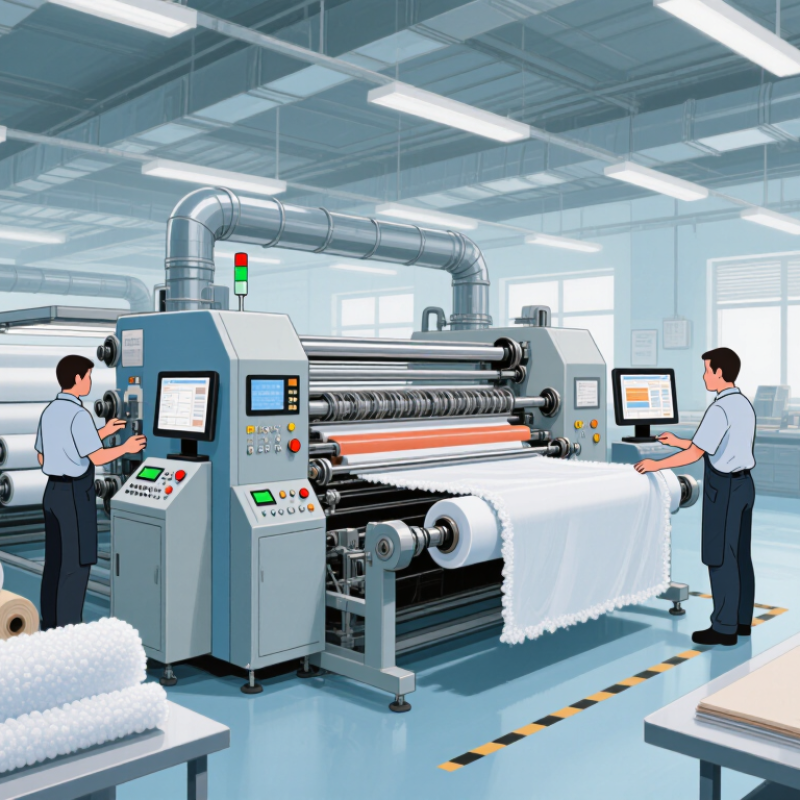
Textile lamination joins fabric with a functional film through adhesive, heat, and pressure. The film may add waterproofing, breathability, softness, or abrasion resistance. Common options include polyurethane, thermoplastic, and adhesive web films.
A reliable machine must control temperature across the full working width. Uneven heat can create dull patches, weak edges, or film shrinkage. Hot-melt adhesives activate within a defined temperature range. Too little heat leaves poor bonding. Excess heat can damage elastic fibers or change fabric color. Pressure rollers then close small gaps between layers. Keep the nip pressure stable. Small changes matter.
Production speeds can range from 20 to 500 m/min, but speed alone proves little. A delicate stretch fabric may need slower movement and longer heating. A stable nonwoven structure may run much faster. Line speed, coating weight, film thickness, and dwell time must work together. Test peel strength, washing resistance, flexibility, and surface appearance after cooling. Inspect samples from the beginning, middle, and end of a roll. One issue remains easy to miss: a bond can look perfect while failing after repeated washing. A careful trial should include real fabric lots, not only laboratory swatches. That extra step may slow approval, but it prevents expensive rework.

Textile Lamination Basics: Films, Adhesives, Heat, Pressure, and 20–500 m/min
The chart compares typical production-speed ranges for common textile lamination configurations. Extrusion coating and lamination generally support the highest web speeds, while powder-scatter and hot-melt film systems are often selected for controlled adhesive application and flexible material combinations. Actual throughput depends on fabric construction, film thickness, adhesive chemistry, heating capacity, nip pressure, curing time, and web width.
Seven Lamination Machine Types Compared by 1,000–3,200 mm Working Width
Global buyers should compare usable working width, not only the machine frame. A 1,000–1,400 mm line suits narrow apparel panels and technical tapes. A 1,600–2,000 mm hot-melt, film, or paste-dot machine supports bedding, upholstery, and protective textiles. Wider 2,400–3,200 mm systems target mattress ticking, coated fabrics, and industrial rolls.
The seven common types are flame, hot-melt, powder, paste-dot, film, foam, and solvent-free lamination machines.
Flame systems can process foam-backed textiles quickly, but heat control needs careful testing.
Hot-melt lines offer accurate adhesive coating.
Powder systems can reduce wet processing, while paste-dot units handle breathable constructions.
Film laminators provide clean surfaces.
Foam lines create thicker composites.
Solvent-free systems support lower-emission production.
Machine width alone is not enough. The International Textile Machinery Federation’s 2024 survey highlights continuing pressure for efficiency and investment discipline. Textile Exchange’s 2024 Materials Market Report recorded global fiber production at 124 million tonnes in 2023, showing the scale of material demand and waste concerns.
Buyers should verify coat weight, line speed, nip pressure, edge trim, and roll tension on actual fabric.
One caution: quoted widths sometimes exceed practical widths. That detail is easy to miss. A 3,200 mm machine may deliver less usable fabric after alignment and trimming, so factory trials remain essential.
7 Best Textile Lamination Machines for Global Buyers
The best textile lamination machines should be judged by measurable output, not impressive brochures. GSM stability matters because a 3% weight variation can change drape, breathability, and coating cost. A 2024 Smithers market report links higher-value nonwoven growth with tighter process control and consistent material performance. Buyers should therefore check GSM readings across the roll, not only at its center.
Peel strength reveals whether the layers will survive washing, bending, and repeated use. Test results should follow recognized methods, such as ASTM D903, with values recorded in N/25 mm. Bond uniformity also deserves close inspection. Uneven adhesive spread may create glossy patches, stiff edges, or weak corners. Small defects become expensive during bulk production.
Temperature control is equally practical. A machine holding ±1°C can reduce adhesive viscosity changes and improve bonding consistency. Grand View Research reports continued growth in textile coating demand, increasing pressure for repeatable production. During factory trials, measure surface temperature at several points. Do not trust one sensor. Humidity, fabric tension, and line speed can still disturb results. That is the uncomfortable part: a machine may meet ±1°C on paper, yet produce uneven bonds in real conditions. Compare at least three rolls, record failures, and question unusually perfect samples.
7 Best Textile Lamination Machines for Global Buyers
Global Compliance Standards: ISO 12947, ASTM D751, and EN 13501-1
Choosing among seven textile lamination machines requires more than comparing speed and roll width. ISO 12947 measures abrasion resistance through Martindale testing, where pressure, cycles, and fabric construction affect the result. ASTM D751 evaluates coated fabrics, including strength, tear resistance, adhesion, and hydrostatic performance. EN 13501-1 classifies reaction to fire, but the machine itself cannot guarantee a final fire rating. Adhesive type, coating weight, backing fabric, and curing conditions remain decisive.
Textile Exchange’s 2024 Materials Market Report estimated global fiber production at 124 million tonnes in 2023, with growth projected toward 160 million tonnes by 2030. More volume means greater pressure for repeatable quality. In production trials, operators should record nip pressure, web tension, line speed, oven temperature, and dwell time. Small tension changes can create wrinkles near the fabric edge. I have seen apparently stable laminates fail after laundering or abrasion testing. That failure is easy to underestimate.
Tips: Request test samples using your actual fabric and adhesive. Test before buying. Ask for traceable calibration records and independent laboratory verification. Select machines with controlled heating zones, stable unwinding, and adjustable nip pressure. Keep EN 13501-1 testing separate from marketing claims. A passed sample does not prove every production batch will pass. Recheck performance after washing, flexing, and storage. Some specifications remain unclear; questioning them early is safer than correcting nonconforming rolls later.
| No. | Machine Type | Typical Lamination Process | Suitable Materials | Typical Working Width | Typical Operating Range | Production Capability | Compliance and Quality Relevance |
|---|---|---|---|---|---|---|---|
| 1 | Hot-Melt Roll-to-Roll Laminator | Applies thermoplastic adhesive film or web between textile layers using heated rollers and controlled nip pressure. | Polyester, nylon, cotton blends, nonwovens, foam, membrane fabrics, and synthetic leather. | 1,600–3,200 mm | 60–180°C; 5–40 m/min | Continuous production with uniform adhesive coating and stable web tension. | ISO 12947 Can produce consistent multilayer constructions for abrasion testing. ASTM D751 Useful for coated-fabric specimens when the laminate includes a coated substrate. |
| 2 | Flame Lamination Machine | Uses controlled flame to activate the surface of polyurethane foam before pressing it against a textile layer. | Upholstery fabric, automotive textiles, foam-backed fabric, mattress textiles, and acoustic materials. | 1,600–2,800 mm | Flame intensity controlled by gas flow; 5–30 m/min | High-throughput foam-to-fabric bonding without a separate liquid adhesive coating station. | EN 13501-1 The final laminate must be fire-classified as a complete construction; the machine itself does not provide a fire rating. ISO 12947 Supports preparation of bonded textile samples for durability evaluation. |
| 3 | Powder-Dot Adhesive Laminator | Deposits thermoplastic adhesive powder in a controlled dot pattern, then melts and bonds the layers through a heated calender or press. | Garment interlinings, technical textiles, breathable laminates, fleece, woven fabrics, and knit fabrics. | 1,600–2,400 mm | 100–160°C; 8–35 m/min | Adjustable adhesive add-on and dot density; helps preserve fabric softness and breathability. | ISO 12947 Useful where controlled adhesive distribution is required before Martindale abrasion testing. Fire performance under EN 13501-1 depends on all laminate components and the tested end-use assembly. |
| 4 | Hot-Air Laminator | Softens a thermoplastic film or adhesive web with heated air before combining textile layers in a pressure nip. | Outdoor fabrics, waterproof-breathable membranes, medical textiles, protective clothing, and sportswear. | 1,600–3,000 mm | 80–220°C; 3–25 m/min | Low-contact heating and adjustable air circulation for sensitive or dimensionally unstable fabrics. | ASTM D751 Suitable for manufacturing coated-fabric constructions that may be evaluated for adhesion, bursting strength, hydrostatic resistance, or related properties under the applicable method. Final compliance requires laboratory testing. |
| 5 | Thermal Calender Laminator | Combines layers through heated steel or elastomer-covered rollers with controlled temperature, pressure, and line speed. | Nonwovens, geotextiles, filtration media, decorative textiles, carpet backings, and multilayer technical fabrics. | 1,800–3,600 mm | 60–200°C; 5–50 m/min | High-speed bonding with precise nip control and good thickness uniformity across wide webs. | ISO 12947 Appropriate for laminates requiring repeatable thickness and surface construction before abrasion evaluation. EN 13501-1 Fire classification must be established using the finished product and its intended mounting arrangement. |
| 6 | Hot-Press Flatbed Laminator | Uses heated platens and controlled pressure to bond cut panels, small rolls, or layered fabric assemblies in batch operation. | Protective garments, upholstery panels, automotive interiors, composites, labels, and small-batch technical textiles. | 600–2,000 mm platen width | 80–200°C; 0.2–0.8 MPa; programmable dwell time | Batch production with accurate pressure and dwell-time control; suitable for sampling and product development. | ASTM D751 Convenient for producing controlled coated-fabric panels and laboratory samples. ISO 12947 Can support repeatable specimen preparation, but abrasion results must be obtained using the prescribed test apparatus and procedure. |
| 7 | Ultrasonic Textile Laminator | Uses high-frequency mechanical vibration to generate localized heat and bond thermoplastic layers without continuous external heating. | Nonwovens, hygiene fabrics, filtration media, protective clothing, medical textiles, and lightweight synthetic laminates. | 600–2,000 mm | 20–35 kHz; 2–20 m/min | Fast localized bonding with low adhesive use and limited heat exposure to surrounding fabric areas. | ISO 12947 Useful for developing lightweight bonded constructions for abrasion assessment. For EN 13501-1, flame classification applies to the completed textile assembly, including seams, coatings, adhesives, and backing materials. |
Selecting a textile lamination machine requires more than comparing purchase prices. The IEA reports that industry uses about 37% of global final energy, making thermal efficiency a serious purchasing factor. Request electricity consumption in kWh per finished square metre, not only installed motor power. A machine with lower CAPEX may create higher long-term costs through heat loss, scrap, and frequent stoppages.
Automation affects ROI differently across factories. Automatic tension control, recipe storage, and inline inspection can reduce operator variation. However, automation adds investment and requires trained technicians. The World Economic Forum has repeatedly identified automation and digital skills as major manufacturing priorities. Service coverage matters too. Ask for response times, spare-parts availability, remote diagnostics, and documented maintenance intervals. A simple ROI model should include output, labour savings, energy costs, scrap reduction, financing, and downtime. Keep assumptions visible. They are rarely perfect.
Tips: Test production fabric before signing. Measure warm-up time, adhesive use, noise, surface defects, and kWh per square metre. Compare at least three operating speeds. Do not trust laboratory results alone. Real factory conditions are messier. The IEA also stresses measurement and energy management, so request a twelve-month monitoring plan. A useful buyer matrix can score energy use at 25%, service at 20%, automation at 20%, CAPEX at 15%, and expected ROI at 20%. Adjust those weights when labour costs, utility prices, or product complexity change.

Cepex is the brand for the fluid handling market belonging to the Fluidra group. One of the leading european manufacturer of valves and fittings in thermoplastic materials.
Dedicated to the swimming pool, irrigation and industrial markets, we distribute our products worldwide with the Fluidra commercial network and presence in 46 countries with 136 sales branches.


