
7 Best Road Excavators for Global Buyers?
FLUID HANDLING EXPERTS

Blog, all our news

7 Best Road Excavators for Global Buyers?

Choosing the right Road Excavator is rarely about horsepower alone. Global buyers must examine soil conditions, project scale, transport limits, fuel use, operator comfort, and local service access. A machine that performs well on a European highway project may struggle on remote, uneven roads elsewhere. That difference matters.

Construction-equipment specialist Mike Vorster has emphasized a practical ownership principle: “The cost of owning equipment is not what you pay for it, but what it costs you to own it.” This idea guides our comparison of seven leading road excavators. Purchase price is only one part of the decision. Maintenance intervals, hydraulic efficiency, attachment compatibility, resale value, and dealer response can change the real investment.

Field experience also teaches a less comfortable lesson. Product brochures rarely show every operating challenge. Dust enters filters. Mud slows travel. Skilled operators can improve output, but they cannot repair weak dealer support. Small details become expensive.

Our selection considers performance, reliability, versatility, safety features, and long-term operating value. It also reflects the needs of contractors, rental companies, infrastructure developers, and public-works teams. Some rankings remain debatable because regional prices and service networks vary. That limitation should be acknowledged, not hidden.

The seven models discussed here are not universal winners. They are practical candidates for different working conditions and business goals. Buyers should still request local quotations, inspect service coverage, and test machines when possible. A careful decision begins with honest questions, not impressive specifications.
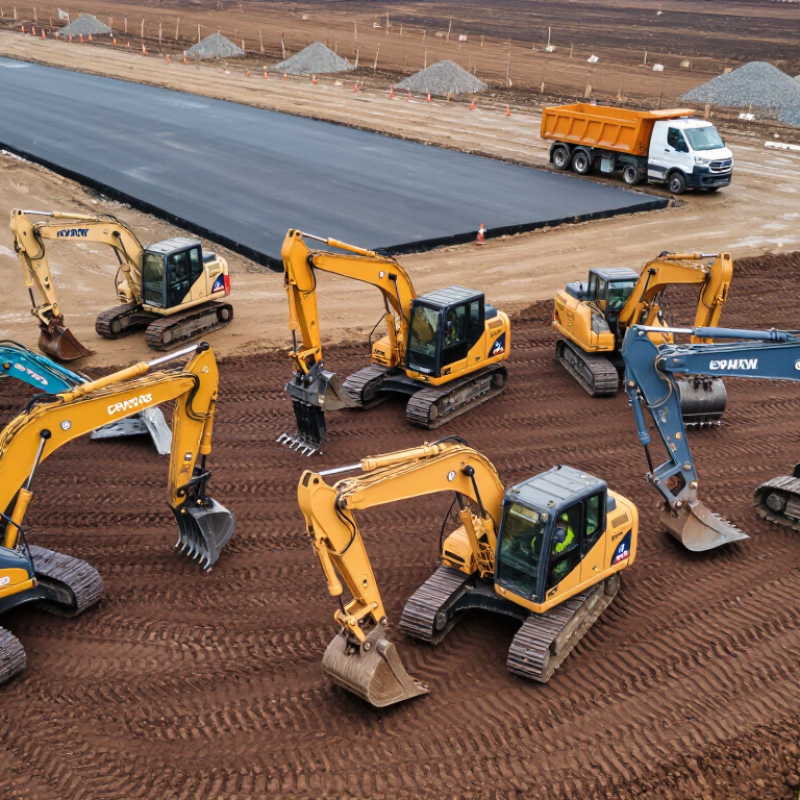
7 Best Road Excavators for Global Buyers?

What Makes a Road Excavator Suitable for Global Buyers?

7 Best Road Excavators for Global Buyers?

A suitable road excavator must work beyond one climate, one fuel standard, or one jobsite. Global Infrastructure Hub’s Global Infrastructure Outlook estimates that the world may need 94 trillion dollars in infrastructure investment by 2040. That demand increases pressure for flexible, reliable machines. Field inspections often reveal simple problems: narrow transport widths, weak cooling systems, or unclear control labels. Transport matters. UNCTAD’s Review of Maritime Transport 2023 reports that over 80% of global merchandise trade moves by sea. Therefore, buyers should check shipping dimensions, lifting points, tie-down locations, and corrosion protection before comparing digging force.

Roadwork also demands balance. A machine needs enough reach for drainage trenches, shoulder repairs, and utility work, but excessive operating weight can damage weak pavement. Adjustable undercarriages, smooth hydraulic control, and compact rear swing can improve access near traffic. Tiered emissions rules differ across markets, so buyers should confirm the engine certification required at the destination. Fuel quality matters too. A highly efficient engine may perform poorly where maintenance standards are inconsistent.

After-sales support often decides whether an excavator remains productive. Buyers should request parts lead times, service manuals, diagnostic access, warranty terms, and technician training. Telematics can track idle time, fuel use, and maintenance alerts, although connectivity may fail in remote areas. That weakness deserves attention. A strong specification sheet cannot replace local support. The best road excavator is not always the most powerful model; it is the one that can be transported legally, operated safely, maintained affordably, and adapted to uncertain working conditions. Reliability should be verified through documented tests, independent inspections, and references from comparable road projects.

How the Seven Best Road Excavators Compare by Size and Performance

Choosing among the seven best road excavators depends on size, hydraulic power, transport needs, and road conditions. A compact 8-ton excavator suits narrow streets and utility work, but its lifting reach is limited. The 12-ton class offers better balance for drainage and shoulder repairs. A 16-ton machine delivers stronger digging force without becoming difficult to move between sites. Larger 20-ton and 24-ton excavators handle deep cuts, heavy rock, and wide road construction more confidently. They also consume more fuel and require stronger transport planning.

The 28-ton and 35-ton classes provide the highest breakout force among the seven options. Their long booms can reach deep trenches, while larger counterweights improve stability. However, size can become a weakness near bridges, villages, or soft road edges. In field inspections, operators often value smooth hydraulic control more than maximum power. A machine that responds gently can reduce material damage and operator fatigue. Performance figures can mislead. Real productivity changes with soil, attachments, altitude, and maintenance quality.

Tips: Match the excavator to the daily task, not the largest project. Check axle load, turning radius, ground clearance, and service access before buying. Ask for fuel data under similar working conditions. Test hydraulic response with a bucket and breaker. Record cycle times on your own site. One overlooked detail matters: cabin visibility during reversing. I would also leave room for doubt, because brochure numbers rarely reflect every road environment.

Top Road Excavators for Urban, Highway, and Rural Construction

7 Best Road Excavators for Global Buyers

Top Road Excavators for Urban, Highway, and Rural Construction

Road projects demand different excavators for different working spaces. For urban repairs, a compact excavator with zero tail swing fits beside traffic barriers and narrow sidewalks. A mini excavator works well around utility lines, drainage channels, and landscaped areas. Wheeled excavators are practical for city streets because they move quickly between work zones. However, their tires can lose traction on muddy shoulders.

For highway construction, a standard crawler excavator offers stable digging, strong lifting, and reliable trenching performance. A heavy crawler model suits deep cuts, rock removal, and large drainage systems. Long-reach excavators help clean canals, shape embankments, and work safely beside water. In rural construction, a compact crawler excavator balances transport costs and digging power. These seven configurations cover most road conditions. Still, no machine is perfect. A larger excavator may finish faster, but it can damage soft ground and require more fuel.

Tips: Check operating weight, tail swing, bucket capacity, transport width, and attachment support before buying. Ask for verified working-hour records and service documentation. Test hydraulic smoothness under load. Small details matter. Local soil should guide the final choice, not brochure numbers alone. During one rural project, choosing a smaller machine reduced ground damage, although production became slower than expected. That trade-off deserved more planning.

7 Best Road Excavators for Global Buyers? - Top Road Excavators for Urban, Highway, and Rural Construction

Rank Excavator Class Best Road-Construction Application Operating Weight Net Engine Power Typical Bucket Capacity Maximum Digging Depth Tail-Swing Configuration Key Buying Advantages
1 8–10 t Compact Excavator Urban utility work Sidewalks Drainage 8,000–10,500 kg 45–65 kW 0.20–0.45 m³ 4.0–5.2 m Reduced or conventional Transport-friendly size, low ground disturbance, and good maneuverability in narrow streets and work zones.
2 12–15 t Midi Excavator Urban roads Trenching Shoulder repair 12,000–15,500 kg 70–95 kW 0.40–0.75 m³ 5.0–6.2 m Reduced or conventional Balances lifting capacity, transport cost, and working access for municipal and medium-duty road projects.
3 18–22 t Standard Excavator Highway earthworks Cut-and-fill Pipe installation 18,000–22,500 kg 105–135 kW 0.75–1.20 m³ 6.2–6.8 m Conventional Widely suitable for bulk excavation, trenching, loading, and general highway construction operations.
4 24–30 t Heavy Excavator Large highway projects Rock excavation Mass earthmoving 24,000–30,500 kg 140–190 kW 1.00–1.60 m³ 6.8–7.5 m Conventional High breakout force and production capacity for deep cuts, heavy materials, and demanding ground conditions.
5 30–40 t Heavy-Duty Excavator Quarries Rock cuts Major infrastructure 30,000–40,500 kg 185–260 kW 1.40–2.20 m³ 7.2–8.2 m Conventional Designed for high-volume excavation, stronger structures, and continuous work in severe operating environments.
6 Wheeled Road Excavator Urban maintenance Roadside work Traffic-sensitive sites 14,000–22,000 kg 95–175 kW 0.40–1.10 m³ 5.5–7.0 m Short or conventional Travels efficiently between work areas on paved roads and reduces the need for low-bed transport on short distances.
7 Long-Reach Excavator Slope shaping Drainage channels Embankment work 20,000–35,000 kg 120–220 kW 0.35–1.00 m³ 6.5–10.0 m Conventional Provides extended working reach for channel cleaning, slope finishing, and excavation where the machine must remain away from the edge.

Note: Specifications are representative market ranges for common road-excavator configurations. Actual values vary according to operating equipment, boom and arm length, counterweight, emissions configuration, bucket selection, and regional requirements.

Key Features, Attachments, and Technologies to Evaluate

Choosing among the seven best road excavators requires more than comparing horsepower. Field experience shows that transport weight, axle loading, and hydraulic response often decide project productivity. A compact road excavator may reach narrow shoulders, while a heavier unit offers better stability during deep trenching.

Attachments should match local work. A 1.2-meter grading bucket suits drainage shaping, while a hydraulic breaker handles damaged pavement. Tiltrotators can reduce repositioning time, but they add weight, maintenance points, and operator training needs.

Check quick-coupler visibility, hose protection, and attachment flow settings before purchase. Small details matter.

Telematics deserves careful evaluation. Systems using ISO 15143-3 data can track fuel use, idle hours, service alerts, and machine location across mixed fleets. The U.S. Environmental Protection Agency states that Tier 4 Final engines can reduce particulate matter by about 50% and nitrogen oxides by about 80% versus earlier standards. That supports cleaner operation, but fuel quality and maintenance still matter. They are not optional.

Look for load-sensing hydraulics, adjustable cab controls, 360-degree cameras, and automatic lubrication. The Global Fleet Management Report 2024 from Berg Insight identifies rising demand for connected equipment and remote monitoring in construction fleets.

Yet connectivity may fail on remote roads. A paper-based backup remains sensible. No checklist is perfect. Test the excavator with your actual bucket, road slope, and soil before signing a purchase agreement.

Ownership Costs, Safety Standards, and Regional Support Considerations

7 Best Road Excavators for Global Buyers?

Ownership costs deserve more attention than purchase price. The 2024 EquipmentWatch Annual Cost Reference separates depreciation, repairs, fuel, tires, and utilization. Buyers should request local hourly-cost estimates, not generic catalog figures. A road excavator working 1,200 hours yearly may justify higher initial efficiency. A machine working 500 hours may not. Fuel burn, tire wear, transport permits, and resale demand can change the decision.

Safety standards also vary by market. ISO 20474-5 addresses excavator safety requirements, while ISO 12100 supports machinery risk assessment. OSHA’s construction data continues to identify struck-by and caught-in hazards as serious risks. Look for stable two-piece booms, clear camera coverage, tested lifting points, and access steps that remain usable when muddy. Small details matter. They prevent expensive hesitation.

Regional support can determine real ownership value. A 2024 industry survey by the Association of Equipment Manufacturers highlights persistent workforce and service-capacity pressures across construction markets. Confirm technician response times, parts stock, software support, and operator training before ordering. Ask for documented uptime data from similar climates. Some published fuel figures seem optimistic. That deserves scrutiny. Local dust, heat, poor roads, and uneven fuel quality can expose weaknesses quickly. Evaluate the seven candidates through a three-year total-cost model, with conservative resale and repair assumptions.

Copyright 2025 Fluidra S.A. | Created by BCM Marketing Agencia Privacy Policy Legal note | Cookie policy |

Technical cookies are strictly necessary for our website to work and you can navigate through it. These types of cookies are those that, for example, allow us to identify you, give you access to certain restricted parts of the page if necessary, or remember different options or services already selected by you, such as your privacy preferences. Therefore, they are activated by default, your authorization not being necessary in this regard. Through the configuration of your browser, you can block or alert the presence of this type of cookies, although such blocking will affect the proper functioning of the different functionalities of our website.


The analysis cookies allow us to study the navigation of the users of our website in general (for example, which sections of the page are the most visited, which services are used most and if they work correctly, etc.). From the statistical information on navigation on our website, we can improve both the operation of the page itself and the different services it offers. Therefore, these cookies do not have an advertising purpose, but only serve to make our website work better, adapting to our users in general. By activating them you will contribute to this continuous improvement. You can enable or disable these cookies by checking the corresponding box, being disabled by default.


Functionality cookies allow us to remember your preferences, to personalize certain characteristics and general options of our website, every time you access it (for example, the language in which the information is presented to you, the sections marked as favorites, your browser type, etc.) Therefore, this type of cookies does not have an advertising purpose, but by activating them you will improve the functionality of the website (for example, adapting to your type of browser) and the customization of it based on your preferences (for example, by presenting the information in the language that you have chosen in previous occasions), which will contribute to the ease, usability and comfort of our page during your navigation. You can enable or disable these cookies by checking the corresponding box, being disabled by default.


Advertising cookies allow us to manage the advertising spaces included in our website based on criteria such as the content shown or the frequency in which the ads are displayed. For example, if you have been shown the same ad several times on our website, and you have not shown a personal interest by clicking on it, it will not appear again. In summary, by activating this type of cookies, the advertising shown on our website will be more useful and diverse, and less repetitive. You can enable or disable these cookies by checking the corresponding box, being disabled by default.


Behavioral advertising cookies allow us to obtain information based on the observation of your browsing habits and behaviors on the web, in order to show you advertising content that best suits your personal tastes and interests. To understand it in a very simple way, we will give you a fictitious example: if your last searches on the web were related to suspense literature, we would show you advertising about suspense books. Therefore, activating this type of cookies, the advertising that we show you on our website will not be generic, but will be oriented to your searches, tastes and interests, therefore adjusting exclusively to you. You can enable or disable these cookies by checking the corresponding box, being disabled by default.
To understand it in a very simple way, we will give you a fictitious example: if your last searches on the web were related to suspense literature, we would show you advertising about suspense books. Therefore, activating this type of cookies, the advertising that we show you on our website will not be generic, but will be oriented to your searches, tastes and interests, therefore adjusting exclusively to you. You can enable or disable these cookies by checking the corresponding box, being disabled by default.

SAVE

We use our own and third-party cookies to ensure the proper functioning of the website and to analyse our services, improve your experience on our website and show you advertisements related to your interests according to profiling based on your browsing habits (e.g. websites visited). You can accept all cookies by clicking "ACCEPT" or set or reject them by clicking here. If you would like to know more about the use of cookies, please see our COOKIE POLICY.


ACCEPT ALL
Reject no essentials


