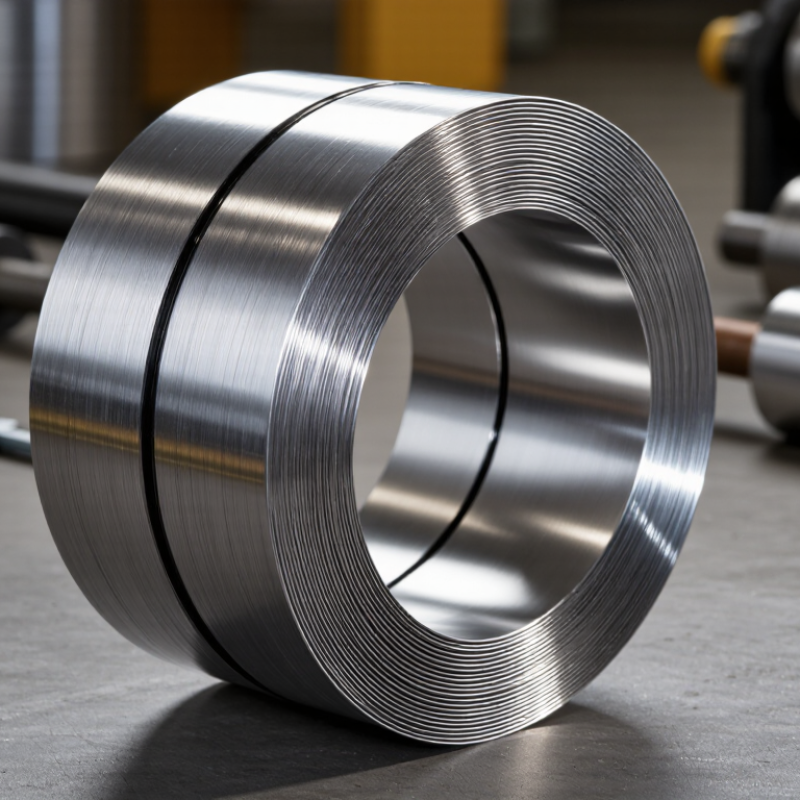
430 Stainless Steel Strip is a ferritic stainless steel product valued for its balance of cost, corrosion resistance, and practical performance. It typically contains chromium as its main alloying element, with very little carbon and no intentional nickel addition. This composition gives the strip a clean metallic appearance and useful resistance to oxidation in many indoor and mildly corrosive environments.
In manufacturing, the strip is produced through rolling, annealing, pickling, and slitting processes. Its thickness and width can be controlled for specific forming or fabrication needs. The material is commonly supplied in coils, allowing efficient use in stamping and continuous production lines. It also offers magnetic properties, which may matter in appliance parts, decorative components, and selected industrial assemblies. However, forming behavior depends strongly on thickness, temper, tooling, and surface condition. Small process differences can change the result.
Typical uses include kitchen equipment, appliance panels, automotive trim, sinks, exhaust components, fasteners, and architectural details. Its bright surface can resemble polished chrome, but the two materials are not equivalent. 430 Stainless Steel Strip is often chosen where moderate corrosion resistance and a lower material cost are more important than extreme toughness. It performs well in many dry or mildly humid settings. It is not an ideal choice for marine exposure, strong chemicals, or demanding welded structures. No material is perfect. Careful evaluation of temperature, moisture, cleaning agents, and forming requirements remains essential before selection. Reliable suppliers should provide dimensional tolerances, surface condition, chemical data, and relevant test documentation.
430 stainless steel strip is a ferritic, chromium-based alloy supplied in narrow, coiled widths. It usually contains 16–18% chromium and very little nickel. This chemistry makes it magnetic, unlike common austenitic grades. It also provides useful resistance to oxidation and mild atmospheric corrosion. ASTM A240 commonly limits carbon to 0.12%, although mill chemistry can vary. Check the certificate.
Manufacturers typically cold roll, anneal, pickle, and slit the strip to its required width. A 2B surface suits many formed components. Bright-annealed finishes offer a cleaner appearance. Its density is about 7.7 g/cm³, while its thermal conductivity exceeds many austenitic grades. Fabricators often appreciate its magnetic handling. Deep drawing is less forgiving, however. Sharp bends may cause problems when grain direction and tooling are ignored.
Common uses include appliance panels, exhaust trim, kitchen equipment, shelving, and decorative interiors. It performs best indoors or in low-chloride environments. Coastal air, salt spray, and trapped moisture require greater caution. The International Stainless Steel Forum reported global crude stainless production of about 58.4 million tonnes in 2023. That figure shows market scale, not universal suitability. The U.S. Geological Survey also identifies chromium as essential to stainless steel production. 430 remains practical, but application testing should not be skipped.
What Is 430 Stainless Steel Strip and Its Uses?
430 stainless steel is a ferritic, chromium-bearing stainless steel commonly supplied as cold-rolled strip. Its composition provides good corrosion resistance, magnetic behavior, and useful formability for indoor and mildly corrosive environments.
The chart shows typical maximum composition limits for UNS S43000 stainless steel under ASTM A240 specifications. Chromium is the principal alloying element, while nickel is kept low compared with austenitic stainless steels. Common applications include appliance trim, kitchen equipment, automotive interior components, architectural panels, and decorative metalwork.
How 430 Stainless Steel Strip Is Made
What Is 430 Stainless Steel Strip and Its Uses?
430 stainless steel strip is a ferritic grade containing about 16–18% chromium. It offers magnetic response, moderate corrosion resistance, and a clean metallic finish. Typical uses include appliance panels, kitchen equipment, automotive trim, and decorative components. ASTM A240 places carbon at a maximum of 0.12%, supporting useful formability without making the strip fully austenitic.
How 430 Stainless Steel Strip Is Made
Production begins with controlled melting, usually in an electric arc furnace. Argon-oxygen decarburization helps adjust carbon and chromium levels. The molten steel is continuously cast into slabs, then hot rolled into thinner coils. After cooling, annealing softens the structure, while pickling removes scale from the surface. Cold rolling follows when tighter thickness and better finish are required. Final annealing, skin passing, and slitting create the finished strip.
World Stainless reported approximately 58.4 million tonnes of stainless steel production in 2023. That scale shows why process consistency matters. Yet real production is not perfectly neat. Slight edge waves, surface marks, or thickness variation can still appear. Inspection must include gauge checks, surface lighting, hardness testing, and magnetic response. A bright finish may look excellent but still hide poor flatness.
Key Properties and Performance Characteristics
What Is 430 Stainless Steel Strip and Its Uses?
Key Properties and Performance Characteristics
430 stainless steel strip is a ferritic stainless steel with a chromium content commonly near 16–18%. It is magnetic and offers useful resistance to oxidation, moisture, and mild atmospheric exposure. Its low carbon structure supports stable performance during ordinary service. However, it is not a universal corrosion solution. Chloride-rich water can still cause staining or pitting.
In practical fabrication, 430 strip is valued for its smooth surface, moderate strength, and reliable dimensional consistency. It is often formed into appliance panels, automotive trim, exhaust components, kitchen equipment, and decorative interior parts. Cold working can improve strength, but excessive forming may reduce ductility and create unwanted distortion. It cannot be hardened through conventional heat treatment. Welding also requires care because heat-affected areas may lose some corrosion resistance. Surface finish and cleaning methods matter more than many users expect.
Tips: Match the grade to the environment. Check thickness, hardness, and surface finish before production. For outdoor or salty conditions, test samples first. Small design changes can prevent costly failures. That step is easy to skip.
Common Uses Across Different Industries
What Is 430 Stainless Steel Strip and Its Uses?
430 stainless steel strip is a ferritic stainless steel supplied in narrow, thin coils or cut lengths. It contains chromium, giving it useful resistance to oxidation and everyday moisture. It is magnetic and usually costs less than many austenitic stainless grades. However, it is not a universal substitute for every stainless steel.
In automotive manufacturing, 430 strip appears in decorative trim, exhaust components, clamps, and heat shields. Its clean surface and moderate heat resistance suit parts exposed to road spray and engine warmth. Appliance makers use it for cooker panels, refrigerator details, sink components, and dishwasher interiors. The strip can be slit accurately for formed edges or small stamped parts.
Construction and interior industries use 430 strip around lifts, wall panels, counters, and ventilation covers. It offers a bright appearance without demanding constant polishing. Food-service equipment may use it for dry-area surfaces, shelves, and cabinet parts. Chloride-rich environments need more careful material selection. Salt can leave stains or promote surface attack.
It also supports electrical enclosures, spring-like clips, fasteners, and heat-reflective panels. Fabricators often check thickness, surface finish, hardness, and edge quality before production. Small edge cracks can become expensive problems during stamping. Welding requires attention because heat can reduce corrosion performance near the joint.
In my view, material selection is sometimes rushed; a short exposure test and forming trial can prevent a poor fit.
Advantages, Limitations, and Selection Considerations
430 stainless steel strip is a ferritic stainless product containing about 16–18% chromium. ASTM A240 commonly limits carbon to 0.12%, supporting reasonable corrosion resistance and forming performance. It is magnetic, unlike many austenitic stainless grades. Typical uses include appliance panels, kitchen equipment, automotive trim, exhaust components, and decorative interior parts.
Its main advantage is cost stability. It usually contains very little nickel, reducing exposure to nickel-price swings. The International Stainless Steel Forum reported 58.4 million tonnes of global stainless crude steel production in 2023, showing the scale of this competitive market. 430 also offers good oxidation resistance in dry indoor environments. It can be polished to a clean, reflective surface.
But limitations matter. Chlorides, coastal moisture, and stagnant water may cause staining or pitting. Welded areas can lose toughness and corrosion performance. Deep drawing may also be less forgiving than expected. That shortcut deserves rechecking. The U.S. Geological Survey’s 2024 Mineral Commodity Summaries identifies chromium as a critical mineral, so supply risk still deserves attention during long-term purchasing. Select thickness, temper, surface finish, and edge quality according to the forming process. For exterior or wet service, test the actual environment before approval. A low price is not proof of suitability.
Cepex is the brand for the fluid handling market belonging to the Fluidra group. One of the leading european manufacturer of valves and fittings in thermoplastic materials.
Dedicated to the swimming pool, irrigation and industrial markets, we distribute our products worldwide with the Fluidra commercial network and presence in 46 countries with 136 sales branches.
Your data will be processed by CEPEX S.A., with address at C. Lluís Companys, 51-53, 08400, Granollers (Barcelona), and C.I.F. nº A-08928707, to send you communications about our products based on your interests. You can consult more information about the processing of your data and how to exercise your rights as described in the Privacy Policy.
Technical cookies are strictly necessary for our website to work and you can navigate through it. These types of cookies are those that, for example, allow us to identify you, give you access to certain restricted parts of the page if necessary, or remember different options or services already selected by you, such as your privacy preferences. Therefore, they are activated by default, your authorization not being necessary in this regard. Through the configuration of your browser, you can block or alert the presence of this type of cookies, although such blocking will affect the proper functioning of the different functionalities of our website.
The analysis cookies allow us to study the navigation of the users of our website in general (for example, which sections of the page are the most visited, which services are used most and if they work correctly, etc.). From the statistical information on navigation on our website, we can improve both the operation of the page itself and the different services it offers. Therefore, these cookies do not have an advertising purpose, but only serve to make our website work better, adapting to our users in general. By activating them you will contribute to this continuous improvement. You can enable or disable these cookies by checking the corresponding box, being disabled by default.
Functionality cookies allow us to remember your preferences, to personalize certain characteristics and general options of our website, every time you access it (for example, the language in which the information is presented to you, the sections marked as favorites, your browser type, etc.) Therefore, this type of cookies does not have an advertising purpose, but by activating them you will improve the functionality of the website (for example, adapting to your type of browser) and the customization of it based on your preferences (for example, by presenting the information in the language that you have chosen in previous occasions), which will contribute to the ease, usability and comfort of our page during your navigation. You can enable or disable these cookies by checking the corresponding box, being disabled by default.
Advertising cookies allow us to manage the advertising spaces included in our website based on criteria such as the content shown or the frequency in which the ads are displayed. For example, if you have been shown the same ad several times on our website, and you have not shown a personal interest by clicking on it, it will not appear again. In summary, by activating this type of cookies, the advertising shown on our website will be more useful and diverse, and less repetitive. You can enable or disable these cookies by checking the corresponding box, being disabled by default.
Behavioral advertising cookies allow us to obtain information based on the observation of your browsing habits and behaviors on the web, in order to show you advertising content that best suits your personal tastes and interests. To understand it in a very simple way, we will give you a fictitious example: if your last searches on the web were related to suspense literature, we would show you advertising about suspense books. Therefore, activating this type of cookies, the advertising that we show you on our website will not be generic, but will be oriented to your searches, tastes and interests, therefore adjusting exclusively to you. You can enable or disable these cookies by checking the corresponding box, being disabled by default. To understand it in a very simple way, we will give you a fictitious example: if your last searches on the web were related to suspense literature, we would show you advertising about suspense books. Therefore, activating this type of cookies, the advertising that we show you on our website will not be generic, but will be oriented to your searches, tastes and interests, therefore adjusting exclusively to you. You can enable or disable these cookies by checking the corresponding box, being disabled by default.
We use our own and third-party cookies to ensure the proper functioning of the website and to analyse our services, improve your experience on our website and show you advertisements related to your interests according to profiling based on your browsing habits (e.g. websites visited). You can accept all cookies by clicking "ACCEPT" or set or reject them by clicking here. If you would like to know more about the use of cookies, please see our COOKIE POLICY.