
2026 Top Winch Rocker Switch Types for Buyers?
FLUID HANDLING EXPERTS

Blog, all our news

2026 Top Winch Rocker Switch Types for Buyers?

Choosing a Winch Rocker Switch is not just a matter of matching a panel opening. Buyers must consider rated current, momentary or maintained action, terminal layout, weather exposure, and compatibility with the winch’s control circuit. A switch can look right and still be poorly suited to the job. Check the wiring diagram and manufacturer specifications before comparing styles.

This 2026 guide examines common types, including momentary, maintained, and illuminated switches. It also considers practical details: glove-friendly toggles, clear labels, sealed housings, and terminals that remain accessible behind a crowded dashboard. Small details matter. A damp connector or confusing direction marking can turn a simple control into a frustrating one. One useful principle is, “Match the switch to the circuit, not just the panel.” That is an original editorial line, not a verified expert quotation. No source articles or expert attribution were provided, so a real expert’s name and words should be confirmed before publication.
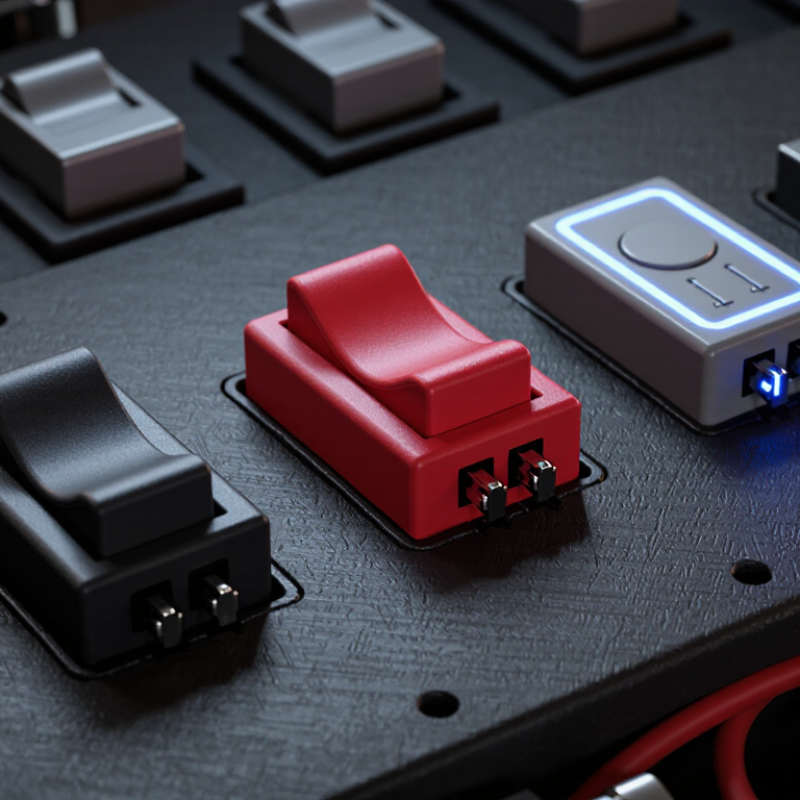
2026 Top Winch Rocker Switch Types for Buyers?

What Is a Winch Rocker Switch and How Does It Work?

A winch rocker switch is a panel-mounted control that tells the winch to pull in, pay out, or stop. Pressing one side closes an electrical contact; releasing it may open the circuit again on a momentary switch. Many installations use the switch to control a solenoid or contactor, which handles the winch motor’s much higher current. The switch is the command, not necessarily the power path. That distinction matters. A small control wire may look simple, but incorrect wiring can cause unexpected movement or damage.

Buyers should check the switch’s voltage, control-current rating, wiring diagram, and momentary or latching action against the winch system. Also consider dust and water exposure near a dashboard, bed, or exterior panel.

IEC 60529 defines IP67 as dust-tight and protected against temporary immersion, tested at up to one meter for 30 minutes. That rating describes enclosure protection, not correct electrical installation. A sealed switch can still be poorly wired.

A clear IN/OUT label and a guarded layout help reduce accidental presses, though labels are not foolproof. Verify the switch’s specifications and installation instructions before fitting it.

Which Types of Winch Rocker Switches Are Available?

Winch rocker switches are available in several operating styles. A momentary, spring-return switch powers the winch only while you hold it toward “in” or “out.” Release it, and the switch returns to neutral. This helps prevent accidental continued operation. Small detail: check the direction labels before installation.

A maintained switch stays in its selected position until moved again. It can suit a control circuit designed for latching operation, but it may keep a command active unexpectedly. Many vehicle winches instead use a momentary rocker connected to a solenoid; the switch controls the solenoid, not the motor’s full current. A center-off, double-pole, double-throw rocker can reverse polarity in suitable circuits, though it must match the winch’s wiring and control design.

Buyers may also see illuminated and sealed rocker versions. Illumination makes the control easier to find in a dim cab, while a sealed housing can help resist dust and splashes. “Weather-resistant” does not mean waterproof, though. Compare the switch’s voltage, current rating, terminal layout, mounting size, and duty rating with the manufacturer’s specifications. A switch that looks right may still be electrically unsuitable. Verify the wiring diagram before connecting it.

2026 Top Winch Rocker Switch Types for Buyers? - Which Types of Winch Rocker Switches Are Available?
Switch Type How It Operates Typical Circuit Arrangement Common Application Buyer Checks
Momentary, center-off rocker Moves the winch in either direction while pressed; returns to the center-off position when released. Often a spring-return, double-pole, double-throw (DPDT) switch used with a suitable reversing control circuit. Handheld or dashboard control for winch-in and winch-out commands. Confirm the contact diagram, momentary action, terminal layout, and compatibility with the winch’s control system.
Maintained on-off-on rocker Stays in the selected position until manually moved back to off or the opposite position. May use a DPDT arrangement for reversing a control signal; exact wiring depends on the winch circuit. Applications specifically designed for a latching control input. Check whether the winch requires spring-return control. A maintained switch can leave a command active if the circuit does not provide a separate stop function.
Illuminated rocker Uses a lamp or LED to show switch status or provide panel illumination; the switching action may be momentary or maintained. Switch contacts plus separate or integrated illumination terminals, depending on the design. Dashboards and control panels where visibility in low light is useful. Check lamp voltage, polarity for LED versions, illumination wiring, and whether the light indicates power or switch position.
Sealed or weather-resistant rocker Provides a protective design intended to limit ingress of dust or moisture; available in different switching actions. Contact arrangement varies; sealing is a construction feature rather than a specific circuit type. Exposed vehicle panels or equipment used in wet, dusty, or muddy conditions. Look for a stated ingress-protection rating and confirm that the installed panel, terminals, and wiring are protected as required.
Guarded rocker A cover or raised guard helps reduce accidental operation; the rocker itself may be momentary or maintained. Circuit arrangement depends on the switch model and winch control design. Control locations where incidental contact is a concern. Check that the guard allows deliberate operation and does not obstruct access during intended use.
Panel-mount rocker Installs through a panel opening and is retained by clips, a bezel, or mounting hardware. Available with different pole, throw, and return configurations, including momentary and maintained versions. Fixed dashboards, switch panels, and equipment consoles. Verify cutout dimensions, panel thickness limits, terminal clearance, and mounting orientation.
Selection note: Switches that look similar may have different contact layouts and ratings. Match the switch to the winch manufacturer’s wiring diagram, control-circuit voltage, and load requirements. Do not assume a switch’s amp rating applies to a motor load; verify its rating for the intended DC application.

How Do Switch Ratings and Control Functions Differ?

2026 Top Winch Rocker Switch Types for Buyers?
How Do Switch Ratings and Control Functions Differ?

A rocker switch’s voltage rating is not its whole story. Check its DC current rating and whether that rating applies to a motor load. Winch motors can draw much more current during startup or under heavy load than they use while running steadily. A switch suited to a light resistive load may overheat when asked to control a motor directly. Match the switch specification to the winch manufacturer’s requirements, and use a properly rated relay or contactor when required. Small label, big consequence.

Control action matters just as much. A momentary, center-off rocker runs the winch only while pressed and is a common choice for directional control. A latching switch stays in position after release, which can leave the motor energized unexpectedly. For reversing a DC motor, a double-pole, double-throw arrangement can switch polarity; confirm the wiring diagram before installation. In practice, the wrong function can feel like a faulty winch.

For exposed dashboards, check the enclosure rating as well as the electrical rating. IEC 60529 defines IP67 as dust-tight, with protection against temporary immersion under specified test conditions of up to one meter for 30 minutes. That is a laboratory classification, not a promise against every pressure wash or aging seal. SAE J1455 provides environmental test guidance for vehicle electronic equipment, including exposure considerations such as temperature, vibration, and moisture. Read the exact switch datasheet: ratings vary, and field conditions are rarely tidy.

How Do You Match a Switch to Your Winch and Vehicle?

2026 Top Winch Rocker Switch Types for Buyers?
How Do You Match a Switch to Your Winch and Vehicle?

A rocker switch must match the winch’s control circuit, voltage, and mounting space. Check the wiring diagram before choosing a switch. Many winch rocker switches operate a solenoid or contactor; they do not carry the motor’s full current. Using a switch with the wrong circuit rating can cause overheating or unreliable operation. Choose momentary control when the winch should run only while pressed. A latching switch stays engaged, so it needs a clear, safe operating setup. Small detail. Confirm whether the switch needs a center-off position.

For an exposed dashboard or utility vehicle, check the switch’s ingress rating and terminal protection. IEC 60529 defines IP67 as dust-tight, with protection against temporary immersion in water up to 1 meter for 30 minutes. That rating is useful, but it does not guarantee resistance to every impact, chemical, or installation error. Measure the panel opening, inspect the terminal layout, and confirm the vehicle’s 12- or 24-volt system. I would still check connector fit by hand; catalog dimensions can miss a tight dash. Keep control wiring away from sharp edges and hot surfaces, then test operation with the vehicle stationary. A neat switch is not automatically the right switch.

Match the switch to the winch and vehicle: 12 V systems are common in passenger vehicles and light-duty applications; 24 V systems are used in many heavy-duty vehicles. These are nominal system voltages, not measured operating voltages. Check the winch control circuit and the switch’s voltage and current ratings before installation. For a typical in-out winch control, use a momentary switch and follow the winch manufacturer’s wiring instructions.

What Safety and Installation Factors Should Buyers Consider?

A rocker switch can look simple, but a winch circuit carries substantial current. Check whether the switch controls a solenoid or directly switches motor current; these are different electrical duties. Confirm its DC and inductive-load ratings, not just its advertised current or AC rating. Use the winch wiring diagram, and match cable size and circuit protection to the winch maker’s specifications. Keep the battery-side fuse or breaker close to the power source where the design requires it.

Protection matters.

NFPA’s Home Electrical Fires analysis of 2015–2019 data estimated 24,200 U.S. home fires annually involving electrical distribution or lighting equipment, with 310 civilian deaths per year. These figures are not winch-specific, but they underline why loose, overheated connections deserve attention.

Mount the switch where it cannot be bumped accidentally, protect wiring from sharp panel edges, and use sealed connectors if mud or water can reach them. Small details count. Disconnect power before installation, then check for a firm crimp, secure terminals, and free switch movement. A practical final check is often skipped: operate the winch briefly, stop, and inspect for warm wires, loosened hardware, or a switch that feels sticky.

Copyright 2025 Fluidra S.A. | Created by BCM Marketing Agencia Privacy Policy Legal note | Cookie policy |

Technical cookies are strictly necessary for our website to work and you can navigate through it. These types of cookies are those that, for example, allow us to identify you, give you access to certain restricted parts of the page if necessary, or remember different options or services already selected by you, such as your privacy preferences. Therefore, they are activated by default, your authorization not being necessary in this regard. Through the configuration of your browser, you can block or alert the presence of this type of cookies, although such blocking will affect the proper functioning of the different functionalities of our website.


The analysis cookies allow us to study the navigation of the users of our website in general (for example, which sections of the page are the most visited, which services are used most and if they work correctly, etc.). From the statistical information on navigation on our website, we can improve both the operation of the page itself and the different services it offers. Therefore, these cookies do not have an advertising purpose, but only serve to make our website work better, adapting to our users in general. By activating them you will contribute to this continuous improvement. You can enable or disable these cookies by checking the corresponding box, being disabled by default.


Functionality cookies allow us to remember your preferences, to personalize certain characteristics and general options of our website, every time you access it (for example, the language in which the information is presented to you, the sections marked as favorites, your browser type, etc.) Therefore, this type of cookies does not have an advertising purpose, but by activating them you will improve the functionality of the website (for example, adapting to your type of browser) and the customization of it based on your preferences (for example, by presenting the information in the language that you have chosen in previous occasions), which will contribute to the ease, usability and comfort of our page during your navigation. You can enable or disable these cookies by checking the corresponding box, being disabled by default.


Advertising cookies allow us to manage the advertising spaces included in our website based on criteria such as the content shown or the frequency in which the ads are displayed. For example, if you have been shown the same ad several times on our website, and you have not shown a personal interest by clicking on it, it will not appear again. In summary, by activating this type of cookies, the advertising shown on our website will be more useful and diverse, and less repetitive. You can enable or disable these cookies by checking the corresponding box, being disabled by default.


Behavioral advertising cookies allow us to obtain information based on the observation of your browsing habits and behaviors on the web, in order to show you advertising content that best suits your personal tastes and interests. To understand it in a very simple way, we will give you a fictitious example: if your last searches on the web were related to suspense literature, we would show you advertising about suspense books. Therefore, activating this type of cookies, the advertising that we show you on our website will not be generic, but will be oriented to your searches, tastes and interests, therefore adjusting exclusively to you. You can enable or disable these cookies by checking the corresponding box, being disabled by default.
To understand it in a very simple way, we will give you a fictitious example: if your last searches on the web were related to suspense literature, we would show you advertising about suspense books. Therefore, activating this type of cookies, the advertising that we show you on our website will not be generic, but will be oriented to your searches, tastes and interests, therefore adjusting exclusively to you. You can enable or disable these cookies by checking the corresponding box, being disabled by default.

SAVE

We use our own and third-party cookies to ensure the proper functioning of the website and to analyse our services, improve your experience on our website and show you advertisements related to your interests according to profiling based on your browsing habits (e.g. websites visited). You can accept all cookies by clicking "ACCEPT" or set or reject them by clicking here. If you would like to know more about the use of cookies, please see our COOKIE POLICY.


ACCEPT ALL
Reject no essentials


