
2026 Top Electrical Track Socket Types for Global Buyers?
FLUID HANDLING EXPERTS

Blog, all our news

2026 Top Electrical Track Socket Types for Global Buyers?

In 2026, global buyers are looking beyond fixed wall outlets. They want flexible power for kitchens, offices, retail displays, and hospitality spaces. An Electrical Track Socket can support this demand through adjustable outlet positioning and cleaner cable management. Instead of drilling new holes, users can often move socket modules along an installed track. That practical detail matters beside a workbench, under a cabinet, or along a conference table.

This guide examines the leading Electrical Track Socket types for international purchasing. It compares modular sliding sockets, magnetic track systems, pop-up designs, USB-C combinations, and smart control models. Each type has a different balance of flexibility, appearance, installation effort, and maintenance needs. Buyers should check rated voltage, current capacity, grounding method, track length, connector design, and heat performance. Regional plug formats also vary. A product suitable for one market may not fit another system safely.

Reliable decisions require more than attractive product photos. Experienced buyers should request test reports, wiring diagrams, material specifications, and clear installation instructions. They should also confirm applicable certification requirements with qualified local professionals. IP ratings deserve attention in kitchens, workshops, and commercial areas. Not every premium-looking model performs well under continuous loads. I may favor modular systems for general use, but that preference is not universal. Some projects need stronger protection, simpler servicing, or a fixed outlet arrangement. The best choice depends on the building, users, appliances, and local electrical conditions. Small details matter. One incompatible rail can delay an entire installation.
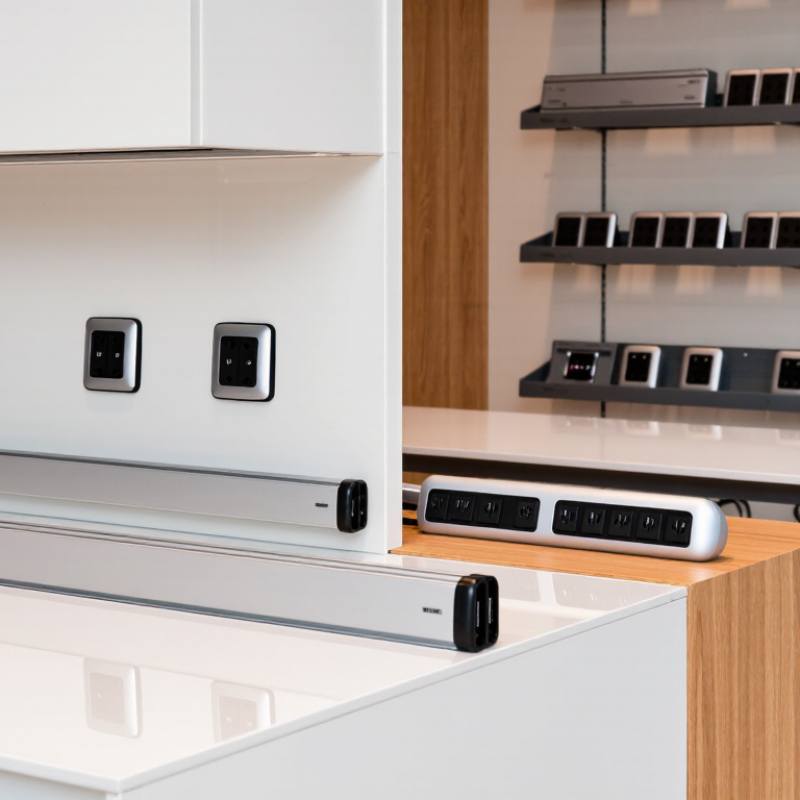
2026 Top Electrical Track Socket Types for Global Buyers?

What Is an Electrical Track Socket and How Does It Work?

An electrical track socket is a movable power outlet mounted on an energized rail. The rail contains insulated conductors. A socket module connects through an adapter and draws electricity from those conductors. Users can slide the module along the track, then lock it in place. It sounds simple. However, the internal contact design matters greatly.

Common types include single-outlet, multi-outlet, USB-equipped, recessed, and suspended modules. Some tracks support adjustable positioning, while others use fixed connection points. During product evaluations, I check the locking force, contact stability, housing temperature, and grounding path. A loose module may cause arcing, noise, or intermittent power. Those details are easy to overlook during a quick showroom inspection.

For global buyers, voltage rating, frequency, plug configuration, and installation method require careful verification. The track, socket, and adapter should have compatible electrical ratings. Materials should resist heat and normal mechanical wear. Independent testing records can provide useful evidence, but paperwork alone is not enough. A qualified electrician should confirm the installation and local compliance requirements. I would also leave space between high-load appliances. Track sockets are flexible, yet they are not automatically suitable for every load. Some product descriptions make this point unclear. That deserves a closer technical review before purchase.

Which Electrical Track Socket Types Will Lead the 2026 Market?

In 2026, modular electrical track sockets are likely to lead global demand. Buyers want one track system that supports offices, hotels, homes, and retail spaces. Replaceable socket modules reduce renovation time and simplify maintenance. That matters for installers working across changing floor plans.

USB-C power sockets will remain highly competitive. They support laptops, tablets, and small appliances from one wall-mounted track. However, power ratings must be checked carefully. A compact socket may not safely support several high-load devices together.

Professional buyers should review continuous output, heat control, grounding, and overload protection before ordering.

Smart track sockets may gain attention in premium projects. Remote switching, energy monitoring, and occupancy control can reduce wasted electricity. Weather-resistant versions will also serve kitchens, workshops, and covered outdoor areas. Certification remains more important than attractive features.

Products should match the destination market’s voltage, frequency, plug design, and safety requirements. In practice, global buyers often need separate configurations for different regions. This increases purchasing complexity.

It is easy to overlook cable capacity when adding more modules. Field testing, clear installation instructions, and traceable quality records can prevent expensive failures.

Yet market forecasts are not perfect. Lower-cost conventional sockets may still dominate projects where smart functions offer little value.

How Do Track Socket Designs Differ by Power, Mounting, and Use?

Track socket designs differ most in power architecture, mounting method, and intended use. The IEA Electricity 2024 report projects global electricity demand to grow by an average 3.4% annually through 2026. That trend increases interest in flexible power distribution, especially in offices, shops, and renovated homes.

Power ratings are not interchangeable. A 10A track may suit desk lamps and small appliances, while a 16A system offers more capacity for kitchen equipment or workshop tools. Buyers should check voltage, frequency, earthing, connector spacing, and heat limits. USB-C charging is convenient, but its output may be limited by the internal power module. More sockets do not always mean more usable power.

Mounting changes the installation experience. Recessed tracks create a clean ceiling line, while surface-mounted rails work better on concrete ceilings and exposed walls. Suspended systems can place power above shared desks or retail counters. Magnetic or modular designs allow quick repositioning, yet mechanical locking still matters. Use also determines protection needs: an office may prioritize cable management, while a workshop needs stronger housings and suitable IP protection. IEC 61534 covers powertrack systems, and IEC 60884-1 addresses household plugs and socket-outlets. Local certification remains essential.

Real projects expose a common mistake: buyers compare amperage, but ignore continuous loading and local wiring rules. That oversight can create nuisance tripping or unsafe heat buildup. Specification sheets should state maximum load, conductor size, installation orientation, and replacement-part availability. Procurement teams should test one complete assembly before ordering at scale.

2026 Top Electrical Track Socket Types for Global Buyers

How do track socket designs differ by power, mounting, and use?

This chart compares representative maximum apparent power for common socket standards that may be integrated into modular electrical track systems. Values are calculated from nominal voltage × rated current. Sliding track modules support flexible positioning, while surface-mounted and recessed designs are selected according to installation space, protection requirements, and intended use. Actual system capacity must follow the track assembly rating and local electrical regulations.

What Safety Standards Should Global Buyers Check Before Purchasing?

2026 Top Electrical Track Socket Types for Global Buyers

Before purchasing a track socket, verify its electrical rating for the destination market. Check voltage, frequency, current, earthing, and temperature limits. A socket designed for 220–240 V may not suit a 100–120 V installation. Confirm the product follows relevant IEC or national requirements. Depending on its design, this may include standards for plugs, sockets, insulation, resistance to heat, and protection against electric shock. Certification marks alone are not enough. Request test reports, factory inspection records, and clear instructions in the buyer’s language. I have seen product listings with impressive markings but weak technical evidence.

Tips: Ask for the exact standard number and edition. Check whether certification covers the complete track system. Inspect contact spacing, locking parts, shutters, and grounding continuity. Do not accept a generic “CE certified” claim as proof of performance. CE marking indicates regulatory conformity in applicable markets, not one universal safety test.

Also examine IP protection where dust or moisture may occur. Review fire-resistance data for plastic housings and terminals. Confirm that adapters cannot be inserted incorrectly or overloaded. A qualified electrician should test insulation and earth continuity after installation. This step is often skipped, unfortunately. Buyers should also compare the certificate scope with the actual model, rated load, and accessories supplied. Standards change, and an old report may no longer reflect the 2026 configuration. Keep records for traceability and future maintenance.

How Can Buyers Select Reliable Track Socket Suppliers for Their Region?

Global buyers now compare modular, linear, magnetic, and recessed electrical track sockets for different interiors. However, product type alone does not prove supplier reliability. Regional voltage, frequency, grounding rules, and plug configurations must guide the purchase. A socket designed for one market may fit physically but fail compliance testing elsewhere.

Ask suppliers for current test reports, material specifications, wiring diagrams, and traceable production records. Check whether documents match the exact model, not a similar sample. Request samples before placing a large order. Inspect terminal tightness, contact alignment, housing strength, and heat performance. Small details matter. I have seen attractive samples hide inconsistent assembly.

A dependable supplier should explain tolerances, inspection stages, packaging protection, and replacement procedures. Confirm lead times in writing, including delays caused by custom colors or regional fittings. Clear communication matters when time zones and technical terms create confusion. Supplier audits, factory videos, and independent inspections can provide useful evidence, but none is perfect. Do not rely on polished presentations alone. Ask how defects are handled after delivery, and test that answer with a small, controlled shipment. A low price may be useful, yet weak documentation or unstable quality can cost more later.

Copyright 2025 Fluidra S.A. | Created by BCM Marketing Agencia Privacy Policy Legal note | Cookie policy |

Technical cookies are strictly necessary for our website to work and you can navigate through it. These types of cookies are those that, for example, allow us to identify you, give you access to certain restricted parts of the page if necessary, or remember different options or services already selected by you, such as your privacy preferences. Therefore, they are activated by default, your authorization not being necessary in this regard. Through the configuration of your browser, you can block or alert the presence of this type of cookies, although such blocking will affect the proper functioning of the different functionalities of our website.


The analysis cookies allow us to study the navigation of the users of our website in general (for example, which sections of the page are the most visited, which services are used most and if they work correctly, etc.). From the statistical information on navigation on our website, we can improve both the operation of the page itself and the different services it offers. Therefore, these cookies do not have an advertising purpose, but only serve to make our website work better, adapting to our users in general. By activating them you will contribute to this continuous improvement. You can enable or disable these cookies by checking the corresponding box, being disabled by default.


Functionality cookies allow us to remember your preferences, to personalize certain characteristics and general options of our website, every time you access it (for example, the language in which the information is presented to you, the sections marked as favorites, your browser type, etc.) Therefore, this type of cookies does not have an advertising purpose, but by activating them you will improve the functionality of the website (for example, adapting to your type of browser) and the customization of it based on your preferences (for example, by presenting the information in the language that you have chosen in previous occasions), which will contribute to the ease, usability and comfort of our page during your navigation. You can enable or disable these cookies by checking the corresponding box, being disabled by default.


Advertising cookies allow us to manage the advertising spaces included in our website based on criteria such as the content shown or the frequency in which the ads are displayed. For example, if you have been shown the same ad several times on our website, and you have not shown a personal interest by clicking on it, it will not appear again. In summary, by activating this type of cookies, the advertising shown on our website will be more useful and diverse, and less repetitive. You can enable or disable these cookies by checking the corresponding box, being disabled by default.


Behavioral advertising cookies allow us to obtain information based on the observation of your browsing habits and behaviors on the web, in order to show you advertising content that best suits your personal tastes and interests. To understand it in a very simple way, we will give you a fictitious example: if your last searches on the web were related to suspense literature, we would show you advertising about suspense books. Therefore, activating this type of cookies, the advertising that we show you on our website will not be generic, but will be oriented to your searches, tastes and interests, therefore adjusting exclusively to you. You can enable or disable these cookies by checking the corresponding box, being disabled by default.
To understand it in a very simple way, we will give you a fictitious example: if your last searches on the web were related to suspense literature, we would show you advertising about suspense books. Therefore, activating this type of cookies, the advertising that we show you on our website will not be generic, but will be oriented to your searches, tastes and interests, therefore adjusting exclusively to you. You can enable or disable these cookies by checking the corresponding box, being disabled by default.

SAVE

We use our own and third-party cookies to ensure the proper functioning of the website and to analyse our services, improve your experience on our website and show you advertisements related to your interests according to profiling based on your browsing habits (e.g. websites visited). You can accept all cookies by clicking "ACCEPT" or set or reject them by clicking here. If you would like to know more about the use of cookies, please see our COOKIE POLICY.


ACCEPT ALL
Reject no essentials


