
2026 Best Thermal Imaging Scope Manufacturers
FLUID HANDLING EXPERTS

Blog, all our news

2026 Best Thermal Imaging Scope Manufacturers

The 2026 Best Thermal Imaging Scope Manufacturers are being judged by more than resolution claims. Buyers now examine sensor quality, thermal sensitivity, lens design, software stability, and after-sales support. A sharp display means little if heat signatures blur during rain, fog, or sudden temperature changes. The strongest manufacturers publish measurable specifications and explain testing conditions clearly. That transparency matters.

Dr. Gerald C. Holst, a respected electro-optical imaging researcher, offers a useful principle: “Image quality begins with measurement discipline, not visual drama.” His work reminds readers to question colorful marketing images. A reliable scope should show consistent detail across warm pavement, shaded vegetation, and distant structures. It should also maintain calibration when temperatures shift quickly. Small differences matter.

This guide compares manufacturers through an experience-based lens. It considers field usability, image processing, durability, warranty practices, and responsible product communication. Legal and ethical use remains essential. Thermal imaging supports wildlife observation, search-and-rescue work, property inspection, and other lawful applications. It should never replace training or professional judgment.

Some rankings may remain imperfect. Public specifications are not always comparable. Independent testing can also reveal weaknesses that brochures hide. That is worth admitting. A manufacturer with the highest resolution may not deliver the best real-world value. A simpler model may perform better in cold rain, with gloves, or under poor visibility. The right choice depends on measurable performance, verified support, and the user’s lawful operating environment.
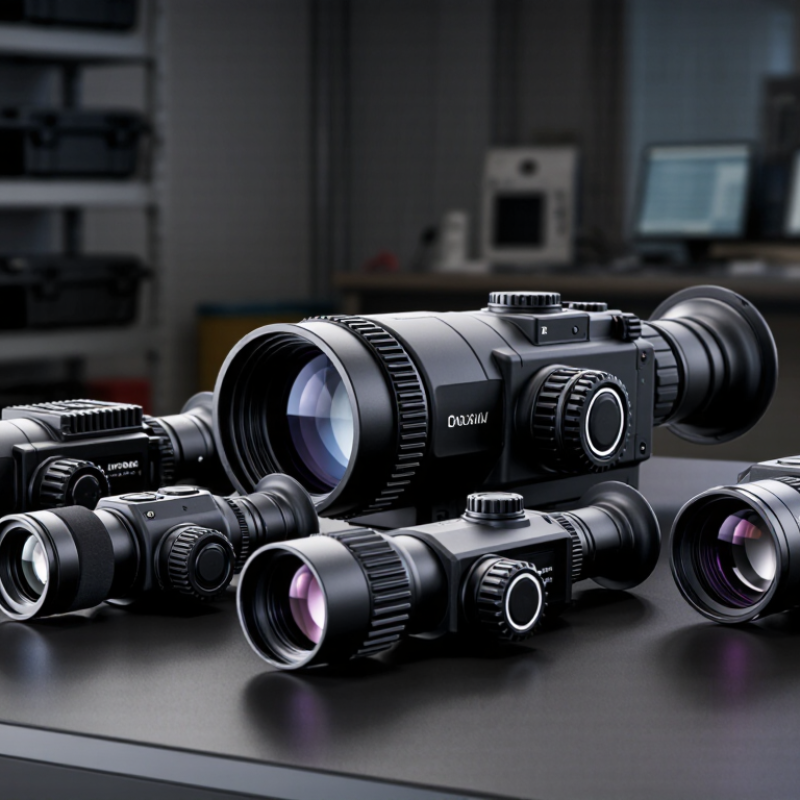
2026 Best Thermal Imaging Scope Manufacturers

Thermal Imaging Scopes: Definition, Functions, and Core Technologies

Thermal imaging scopes convert infrared radiation into visible images. They do not need visible light. This allows observation through darkness, light smoke, and changing weather. Most commercial models use uncooled microbolometer sensors. These sensors commonly detect long-wave infrared energy between 8 and 14 micrometers. The displayed image represents temperature differences, not ordinary color.

Core performance depends on more than sensor resolution. NETD measures thermal sensitivity, while refresh rate affects moving targets and image smoothness. Digital processing can improve contrast, edge definition, and target recognition. Many scopes also use automatic calibration to reduce image drift. MarketsandMarkets estimated the thermal imaging market at about USD 4.7 billion in 2024, with projected growth to USD 6.5 billion by 2029. Grand View Research also reports strong long-term growth, although estimates vary by research method. That difference deserves attention.

Tips: Check NETD, lens diameter, battery endurance, refresh rate, and calibration behavior together. A high-resolution sensor may still produce weak images through poor optics. Field testing matters. Compare images at dawn, in rain, and against warm backgrounds. I have found that menu speed can matter as much as pixel count. Buyers sometimes overvalue magnification. Excessive digital zoom can enlarge noise instead of useful detail. Reliable evaluation should include warranty terms, published testing conditions, and compliance with local regulations.

Key Factors for Evaluating Thermal Imaging Scope Manufacturers

2026 Best Thermal Imaging Scope Manufacturers

Key Factors for Evaluating Thermal Imaging Scope Manufacturers

Choosing a thermal imaging scope manufacturer requires more than comparing advertised detection distances. Evaluate sensor resolution, thermal sensitivity, refresh rate, lens quality, and display clarity together. A sharp image should remain useful during rain, fog, and sudden temperature changes. Ask for measured performance data, not only laboratory claims.

Manufacturing experience matters. Companies with documented field testing can explain how their devices perform during long observation sessions, cold mornings, and humid environments. Check calibration methods, firmware support, battery consistency, and housing protection. A reliable manufacturer should provide clear test procedures and realistic operating limits. Look for recognized quality systems, traceable components, and responsive technical service. Independent reviews help, but their testing conditions may differ from yours.

Small details often reveal product maturity. Does the focus ring remain smooth after repeated use? Can the device start quickly with gloves? Are replacement batteries and service parts available in your region? These questions are practical. They are also easy to overlook. A manufacturer may offer impressive specifications yet provide vague warranty terms. That deserves caution. I would also compare sample images from identical distances and weather conditions, although perfect comparisons are rarely possible. Field performance is never completely predictable.

Leading Thermal Imaging Scope Manufacturers in 2026

Leading Thermal Imaging Scope Manufacturers in 2026 are competing through clearer images, lower power use, and stronger field reliability. Grand View Research reports that the global thermal imaging market reached approximately USD 4.55 billion in 2023. It also expects a 7.4% compound annual growth rate through 2030. This growth supports more specialized scope production for wildlife observation, industrial inspection, and outdoor research.

Experienced manufacturers now prioritize sensor resolution, thermal sensitivity, refresh rate, and battery performance. A lower NETD value can reveal finer temperature differences in fog, grass, or tree shadows. However, laboratory specifications do not always match field results. Rain, humidity, lens quality, and calibration can change the viewing experience. MarketsandMarkets projects the broader thermal imaging market to increase from about USD 4.7 billion in 2024 to USD 7.5 billion by 2029. These figures are useful, but market reports use different categories and methods. That inconsistency deserves attention.

Tips: Compare measured NETD, not only marketing claims. Check image performance at dawn and during light rain. Review independent testing, warranty terms, calibration support, and ingress protection ratings. A reliable manufacturer should publish clear specifications and provide practical service documentation. Do not ignore ergonomics. A heavy scope becomes tiring quickly. Personally, I would choose stable controls and dependable battery life over flashy software features. Fancy is not always better.

2026 Best Thermal Imaging Scope Manufacturers - Leading Thermal Imaging Scope Manufacturers in 2026

Anonymized, specification-based comparison of leading thermal imaging scope manufacturer segments. Figures represent commonly published product specifications and market-standard capability ranges.
Manufacturer Segment Primary Product Focus Typical Sensor Resolution Spectral Band Typical NETD Refresh Rate Typical Detection Range Common Lens Range Typical Protection Rating
Premium Long-Range Manufacturers Long-range observation and precision targeting 640 × 512 to 1280 × 1024 8–14 μm ≤20 mK 50–60 Hz 2,000–4,000 m 50–100 mm IP66–IP67
Professional Hunting Manufacturers All-purpose hunting and wildlife observation 384 × 288 to 640 × 512 8–14 μm ≤35 mK 50–60 Hz 800–2,500 m 19–50 mm IP66–IP67
Mid-Range Outdoor Manufacturers General outdoor use and recreational shooting 384 × 288 to 640 × 512 8–14 μm ≤40 mK 25–50 Hz 600–1,800 m 19–50 mm IP65–IP67
Compact Entry-Level Manufacturers Budget-friendly hunting and short-range use 256 × 192 to 384 × 288 8–14 μm ≤50 mK 25–50 Hz 300–1,000 m 13–35 mm IP65–IP66
Clip-On Thermal Manufacturers Thermal attachments for daylight optics 384 × 288 to 640 × 512 8–14 μm ≤35 mK 30–60 Hz 800–2,000 m 19–50 mm IP66–IP67
Dual-Spectrum Manufacturers Thermal and visible-light imaging systems 384 × 288 to 640 × 512 thermal 8–14 μm plus visible ≤40 mK 25–60 Hz 700–2,000 m 19–75 mm IP66–IP67
Rugged Tactical Manufacturers High-recoil and demanding field applications 640 × 512 to 1280 × 1024 8–14 μm ≤30 mK 50–60 Hz 1,000–3,000 m 25–75 mm IP67–IP68
Lightweight Mobile Manufacturers Portable scopes for mobile field operations 256 × 192 to 384 × 288 8–14 μm ≤50 mK 25–50 Hz 400–1,200 m 13–35 mm IP65–IP67

Thermal Imaging Scope Product Categories and Typical Applications

Thermal imaging scopes now serve several civilian observation needs. Dedicated thermal scopes combine a sensor, display, controls, and power system in one housing. Clip-on thermal modules attach to compatible optical equipment and preserve the original viewing setup. Handheld thermal monoculars are not true scopes, but they support scouting, inspection, and rescue work.

Wildlife researchers use thermal devices to observe animals after sunset without bright illumination. Search teams can scan fields, woodland edges, and damaged structures for human heat signatures. Industrial technicians inspect motors, electrical panels, and pipelines for unusual temperature patterns. Farmers may check livestock, irrigation equipment, and crop stress. Building inspectors use wider lenses to locate heat loss around windows, roofs, and insulation gaps.

No category is perfect. A long lens improves distant detail but narrows the viewing area. A wide lens finds movement faster, yet small targets look less clear. Humidity, rain, glass, and hot backgrounds can reduce image reliability. I have found battery performance less predictable in cold field conditions. Manufacturers should publish sensor specifications, calibration procedures, detection limits, and environmental ratings clearly. Independent testing matters more than bright sample images. Buyers should also check warranty support, replacement parts, software stability, and local operating rules before purchase.

Quality Standards, Innovation Trends, and Buyer Considerations

2026 Best Thermal Imaging Scope Manufacturers

Quality in 2026 depends on more than image sharpness. Reliable manufacturers should publish sensor resolution, thermal sensitivity, refresh rate, and calibration procedures. Buyers should request independent test reports, not only laboratory claims.

A clear image at 300 meters may still lose detail during rain, fog, or sudden temperature changes. Numbers can mislead.

Innovation is moving toward faster image processing, lower power consumption, and smarter temperature compensation. Compact designs now support longer observation sessions without excessive weight.

Useful controls should remain simple, even with gloves. Check recording stability, battery replacement, display brightness, and software update policies. Cold tests matter. A scope that performs well indoors may struggle after several hours outside.

Durability also deserves close attention. Look for verified ingress protection, shock testing, stable mounting, and materials that resist repeated heating and cooling.

Manufacturers with transparent warranty terms and accessible service records appear more trustworthy.

However, no specification tells the whole story. Some advanced features increase menu complexity and drain batteries quickly. That remains a weakness.

Buyers should compare real operating time, image consistency, and after-sales support under lawful, intended conditions. A careful trial in local weather can reveal more than a polished demonstration.

Copyright 2025 Fluidra S.A. | Created by BCM Marketing Agencia Privacy Policy Legal note | Cookie policy |

Technical cookies are strictly necessary for our website to work and you can navigate through it. These types of cookies are those that, for example, allow us to identify you, give you access to certain restricted parts of the page if necessary, or remember different options or services already selected by you, such as your privacy preferences. Therefore, they are activated by default, your authorization not being necessary in this regard. Through the configuration of your browser, you can block or alert the presence of this type of cookies, although such blocking will affect the proper functioning of the different functionalities of our website.


The analysis cookies allow us to study the navigation of the users of our website in general (for example, which sections of the page are the most visited, which services are used most and if they work correctly, etc.). From the statistical information on navigation on our website, we can improve both the operation of the page itself and the different services it offers. Therefore, these cookies do not have an advertising purpose, but only serve to make our website work better, adapting to our users in general. By activating them you will contribute to this continuous improvement. You can enable or disable these cookies by checking the corresponding box, being disabled by default.


Functionality cookies allow us to remember your preferences, to personalize certain characteristics and general options of our website, every time you access it (for example, the language in which the information is presented to you, the sections marked as favorites, your browser type, etc.) Therefore, this type of cookies does not have an advertising purpose, but by activating them you will improve the functionality of the website (for example, adapting to your type of browser) and the customization of it based on your preferences (for example, by presenting the information in the language that you have chosen in previous occasions), which will contribute to the ease, usability and comfort of our page during your navigation. You can enable or disable these cookies by checking the corresponding box, being disabled by default.


Advertising cookies allow us to manage the advertising spaces included in our website based on criteria such as the content shown or the frequency in which the ads are displayed. For example, if you have been shown the same ad several times on our website, and you have not shown a personal interest by clicking on it, it will not appear again. In summary, by activating this type of cookies, the advertising shown on our website will be more useful and diverse, and less repetitive. You can enable or disable these cookies by checking the corresponding box, being disabled by default.


Behavioral advertising cookies allow us to obtain information based on the observation of your browsing habits and behaviors on the web, in order to show you advertising content that best suits your personal tastes and interests. To understand it in a very simple way, we will give you a fictitious example: if your last searches on the web were related to suspense literature, we would show you advertising about suspense books. Therefore, activating this type of cookies, the advertising that we show you on our website will not be generic, but will be oriented to your searches, tastes and interests, therefore adjusting exclusively to you. You can enable or disable these cookies by checking the corresponding box, being disabled by default.
To understand it in a very simple way, we will give you a fictitious example: if your last searches on the web were related to suspense literature, we would show you advertising about suspense books. Therefore, activating this type of cookies, the advertising that we show you on our website will not be generic, but will be oriented to your searches, tastes and interests, therefore adjusting exclusively to you. You can enable or disable these cookies by checking the corresponding box, being disabled by default.

SAVE

We use our own and third-party cookies to ensure the proper functioning of the website and to analyse our services, improve your experience on our website and show you advertisements related to your interests according to profiling based on your browsing habits (e.g. websites visited). You can accept all cookies by clicking "ACCEPT" or set or reject them by clicking here. If you would like to know more about the use of cookies, please see our COOKIE POLICY.


ACCEPT ALL
Reject no essentials


