
2026 Top Park Music Fountain Types for Global Buyers
FLUID HANDLING EXPERTS

Blog, all our news

2026 Top Park Music Fountain Types for Global Buyers

Choosing a Park Music Fountain for a public space is more than selecting jets and speakers. Buyers must consider the park’s size, visitor flow, water supply, climate, and maintenance capacity. A compact plaza may suit a programmable ground-level fountain, while a large civic park can support a choreographed lake installation. Each setting calls for different equipment.

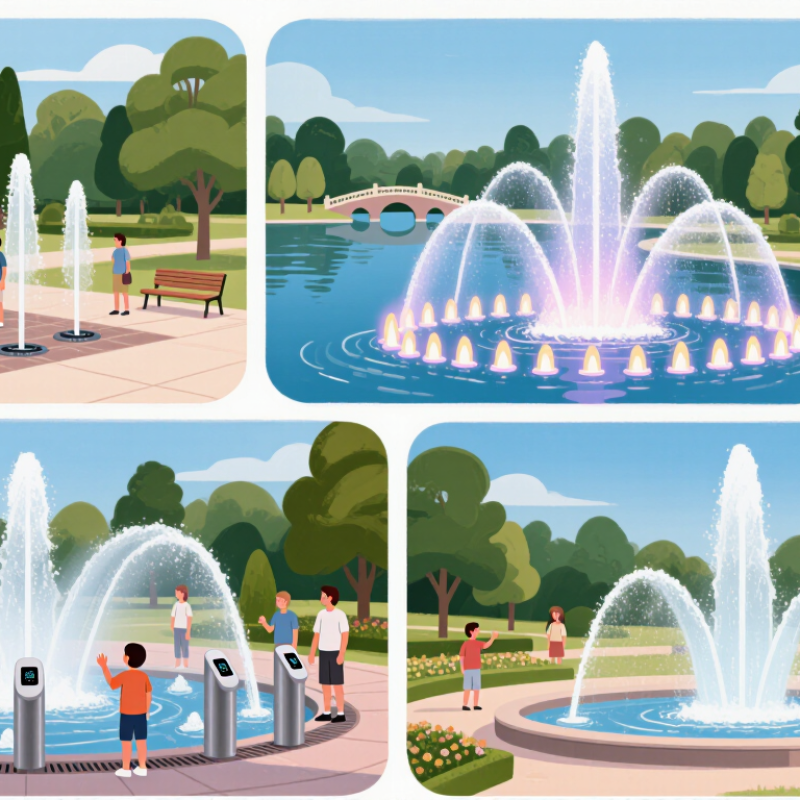
This guide introduces fountain types available to global buyers in 2026, including musical, interactive, floating, and dry-deck designs. It explains how nozzle arrangements, lighting, control systems, and sound shape the visitor experience. Practical details matter. A dramatic spray can look impressive in a rendering, yet wind may carry it beyond the pool and wet nearby paths. Cold regions may require seasonal shutdowns, while busy parks need accessible controls and straightforward cleaning routines.

Buyers should compare more than the initial price. Pump efficiency, replacement parts, installation support, and long-term service can affect the real cost of ownership. Ask suppliers for project references, equipment specifications, and clear maintenance guidance. Then assess whether the proposed system fits the site rather than relying on visual appeal alone. No single fountain type works everywhere. Some trade-offs are easy to miss. The sections ahead offer a practical framework for comparing options, asking better questions, and planning a fountain that serves both visitors and park operators.
2026 Top Park Music Fountain Types for Global Buyers

What Defines a Park Music Fountain and How It Works

2026 Top Park Music Fountain Types for Global Buyers

What Defines a Park Music Fountain and How It Works

A park music fountain combines water, lighting, and sound in a coordinated outdoor display. Unlike a simple spray feature, it uses programmed equipment to vary water height, direction, and timing with music. A central controller sends cues to pumps, valves, and lights. The result can be a gentle sequence or a dramatic performance across a broad pool. The setting matters: wind, nearby paths, and audience distance all affect what visitors actually see and hear.

During operation, pumps move water through pipes and nozzles. Valves adjust flow, while some systems use variable-speed pumps to change jet height more smoothly. Lights can shift color or brightness in step with the program. Music and control cues are usually prepared in advance, then played through outdoor audio equipment. Good design balances visual impact with practical needs, including drainage, water quality, maintenance access, and noise. It is not effortless. Even a well-planned show may need adjustments after testing.

Tips: Check wind exposure before choosing tall jets; drifting spray can wet paths. Ask for a clear maintenance plan and test the show at different audience locations. Keep expectations realistic: sound and water effects can feel different outdoors than they do in a design preview.

Major Fountain Types Classified by Water Display

Park music fountains are easiest to compare by the shape and movement of their water. Vertical-jet displays send narrow streams upward, creating clear lines that can rise and fall with musical beats. They suit open plazas and broad pools. Fan-shaped nozzles spread water into flat, layered sheets, which can catch colored lighting well. Wind matters, though. Even a modest breeze can blur the pattern.

Dancing fountains combine changing jet heights, angles, and timing for more animated sequences. Their pumps and controls need careful coordination; otherwise, the water may feel out of step with the music. Interactive ground jets offer a different experience. Water rises from pavement openings, inviting visitors closer, but drainage, slip resistance, and maintenance deserve attention. Those details are easy to underestimate.

Water-screen fountains project a thin sheet that can carry light or visual content. They work best where wind and ambient light are manageable, since both can reduce image clarity. Bubble or aerated displays use bright, textured water rather than precise shapes. They can add movement to a quieter garden, but may look less dramatic from a distance. No type fits every park. Viewing distance, local wind, water treatment, and maintenance capacity should shape the selection.

Lighting and Control Systems Used in Music Fountains

A dependable music fountain pairs underwater lighting with controls that keep every cue readable and repeatable. RGBW fixtures can create warm whites, saturated colors, and softer transitions across changing water patterns. Beam angles matter: a narrow beam may illuminate a jet clearly, while a wide beam can brighten nearby spray and create glare. Fixtures should be positioned to reduce shadows and avoid shining directly toward visitors. Small details matter.

The control system links lighting cues to pumps, valves, and audio timing. A show controller can trigger preset sequences, while an operator panel supports manual checks and safe shutdowns. During commissioning, technicians should test each fixture and water effect together, then adjust timing for the actual site. Water clarity, sunlight, and viewing distance can change how colors appear; a screen preview cannot show everything. One compromise is unavoidable: brighter lighting may improve visibility but also make transitions feel harsh. Leave time for on-site tuning, and document settings so maintenance teams can reproduce a show without guesswork.

Fountain Configurations for Different Park Sizes

For compact neighborhood parks, a single-ring or small circular fountain can create a clear focal point without crowding paths and play areas. A basin around 6 to 10 meters wide may suit a modest plaza, depending on viewing distance and local site conditions. Keep it simple. Low jets and gentle lighting help preserve sightlines, while a nearby service area makes routine checks easier.

Medium parks can support a multi-zone layout, such as a central cluster with smaller jets around its edge. This creates movement across the water surface and gives visitors several viewing angles. Leave enough dry paving for seating, walking, and occasional events. Water needs room. Designers should also check wind direction: spray that drifts onto a busy path can make paving slippery and frustrate visitors.

Large parks may accommodate a broad lake fountain or several linked display zones, but scale alone does not guarantee a better experience. Longer sightlines, pump capacity, sound levels, and maintenance access all affect performance. A practical plan may use distinct show areas rather than one oversized feature. The trade-off is real: more jets can add visual variety, yet they also increase control and upkeep needs. Revisit the layout after observing visitor flow; early assumptions about where people gather are not always right.

2026 Top Park Music Fountain Types for Global Buyers — Fountain Configurations for Different Park Sizes
Park Scale Typical Park Area Recommended Fountain Type Indicative Water Feature Footprint Typical Configuration Indicative Installed Pump Capacity Best Suited For Planning Considerations
Small community park Less than 1 hectare Compact musical jet fountain Approximately 6–12 m diameter About 12–30 programmable nozzles; moderate-height vertical jets; basic LED lighting; scheduled music shows Approximately 15–45 kW Neighborhood gathering areas, small civic parks, and compact plazas Prioritize simple controls, safe viewing distances, accessible routes, and manageable water treatment requirements.
Medium urban park 1–5 hectares Choreographed musical jet fountain Approximately 12–25 m diameter About 30–80 nozzles; variable-height jets and selected fan or arch effects; synchronized lighting and audio Approximately 45–150 kW Town parks, urban waterfronts, and parks with regular evening programming Allow space for audience circulation, equipment access, electrical infrastructure, drainage, and sound management.
Large metropolitan park 5–20 hectares Large-format choreographed fountain Approximately 25–50 m across About 80–180 nozzles; multiple jet zones, varied spray effects, color-changing lights, and programmable show control Approximately 150–500 kW Major public parks, destination gardens, and large event spaces Plan for higher visitor volumes, acoustic impact, robust filtration, maintainable equipment access, and coordinated show scheduling.
Destination or regional park More than 20 hectares Integrated lake or waterfront music fountain Typically 40–100 m or more, subject to waterbody layout Multiple fountain zones; selected high- and low-level effects; synchronized lighting and audio; optional projection where suitable Approximately 300 kW to over 1 MW Regional attractions, large waterfront parks, and venues designed for major public shows Requires detailed hydraulic, structural, electrical, environmental, wind, visibility, and operating-cost assessments.
Park with water-play priority Any size; reserve a dedicated activity area Interactive musical splash fountain Approximately 8–20 m across Ground-level spray nozzles, interactive controls, slip-resistant surfaces, timed water cycles, and suitable water treatment Approximately 10–80 kW Family parks, play areas, and warm-climate public spaces Design for supervised use, drainage, accessible entry, water-quality management, and clear separation from non-play areas.

Figures are indicative planning ranges, not universal design standards. Final dimensions, pump capacity, electrical demand, and equipment selection depend on site conditions, water source, local codes, climate, show requirements, and engineering design.

How Global Buyers Compare Fountain Types and Requirements

Park buyers rarely compare fountain types by appearance alone. They match each display to the site, audience, and operating capacity. A musical fountain suits an open plaza where visitors can watch scheduled shows. A dry-deck fountain brings water close to walking routes, but requires reliable drainage and slip-resistant paving. A floating lake fountain creates a distant focal point; wind can scatter its spray. Small details matter.

Buyers should compare water depth, power supply, filtration, and access for maintenance. Ask how often pumps and nozzles need inspection, and whether local technicians can service them. Request sound measurements from a comparable installation, not just a demonstration video. For family parks, check how the design manages wet surfaces and separates visitors from equipment. Ask for evidence.

The best choice depends on daily use, not only opening-day impact. A large show may draw crowds, yet its operating schedule and energy demand must fit the park’s budget. Interactive jets can invite repeat visits, though controls and drainage need extra attention. Supplier proposals sometimes make maintenance sound simpler than it is. Buyers should request a clear service plan, spare-parts list, and realistic operating estimate before comparing prices.

Copyright 2025 Fluidra S.A. | Created by BCM Marketing Agencia Privacy Policy Legal note | Cookie policy |

Technical cookies are strictly necessary for our website to work and you can navigate through it. These types of cookies are those that, for example, allow us to identify you, give you access to certain restricted parts of the page if necessary, or remember different options or services already selected by you, such as your privacy preferences. Therefore, they are activated by default, your authorization not being necessary in this regard. Through the configuration of your browser, you can block or alert the presence of this type of cookies, although such blocking will affect the proper functioning of the different functionalities of our website.


The analysis cookies allow us to study the navigation of the users of our website in general (for example, which sections of the page are the most visited, which services are used most and if they work correctly, etc.). From the statistical information on navigation on our website, we can improve both the operation of the page itself and the different services it offers. Therefore, these cookies do not have an advertising purpose, but only serve to make our website work better, adapting to our users in general. By activating them you will contribute to this continuous improvement. You can enable or disable these cookies by checking the corresponding box, being disabled by default.


Functionality cookies allow us to remember your preferences, to personalize certain characteristics and general options of our website, every time you access it (for example, the language in which the information is presented to you, the sections marked as favorites, your browser type, etc.) Therefore, this type of cookies does not have an advertising purpose, but by activating them you will improve the functionality of the website (for example, adapting to your type of browser) and the customization of it based on your preferences (for example, by presenting the information in the language that you have chosen in previous occasions), which will contribute to the ease, usability and comfort of our page during your navigation. You can enable or disable these cookies by checking the corresponding box, being disabled by default.


Advertising cookies allow us to manage the advertising spaces included in our website based on criteria such as the content shown or the frequency in which the ads are displayed. For example, if you have been shown the same ad several times on our website, and you have not shown a personal interest by clicking on it, it will not appear again. In summary, by activating this type of cookies, the advertising shown on our website will be more useful and diverse, and less repetitive. You can enable or disable these cookies by checking the corresponding box, being disabled by default.


Behavioral advertising cookies allow us to obtain information based on the observation of your browsing habits and behaviors on the web, in order to show you advertising content that best suits your personal tastes and interests. To understand it in a very simple way, we will give you a fictitious example: if your last searches on the web were related to suspense literature, we would show you advertising about suspense books. Therefore, activating this type of cookies, the advertising that we show you on our website will not be generic, but will be oriented to your searches, tastes and interests, therefore adjusting exclusively to you. You can enable or disable these cookies by checking the corresponding box, being disabled by default.
To understand it in a very simple way, we will give you a fictitious example: if your last searches on the web were related to suspense literature, we would show you advertising about suspense books. Therefore, activating this type of cookies, the advertising that we show you on our website will not be generic, but will be oriented to your searches, tastes and interests, therefore adjusting exclusively to you. You can enable or disable these cookies by checking the corresponding box, being disabled by default.

SAVE

We use our own and third-party cookies to ensure the proper functioning of the website and to analyse our services, improve your experience on our website and show you advertisements related to your interests according to profiling based on your browsing habits (e.g. websites visited). You can accept all cookies by clicking "ACCEPT" or set or reject them by clicking here. If you would like to know more about the use of cookies, please see our COOKIE POLICY.


ACCEPT ALL
Reject no essentials


