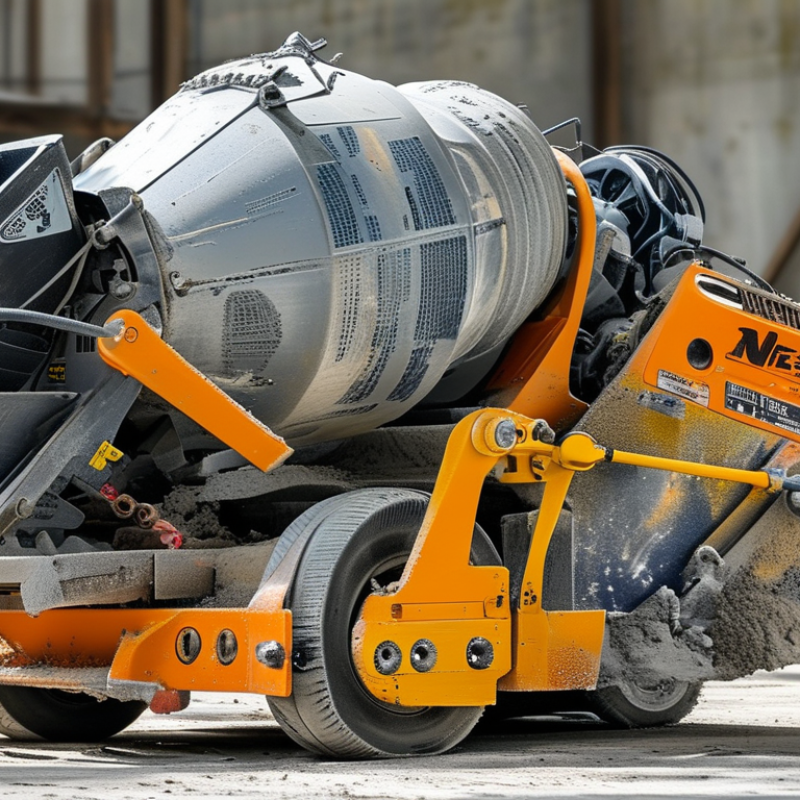
Choosing the right Mp330 Planetary Concrete Mixer for sale in 2026 requires more than comparing prices and polished photographs. Buyers should examine mixing capacity, discharge design, wear protection, motor output, maintenance access, and verified production records. The MP330 name may describe different configurations across suppliers, so specifications must be confirmed carefully.
The details matter. A reliable mixer should produce uniform concrete within a repeatable cycle. That consistency supports precast plants, concrete products, repair materials, and demanding construction schedules. Experienced operators also inspect the mixing arms, liners, gearbox, safety interlocks, and spare-parts availability before purchase. Small errors grow. A poorly matched motor or unsuitable liner can increase downtime and operating costs.
Concrete technology authority A. M. Neville wrote, “Concrete is a composite material.” This simple statement explains why mixing quality matters. Cement, aggregates, water, and admixtures must combine evenly, not merely move inside the pan. An experienced supplier should provide test data, commissioning support, clear warranty terms, and realistic delivery information. These details demonstrate expertise more convincingly than sales language.
Still, no online guide can replace a plant-specific assessment. A catalogue can look convincing. It can also hide limitations. Buyers should request a live demonstration or independent reference from a comparable operation. Check actual output, batch time, energy demand, and cleaning requirements. The best Mp330 Planetary Concrete Mixer is not automatically the cheapest model. It is the machine that performs reliably under your materials, climate, labor conditions, and daily production targets. Expect some uncertainty, and document every assumption before signing.
MP330 Planetary Mixer Basics: 330-L Nominal Capacity and Mixing Principle
A 330-L planetary concrete mixer is sized by nominal capacity, not guaranteed finished output. The 330-L figure describes the rated mixing chamber volume. Practical batch size may be lower, especially with stiff concrete, coarse aggregate, or strict quality targets.
Its mixing principle is distinctive. A stationary pan holds the material while tools rotate around a vertical axis. Each tool also spins on its own axis. This creates overlapping movement, helping cement paste reach aggregate surfaces and reducing dead zones. The action resembles controlled orbital scrubbing.
The Global Cement and Concrete Association reports that more than 14 billion cubic metres of concrete are produced globally each year. That scale makes repeatable mixing important, even on smaller projects. ASTM C94/C94M and ACI 304R emphasize uniformity, material control, and documented batching practices. Operators should check moisture, loading sequence, mixing time, and discharge consistency.
During a purchase inspection, look inside the 330-L pan. Scraped material near the wall may indicate poor clearance or worn tools. Listen for uneven gearbox noise. Check whether the stated capacity means chamber volume or usable batch volume; suppliers do not always define it identically. This detail is easy to miss.
A simple water-cement ratio error can change workability quickly. Record each batch. Then compare slump and visual uniformity before approving production. The machine may be powerful, but operator discipline still decides much of the result.
2026 Top MP330 Planetary Concrete Mixer for Sale? - MP330 Planetary Mixer Basics: 330-L Nominal Capacity and Mixing Principle
Specification
Reference Data
Practical Meaning
Mixer category
Planetary concrete mixer
A vertical-shaft mixer designed for intensive and relatively uniform mixing of concrete and other cementitious materials.
Nominal capacity
330 L
The stated geometric or rated capacity is approximately 0.33 m³, equivalent to 330,000 cm³.
Actual usable batch volume
Below the nominal volume
The recommended working fill depends on the mix design, moisture level, aggregate size, and the manufacturer’s loading limit; the vessel should not be filled to the rim.
Mixing principle
Orbiting mixing tools rotate around a vertical axis while their paddles or blades rotate within the mixing pan
The combined planetary and tool rotation creates repeated circulation, folding, and shearing of the mix.
Mixing vessel
Generally a fixed vertical mixing pan
A fixed pan allows the mixing tools to work continuously around the vessel and supports bottom or side discharge arrangements.
Typical materials
Cement, water, sand, gravel, mineral additives, pigments, and chemical admixtures
Material compatibility and maximum aggregate size should be checked against the mixer’s liner, blade, and discharge design.
Suitable concrete types
Normal concrete, dry or semi-dry concrete, mortar, grout, and specialty cementitious mixes
The final suitability depends on slump, aggregate grading, moisture content, and the required mixing time.
Mix uniformity
High potential for uniform distribution of cement paste, aggregates, and admixtures
The planetary path helps reduce dead zones when the batch size, loading order, and mixing time are correctly controlled.
Charging sequence
Commonly aggregates and part of the liquid are loaded first, followed by cementitious materials and remaining liquid
The exact sequence should follow the approved mix design to limit dust, prevent balling, and improve consistency.
Discharge arrangement
Typically a bottom or side discharge gate
The outlet should match the receiving hopper, conveyor, mould, or production line and should minimize material retention.
Control requirements
Timed mixing, controlled water addition, and interlocked discharge operation
Consistent control of loading, mixing, and discharge improves batch-to-batch repeatability.
Wear components
Mixing blades, paddles, scrapers, liners, discharge seals, and drive components
Abrasive aggregates gradually cause wear; inspection and timely replacement help maintain mixing performance.
Cleaning practice
Clean the pan, tools, discharge opening, and accessible surfaces after production
Removing fresh residue reduces hardened buildup, cross-contamination, and additional wear.
Selection checks before purchase
Working batch volume, maximum aggregate size, motor and electrical requirements, discharge height, liner material, safety guarding, and spare-part availability
These parameters should be confirmed against the required mix recipe, production rate, installation space, and local electrical standards.
Note: Nominal capacity is not the same as guaranteed finished-concrete output. Final production per batch depends on the approved fill level, mix design, aggregate grading, moisture content, mixing time, and discharge efficiency.
Key Specifications: 0.25–0.33 m³ Output and 20–40 rpm Mixing Speed
2026 Top MP330 Planetary Concrete Mixer for Sale?
For small precast yards and repair projects, an MP330 planetary concrete mixer offers practical batch control. Its rated output ranges from 0.25 to 0.33 m³ per batch. That volume suits paving blocks, stairs, panels, and compact foundation work. A full batch can weigh heavily when aggregates contain excess moisture. Operators should confirm the actual mix capacity before purchasing.
The 20–40 rpm mixing range provides useful flexibility. Lower speed can reduce splashing during initial loading. Higher speed helps distribute cement paste through stiff, fiber-rich mixtures. The best setting depends on slump, aggregate size, and mixing time. It is not simply a matter of choosing the fastest speed. In daily operation, I would check the discharge texture every few batches. Small changes in water content can alter the result noticeably.
A reliable mixer should show stable rotation under load and discharge without excessive residue. Inspect the planetary arms, liners, seals, and emergency stop system regularly. These details often affect maintenance costs more than advertised capacity. One limitation deserves attention: the 0.33 m³ figure may represent ideal loading conditions. Real output can fall when workers use large stone or cautious filling methods. That is acceptable, but it should be included in production planning. Ask for test-mix records, motor data, and service guidance before making a final decision.
2026 Top MP330 Planetary Concrete Mixer for Sale
Reference operating points within the specified 0.25–0.33 m³ output and 20–40 rpm mixing-speed ranges.
The chart compares representative mixer configurations across the stated capacity and mixing-speed ranges. Output is measured in cubic metres per batch, while mixing speed is measured in revolutions per minute.
Concrete Quality Factors: 60–90-Second Cycles and Homogeneity Control
2026 Top MP330 Planetary Concrete Mixer for Sale?
A 60–90-second mixing cycle is a practical target for many planetary concrete mixers. However, time alone cannot guarantee uniform concrete. Aggregate moisture, cement loading, admixture dosage, and batch size all change the result. ACI 304R recommends evaluating mixing performance through actual production conditions, not only equipment specifications.
Operators should inspect the discharge visually. The mix should show consistent color, mortar coating, and aggregate distribution. No dry pockets. No watery streaks. ASTM C94/C94M uses uniformity checks, including slump variation, air content, density, and strength results. Its criteria help convert “looks uniform” into measurable quality control. Samples from different discharge points can reveal segregation that a single sample misses.
The target is not magic.
A 60-second cycle may work with a well-calibrated batch. A stiff, fiber-rich mix may need more time. Extending the cycle can also increase heating, evaporation, or wear. That trade-off is easy to overlook. One useful field habit is recording cycle time, moisture readings, and discharge appearance for every trial batch. If results drift, check the loading sequence before blaming the mixer. In practice, homogeneity often depends on disciplined operation as much as mechanical design. The uncomfortable point is simple: a fast cycle with poor measurement is only a confident guess.
2026 Buying Guide: Wear Parts, Motor Power, and 5,000–10,000-Hour Service Life
2026 Top MP330 Planetary Concrete Mixer for Sale?
A 2026 MP330 planetary concrete mixer should be judged beyond purchase price. Inspect the mixing chamber, discharge gate, liners, and shaft seals before comparing offers. Abrasive sand and crushed stone attack these parts every working hour. Replaceable liners should fit tightly, without exposed gaps or loose fasteners. Mixing arms and scrapers need hard-wearing surfaces, but excessive hardness can make repairs difficult. That trade-off deserves attention.
Motor power must match the batch size, concrete slump, and aggregate grading. A larger motor is not automatically better. Check rated power, starting current, gearbox efficiency, and overload protection. Ask for measured output under full-load conditions, not only a brochure figure. During site checks, listen for gearbox knocks and watch for unusual vibration. Small noise changes often appear before major failures.
A realistic service target is 5,000 to 10,000 operating hours, with disciplined maintenance. Daily cleaning prevents hardened concrete from damaging seals and discharge components. Grease points, oil levels, bolt torque, and liner thickness need written inspection records. Operators should record motor temperature and batch cycle time. Neglected wear parts can shorten service life sharply. Even good maintenance cannot fix poor aggregate control. I would also reserve budget for early scraper replacement, because actual wear rarely follows the seller’s best estimate.
MP330 Applications and Pricing: Precast, RCC, and High-Performance Concreteeriwa
In 2026, the MP330 planetary concrete mixer suits demanding precast, RCC, and high-performance concrete work. Its compact mixing chamber helps distribute cement, aggregates, fibers, and admixtures evenly. Precast plants can use it for panels, pipes, blocks, and architectural elements. RCC projects benefit from consistent batches with controlled moisture. High-performance mixes need even dispersion, especially when silica fume or low water-cement ratios are involved.
From field experience, operators should check the batch size against daily production, not only the machine’s rated capacity. A 330-liter mixer may deliver different output depending on aggregate size, mix stiffness, and loading sequence. Mixing time often ranges from two to five minutes, but laboratory trials should decide the final setting. Small errors matter. Overloading can reduce uniformity and accelerate wear on mixing tools.
MP330 pricing depends on motor power, discharge design, wear protection, automation, freight, installation, and after-sales service. Request a detailed quotation separating the mixer, control system, spare parts, and commissioning costs. Stainless or reinforced liners may increase the purchase price, yet they can reduce downtime in abrasive RCC production. Buyers should also compare energy use and maintenance access. A cheaper unit is not always cheaper to operate. I would verify the warranty terms, test a representative mix, and inspect finished samples before purchase. Mistakes happen when specifications look precise but lack production data.
Cepex is the brand for the fluid handling market belonging to the Fluidra group. One of the leading european manufacturer of valves and fittings in thermoplastic materials.
Dedicated to the swimming pool, irrigation and industrial markets, we distribute our products worldwide with the Fluidra commercial network and presence in 46 countries with 136 sales branches.
Your data will be processed by CEPEX S.A., with address at C. Lluís Companys, 51-53, 08400, Granollers (Barcelona), and C.I.F. nº A-08928707, to send you communications about our products based on your interests. You can consult more information about the processing of your data and how to exercise your rights as described in the Privacy Policy.
Technical cookies are strictly necessary for our website to work and you can navigate through it. These types of cookies are those that, for example, allow us to identify you, give you access to certain restricted parts of the page if necessary, or remember different options or services already selected by you, such as your privacy preferences. Therefore, they are activated by default, your authorization not being necessary in this regard. Through the configuration of your browser, you can block or alert the presence of this type of cookies, although such blocking will affect the proper functioning of the different functionalities of our website.
The analysis cookies allow us to study the navigation of the users of our website in general (for example, which sections of the page are the most visited, which services are used most and if they work correctly, etc.). From the statistical information on navigation on our website, we can improve both the operation of the page itself and the different services it offers. Therefore, these cookies do not have an advertising purpose, but only serve to make our website work better, adapting to our users in general. By activating them you will contribute to this continuous improvement. You can enable or disable these cookies by checking the corresponding box, being disabled by default.
Functionality cookies allow us to remember your preferences, to personalize certain characteristics and general options of our website, every time you access it (for example, the language in which the information is presented to you, the sections marked as favorites, your browser type, etc.) Therefore, this type of cookies does not have an advertising purpose, but by activating them you will improve the functionality of the website (for example, adapting to your type of browser) and the customization of it based on your preferences (for example, by presenting the information in the language that you have chosen in previous occasions), which will contribute to the ease, usability and comfort of our page during your navigation. You can enable or disable these cookies by checking the corresponding box, being disabled by default.
Advertising cookies allow us to manage the advertising spaces included in our website based on criteria such as the content shown or the frequency in which the ads are displayed. For example, if you have been shown the same ad several times on our website, and you have not shown a personal interest by clicking on it, it will not appear again. In summary, by activating this type of cookies, the advertising shown on our website will be more useful and diverse, and less repetitive. You can enable or disable these cookies by checking the corresponding box, being disabled by default.
Behavioral advertising cookies allow us to obtain information based on the observation of your browsing habits and behaviors on the web, in order to show you advertising content that best suits your personal tastes and interests. To understand it in a very simple way, we will give you a fictitious example: if your last searches on the web were related to suspense literature, we would show you advertising about suspense books. Therefore, activating this type of cookies, the advertising that we show you on our website will not be generic, but will be oriented to your searches, tastes and interests, therefore adjusting exclusively to you. You can enable or disable these cookies by checking the corresponding box, being disabled by default. To understand it in a very simple way, we will give you a fictitious example: if your last searches on the web were related to suspense literature, we would show you advertising about suspense books. Therefore, activating this type of cookies, the advertising that we show you on our website will not be generic, but will be oriented to your searches, tastes and interests, therefore adjusting exclusively to you. You can enable or disable these cookies by checking the corresponding box, being disabled by default.
We use our own and third-party cookies to ensure the proper functioning of the website and to analyse our services, improve your experience on our website and show you advertisements related to your interests according to profiling based on your browsing habits (e.g. websites visited). You can accept all cookies by clicking "ACCEPT" or set or reject them by clicking here. If you would like to know more about the use of cookies, please see our COOKIE POLICY.