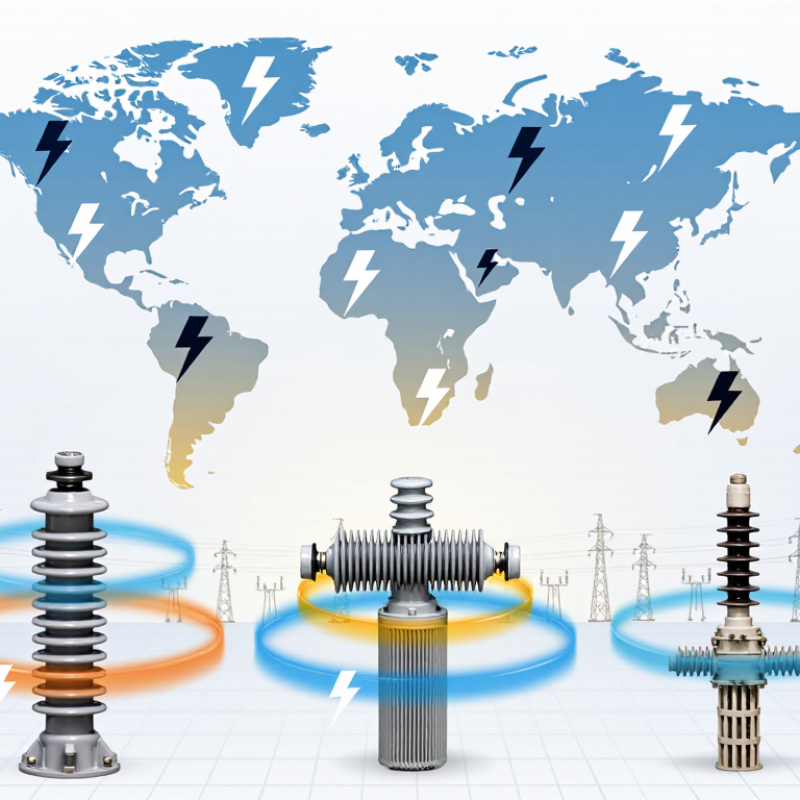
2026 Best Lightning Arrester Types for Global Buyers
FLUID HANDLING EXPERTS

Blog, all our news

2026 Best Lightning Arrester Types for Global Buyers

Choosing the best Lightning Arrester in 2026 requires more than comparing price, voltage ratings, or product photos. Global buyers must examine network voltage, temporary overvoltage, pollution, altitude, lightning density, and installation conditions. A coastal substation faces salt, moisture, and intense corrosion. A dry inland grid may face different thermal and switching stresses.

IEC 60099-4 remains a key reference for metal-oxide surge arresters used on alternating-current power systems. It defines important performance and testing requirements, including energy capability and protective characteristics. IEEE Std C62.11 provides additional guidance for metal-oxide arresters without gaps. These standards help buyers compare distribution, intermediate, station-class, polymer-housed, and porcelain-housed designs with greater confidence.

Industry evidence also shows why selection matters. The World Meteorological Organization’s global lightning information highlights lightning as a persistent hazard across many regions, not a rare seasonal event. CIGRE technical publications repeatedly emphasize coordination between arrester protection levels, transformer insulation, and grounding performance. Market research from Grand View Research and MarketsandMarkets also indicates continuing growth in lightning protection demand, supported by renewable energy, grid expansion, and aging infrastructure.

Still, market forecasts are not purchase specifications. No shortlist is perfect. A cheaper arrester may create higher lifecycle costs if sealing, monitoring, or replacement access is weak. Buyers should request certified test results, discharge-current data, pressure-relief performance, creepage distance, warranty terms, and field references. The best choice depends on the actual grid, not a catalogue label. This guide compares the leading Lightning Arrester types for global buyers in 2026, while recognizing one uncomfortable fact: installation quality can defeat excellent equipment.

2026 Best Lightning Arrester Types for Global Buyers

Lightning Arrester Basics and Their Role in Power System Protection

Lightning arresters protect power systems from sudden overvoltage caused by lightning and switching events. They do not stop lightning. Instead, they provide a controlled path to earth when voltage rises beyond a safe level. Under normal voltage, the arrester remains highly resistive. During a surge, its metal-oxide elements conduct within microseconds.

Selection depends on system voltage, maximum continuous operating voltage, discharge current, insulation level, and grounding quality. Common designs include distribution, station, and line arresters. A distribution arrester may protect a transformer near a rural pole. A station arrester handles larger energy at substations. Line arresters can reduce flashovers along exposed transmission routes. The correct rating must match the network, not merely the equipment nameplate.

Installation details matter greatly. Keep the connection to earth short, straight, and free from sharp bends. A long grounding lead can add inductive voltage during a fast surge. Field inspections often find damaged housings, loose terminals, or poor earth connections after severe storms. These faults are easy to underestimate. They are not minor.

Global buyers should review applicable standards, routine test records, leakage-current data, and environmental conditions. Salt, dust, altitude, and temperature can change arrester performance. A cheap unit may become costly after repeated failures. Yet higher price alone proves nothing. Selection still requires careful coordination with transformer insulation and local fault conditions. There is no perfect choice, and even experienced engineers should recheck assumptions before ordering.

2026 Best Lightning Arrester Types for Global Buyers

Lightning Arrester Basics and Their Role in Power System Protection

Metal-oxide lightning arresters protect electrical equipment by diverting surge current to earth and limiting the resulting overvoltage. Common reference nominal discharge-current levels for medium- and high-voltage arresters are 5 kA, 10 kA, and 20 kA using the standardized 8/20 μs impulse-current waveform. Higher ratings are generally selected where exposure, system voltage, substation importance, or insulation-coordination requirements are greater. The final selection must also consider maximum continuous operating voltage, temporary overvoltage, energy capability, grounding, and applicable IEC requirements.

Reference framework: IEC 60099-4 for metal-oxide surge arresters and IEC 61643-11 for low-voltage surge protective devices. Values shown are common reference ratings, not brand-specific specifications or universal application rules.

Main Lightning Arrester Types Available in 2026

2026 Best Lightning Arrester Types for Global Buyers

The main lightning arrester types in 2026 serve different voltage levels and installation environments. NOAA estimates roughly eight million lightning flashes occur worldwide each day. That exposure makes correct classification important, not optional.

Gapless metal-oxide arresters remain the dominant choice for medium-voltage networks and substations. They use zinc-oxide varistors to limit surge voltage without relying on an external spark gap. IEC 60099-4 identifies common nominal discharge currents, including 5 kA, 10 kA, and 20 kA classes. Higher-duty station arresters suit transformers and high-value switchgear. Distribution arresters are smaller, but they still require careful energy and temporary-overvoltage checks.

Gapped arresters remain available where system coordination needs defined sparkover behavior. Expulsion types may fit selected overhead distribution systems, though maintenance conditions can reduce their practical appeal. Line arresters protect exposed transmission lines, often beside insulators. For buildings, low-voltage Type 1, Type 2, and Type 3 devices follow IEC 61643-11 testing concepts, using 10/350 µs or 8/20 µs surge waveforms.

The numbers matter.

A catalog match can still fail in the field. Buyers should compare continuous operating voltage, discharge current, energy capability, pollution level, and grounding design. Regional terminology also causes confusion. Oversizing is not always safer, and a cheaper arrester may create expensive coordination problems.

How to Compare Arrester Ratings, Materials, and Performance

2026 Best Lightning Arrester Types for Global Buyers

How to Compare Arrester Ratings, Materials, and Performance

Choosing a lightning arrester starts with system voltage, not marketing language. The continuous operating voltage must exceed the network’s maximum line-to-ground voltage. IEC 60099-4 defines standardized tests using 8/20 microsecond current impulses. This makes laboratory results easier to compare across suppliers. A 10 kA nominal discharge rating suits many distribution applications, while higher fault exposure may justify 20 kA equipment. Bigger is not always safer.

Metal-oxide arresters usually provide fast nonlinear voltage limitation without series gaps. Their zinc-oxide blocks absorb surge energy, but thermal stability remains critical. Compare residual voltage at the same discharge current, not at different test conditions. Check energy capability in kJ per kV, pressure-relief performance, housing material, and pollution resistance. Silicone rubber can improve water-shedding performance, while porcelain offers rigid mechanical strength. Each choice has trade-offs.

CIGRE Technical Brochure 549 emphasizes insulation coordination and accurate lightning-current assessment. IEEE C62.11-2020 also provides test principles for metal-oxide arresters. Buyers should request certified test records, leakage-current data, and aging results. Verify altitude, humidity, salt exposure, and grounding assumptions. Field experience shows that poor grounding can undermine a well-rated arrester. That part is often overlooked. I would also question unusually low prices, because incomplete testing may explain them. Performance claims need conditions, dates, and traceable laboratory evidence.

Choosing Lightning Arresters for Different Global Power Networks

2026 Best Lightning Arrester Types for Global Buyers

Choosing a lightning arrester starts with the power network, not the catalogue. A 33 kV grounded feeder needs different protection from an ungrounded industrial system. The key checks include maximum continuous operating voltage, temporary overvoltage, fault duration, and discharge energy. IEC 60099-4 provides the main testing framework for metal-oxide arresters. IEEE C62.11 also guides distribution and station-class performance evaluations. The site decides.

Network frequency matters less than insulation coordination and earthing design. However, 50 Hz and 60 Hz systems can show different operating conditions during faults. Coastal substations face salt deposits and moisture. Desert sites experience dust, heat, and sudden cooling. Mountain installations need altitude correction and careful external insulation selection. CIGRE Technical Brochure 549 stresses system conditions, environmental pollution, and energy duty during arrester assessment.

Grid expansion adds pressure. The IEA Electricity 2024 report estimates that 80 million kilometres of grids must be added or upgraded by 2040. That growth will connect mixed networks, renewable plants, and long overhead lines. Buyers should compare gapless metal-oxide designs, housing materials, creepage distance, pressure-relief performance, and certified residual-voltage data. A lower purchase price may hide higher replacement risk. Small errors matter. I would not select an arrester from voltage alone. Field records, lightning density, transformer insulation levels, and switching-surges data deserve equal weight. Even experienced teams can overlook contamination after installation.

Installation, Testing, Maintenance, and Compliance Requirements

2026 Best Lightning Arrester Types for Global Buyers

Installation, Testing, Maintenance, and Compliance Requirements

An international lightning-detection network’s 2024 Annual Lightning Report recorded over 1.4 billion detected events in 2023. Coverage remains uneven, so buyers should not treat regional lightning maps as complete evidence. Select metal-oxide arresters by system voltage, temporary overvoltage, discharge current, altitude, and pollution level. A higher nominal current rating alone does not guarantee better protection.

Installation quality decides performance. Keep connections short, straight, and mechanically secure. IEC 60099-4 defines testing requirements for metal-oxide surge arresters above 1 kV. IEEE C62.11-2020 provides complementary performance and test guidance. Before energizing, verify insulation coordination, grounding resistance, phase clearances, and enclosure sealing. IEC 62305-1 uses 10⁻⁵ per year as a tolerable annual risk value for loss of human life. That figure supports risk assessment, not careless shortcuts.

Testing should include visual inspection, leakage-current measurement, thermal checks, and post-fault evaluation. Record temperature, humidity, test voltage, and instrument calibration. Maintenance intervals should follow the site’s exposure and fault history, not a generic calendar. CIGRE technical guidance stresses condition-based assessment for aging arresters. In practice, a clean-looking unit may still have internal degradation. That is easy to miss. Keep serial records, test certificates, installation drawings, and local conformity documents together. Requirements may also include IEC, IEEE, national electrical codes, and utility rules.

2026 Best Lightning Arrester Types for Global Buyers - Installation, Testing, Maintenance, and Compliance Requirements

Arrester Type Typical Application Main Characteristics Installation Requirements Commissioning and Testing Maintenance Requirements Key Selection Data Common Compliance References
Metal-Oxide, Gapless Distribution Arrester Medium-voltage distribution transformers, overhead feeders, cable terminations, and pole-mounted equipment. Uses non-linear metal-oxide blocks without series gaps. Provides fast response and low residual voltage for distribution equipment. Install as close as practical to the protected equipment. Keep phase and earth leads short, straight, and separated from sensitive control wiring. Connect the earth terminal to a low-impedance grounding system. Check nameplate ratings, physical condition, terminal tightness, clearances, grounding continuity, and correct phase connection. Perform leakage-current or reference-voltage testing only with suitable calibrated equipment and the applicable manufacturer procedure. Inspect after severe lightning activity and during scheduled equipment outages. Look for cracked housings, contamination, corrosion, tracking, displaced disconnectors, and signs of thermal damage. Replace units showing permanent damage or abnormal test results. System maximum continuous operating voltage, temporary overvoltage withstand, nominal discharge current, line discharge class, residual voltage, pollution level, housing material, and altitude. IEC 60099-4; IEEE C62.11; IEEE C62.22; IEC 60099-5; IEC 62305 where the arrester forms part of a lightning protection system.
Metal-Oxide, Gapless Station-Class Arrester High-voltage substations, generator step-up transformers, transmission transformers, busbars, and major switching equipment. Designed for higher energy capability, greater electrical stress, and more demanding protective-performance requirements than ordinary distribution arresters. Position near transformer or apparatus terminals. Maintain specified phase-to-earth and phase-to-phase clearances. Use a short, mechanically supported earth connection and bond the arrester ground to the substation grounding grid. Verify rated voltage, continuous operating voltage, discharge class, energy capability, and protective levels. Conduct visual inspection, grounding checks, connection torque verification, and approved electrical diagnostic tests before energization. Use condition-based maintenance supported by operating records, thermal imaging where appropriate, leakage-current trend analysis, and inspection of pressure-relief or monitoring devices. Investigate any sudden change from the established baseline. System insulation level, transformer insulation coordination, switching surge exposure, temporary overvoltages, energy duty, nominal discharge current, altitude, seismic requirements, and pollution severity. IEC 60099-4; IEEE C62.11; IEEE C62.22; IEC 60071-1; IEC 60071-2; IEC 62305 where applicable.
Metal-Oxide Line Arrester Overhead lines exposed to direct or nearby lightning, especially in areas with frequent faults, poor shielding, or high ground resistance. Installed directly on or alongside conductors to reduce lightning-related outages. May include a series disconnector or fault indicator depending on the design. Mount securely to the structure and maintain the specified conductor connection and earth clearance. Keep the grounding conductor as short and direct as possible. Confirm that mechanical loads and conductor movement will not damage the arrester. Confirm phase assignment, mounting security, conductor clamps, earth continuity, disconnector position, and clearance from grounded structures. Inspect for transport damage and contamination before installation. Inspect after lightning-related line trips and severe storms. Check housing condition, mounting hardware, disconnector status, corrosion, bird contamination, and earth connections. Record failed units and investigate repeated operations. Line insulation level, conductor-to-ground voltage, fault current capability, lightning exposure, line length, tower or pole grounding, mechanical loading, and required energy rating. IEC 60099-4; IEEE C62.11; IEEE C62.22; IEC 62305; applicable national overhead-line and electrical safety regulations.
Gapped Line Arrester Overhead distribution and transmission lines where temporary overvoltage behavior, follow current, or specific line-protection arrangements must be controlled. Uses an external or internal series gap with an arrester element. The gap helps isolate the arrester from normal system voltage but requires accurate installation geometry. Follow the specified gap distance, alignment, conductor attachment, and mounting orientation. Prevent contamination, vegetation, or hardware from bridging the gap. Verify clearances under expected conductor movement. Inspect gap spacing and alignment using the approved dimensional method. Check earth continuity, mounting condition, conductor connections, and any disconnector or fault indicator. Do not energize if the gap is contaminated or mechanically displaced. Inspect gap electrodes for erosion, contamination, corrosion, and incorrect spacing. Recheck after major storms, line work, or mechanical incidents. Replace components that no longer meet the specified gap or insulation condition. Sparkover voltage, power-frequency withstand, lightning impulse performance, follow-current behavior, line fault current, gap geometry, and environmental pollution level. IEC 60099-6 where applicable; IEC 60099-4 for relevant metal-oxide arrester elements; IEC 62305; applicable national grid requirements.
Porcelain-Housed Arrester Outdoor medium- and high-voltage substations and installations requiring established mechanical and electrical housing technology. Provides a rigid ceramic enclosure with good outdoor insulation performance. It is heavier and more vulnerable to impact damage than polymeric housings. Use suitable lifting equipment and avoid impact during transport and erection. Install on a level support, maintain creepage and clearance distances, and protect the porcelain from mechanical stress and excessive terminal loading. Inspect for chips, cracks, glaze damage, contamination, moisture ingress, and loose hardware. Verify grounding, terminal connections, support alignment, and any pressure-relief path before energization. Clean according to the site pollution-control procedure. Inspect for cracking, chalking, corrosion, water ingress, and flashover marks. Thermal or electrical diagnostic tests should be compared with previous results, not judged from a universal limit alone. Mechanical load, seismic duty, creepage distance, pollution severity, altitude correction, enclosure pressure-relief behavior, and required insulation coordination. IEC 60099-4; IEEE C62.11; IEC 60815 for creepage and pollution considerations; IEC 60071-1 and IEC 60071-2.
Polymeric-Housed Arrester Outdoor distribution, renewable-energy collection systems, substations, compact switchyards, and locations with high pollution or demanding weight restrictions. Uses a lightweight polymeric housing, commonly with weather-shed profiles and an integral sealing system. Offers good handling and reduced breakage risk, subject to material and design quality. Avoid cutting, drilling, or compressing the housing. Maintain the specified bending radius and terminal torque. Confirm that the housing is suitable for ultraviolet exposure, pollution, altitude, and local climate. Check for cuts, punctures, tracking, erosion, discoloration, loose sheds, seal damage, and incorrect mounting. Verify grounding, phase connection, clearances, and any pressure-relief or disconnector indication. Inspect polymer surface aging, erosion, hydrophobicity loss, contamination, animal damage, and ultraviolet degradation. Clean only with approved methods that do not damage the housing. Replace units with structural or sealing defects. Housing material, weather-shed profile, creepage distance, pollution level, UV and climate resistance, mechanical cantilever load, energy rating, and sealing performance. IEC 60099-4; IEEE C62.11; IEC 60815; IEC 60071-1; IEC 60071-2; applicable environmental and electrical installation rules.
Low-Voltage Surge Protective Device, Type 1 Main incoming power distribution where partial lightning current may enter the installation, particularly when an external lightning protection system is present. Designed for high-energy transient currents at the service entrance. Usually installed upstream of or near the main overcurrent protective arrangement according to the applicable wiring rules. Install with very short connecting conductors, correct backup protection, suitable enclosure spacing, and a reliable main protective bonding connection. Coordinate with downstream surge-protection stages. Verify wiring configuration, protective-device rating, backup fuse or breaker, status indicator, conductor length, bonding, and insulation clearances. Test according to the applicable low-voltage installation standard and device instructions. Check status indicators during routine electrical inspections and after suspected surge events. Replace modules or the complete device when the end-of-life indicator operates or when physical damage is visible. System earthing arrangement, maximum continuous operating voltage, nominal discharge current, impulse current rating, voltage-protection level, short-circuit rating, and backup protection. IEC 61643-11; IEC 60364-4-44; IEC 62305; applicable national low-voltage wiring regulations.
Low-Voltage Surge Protective Device, Type 2 Distribution boards, commercial buildings, industrial panels, control cabinets, and downstream circuits requiring protection from induced or conducted surges. Designed primarily for residual surge energy after upstream protection. Commonly uses metal-oxide varistors and may be installed as a modular device with visual status indication. Install downstream of the main incoming protection with short leads and correct line, neutral, and protective-earth connections. Observe required coordination distance or use a coordinated protection system. Check circuit configuration, continuous operating voltage, protection level, backup protection, conductor routing, earth connection, and status indicator. Confirm that the device is suitable for the system earthing arrangement. Inspect status indicators and terminals during panel maintenance. Replace the module or device after an end-of-life indication, major surge event, overheating, or visible deterioration. Nominal discharge current, maximum discharge current, voltage-protection level, continuous operating voltage, response characteristics, short-circuit rating, and coordination with Type 1 or Type 3 protection. IEC 61643-11; IEC 60364-4-44; IEC 62305; applicable national electrical installation regulations.
Low-Voltage Surge Protective Device, Type 3 Final protection near sensitive electronic equipment, instrumentation, communication equipment, building automation, and information-technology loads. Provides fine protection at the equipment level but has lower energy-handling capability than service-entrance and distribution-stage devices. Install close to the protected load and use short, correctly routed conductors. Do not use as the only protection where direct or substantial lightning current can enter the installation. Verify compatibility with the upstream protection stages, equipment voltage, plug or terminal arrangement, grounding method, and status indication. Confirm that signal and power protection are coordinated where necessary. Check indicators, plugs, terminals, enclosure condition, and equipment nuisance-trip history. Replace after an end-of-life indication or a confirmed surge event. Voltage-protection level, nominal discharge current, load current, system voltage, response time, connector arrangement, and compatibility with upstream Type 1 or Type 2 protection. IEC 61643-11; IEC 60364-4-44; IEC 62305; applicable product and installation requirements for the protected equipment.
Signal and Data-Line Surge Protector Industrial communication networks, measurement circuits, control systems, security systems, telecommunications, and outdoor sensor cabling. Protects signal conductors from common-mode and differential-mode surges while aiming to preserve the operating bandwidth and signal integrity. Install at cable entry points and near sensitive equipment when required. Match conductor configuration, impedance, operating frequency, shielding, grounding method, and connector type. Avoid ground loops. Verify line assignment, polarity, shielding, earth bonding, insertion loss, continuity, insulation condition, and communication performance. Use suitable test equipment for the interface type. Inspect connectors, shield bonds, grounding conductors, corrosion, moisture ingress, and status indicators. Test communication quality after maintenance and replace damaged protection modules. Maximum operating voltage, nominal discharge current, clamping voltage, bandwidth, insertion loss, capacitance, common-mode and differential-mode protection, and shield termination method. IEC 61643-21; IEC 61643-22; IEC 62305; applicable telecommunications, industrial-control, and electromagnetic-compatibility requirements.
Global buyer note: Final arrester selection must be based on the installation’s system voltage, maximum continuous operating voltage, temporary overvoltage profile, insulation coordination, expected lightning and switching exposure, grounding arrangement, pollution level, altitude, mechanical duty, and the requirements of the authority having jurisdiction. Test limits and maintenance intervals should follow the applicable standard, project specification, and the arrester manufacturer’s technical documentation.
Copyright 2025 Fluidra S.A. | Created by BCM Marketing Agencia Privacy Policy Legal note | Cookie policy |

Technical cookies are strictly necessary for our website to work and you can navigate through it. These types of cookies are those that, for example, allow us to identify you, give you access to certain restricted parts of the page if necessary, or remember different options or services already selected by you, such as your privacy preferences. Therefore, they are activated by default, your authorization not being necessary in this regard. Through the configuration of your browser, you can block or alert the presence of this type of cookies, although such blocking will affect the proper functioning of the different functionalities of our website.


The analysis cookies allow us to study the navigation of the users of our website in general (for example, which sections of the page are the most visited, which services are used most and if they work correctly, etc.). From the statistical information on navigation on our website, we can improve both the operation of the page itself and the different services it offers. Therefore, these cookies do not have an advertising purpose, but only serve to make our website work better, adapting to our users in general. By activating them you will contribute to this continuous improvement. You can enable or disable these cookies by checking the corresponding box, being disabled by default.


Functionality cookies allow us to remember your preferences, to personalize certain characteristics and general options of our website, every time you access it (for example, the language in which the information is presented to you, the sections marked as favorites, your browser type, etc.) Therefore, this type of cookies does not have an advertising purpose, but by activating them you will improve the functionality of the website (for example, adapting to your type of browser) and the customization of it based on your preferences (for example, by presenting the information in the language that you have chosen in previous occasions), which will contribute to the ease, usability and comfort of our page during your navigation. You can enable or disable these cookies by checking the corresponding box, being disabled by default.


Advertising cookies allow us to manage the advertising spaces included in our website based on criteria such as the content shown or the frequency in which the ads are displayed. For example, if you have been shown the same ad several times on our website, and you have not shown a personal interest by clicking on it, it will not appear again. In summary, by activating this type of cookies, the advertising shown on our website will be more useful and diverse, and less repetitive. You can enable or disable these cookies by checking the corresponding box, being disabled by default.


Behavioral advertising cookies allow us to obtain information based on the observation of your browsing habits and behaviors on the web, in order to show you advertising content that best suits your personal tastes and interests. To understand it in a very simple way, we will give you a fictitious example: if your last searches on the web were related to suspense literature, we would show you advertising about suspense books. Therefore, activating this type of cookies, the advertising that we show you on our website will not be generic, but will be oriented to your searches, tastes and interests, therefore adjusting exclusively to you. You can enable or disable these cookies by checking the corresponding box, being disabled by default.
To understand it in a very simple way, we will give you a fictitious example: if your last searches on the web were related to suspense literature, we would show you advertising about suspense books. Therefore, activating this type of cookies, the advertising that we show you on our website will not be generic, but will be oriented to your searches, tastes and interests, therefore adjusting exclusively to you. You can enable or disable these cookies by checking the corresponding box, being disabled by default.

SAVE

We use our own and third-party cookies to ensure the proper functioning of the website and to analyse our services, improve your experience on our website and show you advertisements related to your interests according to profiling based on your browsing habits (e.g. websites visited). You can accept all cookies by clicking "ACCEPT" or set or reject them by clicking here. If you would like to know more about the use of cookies, please see our COOKIE POLICY.


ACCEPT ALL
Reject no essentials