
Choosing the right Galvanized Closed Head Steel Drum manufacturer in 2026 requires more than comparing catalog prices. Buyers need dependable steel quality, accurate closures, and consistent galvanized protection. A drum may look robust on a warehouse floor, yet small defects around the seam or bung can create serious handling problems.
This guide examines manufacturers through practical, verifiable criteria. These include production experience, material traceability, closure performance, coating consistency, and documented quality systems. Factory capacity also matters when customers need thousands of drums with matching dimensions and reliable delivery schedules. Look for manufacturers that can explain their steel grades, testing methods, inspection records, and packaging controls clearly.
Real manufacturing details reveal a great deal. A trustworthy supplier should discuss leak testing, dimensional checks, surface inspection, and pallet stability without vague promises. Samples can expose issues that brochures rarely mention. Check the lid fit, thread condition, weld finish, and coating around the bottom chime. Small observations matter.
Certification claims deserve careful review.
The leading manufacturers are not always the largest exporters. Some regional producers offer stronger communication, faster samples, or better customization. Others provide impressive facilities but weaker after-sales support. No ranking remains perfect for every buyer, because requirements differ by industry, volume, and destination. This comparison therefore focuses on evidence rather than advertising language. It also recognizes an uncomfortable point: supplier information can change quickly, so independent verification remains necessary before purchase. The goal is a practical shortlist of capable 2026 manufacturers, helping procurement teams reduce quality risks and make more confident decisions.
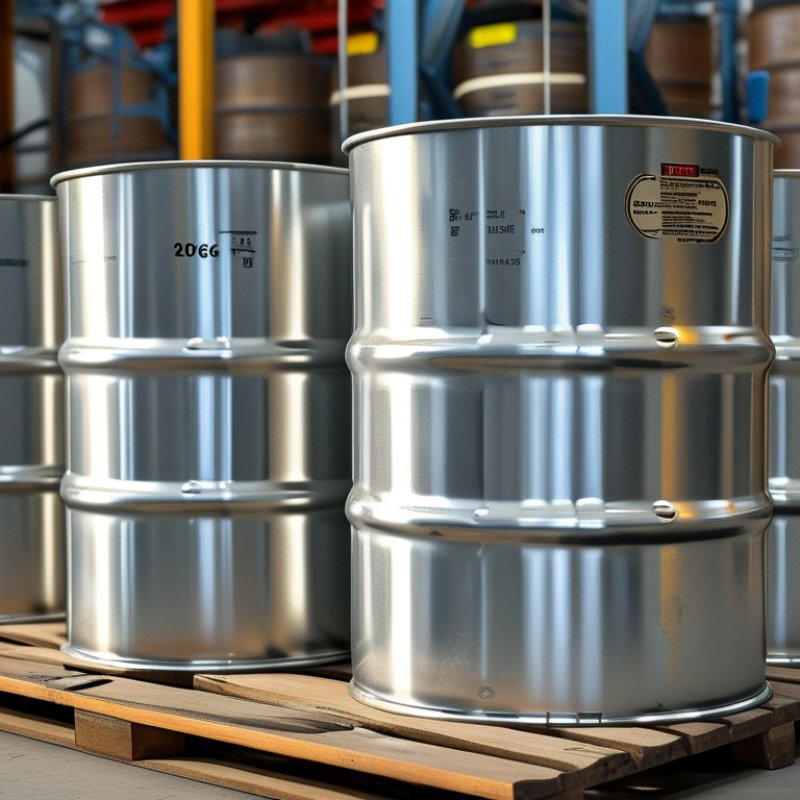
A galvanized closed-head steel drum is a fixed-top container made from carbon steel with a protective zinc coating. The head cannot be removed easily. Instead, operators access the interior through threaded bung openings, commonly placed on the top panel. This design reduces dust entry and supports controlled filling, storage, and dispensing.
The standard nominal capacity is 208 liters, equal to approximately 55 U.S. gallons. Actual working volume may be lower, because headspace helps prevent pressure buildup and liquid movement. ISO 15750-2 describes key requirements for non-removable-head steel drums, including dimensions, closures, and performance testing. ASTM D3951 also provides commercial packaging guidance relevant to handling and shipment.
Galvanizing improves resistance against exterior moisture, scratches, and warehouse humidity. It does not make every drum suitable for every chemical. Strong acids, highly alkaline liquids, and certain corrosive formulations can attack zinc or steel. Check compatibility data before selection.
The 2025 World Steel Association report recorded roughly 1.84 billion tonnes of crude steel production in 2024. That scale supports broad steel availability, but it does not guarantee consistent drum quality. Coating thickness, weld integrity, bung fit, and leak-test results still require inspection. A drum may look robust and still fail at the seam. Small details matter.
For 2026 purchasing, request capacity tolerance, steel gauge, zinc-coating information, closure specifications, and documented test results. “208 L” is a useful reference, not a promise of exact usable volume.

In 2026, galvanized closed head steel drums remain practical for demanding industrial storage. Their reliability depends on zinc-coating control, not appearance alone. EN 10346 defines requirements for continuously hot-dip coated flat steel products. It helps buyers verify coating designation, mechanical properties, and surface quality. ASTM A653/A653M provides similar guidance for galvanized steel sheet in North American supply chains. However, neither standard alone proves finished-drum performance. Forming, welding, seams, and closures can reduce local protection.
Corrosion evaluation should include coating mass, thickness, adhesion, and surface uniformity. Coating mass is often reported in grams per square metre. A heavier coating usually offers greater protection, but geometry still matters. Inspect the chime, rolling hoops, weld area, and bottom edge carefully. These zones may show thinner coverage after fabrication. Salt-spray results can support comparisons, but they do not perfectly predict warehouse life. Humidity, chemicals, temperature changes, and damaged surfaces can alter results. A standard is guidance, not a guarantee.
Tips: Request mill certificates and coating-test records before approval. Measure several locations, not only the flat body. Check for bare spots, zinc flaking, sharp edges, and white rust. Store drums dry, ventilated, and separated from standing water. I have found visual inspection useful, but it can miss thin coating near seams. That limitation deserves attention.
| Data Dimension | EN 10346 Reference | ASTM A653/A653M Reference | Manufacturer-Neutral Closed Head Drum Benchmark | Verification Notes |
|---|---|---|---|---|
| Base steel product | Continuously hot-dip coated flat steel products for cold forming and general applications. | Steel sheet, zinc-coated or zinc-iron alloy-coated by the continuous hot-dip process. | Use a consistent low-carbon sheet grade suitable for deep drawing, flanging, rolling, welding, and drum-head forming. | Confirm the steel grade, thickness tolerance, mechanical properties, and surface quality on the material certificate. |
| Zinc coating designation | Z100 Z140 Z200 Z275 | G30 G40 G60 G90 | For comparable coating levels, select the designation according to the required atmosphere, handling exposure, drum life, and total cost. | EN designations are coating mass classes in g/m²; ASTM G designations are coating weight classes in oz/ft². |
| Nominal coating mass or weight | Z100 = 100 g/m² Z140 = 140 g/m² Z200 = 200 g/m² Z275 = 275 g/m² | G30 = 0.30 oz/ft² ≈ 92 g/m² G40 = 0.40 oz/ft² ≈ 122 g/m² G60 = 0.60 oz/ft² ≈ 183 g/m² G90 = 0.90 oz/ft² ≈ 275 g/m² | For specification comparisons, Z100 is approximately comparable to G30, Z140 to G40, and Z275 to G90 by total coating mass. | Approximate conversions use 1 oz/ft² ≈ 305.15 g/m². Equivalent designation does not by itself prove identical test or acceptance requirements. |
| Coating measurement basis | Coating mass is generally expressed as the total mass on both sides of the sheet. | Coating weight is generally expressed as the total coating on both sides of the sheet; ASTM acceptance is based on the specified test method and sampling requirements. | Record both the ordered class and the measured result for incoming sheet, body blanks, and formed components where practical. | Do not compare a one-side measurement with a two-side designation without correcting the basis. |
| Approximate zinc thickness per side | For Z275, approximately 19 µm per side when evenly distributed. | For G90, approximately 19 µm per side when evenly distributed. | Use thickness as a secondary diagnostic; specify coating mass or weight as the primary purchasing requirement. | Values are theoretical estimates based on zinc density of approximately 7.14 g/cm³ and even distribution. Actual profiles can vary. |
| Surface finish and appearance | Surface categories and finish requirements should be selected according to the intended appearance and forming performance. | Surface finish, spangle, and treatment requirements are selected from the applicable ASTM product requirements. | Require a continuous, adherent coating with no exposed steel, harmful bare spots, excessive runs, or defects that could interfere with forming, sealing, or coating. | Visual appearance is not a substitute for coating-mass testing or corrosion-performance evaluation. |
| Forming and fabrication stress | Specify a grade and surface quality compatible with the required forming operation and deformation level. | Specify the required steel grade, temper, and structural or commercial quality appropriate to fabrication. | Inspect beaded body panels, chimes, flanges, and necked areas because severe forming can create microcracks or locally reduce protection. | Validate the complete forming route using production tooling, not only flat-sheet samples. |
| Welding and heat-affected areas | Welded areas may require post-fabrication protection where zinc has been removed or disrupted. | Welding can locally remove or damage zinc coating and may require an approved repair system. | Define weld-zone cleaning, zinc-rich repair, ventilation, and coating-repair controls for seams, plugs, chimes, and fittings. | Repair products should be compatible with the intended chemical contents and any required regulatory approvals. |
| Corrosion test method | Use a defined laboratory method such as neutral salt spray under ISO 9227 when comparative testing is required. | ASTM B117 is commonly used for controlled salt-spray exposure and comparative evaluation. | Report exposure duration, test specimens, scribe condition, red-rust rating, and failure criteria rather than reporting hours alone. | ISO 9227 and ASTM B117 define test procedures; salt-spray hours should not be treated as a direct service-life prediction. |
| Corrosion-protection metrics | Recommended reporting: coating mass, coating thickness, visual defects, red-rust area, edge creep, and post-forming condition. | Recommended reporting: coating weight, coating thickness, red-rust area, scribe creep, blistering, and weld-zone condition. | Use a multi-metric scorecard: coating compliance, formed-area integrity, salt-spray result, humidity exposure, and packaging/handling damage rate. | Specify acceptance limits before testing. Results from different substrates, pretreatments, or test panels should not be ranked directly. |
| Atmospheric exposure classification | Corrosion risk should be assessed using the actual environment, such as indoor dry storage, humid warehouse, coastal air, or industrial atmosphere. | ASTM coating designation alone does not classify the service environment or guarantee a fixed service life. | Increase coating level, add compatible post-treatment, or use a secondary protective system for high humidity, chloride, acidic, or industrial exposure. | Consider storage duration, condensation cycles, salt contamination, ventilation, and contact with dissimilar metals. |
| Closed head drum quality checkpoints | Material compliance should be combined with dimensional, forming, seam, closure, and leakage requirements. | Material compliance should be combined with fabrication, dimensional, performance, and applicable transport-container requirements. | Check body diameter and height, head-to-body seam, chime roundness, bung threads, gasket seating, internal cleanliness, leak tightness, and coating continuity. | For regulated transport, verify the applicable UN packaging approval, performance level, and closure instructions separately from the zinc-coating standard. |
| Recommended purchasing record | Record standard edition, steel grade, coating designation, surface quality, dimensions, tolerances, and inspection documents. | Record standard edition, steel grade, coating designation, finish, dimensions, tolerances, and inspection documents. | Require a material certificate, coating test results, production-lot traceability, dimensional report, leak-test record, and corrective-action process. | Use one agreed coating nomenclature in the purchase order to prevent confusion between g/m² and oz/ft² designations. |
Manufacturing quality begins with steel gauge, not surface appearance. Common drum sheets measure about 0.6–1.2 millimeters, depending on capacity and load requirements. Manufacturers should verify thickness at several points, because small variations can affect forming strength. The World Steel Association reported 1.89 billion tonnes of crude steel production in 2023. That scale supports broad material availability, but it does not guarantee consistent drum quality. Mill certificates, coating records, and incoming inspections still matter.
Seam welding joins the rolled body before flanging creates a secure rim. Operators must control heat, pressure, electrode condition, and alignment. Excessive heat can weaken the galvanized layer and create rough internal areas. A clean weld is not always a reliable weld. I have found visual checks insufficient without destructive sampling and process records. Leak testing commonly uses controlled air pressure with soap-solution inspection, while performance testing may follow UN packaging recommendations. The United Nations reported that dangerous goods transport rules require tested packaging performance, including leakproofness for applicable designs. Each drum should remain pressurized long enough to expose slow leaks, not only obvious failures. Flange dimensions, gasket seating, and closure torque deserve equal attention. Small defects become expensive problems later.
2026 Top Galvanized Closed Head Steel Drum Manufacturers
Compliance begins with the correct standard. ISO 15750-2 covers removable-head steel drums, not closed-head designs. For a closed-head drum, ISO 15750-3 is the more relevant reference. This distinction is often missed during supplier reviews. A drum may look compliant while its technical file points to the wrong construction type.
UN 1A1 identifies a non-removable-head steel drum for transporting regulated liquids. The UN Model Regulations require design-type testing before approval. Drop heights are typically 1.8 meters for Packing Group I, 1.2 meters for Group II, and 0.8 meters for Group III. The hydraulic pressure test generally requires 250 kPa for Group I and 100 kPa for Groups II and III. These figures should appear in controlled test records, not only in marketing documents.
Stacking performance also matters. The standard testing period is commonly 24 hours, with no leakage, buckling, or permanent deformation that affects safety. Galvanizing quality deserves close inspection around seams, chimes, and closures. Small coating gaps can become corrosion points after repeated handling. UN packaging guidance emphasizes tested design types, traceability, and visible marking. Yet production variation remains a practical weakness. A sound audit should compare certificate values with actual wall thickness, closure torque, coating coverage, and recent laboratory results. Some reviews still rely too heavily on certificates. That is not enough.
UN 1A1 drop-test benchmarks by packing group, aligned with the performance-testing framework used for non-removable-head steel drums under ISO 15750-2 and UN packaging regulations.
The minimum drop height is 1.8 m for Packing Group I, 1.2 m for Packing Group II, and 0.8 m for Packing Group III. A complete compliance review should also verify leakproofness, stacking, hydrostatic pressure, closure security, material compatibility, and permanent UN marking requirements.
A reliable comparison begins with UN ratings, not catalog appearance. Confirm the exact UN marking, packing group, capacity, and closure configuration. Ask for recent drop, leak, stack, and hydrostatic test records. A drum may look robust, yet its certification can cover a different model. That detail is easy to miss.
Recycled steel content deserves equal attention. Request a percentage statement, mill documentation, and batch traceability. Higher recycled content can reduce raw-material impact, but it may affect consistency, surface finish, or forming behavior. The result depends on the steel mill and production controls. “More recycled” is not automatically better. I would compare verified content, not marketing language.
Tips: Calculate total landed cost. Include steel prices, zinc coating weight, closure parts, UN testing, freight, duties, storage, and damage risk. A low unit quote can become expensive after transport. In 2026, energy prices, regional steel supply, and compliance testing may shift quickly. Request a validity period for every quotation. Also compare drum weight, because lighter designs reduce freight but may offer less deformation resistance. That trade-off needs practical testing, not assumptions. Keep sample drums for handling trials. Real warehouse conditions often reveal problems that spreadsheets overlook.

Cepex is the brand for the fluid handling market belonging to the Fluidra group. One of the leading european manufacturer of valves and fittings in thermoplastic materials.
Dedicated to the swimming pool, irrigation and industrial markets, we distribute our products worldwide with the Fluidra commercial network and presence in 46 countries with 136 sales branches.


