
2026 Top Electra Heat Treat Furnace Types for Global Buyers
FLUID HANDLING EXPERTS

Blog, all our news

2026 Top Electra Heat Treat Furnace Types for Global Buyers

The 2026 market for Electra Heat Treat Furnace systems is becoming more demanding. Global buyers now compare temperature uniformity, energy use, automation, maintenance, and local support. A furnace may look efficient on paper, yet perform poorly beside an open factory door or unstable power supply. Small details matter.

Dr. George E. Totten, a respected heat-treatment authority, explains: “Heat treatment is the controlled heating and cooling of a solid metal or alloy to obtain desired properties.” This principle remains practical in 2026. Buyers must connect furnace design with material grade, load size, heating cycle, atmosphere, and production volume. Batch furnaces suit varied parts and smaller production runs. Continuous furnaces support repeatable, high-volume output. Vacuum, atmosphere, and electric resistance models offer different control levels and operating costs.

The right choice is rarely the most expensive one. It is the most suitable one. A buyer should inspect sample charts, uniformity tests, cooling performance, controller records, and service response times. Ask for evidence, not promises. Check chamber dimensions with actual baskets, fixtures, and clearance included. That step is often missed.

This guide compares leading Electra Heat Treat Furnace types for international purchasers in 2026. It considers factory conditions, export support, safety expectations, and long-term ownership. Some recommendations may still need adjustment. Real production data can challenge a perfect specification. That is why careful testing, supplier experience, and honest review should guide the final decision.
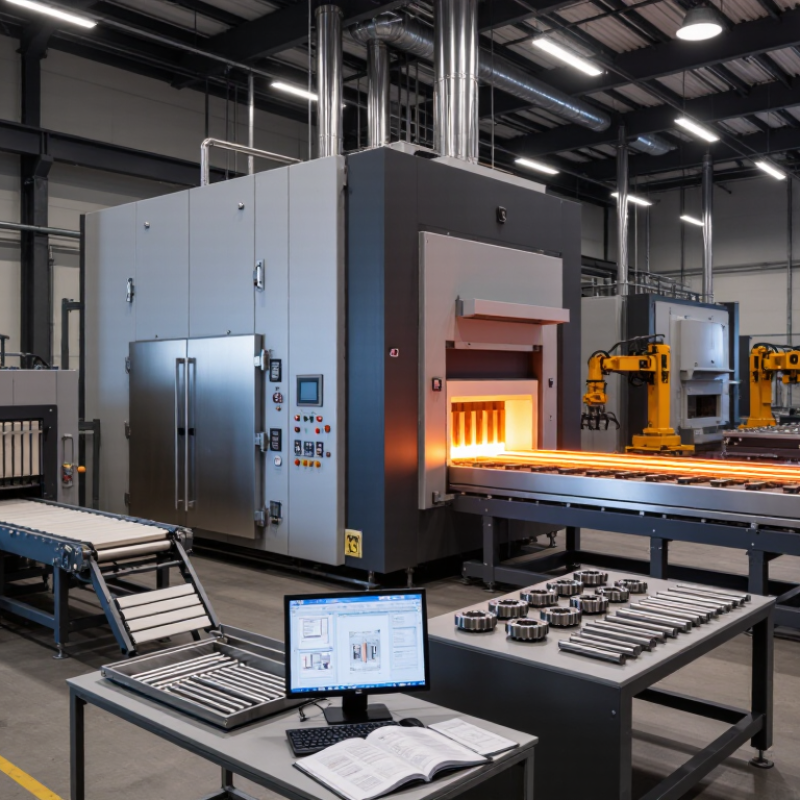
2026 Top Electra Heat Treat Furnace Types for Global Buyers

Electra Heat Treat Furnace Basics and Core Operating Principles

Electric heat-treat furnaces use electrical resistance to convert power into controlled thermal energy. Heating elements warm the chamber, while insulation limits heat loss. A programmable controller adjusts output through temperature feedback.

The operating cycle usually includes heating, soaking, and cooling. Thermocouples measure the load or chamber temperature. A PID controller then corrects small deviations. Uniform airflow matters, especially around dense metal baskets. Cold corners can create hardness differences.

The U.S. Department of Energy’s 2022 Industrial Decarbonization Roadmap identifies process heating as roughly 51% of industrial energy use. This explains why efficient furnace design matters to global buyers. Energy performance depends on insulation, loading density, cycle length, and standby losses. It is not only a nameplate issue.

Atmosphere control prevents oxidation, scaling, or unwanted chemical reactions. Some applications require inert gas, vacuum conditions, or carefully managed air exchange. NFPA 86 provides widely used safety guidance for industrial ovens and furnaces. Operators should verify temperature uniformity through documented surveys, not visual judgment. That step is often skipped.

In real workshops, results can still vary. Door opening, aging sensors, and uneven loading create hidden errors. A smaller furnace may consume less energy, yet frequent overloading can reduce consistency. Buyers should compare usable chamber volume, control accuracy, recovery time, and maintenance records before selecting equipment.

Main Electra Furnace Types for Different Heat Treatment Processes

2026 Top Electra Heat Treat Furnace Types for Global Buyers

Main Electra Furnace Types for Different Heat Treatment Processes

Electric heat-treat furnaces differ by temperature, atmosphere, workload, and required surface quality. Box furnaces suit small batches, hardening, tempering, and annealing. Their insulated chambers provide steady heating around heavy steel parts. Continuous belt furnaces support higher production volumes and repeatable case-hardening cycles. Vacuum furnaces reduce oxidation during tool-steel treatment and brazing. Salt-free operation also simplifies parts cleaning.

For oxidation-sensitive alloys, controlled-atmosphere furnaces use nitrogen, hydrogen, or endothermic gas. Vacuum models usually cost more, but they can reduce scaling and post-treatment machining. Induction systems heat selected zones quickly, although they are not ideal for every geometry. The U.S. Department of Energy’s Industrial Decarbonization Roadmap reports that process heating represents about 51% of industrial energy use. This makes electrical efficiency, insulation quality, and heat recovery important purchasing factors. Actual savings still depend on loading habits and local electricity prices.

Tips: Match furnace type to the real batch size, not the future dream. Ask for temperature-uniformity records, energy-per-cycle data, spare-part availability, and operator training. ISO 13577 guidance can help buyers review safety and control systems. A lower purchase price may become expensive after installation. I would also challenge one common assumption: faster heating does not automatically mean better metallurgy. Recipe stability matters more.

Key Technical Specifications and Performance Evaluation Criteria

For global buyers, selecting an Electra heat treat furnace starts with process evidence, not brochure language. Batch furnaces suit varied loads, while continuous models support steady production. Vacuum types help reduce oxidation on sensitive components. Check both rated temperature and working temperature. A 1,100°C rating means little if uniformity fails at the load center. Request temperature-mapping data under empty and loaded conditions. Small details matter, including door seals, hearth dimensions, usable chamber space, and maximum load weight.

Evaluate heating power, ramp rate, temperature accuracy, and controller response. Ask whether the furnace maintains stable heat during loading and recovery. Atmosphere systems need measurable flow, pressure, and oxygen limits. Vacuum systems should state ultimate pressure, leak rate, and pump-down time. Cooling performance also affects hardness and distortion. Review energy use per cycle, data logging, alarms, and calibration records. Safety functions should match applicable regional requirements. Independent verification adds credibility.

Do not judge performance from one successful cycle. Use representative trial loads and repeat the test several times. Measure hardness, color change, dimensional shift, and treatment uniformity. Review maintenance access, heating-element life, sensor replacement, and operator training. Perfect uniformity is rarely realistic. A careful buyer should question optimistic figures, especially when test conditions are unclear. The best specification is one that remains understandable after installation, not merely impressive during quotation.

How to Select an Electra Furnace for Global Industrial Applications

Selecting an electric heat-treat furnace for global industrial work begins with the process, not the catalog. Define the material, target temperature, heating rate, load weight, and cycle frequency. A small batch furnace may suit tool components, while a continuous system fits high-volume production. Chamber size matters. Leave space for airflow around trays and fixtures.

Check the heating method and atmosphere requirements carefully. Air circulation supports uniform heating, but sensitive alloys may need controlled gas protection. Ask for temperature uniformity data from the intended operating range. A furnace rated at 1,200°C may perform differently near its upper limit. That detail is easy to miss. Control systems should record temperature, alarms, recipe changes, and calibration results. Digital access is useful, but dependable local controls still matter when networks fail.

Global installation adds practical concerns. Confirm voltage, phase, frequency, plug design, insulation requirements, and local electrical certification. Review spare heating elements, thermocouples, door seals, and response times for technical support. Operators should receive clear training and maintenance instructions in their working language. No selection method is perfect. A forecasted production volume can change after installation. Choosing modular capacity may reduce that risk, though it can increase the initial cost. Request sample cycle data, factory test records, and references from facilities with similar materials and workloads.

Installation, Safety, Maintenance, and International Compliance Factors

Choosing an Electra heat-treat furnace requires more than comparing chamber size and heating speed. Installation conditions affect temperature stability, energy use, and operator safety. Place the furnace on a level, non-combustible floor with clear access around service panels. Confirm electrical capacity, grounding, ventilation, and exhaust routing before delivery. A forgotten cable route can delay commissioning for days.

Safety controls need practical verification, not only paperwork. Check door interlocks, over-temperature protection, emergency stops, insulation condition, and guarded hot surfaces. Operators should receive training on loading patterns, protective equipment, lockout procedures, and abnormal-temperature responses. International buyers must review the destination country’s electrical codes, conformity marks, electromagnetic compatibility rules, and workplace requirements. Local inspection may still apply. Compliance documents should match the exact furnace configuration, not a similar model. This detail is often missed.

Tips: Keep it visible. Place emergency contacts near the control panel. Record calibration dates and temperature-uniformity tests. Inspect heating elements, thermocouples, seals, and wiring at scheduled intervals. Clean debris before it reaches the chamber floor. Test alarms while the furnace is cold. No checklist is perfect. Maintenance teams should question unusual noise, drifting readings, or uneven color on treated parts. Small changes can reveal insulation damage or sensor failure before production quality suffers.

Copyright 2025 Fluidra S.A. | Created by BCM Marketing Agencia Privacy Policy Legal note | Cookie policy |

Technical cookies are strictly necessary for our website to work and you can navigate through it. These types of cookies are those that, for example, allow us to identify you, give you access to certain restricted parts of the page if necessary, or remember different options or services already selected by you, such as your privacy preferences. Therefore, they are activated by default, your authorization not being necessary in this regard. Through the configuration of your browser, you can block or alert the presence of this type of cookies, although such blocking will affect the proper functioning of the different functionalities of our website.


The analysis cookies allow us to study the navigation of the users of our website in general (for example, which sections of the page are the most visited, which services are used most and if they work correctly, etc.). From the statistical information on navigation on our website, we can improve both the operation of the page itself and the different services it offers. Therefore, these cookies do not have an advertising purpose, but only serve to make our website work better, adapting to our users in general. By activating them you will contribute to this continuous improvement. You can enable or disable these cookies by checking the corresponding box, being disabled by default.


Functionality cookies allow us to remember your preferences, to personalize certain characteristics and general options of our website, every time you access it (for example, the language in which the information is presented to you, the sections marked as favorites, your browser type, etc.) Therefore, this type of cookies does not have an advertising purpose, but by activating them you will improve the functionality of the website (for example, adapting to your type of browser) and the customization of it based on your preferences (for example, by presenting the information in the language that you have chosen in previous occasions), which will contribute to the ease, usability and comfort of our page during your navigation. You can enable or disable these cookies by checking the corresponding box, being disabled by default.


Advertising cookies allow us to manage the advertising spaces included in our website based on criteria such as the content shown or the frequency in which the ads are displayed. For example, if you have been shown the same ad several times on our website, and you have not shown a personal interest by clicking on it, it will not appear again. In summary, by activating this type of cookies, the advertising shown on our website will be more useful and diverse, and less repetitive. You can enable or disable these cookies by checking the corresponding box, being disabled by default.


Behavioral advertising cookies allow us to obtain information based on the observation of your browsing habits and behaviors on the web, in order to show you advertising content that best suits your personal tastes and interests. To understand it in a very simple way, we will give you a fictitious example: if your last searches on the web were related to suspense literature, we would show you advertising about suspense books. Therefore, activating this type of cookies, the advertising that we show you on our website will not be generic, but will be oriented to your searches, tastes and interests, therefore adjusting exclusively to you. You can enable or disable these cookies by checking the corresponding box, being disabled by default.
To understand it in a very simple way, we will give you a fictitious example: if your last searches on the web were related to suspense literature, we would show you advertising about suspense books. Therefore, activating this type of cookies, the advertising that we show you on our website will not be generic, but will be oriented to your searches, tastes and interests, therefore adjusting exclusively to you. You can enable or disable these cookies by checking the corresponding box, being disabled by default.

SAVE

We use our own and third-party cookies to ensure the proper functioning of the website and to analyse our services, improve your experience on our website and show you advertisements related to your interests according to profiling based on your browsing habits (e.g. websites visited). You can accept all cookies by clicking "ACCEPT" or set or reject them by clicking here. If you would like to know more about the use of cookies, please see our COOKIE POLICY.


ACCEPT ALL
Reject no essentials


