
2026 Top Egg Packaging Machine Manufacturers?
FLUID HANDLING EXPERTS

Blog, all our news

2026 Top Egg Packaging Machine Manufacturers?

Choosing among the 2026 top Egg Packaging Machine manufacturers requires more than comparing catalog prices. Egg producers need dependable equipment, clear technical support, and packaging quality that protects every shell during handling.

This guide examines manufacturers through practical industry criteria. These include machine speed, tray compatibility, automation, sanitation design, energy use, and maintenance access. Real production conditions matter. Dust, humidity, uneven egg sizes, and frequent format changes can expose weak engineering. A reliable machine should handle these challenges without excessive stoppages or complicated adjustments.

Manufacturer experience also deserves close attention. Companies with long-term installations often understand the difference between laboratory performance and a busy packing house. Look for documented case studies, trained service teams, spare-parts availability, and transparent warranty terms. Certifications can support credibility, but they should not replace direct performance evidence. Ask how a machine performs after months of operation, not only during a polished demonstration.

Details matter. A cracked egg can affect an entire retail carton. A delayed sensor can interrupt a full shift. Strong manufacturers explain these risks clearly and offer measurable solutions. Still, no ranking is flawless. Regional service quality may change, and published capacity figures may reflect ideal conditions. Buyers should test equipment with their own egg sizes, trays, and workflow before making a final decision. This article provides a practical starting point, while careful site evaluation remains essential for a confident investment.
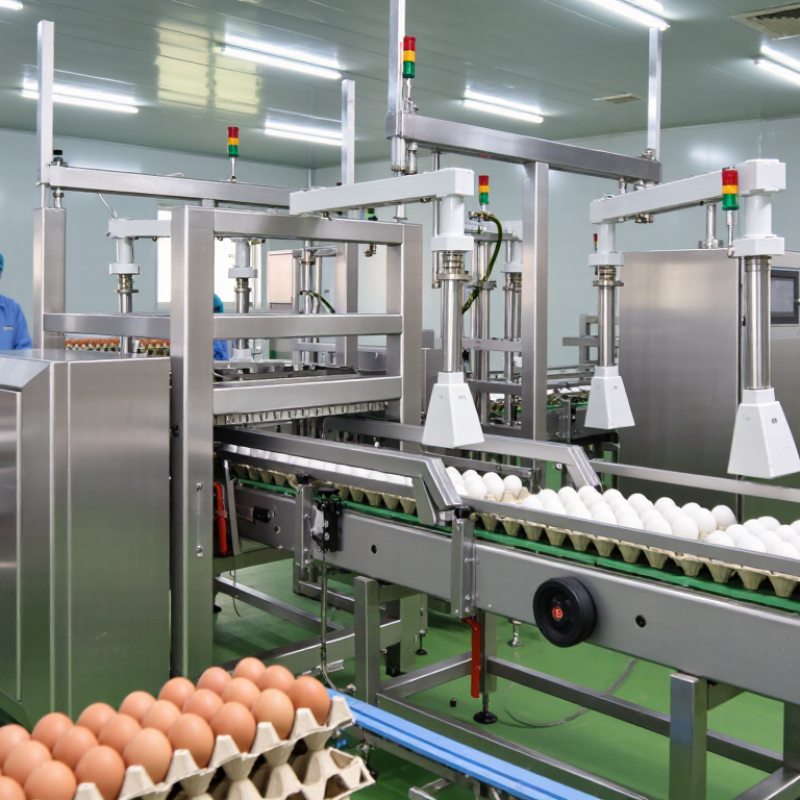
2026 Top Egg Packaging Machine Manufacturers?

Egg Packaging Machines: Definition, Functions, and Main Applications

Egg Packaging Machines: Definition, Functions, and Main Applications

Egg packaging machines are automated systems that place, count, protect, and organize eggs in trays, cartons, or cases. They commonly connect with grading lines, conveyors, weighing units, and sealing equipment. Their main purpose is simple: reduce handling while maintaining consistent package quality. Sensors detect egg positions, while adjustable mechanisms move products gently. Some systems also print dates, batch details, or traceability information.

These machines serve farms, egg-processing facilities, wholesalers, and food retailers. They can handle different egg sizes and packaging formats, but setup accuracy matters. Incorrect spacing may cause cracked shells or unstable cartons. In daily operation, workers still inspect trays, remove damaged eggs, and check sensors. Automation helps, but it does not replace judgment. Even reliable equipment can perform poorly when cleaning is neglected or settings are rushed.

Tips: Match machine capacity with actual production volume, not an imagined peak. Check shell breakage, transfer speed, noise, and cleaning access during testing. Ask manufacturers for material specifications, training, spare-part support, and documented safety procedures. A short trial often reveals problems that brochures hide. Also review the machine’s adjustment range before choosing it. Egg sizes can vary more than expected.

Egg Packaging Machines: Common Pack Capacities

Egg packaging machines are designed to handle, position, grade, and pack eggs into standardized retail or transport formats. The chart shows common egg quantities used in molded-pulp, plastic, or foam packaging.

Common applications include household retail packs, food-service packs, wholesale distribution, and larger transport trays.

Key Machine Types Used for Modern Egg Packaging

2026 Top Egg Packaging Machine Manufacturers: Key Machine Types Used for Modern Egg Packaging

Modern egg lines use several machine types, and each handles a specific risk. Egg grading machines inspect size, weight, shell condition, and visible contamination. Optical sensors improve consistency, but they still need careful calibration. Shells break easily.

Egg counting and transfer machines move eggs into trays or cartons with controlled pressure. Servo-driven systems reduce impact during loading. Tray and carton packing machines then place eggs into molded pulp, plastic, or fiber packaging. Adjustable guides support different egg sizes and pack formats. A poor guide setting can create cracks, uneven rows, or frequent stoppages.

High-volume facilities often add case packers, conveyor systems, labeling units, and robotic palletizers. Vision inspection can verify count, print quality, and carton position before shipping. Washdown-friendly frames and accessible parts support practical sanitation routines. Experienced maintenance teams also check belts, suction cups, sensors, and emergency stops every day. Speed is not everything.

A reliable machine should offer tool-free adjustments, clear fault messages, and stable performance during long shifts. Changeovers matter. Operators may lose valuable production time when a format change requires complicated tools. No system is perfect, and aggressive automation can increase downtime when sensors become dirty. Buyers should compare actual throughput, reject rates, service response, spare-part access, and operator training rather than trusting impressive brochure figures.

2026 Top Egg Packaging Machine Manufacturers? - Key Machine Types Used for Modern Egg Packaging

Machine Type Primary Function Typical Throughput Common Packaging Formats Automation Level Important Features Best-Fit Operation
Egg Grading and Packing Machine Inspects, weighs, sorts, and transfers eggs into retail or transport packaging. Approximately 5,000–180,000 eggs per hour, depending on line size and configuration. Cartons, pulp trays, plastic trays, and reusable transport cases. Semi-automatic to fully automatic. Electronic weighing, reject handling, grade separation, gentle egg transfer, and programmable controls. Medium to large egg-processing and packing facilities.
Automatic Egg Packer Places graded eggs into preformed cartons or trays with controlled positioning. Commonly 15,000–90,000 eggs per hour. 6-, 10-, 12-, 18-, and 30-egg formats, subject to machine tooling. Fully automatic with automatic carton or tray feeding. Servo-driven movements, format changeover, accumulation control, and low-breakage handling. Retail packers requiring consistent output and reduced manual labor.
Egg Tray Forming Machine Molds recycled paper pulp into egg trays, cartons, or related protective packaging. Approximately 1,000–8,000 trays per hour, depending on mold cavities and drying method. 30-egg trays, molded-pulp cartons, corner protectors, and specialty inserts. Semi-automatic to fully automatic. Pulp preparation, forming, hot or ambient drying, trimming, stacking, and water-recovery systems. Packaging plants producing molded-fiber products in-house.
Carton Erecting and Closing Machine Forms flat carton blanks and closes or secures filled egg cartons. Typically 20–100 cartons per minute. Paperboard cartons and selected plastic retail packs. Automatic, with manual loading options for smaller lines. Blank detection, glue or tuck closure, jam sensors, and quick format adjustment. Retail operations that need repeatable carton presentation and sealing.
Case Packer Groups individual cartons or trays and loads them into shipping cases. Approximately 10–60 cases per minute, depending on case pattern and pack size. Corrugated cases containing retail cartons or bulk trays. Semi-automatic to robotic full-case packing. Robotic or mechanical loading, case detection, pattern control, and product accumulation. High-volume distribution and wholesale packaging lines.
Egg Washing and Drying System Cleans eggs and removes surface moisture before grading, coating, or packing where regulations permit. Roughly 5,000–180,000 eggs per hour when integrated with a grading line. Supports cartons, trays, and other standard egg packs. Automatic with controlled water, detergent, and air-drying systems. Food-contact materials, brush or spray cleaning, water-temperature control, filtration, and sanitation monitoring. Regulated food-processing plants requiring consistent pre-packing hygiene.
Labeling and Date-Coding Machine Applies labels and prints batch, date, lot, traceability, or regulatory information. Approximately 30–300 packs per minute, depending on label type and print content. Cartons, trays, cases, lids, and shipping labels. Semi-automatic to fully automatic. Barcode or QR-code support, print verification, label sensors, and database connectivity. Retail and export operations with traceability and variable-data requirements.
Robotic Palletizer Arranges sealed cases or trays onto pallets for storage and transport. About 10–40 cases per minute, depending on payload, pallet pattern, and reach. Corrugated cases, transport trays, slip sheets, and pallet loads. Fully automatic and typically integrated with conveyors. Machine vision, programmable pallet patterns, layer handling, safety guarding, and pallet detection. Large distribution centers seeking lower manual lifting and consistent pallet quality.
Conveyor and Accumulation System Transfers eggs, cartons, trays, cases, and pallets between processing and packaging stations. Designed to match the connected line; speed commonly ranges from low-speed manual support to high-speed continuous flow. Cartons, trays, cases, and palletized loads. Manual, powered, or fully integrated automatic systems. Food-grade belts, soft-transfer sections, accumulation zones, sensors, variable-speed drives, and washdown-compatible construction. Both small packing rooms and high-throughput integrated facilities.
Note: Throughput figures are typical commercial ranges and vary with egg size, pack format, product quality, machine layout, operator workflow, and local food-safety requirements.

Criteria for Evaluating Egg Packaging Machine Manufacturers in 2026

In 2026, evaluating egg packaging machine manufacturers requires more than comparing prices.
A capable supplier should understand farm conditions, egg variation, and daily production pressure. Ask for verified output rates under real operating conditions. Laboratory figures can look impressive but disappoint on a busy packing line.

Examine how gently the machine handles eggs. During a site trial, inspect cracked shells, misaligned cartons, and damaged trays. Test different egg sizes and packaging formats. Reliable equipment should offer accurate counting, stable conveyor movement, and quick format changes. Operators should adjust settings without hunting through unclear menus. Small details matter. Washdown access, guarded moving parts, and stainless-steel contact surfaces also deserve close attention.

Experience is visible in the evidence. Request maintenance records, performance data, training plans, and contact details for comparable users. Check whether the manufacturer documents quality controls and applicable safety requirements. Spare-parts availability matters when a sensor fails during a weekend shift. Technical support should provide practical answers, not generic promises. No supplier is perfect. I would record every weakness found during testing and ask how it will be corrected. A slower machine with consistent handling may outperform a faster model that creates costly breakage. Look for transparent communication, measurable claims, and a willingness to discuss limitations.

Top Egg Packaging Machine Manufacturers and Their Core Strengths

In 2026, top egg packaging machine manufacturers are defined by practical performance, not polished brochures. Experienced manufacturers understand that farms need stable output during early-morning packing peaks. Their machines usually combine accurate egg grading, gentle handling, and adjustable packing speeds. Reliable conveyors reduce sudden stops. Careful design protects fragile shells.

Manufacturers with strong engineering teams often offer modular systems for different farm sizes. Small producers may need compact equipment with simple controls. Large packhouses require automated counting, weighing, labeling, and case packing. The strongest suppliers provide stainless-steel frames, washable surfaces, and accessible maintenance points. Their software should record production data clearly. That matters during quality checks.

Technical support is another core strength. Fast spare-part access can prevent a minor sensor fault from becoming a full-day delay. Good manufacturers train operators, document cleaning routines, and test machines under realistic loads. Still, no supplier is perfect. A machine that performs well in a showroom may struggle with uneven egg sizes or dusty conditions. Buyers should request trial runs, inspect service records, and compare total operating costs. A lower purchase price can hide difficult maintenance. Experiences from actual farms often reveal more than sales promises.

How to Select the Right Egg Packaging Machine for Your Business

How to Select the Right Egg Packaging Machine for Your Business

Choosing among the top egg packaging machine manufacturers in 2026 requires more than comparing advertised speed. Start with your daily egg volume, shell sizes, packaging formats, and available floor space. A machine designed for 30,000 eggs per hour may waste money in a smaller facility. It can also create unnecessary maintenance pressure.

Inspect handling quality during a live trial. Watch how eggs move through the conveyor, loading cups, and carton section. Excessive vibration often causes hairline cracks that appear later. Ask for measured breakage rates, not general promises. Confirm whether the system supports your preferred carton materials and can adjust for different egg sizes without lengthy changeovers.

Sanitation deserves careful attention. Choose equipment with accessible surfaces, sealed components, and clear cleaning procedures. Check the control interface, sensor reliability, and emergency-stop layout with your operators. Technical support matters as much as machinery. Spare-part availability, response times, installation training, and warranty terms should appear in writing.

Do not trust speed alone.

One practical lesson is easy to miss: a highly automated line may still depend on manual inspection. Workers need safe access and useful visibility. Energy use, compressed-air demand, and noise levels should also enter the cost calculation. A supplier that welcomes factory visits and performance testing usually offers stronger evidence. Still, no machine is perfect. Your own egg quality, staff habits, and maintenance discipline can change the final result.

Copyright 2025 Fluidra S.A. | Created by BCM Marketing Agencia Privacy Policy Legal note | Cookie policy |

Technical cookies are strictly necessary for our website to work and you can navigate through it. These types of cookies are those that, for example, allow us to identify you, give you access to certain restricted parts of the page if necessary, or remember different options or services already selected by you, such as your privacy preferences. Therefore, they are activated by default, your authorization not being necessary in this regard. Through the configuration of your browser, you can block or alert the presence of this type of cookies, although such blocking will affect the proper functioning of the different functionalities of our website.


The analysis cookies allow us to study the navigation of the users of our website in general (for example, which sections of the page are the most visited, which services are used most and if they work correctly, etc.). From the statistical information on navigation on our website, we can improve both the operation of the page itself and the different services it offers. Therefore, these cookies do not have an advertising purpose, but only serve to make our website work better, adapting to our users in general. By activating them you will contribute to this continuous improvement. You can enable or disable these cookies by checking the corresponding box, being disabled by default.


Functionality cookies allow us to remember your preferences, to personalize certain characteristics and general options of our website, every time you access it (for example, the language in which the information is presented to you, the sections marked as favorites, your browser type, etc.) Therefore, this type of cookies does not have an advertising purpose, but by activating them you will improve the functionality of the website (for example, adapting to your type of browser) and the customization of it based on your preferences (for example, by presenting the information in the language that you have chosen in previous occasions), which will contribute to the ease, usability and comfort of our page during your navigation. You can enable or disable these cookies by checking the corresponding box, being disabled by default.


Advertising cookies allow us to manage the advertising spaces included in our website based on criteria such as the content shown or the frequency in which the ads are displayed. For example, if you have been shown the same ad several times on our website, and you have not shown a personal interest by clicking on it, it will not appear again. In summary, by activating this type of cookies, the advertising shown on our website will be more useful and diverse, and less repetitive. You can enable or disable these cookies by checking the corresponding box, being disabled by default.


Behavioral advertising cookies allow us to obtain information based on the observation of your browsing habits and behaviors on the web, in order to show you advertising content that best suits your personal tastes and interests. To understand it in a very simple way, we will give you a fictitious example: if your last searches on the web were related to suspense literature, we would show you advertising about suspense books. Therefore, activating this type of cookies, the advertising that we show you on our website will not be generic, but will be oriented to your searches, tastes and interests, therefore adjusting exclusively to you. You can enable or disable these cookies by checking the corresponding box, being disabled by default.
To understand it in a very simple way, we will give you a fictitious example: if your last searches on the web were related to suspense literature, we would show you advertising about suspense books. Therefore, activating this type of cookies, the advertising that we show you on our website will not be generic, but will be oriented to your searches, tastes and interests, therefore adjusting exclusively to you. You can enable or disable these cookies by checking the corresponding box, being disabled by default.

SAVE

We use our own and third-party cookies to ensure the proper functioning of the website and to analyse our services, improve your experience on our website and show you advertisements related to your interests according to profiling based on your browsing habits (e.g. websites visited). You can accept all cookies by clicking "ACCEPT" or set or reject them by clicking here. If you would like to know more about the use of cookies, please see our COOKIE POLICY.


ACCEPT ALL
Reject no essentials


