
In 2026, global buyers face more choices than ever when selecting a Bridge Gantry crane. Port expansion, factory automation, shipyard upgrades, and heavy infrastructure projects demand different lifting solutions. A crane designed for containers may perform poorly in a steel plant. A compact workshop model may struggle under outdoor wind loads.
David R. Duerr, a recognized crane-industry consultant, often emphasizes, “The right crane is the one that fits the work, not the one that looks most impressive.” This practical view matters during international purchasing. Buyers should compare lifting capacity, span, lifting height, duty class, travel speed, foundation requirements, and control systems. Weather exposure also changes the decision. Salt air, rain, dust, and temperature extremes can shorten equipment life without proper protection.
The leading Bridge Gantry crane types for 2026 include rail-mounted gantry cranes, rubber-tired gantry cranes, semi-gantry cranes, portable gantry cranes, and heavy-duty full gantry systems. Each type offers different advantages in mobility, installation cost, maintenance, and operational flexibility. Some models support automated positioning. Others depend on skilled operators and clear site procedures.
The choice is rarely perfect.
A lower purchase price may create higher maintenance costs later. A larger crane may provide useful capacity, yet consume valuable yard space. Buyers should verify supplier experience, testing records, spare-parts availability, and after-sales support. Local engineering conditions also deserve attention. This guide compares the main types honestly, including their limitations, so international buyers can make safer and more practical decisions.
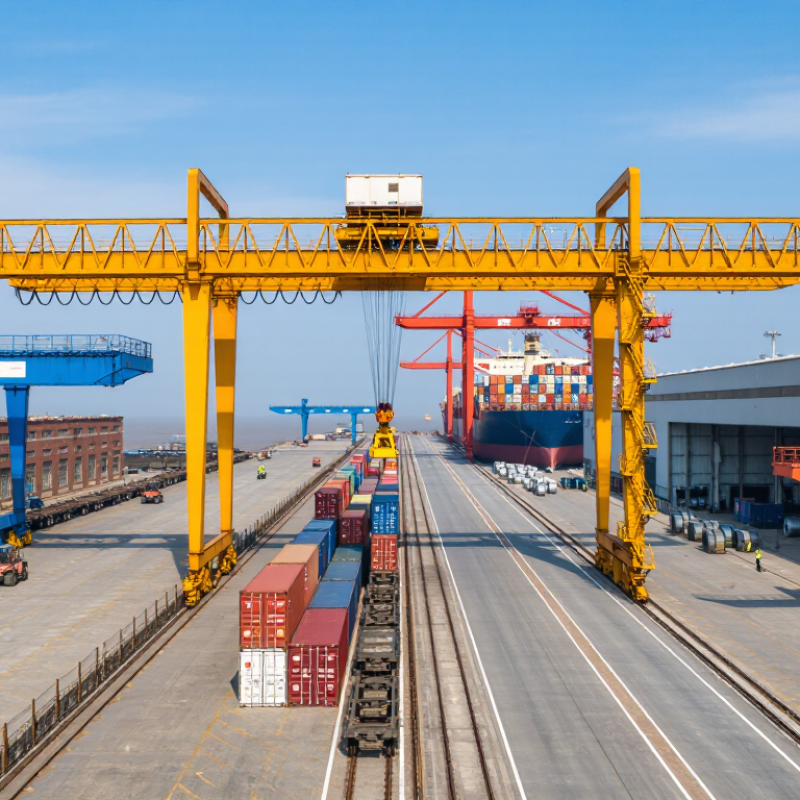
2026 Top Bridge Gantry Crane Types for Global Buyers
What Is a Bridge Gantry Crane?
A bridge gantry crane is a lifting machine with a horizontal bridge supported by two upright legs. The legs travel on rails, wheels, or prepared ground tracks. A trolley moves across the bridge, while a hoist raises and lowers the load. This arrangement creates a rectangular working area for moving steel, machinery, containers, and fabricated components.
Unlike an overhead bridge crane, a gantry crane carries its bridge on legs. It does not always require a fully supported building structure. Common designs include single-girder, double-girder, rubber-tyred, and semi-gantry models. Each type suits different loads, spans, travel distances, and operating environments. In practical projects, capacity alone is not enough. Engineers also check lifting frequency, wind exposure, floor strength, power supply, and maintenance access. A small error in these details can affect daily safety and productivity.
Tips: Confirm the rated load with an experienced lifting engineer. Measure the runway width and available headroom carefully. Request load charts, inspection records, emergency-stop details, and operating manuals. Local regulations may require different testing or operator qualifications. The textbook definition feels simple, but site conditions often complicate the final selection. Allow room for those imperfect assumptions.

A bridge gantry crane is a lifting system in which a horizontal bridge structure moves along legs supported by rails, wheels, or a runway. The chart compares representative rated lifting capacities commonly specified for major bridge gantry crane types. Actual capacity depends on span, lifting height, duty class, operating environment, and project design.
Values are representative industry-reference capacities in metric tonnes, not limits for every individual crane.
Bridge gantry cranes differ mainly by girder arrangement, support method, and travel environment. Single-girder models use one horizontal beam, making them lighter and economical for moderate loads. Double-girder models use two parallel beams, creating a wider trolley path and higher lifting capacity. Their structure usually includes main girders, end carriages, support legs, cross-bracing, a trolley, and a hoist.
Rail-mounted gantry cranes travel along fixed rails. They suit repeated container handling or long production lines. Their steel legs transfer wheel loads directly into prepared foundations. Rubber-tyred gantry cranes use large wheels instead. They can move between work areas, but steering accuracy and ground strength become critical. A semi-gantry crane runs on one elevated runway and one floor rail. It saves building space, although its uneven support conditions require careful alignment.
From field inspections, connection details often decide reliability. Welded joints need consistent penetration and documented testing. Bolted joints need correct tightening and periodic checks. Wind exposure, skewing, corrosion, and uneven rails can damage a sound-looking structure. That assumption is often wrong. Designers should verify duty cycles, impact loads, lifting height, span, and local weather data before selecting a type. A lighter girder may reduce cost, but excessive deflection can affect trolley travel and load control. In some workshops, drainage and access platforms receive too little attention. That practical oversight can complicate maintenance later.
| Crane Type | Main Structural Arrangement | Typical Capacity | Typical Span | Typical Lift Height | Travel Configuration | Common Applications | Key Advantages and Limitations |
|---|---|---|---|---|---|---|---|
| Single-Girder Full Gantry Crane | One main bridge girder supported by two rigid end carriages and four or more legs. The hoist trolley runs beneath or along the lower flange of the girder. | Up to approximately 20 t | 8–35 m | 6–18 m | Powered wheels travel on ground rails or embedded runway tracks. | General manufacturing, workshops, maintenance yards, and light-to-medium outdoor handling. | Lower steel weight and investment cost; suitable for moderate loads. Less suitable for very high capacities, long spans, or intensive heavy-duty cycles. |
| Double-Girder Full Gantry Crane | Two parallel main girders connected to rigid legs and end carriages. A top-running trolley or open winch system travels on rails mounted above the bridge girders. | 10–500 t or more, depending on design duty | 15–40 m | 9–30 m | Motorized end carriages run on parallel ground rails. | Steel yards, shipyards, precast concrete plants, heavy fabrication, and outdoor assembly. | High load capacity, improved stiffness, greater hook height, and better control of deflection. Requires more steel, stronger foundations, and higher installation cost. |
| Semi-Gantry Crane | One side of the bridge is supported by legs running on a floor rail, while the opposite side runs on an elevated runway beam attached to a building column or support structure. | 1–50 t | 8–30 m | 6–20 m | Combined ground-level and elevated runway travel. | Facilities with limited outdoor space, workshops beside buildings, loading areas, and production extensions. | Uses existing building structure on one side and saves floor space. Requires adequate building-column strength and precise alignment between runways. |
| Rubber-Tyred Gantry Crane | Steel bridge, legs, end carriages, lifting trolley, and rubber tires form a self-contained mobile gantry system. Power may be supplied by a cable reel, battery system, or onboard engine-generator set. | 10–100 t; specialized models may be higher | 15–35 m | 8–25 m | Steerable rubber tires allow longitudinal travel and, on suitable designs, limited transfer between lanes. | Container yards, precast production, ship components, heavy equipment assembly, and temporary work sites. | Flexible movement without permanent rails. Requires a level, load-bearing surface, tire maintenance, steering control, and strict wind-safety procedures. |
| Rail-Mounted Gantry Crane | A rigid bridge and leg frame is supported by bogies or end carriages that run on fixed parallel rails. The lifting trolley generally travels across the bridge span. | 20–100 t; higher capacities are available for specialized duties | 20–45 m | 10–30 m | Motorized wheels travel on dedicated rails, normally with guided and synchronized drives. | Container handling, intermodal terminals, large storage yards, and repetitive heavy outdoor lifting. | Accurate positioning, high utilization, and efficient repetitive operation. Needs rail foundations, drainage, alignment checks, and a dedicated operating lane. |
| Single-Leg or Cantilever Gantry Crane | The bridge is supported by a leg frame on one side and an elevated building runway, column, or cantilever support on the other side. The bridge may extend beyond one or both support lines. | 1–20 t | 8–30 m | 5–18 m | One end runs on a ground rail; the other runs on an elevated runway or support beam. | Material transfer along building edges, outdoor loading zones, and production lines requiring side access. | Good use of restricted floor space and convenient access from one side. Load distribution and cantilever deflection require detailed structural verification. |
| Container Gantry Crane | Usually a double-girder bridge with tall rigid legs, a spreader-equipped trolley, long travel beams, and container-clearance geometry. The structure may be rail-mounted or rubber-tyred. | 30–65 t under spreader; greater loads may require special lifting gear | 20–45 m | 12–30 m, depending on stacking requirements | Rail-mounted travel or rubber-tire travel along container blocks and transfer lanes. | Container terminals, inland freight yards, rail-transfer facilities, and high-density storage blocks. | Efficient stacking and precise container handling. Requires spreader compatibility, anti-sway control, lane planning, wind protection, and carefully designed pavement or rails. |
| Heavy-Duty Double-Girder Gantry Crane with Auxiliary Hoist | Two deep main girders carry a primary trolley and an independent auxiliary hoist. The legs, end carriages, brakes, buffers, and power systems are designed for high duty cycles and large impact loads. | 50–500 t or more, subject to engineering design | 15–40 m | 10–30 m | Powered rail travel with synchronized drives and heavy-duty wheel assemblies. | Heavy machinery assembly, power-generation components, shipbuilding, steel handling, and large structural fabrication. | Supports tandem lifting, fine positioning, and demanding service classes. Has the highest structural, foundation, electrical, inspection, and maintenance requirements. |
Note: The figures shown are typical planning ranges for comparison only. Final capacity, span, lift height, duty classification, wind rating, wheel loads, rail arrangement, power supply, and safety devices must be determined from the site conditions and applicable local crane standards.
Bridge gantry cranes move loads across a suspended bridge and trolley system. Their performance changes with ground conditions, weather, and lifting frequency. In warehouses, a full-support gantry can handle steel coils, machinery, or pallets between fixed storage zones. Smooth concrete floors help wheels track accurately. Operators still need clear travel paths and reliable limit switches.
Outdoor yards often use rail-mounted or rubber-tyred gantry cranes. Rail-mounted models provide precise movement along long storage lanes. Rubber-tyred units offer better flexibility between loading areas. They suit container yards, precast plants, and maintenance sites. However, uneven pavement can increase wheel wear and create load sway. Wind is another serious factor. A suspended load can behave like a pendulum.
In shipyards and heavy fabrication areas, cranes require higher capacities, wider spans, and stronger corrosion protection. Salt air can attack electrical cabinets, brakes, and structural joints. Regular inspections should check welds, wheels, cables, emergency stops, and braking distance. The rated load must include lifting attachments, not only the main object. This detail is often overlooked.
Indoor cranes usually benefit from cleaner conditions and controlled airflow. Outdoor systems demand weather alarms, stronger anchoring, and careful parking procedures. A crane may appear efficient on paper but perform poorly when access routes change. I have found that operator visibility is sometimes treated as a minor issue. It is not. A small blind area can slow work and increase risk.
Bridge gantry cranes differ in structure, mobility, and working duty. Single-girder models often suit lighter loads and moderate spans. Double-girder designs provide greater lifting height and better stiffness for heavy industrial work. Rail-mounted gantries support repeated travel along fixed routes. Rubber-tired versions offer flexible movement across changing storage areas. The right type depends on site layout, cargo frequency, and ground conditions.
Compare rated capacity, span, lifting height, and duty classification carefully. A crane rated for 20 tonnes may not handle that load continuously. Check the load chart, not only the headline capacity. Measure the runway length and available headroom before requesting quotations. Small errors matter. Hoist speed, trolley speed, and crane travel speed affect daily output. Variable-speed controls can improve positioning near fragile or expensive cargo.
Power supply also needs attention. Confirm voltage, frequency, cable arrangement, and emergency backup requirements. Outdoor projects should examine wind resistance, corrosion protection, temperature range, and drainage around the rails. Ask for structural calculations, inspection records, testing procedures, and applicable safety certificates. Maintenance access is often overlooked. Grease points, brake access, spare-part availability, and technician response time influence long-term cost. The cheapest offer can become expensive when downtime reaches a busy loading week. Even experienced buyers sometimes compare prices before checking foundation strength, which is an avoidable weakness.
Choosing a bridge gantry crane starts with the load path, not the catalogue photograph. Measure the heaviest real load, its center of gravity, lifting frequency, span, runway length, and required hook height. A 2024 MarketsandMarkets report forecasts mid-single-digit growth for the overhead crane market through 2029. That growth does not make every crane suitable.
For moderate indoor lifting, a single-girder design can reduce steel and installation demands. Heavy loads, wide spans, or frequent cycles may justify a double-girder bridge.
Outdoor yards often need rail-mounted or rubber-tyred gantry options.
Check the duty class against actual working cycles. ISO 4301-1 helps relate crane classification to utilization and load spectrum. Do not size from rated capacity alone. A 20-ton crane lifting twice daily differs greatly from one lifting near capacity every ten minutes.
Consider wind exposure, temperature, floor strength, power quality, access for maintenance, and emergency stopping distance. Practical site reviews often reveal overlooked obstacles, such as a low roof beam or a service truck blocking the runway.
Control choice also matters. Pendant controls suit simple routes, while remote or cabin controls can improve visibility in larger work areas.
Ask suppliers for structural calculations, wheel-load data, inspection access, and documented testing.
Grand View Research’s 2024 crane market analysis identifies Asia-Pacific as a major growth region, where varied site conditions demand careful customization. The selection is rarely perfect on the first pass. A spreadsheet helps, but it can hide assumptions.
Recheck every measurement before fabrication. That step feels slow. It is cheaper than correcting an unsuitable crane.

Cepex is the brand for the fluid handling market belonging to the Fluidra group. One of the leading european manufacturer of valves and fittings in thermoplastic materials.
Dedicated to the swimming pool, irrigation and industrial markets, we distribute our products worldwide with the Fluidra commercial network and presence in 46 countries with 136 sales branches.


