
2026 Top Barbed Wire for Sale Which Type Is Best?
FLUID HANDLING EXPERTS

Blog, all our news

2026 Top Barbed Wire for Sale Which Type Is Best?

Choosing the right barbed wire is less about finding the sharpest-looking coil and more about matching wire, coating, and construction to the site. A perimeter beside open pasture faces different demands from a fence exposed to coastal air, heavy snow, or frequent animal contact. That detail matters. The wrong coating can rust early, while unsuitable spacing may leave gaps where you need reliable containment.

Grand View Research’s Fencing Market Size, Share & Trends Analysis Report estimated the global fencing market at about US$31.3 billion in 2023. That figure covers many fencing products, not barbed wire alone, so it should not be treated as a barbed-wire sales forecast. For product comparison, ASTM A121 provides a technical benchmark for metallic-coated carbon-steel barbed wire. Buyers can also check wire gauge, strand count, barb spacing, coating type, roll length, and the manufacturer’s test documentation. Small specifications matter.

A named expert’s direct quotation was not included in the supplied source material, so assigning one here would risk misrepresenting their views. This guide instead compares common options for anyone researching barbed wire for sale: galvanized and heavier-coated wire, two- and four-point barbs, and different gauges. The “best” type depends on the intended application, exposure, installation, and maintenance plan. Even careful comparisons have limits; product labels alone cannot confirm real-world durability. Use the manufacturer’s data, applicable standards, and site conditions together before deciding.
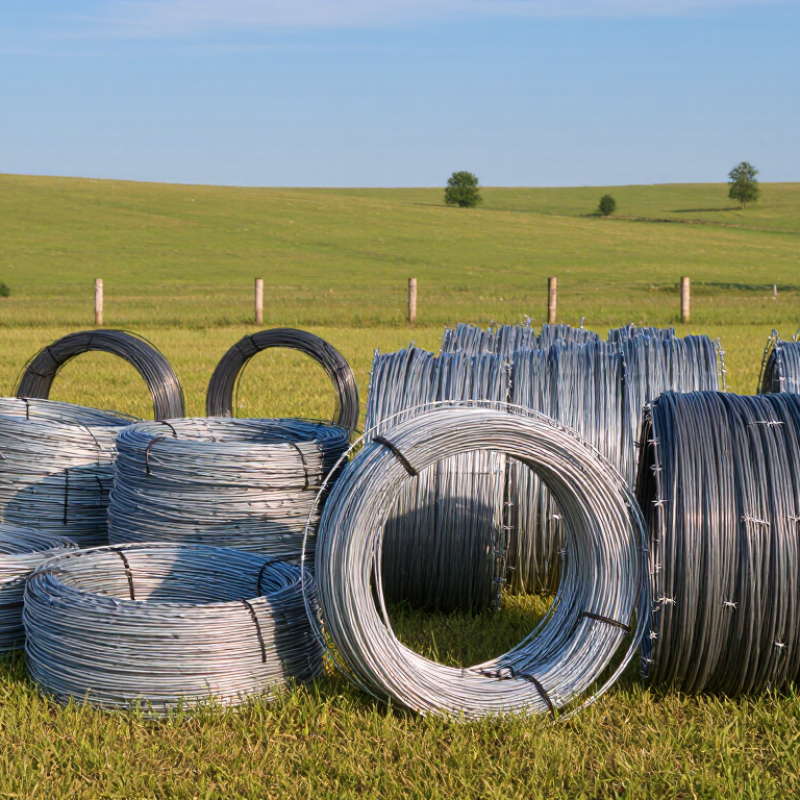
2026 Top Barbed Wire for Sale Which Type Is Best?

What Barbed Wire Is and How It Is Constructed

Barbed wire is a fencing material made from one or more metal strands with short, pointed barbs attached at regular intervals. A common design uses two line wires twisted together, with each barb secured between them. The twisting helps hold the barbs in place and keeps the strands from separating under ordinary tension. It looks simple. The details matter.

Most products are made from steel, often with a zinc coating to slow corrosion. Some use heavier wire or a different coating for harsher outdoor conditions, but the right choice depends on the site and maintenance plan. Barbs may have two or four points, and spacing can vary. A closer look at a sample can reveal uneven twists, damaged coating, or loose barbs before purchase. Small flaws count.

During installation, the wire is stretched between sturdy posts and fixed with compatible fasteners. Too much tension can strain the wire or posts; too little can leave slack that catches debris. Gloves and eye protection are sensible, since the points can snag skin and clothing. I would not judge quality by appearance alone. Check wire thickness, coating, barb attachment, and the supplier’s specifications, then consider how the fence will be inspected over time.

2026 Top Barbed Wire for Sale: Which Type Is Best?

Barbed wire is commonly made by wrapping sharp barbs around one or more line wires. In a typical two-strand design, the line wires are twisted together to hold the barbs in place. Two-point and four-point barbs are common configurations.

How to read this chart: Closer barb spacing means more barbs per meter. The values are calculated from the labeled spacing options (one meter divided by spacing); actual product specifications vary. Choose a configuration based on the intended application, local requirements, and installation conditions—there is no single best type for every use.

The Main Types of Barbed Wire Available in 2026

Conventional double-strand barbed wire remains a practical choice for farms and long boundary runs. It uses twisted line wires with regularly spaced barbs, and common product schedules list 4- or 5-inch barb spacing. High-tensile versions use stronger, thinner wire, which can reduce weight across long fences but requires careful tensioning. Galvanized coatings help resist rust; heavier coating options are useful in damp, salty, or exposed settings. ASTM A121-13(2022), the specification for metallic-coated carbon steel barbed wire, provides a technical benchmark for wire size, barb construction, and coating.

Razor-style coils are a distinct high-security fencing product, not simply another form of ordinary farm wire. Their sharp, continuous edges require specialized handling and installation. For livestock boundaries, standard barbed wire is usually easier to maintain. For coastal sites, coating durability may matter more than the lowest purchase price. USDA NRCS Conservation Practice Standard 382, Fence, emphasizes matching fence design to site and intended use rather than choosing by material alone. That is sensible. Still, buyers can overlook terrain: a neat wire specification may not solve sagging on uneven ground. Compare strand construction, coating class, and installation needs before ordering.

How Barbed Wire Types Compare in Security and Durability

Barbed wire types differ in deterrence and service life. Two-point barbs suit ordinary boundary fencing; four-point barbs create a more pronounced physical deterrent. Yet barb count alone does not determine security. Wire spacing, tension, post stability, and careful installation matter just as much. A loose strand can sag between posts, leaving an obvious weak point. High-tensile wire resists stretching better than softer wire, but it needs sound corner bracing and suitable tensioning. Galvanized coatings help protect steel from moisture. Coastal air and wet soil can still speed corrosion.

Corrosion deserves attention. NACE International’s 2016 IMPACT study estimated its global cost at US$2.5 trillion, or 3.4% of global GDP, and reported that corrosion-control practices could save 15–35% of those costs.

These figures cover many industries; they are not a lifespan forecast for a particular fence. Still, they show why coating quality and routine inspection matter.

Check for flaking zinc, rust around twists, and slack after storms. The best choice is not always the most aggressive-looking wire. A durable, well-tensioned galvanized fence may serve a site better than a heavier type that is poorly maintained. Even a good coating wears. That is easy to underestimate.

Common Uses for Different Types of Barbed Wire

Barbed wire is not one-size-fits-all. The number and shape of its points affect its use, durability, and handling. Traditional two-point wire is common on farms, where it helps mark large pasture boundaries and discourage cattle from pushing through. Four-point wire has more frequent, sharper contact points, so it may suit sturdier perimeter fencing where animals are not pressed against it. More points do not automatically mean better fencing.

High-tensile barbed wire can span longer distances with fewer posts, provided it is correctly tensioned and supported. It is often used for broad rural boundaries, but careful installation matters. Loose wire can sag; excessive tension can strain posts. Details matter. Check the fence regularly for rust, broken strands, and vegetation caught between wires.

For smaller animal enclosures, barbed wire may cause avoidable injuries; smooth wire or mesh can be a more suitable choice. On commercial or industrial boundaries, barbed strands may be added above a strong fence to discourage climbing. The base fence still does most of the work. In exposed areas, wind, soil movement, and weather can change how well any design holds up. A fence that looks suitable on paper may need adjustment after a season in the field. Safety signs and controlled access also help people notice the hazard.

How to Choose the Best Barbed Wire for Your Needs

Choosing the best barbed wire starts with the job it must do. For a farm boundary, consider animal size, fence length, and how often the line needs inspection. A small pasture may need fewer strands than a large perimeter exposed to wandering livestock. Details matter.

Check the wire’s core material, gauge, barb spacing, and coating. Heavier wire can resist stretching, while galvanized coatings help slow rust in damp or coastal conditions. Compare specifications rather than relying on appearance alone. A bright finish does not always mean longer service life. I would not assume the strongest option is automatically best; it may cost more and be harder to handle.

Think about the posts and terrain, too. Uneven ground can leave gaps beneath the fence, even when the wire itself is suitable. Choose a layout that stays taut without placing excessive strain on corner posts. Keep gates easy to use, and plan safe access for repairs. Wear thick gloves and eye protection during handling, and keep people and animals clear while installing it. This choice can be less exact than a catalog suggests, so measure the site and check the product specifications before ordering.

Copyright 2025 Fluidra S.A. | Created by BCM Marketing Agencia Privacy Policy Legal note | Cookie policy |

Technical cookies are strictly necessary for our website to work and you can navigate through it. These types of cookies are those that, for example, allow us to identify you, give you access to certain restricted parts of the page if necessary, or remember different options or services already selected by you, such as your privacy preferences. Therefore, they are activated by default, your authorization not being necessary in this regard. Through the configuration of your browser, you can block or alert the presence of this type of cookies, although such blocking will affect the proper functioning of the different functionalities of our website.


The analysis cookies allow us to study the navigation of the users of our website in general (for example, which sections of the page are the most visited, which services are used most and if they work correctly, etc.). From the statistical information on navigation on our website, we can improve both the operation of the page itself and the different services it offers. Therefore, these cookies do not have an advertising purpose, but only serve to make our website work better, adapting to our users in general. By activating them you will contribute to this continuous improvement. You can enable or disable these cookies by checking the corresponding box, being disabled by default.


Functionality cookies allow us to remember your preferences, to personalize certain characteristics and general options of our website, every time you access it (for example, the language in which the information is presented to you, the sections marked as favorites, your browser type, etc.) Therefore, this type of cookies does not have an advertising purpose, but by activating them you will improve the functionality of the website (for example, adapting to your type of browser) and the customization of it based on your preferences (for example, by presenting the information in the language that you have chosen in previous occasions), which will contribute to the ease, usability and comfort of our page during your navigation. You can enable or disable these cookies by checking the corresponding box, being disabled by default.


Advertising cookies allow us to manage the advertising spaces included in our website based on criteria such as the content shown or the frequency in which the ads are displayed. For example, if you have been shown the same ad several times on our website, and you have not shown a personal interest by clicking on it, it will not appear again. In summary, by activating this type of cookies, the advertising shown on our website will be more useful and diverse, and less repetitive. You can enable or disable these cookies by checking the corresponding box, being disabled by default.


Behavioral advertising cookies allow us to obtain information based on the observation of your browsing habits and behaviors on the web, in order to show you advertising content that best suits your personal tastes and interests. To understand it in a very simple way, we will give you a fictitious example: if your last searches on the web were related to suspense literature, we would show you advertising about suspense books. Therefore, activating this type of cookies, the advertising that we show you on our website will not be generic, but will be oriented to your searches, tastes and interests, therefore adjusting exclusively to you. You can enable or disable these cookies by checking the corresponding box, being disabled by default.
To understand it in a very simple way, we will give you a fictitious example: if your last searches on the web were related to suspense literature, we would show you advertising about suspense books. Therefore, activating this type of cookies, the advertising that we show you on our website will not be generic, but will be oriented to your searches, tastes and interests, therefore adjusting exclusively to you. You can enable or disable these cookies by checking the corresponding box, being disabled by default.

SAVE

We use our own and third-party cookies to ensure the proper functioning of the website and to analyse our services, improve your experience on our website and show you advertisements related to your interests according to profiling based on your browsing habits (e.g. websites visited). You can accept all cookies by clicking "ACCEPT" or set or reject them by clicking here. If you would like to know more about the use of cookies, please see our COOKIE POLICY.


ACCEPT ALL
Reject no essentials


