
2026 Top Ascophyllum Nodosum Agriculture Suppliers
FLUID HANDLING EXPERTS

Blog, all our news

2026 Top Ascophyllum Nodosum Agriculture Suppliers

Choosing a supplier for Ascophyllum Nodosum Agriculture products takes more than comparing prices. Buyers need dependable sourcing, clear specifications, and evidence that products suit their crops and application systems. FAO’s The State of World Fisheries and Aquaculture 2024 reports global algae production of 37.8 million tonnes in 2022. That figure describes the wider algae sector, not Ascophyllum nodosum supply alone. The distinction matters when evaluating supplier claims.

Seaweed-derived products are not interchangeable. Craigie’s 2011 review in the Journal of Applied Phycology describes how seaweed extracts can influence plant growth and stress responses, while outcomes depend on the extract and how it is used. Field results can vary. A supplier’s technical sheet should therefore identify the extract type, concentration, recommended use, and batch testing methods. Ask for a recent certificate of analysis, traceable origin information, and practical crop guidance. Vague claims deserve careful questions.

This 2026 overview examines leading agricultural suppliers through product transparency, technical support, sourcing practices, and market availability. It is not a universal ranking: regional access and crop needs can change the best choice. A liquid extract that performs well in a foliar program may not fit every fertigation setup. We also recognize a limitation: public data rarely allows direct, like-for-like comparison of supplier performance. Use the profiles as a starting point, then verify specifications and trial products under local conditions.
2026 Top Ascophyllum Nodosum Agriculture Suppliers

Understanding Ascophyllum Nodosum and Its Agricultural Uses

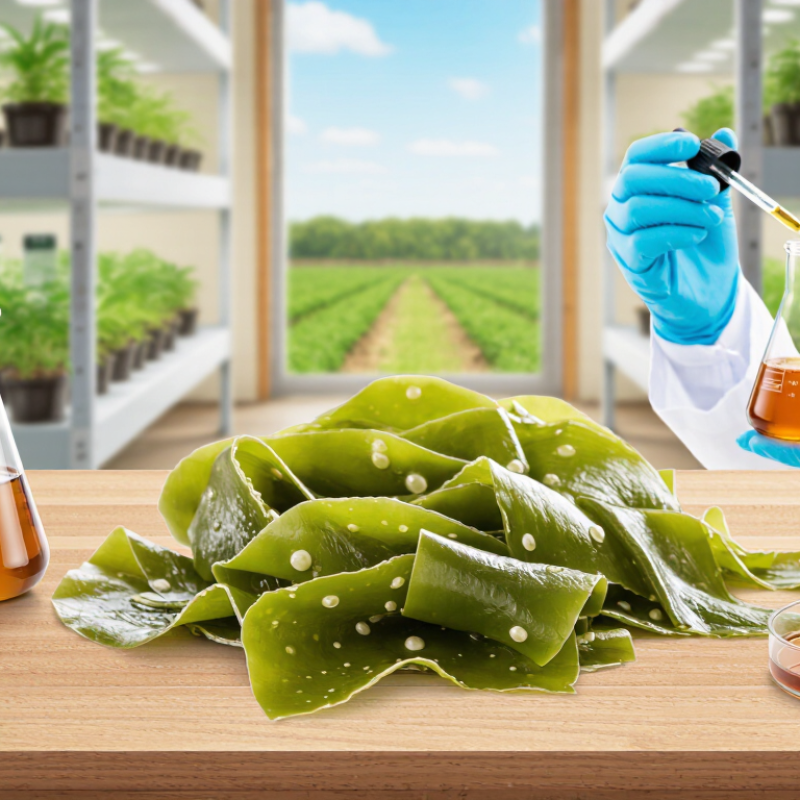
Ascophyllum nodosum is a brown seaweed found along North Atlantic shores. In agriculture, it is processed into liquid extracts, soluble powders, or dried materials for soil and crop use. Its value is not simply a supply of major nutrients. Products may contain trace minerals and naturally occurring compounds, including alginates and other polysaccharides. Composition varies with harvest conditions and processing.

Farmers and growers use these products as supplements, often through irrigation or foliar application. A fine mist on leaves can be useful, but timing, concentration, and crop stage matter. It is not a replacement for balanced fertilization or sound soil management. Results can differ with weather, soil, crop variety, and product quality. That part is easy to overlook. Check the product’s analysis and directions, then test it on a small area before wider use. Keep records of application rates and crop response; otherwise, it is hard to tell whether a change helped. The less tidy truth is that seaweed extracts do not produce the same visible response in every field. Use them as one considered tool, not a guaranteed fix.

2026 Top Ascophyllum Nodosum Agriculture Suppliers — Understanding Ascophyllum Nodosum and Its Agricultural Uses

Ascophyllum nodosum is a brown seaweed used to make agricultural biostimulants. The chart shows application routes reported in seaweed-extract research; it does not compare application rates or crop-performance effects.

How Seaweed Extracts Support Crop and Soil Management

Ascophyllum nodosum extracts can support crop management, but they are not complete fertilizers. Research reviewed by Khan et al. in the Journal of Plant Growth Regulation (2009) describes possible effects on plant growth and stress responses. Outcomes depend on crop, product composition, timing, and growing conditions. Results vary.

The FAO’s 2024 State of World Fisheries and Aquaculture report records 37.8 million tonnes of global algae production in 2022. That figure signals a substantial seaweed supply, not consistent extract quality or proven field performance. For growers, batch traceability and clear processing specifications matter. Small field trials matter more.

Soil context matters too. The FAO’s 2015 Status of the World’s Soil Resources report estimated that 33% of soils were moderately to highly degraded. Seaweed extracts cannot reverse compaction or replace organic matter. They may fit into a wider plan alongside soil testing, residue management, and balanced nutrition. Not a cure-all. Compare treated rows with untreated controls, and record root development, moisture conditions, and harvest results. One limitation is easy to miss: a visible response in a pot may not repeat across a whole field.

How to Evaluate Ascophyllum Nodosum Suppliers in 2026

Evaluating an Ascophyllum nodosum supplier in 2026 means looking beyond a polished product sheet. Ask where the seaweed was harvested, how each lot is identified, and whether raw material can be traced through processing. Request a recent certificate of analysis tied to a batch number, not a generic sample. Check declared concentration, moisture, pH, and relevant contaminant results against your intended use. Ask how extraction conditions and processing aids are controlled; these details can affect consistency. Ask for records. A confident answer should come with documents, not just reassurance.

Then test the product in your own system. Compare a small treated area with an untreated strip, keeping crop stage, irrigation, and application rate consistent. Record emergence, leaf color, root development, and yield; weather can blur the result. Request clear directions for dilution, storage, and tank compatibility, plus a realistic explanation of what the product cannot promise. Technical staff should discuss crop fit without guaranteeing outcomes. I would not treat one successful trial as proof; seasonal variation makes that too neat. Supplier selection is partly evidence, partly follow-up: note response times, complaint handling, and whether later batches match the first.

2026 Top Ascophyllum Nodosum Agriculture Suppliers - How to Evaluate Ascophyllum Nodosum Suppliers in 2026

Use this evidence-based scorecard to compare suppliers. It ranks evaluation criteria rather than naming companies; scores should be assigned only after reviewing current, batch-specific documents and samples.

Evaluation dimension What to verify Strong evidence Suggested weight Scoring guide (0–5)
Species and origin traceability Confirmation that the raw material is Ascophyllum nodosum; harvest or sourcing area; traceability from raw material to finished lot. Written species identification, origin records, lot codes, and documented chain of custody. 20% 0 = no records; 3 = lot-level origin stated; 5 = origin and chain of custody documented and auditable.
Harvest and environmental management Harvest permissions where applicable, harvest practices, and measures to manage impacts on the source area. Relevant permits or supplier records, a written harvesting policy, and evidence of monitoring or independent verification where available. 15% 0 = no information; 3 = documented policy; 5 = policy supported by records and applicable independent verification.
Product specification and consistency Guaranteed composition, physical form, solubility or dispersibility, pH, moisture, and other relevant product characteristics. A current specification sheet with defined test methods and acceptance limits, plus consistent results across multiple lots. 15% 0 = no specification; 3 = key parameters stated; 5 = clear methods and limits supported by lot history.
Batch testing and contaminant controls Testing relevant to the product and destination market, including applicable heavy metals and microbiological or other safety parameters. A dated, lot-specific certificate of analysis (CoA), stated methods, and results assessed against the applicable local requirements or agreed specification. 15% 0 = no test results; 3 = periodic results; 5 = relevant lot-specific results with methods and clear compliance review.
Quality management and laboratory competence Document control, corrective actions, complaint handling, and competence of laboratories performing tests. A quality-system certificate within its valid scope, audit information, and testing by a competent laboratory; ISO/IEC 17025 accreditation is relevant when the specific test is within scope. 10% 0 = no quality records; 3 = documented procedures; 5 = current, relevant system and test-scope evidence.
Agronomic evidence Whether product claims are supported for the crop, application method, and conditions relevant to the buyer. Trial reports identifying crop, location or growing conditions, application rate and timing, comparison treatment, replication, and measured outcomes. 10% 0 = unsupported claims; 3 = limited or single-condition data; 5 = transparent, replicated evidence relevant to intended use.
Regulatory and label readiness Product classification, label language, import documents, and registration or notification requirements in the destination market. Current documents matched to the product and destination jurisdiction; organic claims supported by certification applicable to that market and product scope. 10% 0 = requirements unclear; 3 = key documents available; 5 = complete, current, jurisdiction-specific documentation.
Supply reliability and support Lead times, minimum order quantities, packaging options, storage guidance, change notification, and technical response process. Written delivery terms, product shelf-life and storage information, documented complaint handling, and a clear process for notifying customers of specification changes. 5% 0 = no defined support; 3 = basic terms provided; 5 = clear service commitments and documented change control.
Weighted total — calculate each score as (score ÷ 5) × weight, then add the results. 100% Maximum: 100 points

Comparison note: Regulatory limits, product classifications, and certification requirements vary by destination market and intended use. Confirm current local requirements before purchase. A high score indicates stronger documented evidence against this scorecard; it is not a guarantee of field performance.

Leading Agricultural Suppliers and Their Product Portfolios

Agricultural suppliers of Ascophyllum nodosum differ less by headline claims than by extraction method, formulation, and supporting evidence. Their portfolios may include liquid extracts for fertigation or foliar application, soluble powders, and blends with micronutrients or other organic inputs. The FAO’s 2024 State of World Fisheries and Aquaculture reported 37.8 million tonnes of aquatic algae production in 2022. That figure covers algae broadly, not Ascophyllum nodosum alone, but it shows the scale of the seaweed supply chain behind agricultural products. Buyers should ask where the seaweed is harvested and how batches are tested. Details matter.

A useful supplier portfolio pairs clear product specifications with practical application guidance: crop, dose, timing, compatibility, and storage conditions. Ask for the extraction process, nutrient analysis, and batch-level quality records, then compare labels carefully; “seaweed extract” does not tell the whole story. Field trials should identify the crop, location, and controls, rather than promise identical results across soils and climates. I would still question impressive yield claims without trial methods or independent review. Not always easy. Smaller suppliers may offer more tailored formulations, while larger portfolios can simplify sourcing; neither advantage replaces transparent evidence and responsive technical support.

Comparing Quality Standards, Product Forms, and Supply Options

2026 Top Ascophyllum Nodosum Agriculture Suppliers

Compare suppliers by traceability, testing, product form, and delivery capacity—not price alone. Ask for the harvest location, species identification, processing method, and a batch certificate of analysis. Check declared solids, pH, and contaminant results against your intended use. A polished specification sheet is useful, but it cannot replace batch-level records.

The FAO’s The State of World Fisheries and Aquaculture 2024 reports 37.8 million tonnes of aquatic algae production in 2022, with aquaculture providing about 97 percent. That figure covers algae broadly; it is not an Ascophyllum supply estimate. Ascophyllum products may be sold as liquid extracts, soluble powders, or dried meal. Liquids are easy to meter through irrigation systems. Powders are lighter to ship, but can clump if stored damp. Supply may come through harvesters, processors, or distributors, so confirm seasonal availability and lead times before planning field trials.

Tips: Request recent batch data and a small test lot. Compare dissolution, odor, and handling in your own water. Not all lots match. Keep notes; one trial rarely settles the question.

Copyright 2025 Fluidra S.A. | Created by BCM Marketing Agencia Privacy Policy Legal note | Cookie policy |

Technical cookies are strictly necessary for our website to work and you can navigate through it. These types of cookies are those that, for example, allow us to identify you, give you access to certain restricted parts of the page if necessary, or remember different options or services already selected by you, such as your privacy preferences. Therefore, they are activated by default, your authorization not being necessary in this regard. Through the configuration of your browser, you can block or alert the presence of this type of cookies, although such blocking will affect the proper functioning of the different functionalities of our website.


The analysis cookies allow us to study the navigation of the users of our website in general (for example, which sections of the page are the most visited, which services are used most and if they work correctly, etc.). From the statistical information on navigation on our website, we can improve both the operation of the page itself and the different services it offers. Therefore, these cookies do not have an advertising purpose, but only serve to make our website work better, adapting to our users in general. By activating them you will contribute to this continuous improvement. You can enable or disable these cookies by checking the corresponding box, being disabled by default.


Functionality cookies allow us to remember your preferences, to personalize certain characteristics and general options of our website, every time you access it (for example, the language in which the information is presented to you, the sections marked as favorites, your browser type, etc.) Therefore, this type of cookies does not have an advertising purpose, but by activating them you will improve the functionality of the website (for example, adapting to your type of browser) and the customization of it based on your preferences (for example, by presenting the information in the language that you have chosen in previous occasions), which will contribute to the ease, usability and comfort of our page during your navigation. You can enable or disable these cookies by checking the corresponding box, being disabled by default.


Advertising cookies allow us to manage the advertising spaces included in our website based on criteria such as the content shown or the frequency in which the ads are displayed. For example, if you have been shown the same ad several times on our website, and you have not shown a personal interest by clicking on it, it will not appear again. In summary, by activating this type of cookies, the advertising shown on our website will be more useful and diverse, and less repetitive. You can enable or disable these cookies by checking the corresponding box, being disabled by default.


Behavioral advertising cookies allow us to obtain information based on the observation of your browsing habits and behaviors on the web, in order to show you advertising content that best suits your personal tastes and interests. To understand it in a very simple way, we will give you a fictitious example: if your last searches on the web were related to suspense literature, we would show you advertising about suspense books. Therefore, activating this type of cookies, the advertising that we show you on our website will not be generic, but will be oriented to your searches, tastes and interests, therefore adjusting exclusively to you. You can enable or disable these cookies by checking the corresponding box, being disabled by default.
To understand it in a very simple way, we will give you a fictitious example: if your last searches on the web were related to suspense literature, we would show you advertising about suspense books. Therefore, activating this type of cookies, the advertising that we show you on our website will not be generic, but will be oriented to your searches, tastes and interests, therefore adjusting exclusively to you. You can enable or disable these cookies by checking the corresponding box, being disabled by default.

SAVE

We use our own and third-party cookies to ensure the proper functioning of the website and to analyse our services, improve your experience on our website and show you advertisements related to your interests according to profiling based on your browsing habits (e.g. websites visited). You can accept all cookies by clicking "ACCEPT" or set or reject them by clicking here. If you would like to know more about the use of cookies, please see our COOKIE POLICY.


ACCEPT ALL
Reject no essentials


