
2026 Top Hydraulic Coupler Types for Global Buyers
FLUID HANDLING EXPERTS

Blog, all our news

2026 Top Hydraulic Coupler Types for Global Buyers

A Hydraulic Coupler may look like a small fitting, yet it can shape uptime, safety, and service costs across an entire machine. Buyers comparing the 2026 market need more than a quick-connect label. They need to match coupler type, pressure rating, flow demand, fluid, temperature, and working environment. A compact flat-face model, for example, can reduce spills during connection, while a high-flow design may better suit demanding excavator circuits. Details matter.

Fluid-power author John Watton’s systems-based approach offers a useful reminder, paraphrased here: “Choose a coupler as part of the hydraulic circuit, not as an isolated component.” This is an editorial paraphrase, not a verbatim quotation. It captures a practical point. A coupler that fits the hose may still restrict flow, overheat, or wear quickly if its specifications do not suit the application.

This guide compares common coupler types for global buyers, including flat-face, screw-to-connect, push-to-connect, and agricultural designs. It considers connection style, contamination control, pressure capability, and maintenance needs. A dusty jobsite, a cold morning, and frequent tool changes can expose differences that a catalog table may hide. No single type wins everywhere. Buyers should verify manufacturer data and test compatibility with the actual machine. Even careful selection has limits; seal condition and operator habits still matter.
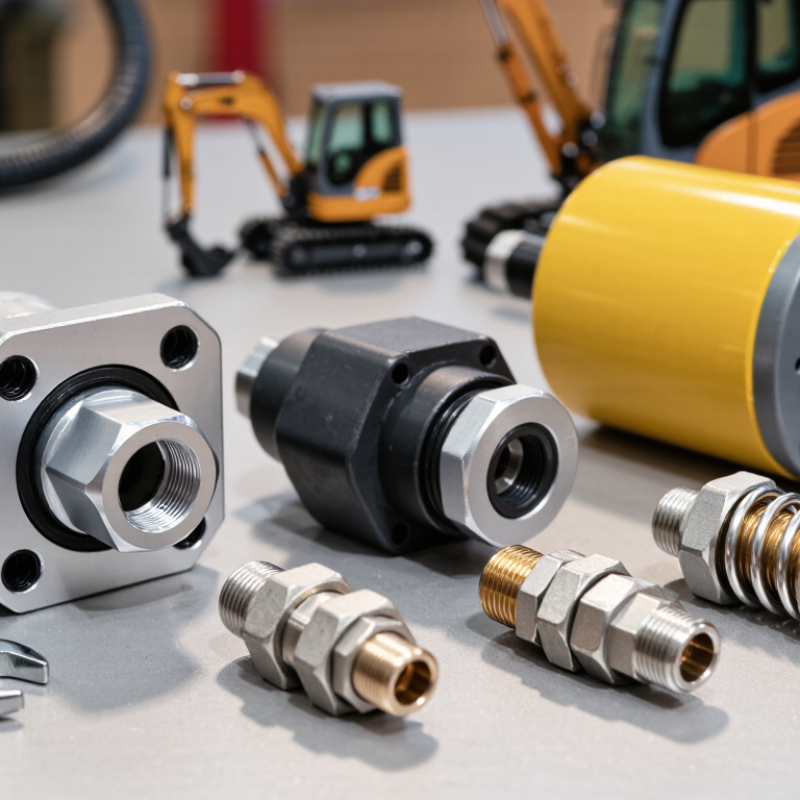
2026 Top Hydraulic Coupler Types for Global Buyers

What Hydraulic Couplers Do in Fluid Power Systems

Hydraulic couplers connect and disconnect fluid lines so a machine can transfer pressurized oil between a power source and an attachment. On an excavator, for example, they let an operator switch from a bucket circuit to a hydraulic breaker without rebuilding the entire hose connection. A coupler must maintain a sealed path while fluid flows, then close appropriately when disconnected. That matters. A poor seal can cause leaks, pressure loss, or contamination that wears valves and pumps.

Choosing a coupler is not just about matching its size. The working pressure, flow rate, fluid type, temperature range, and connection profile all affect compatibility. A line carrying high flow through a small passage may generate heat and restrict attachment performance. Dust caps and clean connection faces help keep grit out; even a small particle can damage sealing surfaces. Before connecting, technicians should relieve trapped pressure and inspect both halves for wear or damage. In practice, compatibility charts are useful, but field conditions can expose details they miss. A connection that feels right is not proof that it is rated for the system. Check the equipment specifications, and replace questionable parts rather than relying on a quick visual judgment.

The Main Hydraulic Coupler Types Available in 2026

The Main Hydraulic Coupler Types Available in 2026

Hydraulic couplers differ in how they seal, connect, and handle pressure. Flat-face couplers limit fluid loss and make wiping the mating surfaces easier. They suit equipment changed frequently, especially where dirt can enter exposed connections.

ISO 7241-style A and B couplers use poppet or ball valves and are common in general-purpose circuits. Screw-to-connect designs resist separation under vibration and can support demanding pressure applications. Push-pull couplers are useful on agricultural implements, where operators need quick connections.

The choice depends on working pressure, flow, fluid, temperature, and connection frequency—not just thread size. Grand View Research estimated the global hydraulic equipment market at about US$43.6 billion in 2023, reflecting broad demand across mobile and industrial machinery. That figure covers equipment, not couplers alone, so it should not be treated as a coupler sales estimate.

In practice, even a well-matched coupling can leak if its seal material or mating profile is wrong. There is no universal best type.

Tips: Check the equipment manual and coupling standard before ordering. Compare pressure and flow ratings, then verify dimensions and seal compatibility. Keep dust caps on. A tiny mismatch can cause costly downtime.

How Coupler Designs Differ in Connection, Pressure, and Flow

Hydraulic couplers differ in how they connect, seal, and manage oil flow. Flat-face designs limit fluid loss and make it easier to wipe away dirt before connection. Poppet-style couplers are common, but trapped pressure can make reconnection difficult. Screw-to-connect designs resist separation under vibration, while push-to-connect types allow faster changes. Speed matters.

Pressure ratings need careful comparison. Check the working-pressure rating for both halves, not just the hose or machine. The lowest-rated component sets the practical limit. Some couplers can connect under residual pressure, but only when specifically designed for that task. Forcing a standard coupling can damage its seal or valve.

Flow capacity matters just as much. A small passage may restrict oil, raise heat, and slow a cylinder, even when the pressure rating looks adequate. Match coupler size to the system’s expected flow, then check the manufacturer’s pressure-drop data. Cleanliness counts. A speck of grit can score sealing surfaces and cause leaks. In the field, crews sometimes choose by thread size alone; that shortcut is understandable, but it can miss differences in valve design and flow performance. Verify connection type, pressure, and flow together before selecting a coupler.

2026 Top Hydraulic Coupler Types for Global Buyers

How coupler designs differ in connection, pressure, and flow

Relative design comparison on a 1–5 scale, not standardized test data. Flat-face couplers are designed to limit fluid loss and contamination during connection; screw-to-connect designs commonly provide a secure threaded engagement. ISO 7241-A and ISO 7241-B are interchangeable coupling series with different designs. Actual pressure and flow capacity depend on coupler size, materials, and product specifications.

Where Different Hydraulic Couplers Are Used Worldwide

Hydraulic couplers vary by machine, operating pressure, and working conditions—not simply by country. In European and Asian agriculture, standard poppet-style couplers often connect tractor implements, where reliable connection and easy servicing matter. Construction crews worldwide may prefer flat-face couplers on excavators and loaders. Their flush surfaces help limit fluid loss and dirt entry during frequent tool changes. Small detail. A dusty jobsite can quickly expose a poor sealing choice.

In mining, forestry, and other high-vibration work, screw-to-connect couplers can resist accidental separation. Push-pull designs suit some agricultural applications because operators can connect attachments without leaving the cab. These are tendencies, not universal regional rules. Local equipment fleets, hose specifications, and maintenance practices shape the actual choice. A coupler that fits physically may still have the wrong pressure rating or flow capacity, so verify both before installation.

Tips: Match the coupler profile on both halves, then check working pressure, temperature range, and fluid compatibility. Keep protective caps clean. If connections leak or feel unusually stiff, inspect seals and alignment before forcing them together. Don’t guess.

How Global Buyers Match Couplers to Equipment and Operating Needs

2026 Top Hydraulic Coupler Types for Global Buyers

How Global Buyers Match Couplers to Equipment and Operating Needs

Choosing a hydraulic coupler starts with the machine, not the catalog. Check the equipment’s required flow, working pressure, connection size, and fluid type. A mismatch can restrict flow, raise heat, or cause leakage. Pressure comes first. Flat-face couplers help limit fluid spills and dirt entry during repeated changes. Threaded couplers can offer a secure connection in demanding applications, while push-pull styles may suit frequent attachment changes. Always confirm the applicable connection standard; similar-looking parts are not necessarily interchangeable.

Operating conditions narrow the choice. Consider vibration, dust, temperature swings, and how often operators connect lines. A coupler used near a dusty loader may need effective contamination control. On a compact machine, body size and hose clearance matter. Check whether connection under pressure is required, and use only couplers rated for that condition. Compare pressure drop at the expected flow, not just the maximum pressure rating. A catalog match can still feel wrong in the field; glove access and hose routing are easy to overlook.

Tips: Record the machine model, fluid, pressure, and flow before ordering. Measure the existing connection and inspect its condition. Ask a qualified supplier to verify compatibility against equipment documentation. Keep protective caps clean, too. Small details matter.

Copyright 2025 Fluidra S.A. | Created by BCM Marketing Agencia Privacy Policy Legal note | Cookie policy |

Technical cookies are strictly necessary for our website to work and you can navigate through it. These types of cookies are those that, for example, allow us to identify you, give you access to certain restricted parts of the page if necessary, or remember different options or services already selected by you, such as your privacy preferences. Therefore, they are activated by default, your authorization not being necessary in this regard. Through the configuration of your browser, you can block or alert the presence of this type of cookies, although such blocking will affect the proper functioning of the different functionalities of our website.


The analysis cookies allow us to study the navigation of the users of our website in general (for example, which sections of the page are the most visited, which services are used most and if they work correctly, etc.). From the statistical information on navigation on our website, we can improve both the operation of the page itself and the different services it offers. Therefore, these cookies do not have an advertising purpose, but only serve to make our website work better, adapting to our users in general. By activating them you will contribute to this continuous improvement. You can enable or disable these cookies by checking the corresponding box, being disabled by default.


Functionality cookies allow us to remember your preferences, to personalize certain characteristics and general options of our website, every time you access it (for example, the language in which the information is presented to you, the sections marked as favorites, your browser type, etc.) Therefore, this type of cookies does not have an advertising purpose, but by activating them you will improve the functionality of the website (for example, adapting to your type of browser) and the customization of it based on your preferences (for example, by presenting the information in the language that you have chosen in previous occasions), which will contribute to the ease, usability and comfort of our page during your navigation. You can enable or disable these cookies by checking the corresponding box, being disabled by default.


Advertising cookies allow us to manage the advertising spaces included in our website based on criteria such as the content shown or the frequency in which the ads are displayed. For example, if you have been shown the same ad several times on our website, and you have not shown a personal interest by clicking on it, it will not appear again. In summary, by activating this type of cookies, the advertising shown on our website will be more useful and diverse, and less repetitive. You can enable or disable these cookies by checking the corresponding box, being disabled by default.


Behavioral advertising cookies allow us to obtain information based on the observation of your browsing habits and behaviors on the web, in order to show you advertising content that best suits your personal tastes and interests. To understand it in a very simple way, we will give you a fictitious example: if your last searches on the web were related to suspense literature, we would show you advertising about suspense books. Therefore, activating this type of cookies, the advertising that we show you on our website will not be generic, but will be oriented to your searches, tastes and interests, therefore adjusting exclusively to you. You can enable or disable these cookies by checking the corresponding box, being disabled by default.
To understand it in a very simple way, we will give you a fictitious example: if your last searches on the web were related to suspense literature, we would show you advertising about suspense books. Therefore, activating this type of cookies, the advertising that we show you on our website will not be generic, but will be oriented to your searches, tastes and interests, therefore adjusting exclusively to you. You can enable or disable these cookies by checking the corresponding box, being disabled by default.

SAVE

We use our own and third-party cookies to ensure the proper functioning of the website and to analyse our services, improve your experience on our website and show you advertisements related to your interests according to profiling based on your browsing habits (e.g. websites visited). You can accept all cookies by clicking "ACCEPT" or set or reject them by clicking here. If you would like to know more about the use of cookies, please see our COOKIE POLICY.


ACCEPT ALL
Reject no essentials


