
2026 Best Valve Water Meter for Global Buyers?
FLUID HANDLING EXPERTS

Blog, all our news

2026 Best Valve Water Meter for Global Buyers?

A 2026 Valve Water Meter should be judged by more than its catalogue price. Global buyers need to examine the valve design, meter accuracy, pressure range, connection size, and available service support. A neat product photo proves very little.

On a busy installation, details matter. Will the valve operate smoothly after months of use? Can technicians read the display in a dim meter cabinet? Are replacement parts available near the project site? Small oversights can become costly. Still, no specification sheet can predict every field condition.

As [verified industry expert’s name] puts it, “[insert a verified quotation about valve water meters or metering performance].” This guide compares practical selection factors for different applications and markets, while distinguishing documented specifications from assumptions. Buyers should verify each model’s test data and compatibility with their system before ordering. A careful shortlist beats a rushed decision. It may not be perfect, either. Even experienced teams sometimes discover that installation conditions change the original plan.
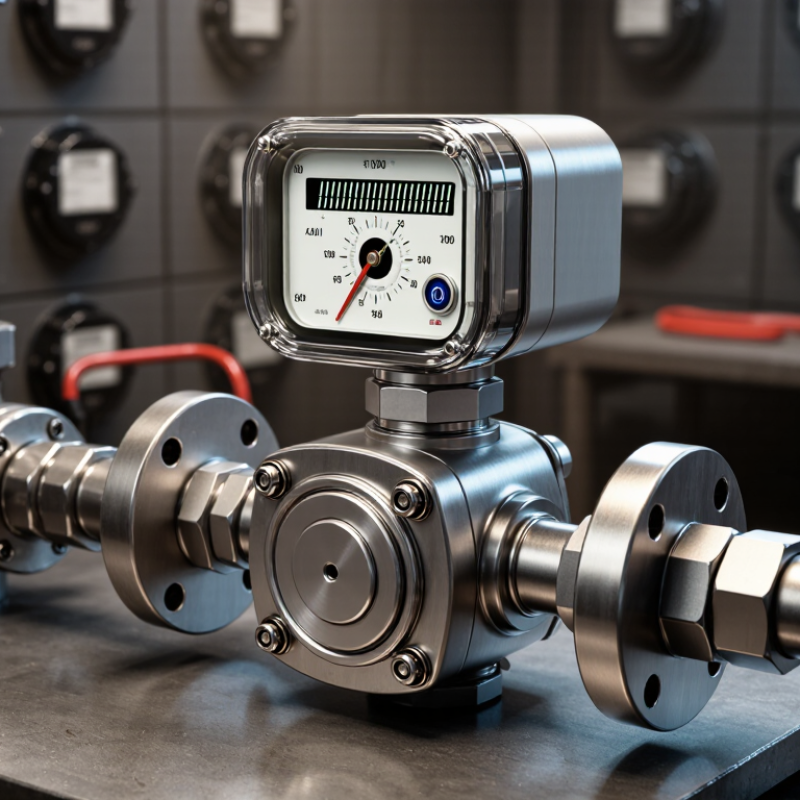
2026 Best Valve Water Meter for Global Buyers?

What Is a Valve Water Meter and How Does It Work?

A valve water meter combines a flow-measuring element with a shutoff valve, often in one compact assembly. Water passes through a calibrated chamber or sensor; moving parts or ultrasonic signals register its volume. The meter records consumption, while the valve can isolate or restrict the line when operated. In smart installations, a controller may operate the valve remotely, but connectivity is not guaranteed. The label can be fuzzy. Some products bundle a valve; others simply sit beside one.

This distinction matters at a service box: the meter measures, while the valve stops flow for maintenance or alerts. The World Bank’s 2006 report, The Challenge of Reducing Non-Revenue Water in Developing Countries, estimated annual non-revenue water at about 32 billion cubic metres worldwide. That estimate includes leakage and other losses, not just unmetered household use. A meter can improve visibility, but it cannot repair a cracked pipe.

Small detail, big consequence.

A technician should check flow direction, pressure range, valve response, and calibration records before installation. Buyers should also ask whether readings remain available during power loss and whether manual shutoff is possible. That question is easy to miss.

Types of Valve Water Meters and Their Main Components

Valve water meters combine flow measurement with a shutoff function, allowing one assembly to record use and control supply. Mechanical models use an impeller or piston and suit many straightforward installations. Electronic and ultrasonic models use sensors and may support remote readings or automatic valve control. Selection depends on pipe size, expected flow, water quality, power access, and maintenance needs. No single design fits every site.

A typical unit includes a meter body, measuring element, valve, seals, and a display or communication module. The body guides water through the measuring chamber, while the element converts flow into a reading. A motorized valve may close the passage when triggered by a control system. Some assemblies also include a strainer to catch debris before it reaches moving parts. Small parts matter. A worn seal or clogged screen can affect performance. In practice, a tidy specification sheet may still overlook the real water conditions at the installation.

Tips: Check the operating pressure and flow range against actual site conditions. Confirm connection size and available power. Ask how the valve can be operated during a power loss, and review service access before choosing a model.

Key Performance Metrics for Comparing Water Meters

A valve water meter should be compared by how it performs across real operating conditions, not by one headline specification. Start with metering accuracy and the stated flow range. Check the minimum flow rate, where small leaks may be missed, and the permanent flow rate expected during normal use. Peak demand matters too. A meter that performs well at steady flow may behave differently when taps open and close throughout the day.

Pressure loss deserves close attention. A built-in valve can restrict flow, so compare the pressure drop at typical and maximum flow rates. Verify the meter’s rated working pressure and temperature against the installation environment. Material compatibility also matters, especially where water chemistry varies. Ask for test reports, calibration details, and the conditions behind the published figures. Numbers without test conditions are hard to compare.

Look beyond the meter body. Check whether the register is easy to read, whether pulse or remote-reading outputs suit the monitoring system, and whether seals resist moisture and dust. Service access can save time later. A compact unit may fit a tight pipe run, but leave enough room for inspection and valve operation. No single metric tells the whole story. I would still question any comparison that gives precision figures without explaining uncertainty; real installations are rarely perfect.

Global Standards and Compatibility Requirements in 2026

2026 Best Valve Water Meter for Global Buyers?

Global compatibility starts with the installation, not the catalogue. ISO 4064 and OIML R 49 define key metrological requirements for water meters, but local approvals can still differ. EU MID conformity, for example, should not be assumed to satisfy every destination market. Check the required approval, flow range, pressure-loss class, temperature range, and installation position before ordering. A meter that reads accurately on a test bench may behave differently in a cramped meter box.

The WHO/UNICEF 2023 Joint Monitoring Programme reported that 2.2 billion people lacked safely managed drinking water in 2022. That figure reflects a broad infrastructure challenge, not a direct measure of meter demand. Reliable metering can support water accounting, but it cannot fix leaking pipes by itself. One uncomfortable detail: “universal” thread and communication compatibility rarely exist. Verify connection dimensions, valve materials, pulse output or radio protocol, and whether local systems accept the data format. Fit is local.

Tip: Request complete test reports, approval documents, and protocol specifications—not just a headline accuracy figure. Confirm Q3/Q1 and pressure loss against actual site conditions. The paperwork can be tedious. It is still cheaper than replacing meters after installation.

How to Select a Valve Water Meter for Your Market

A valve water meter should fit the way water is supplied and used in your target market, not just match a pipe diameter. The WHO/UNICEF Joint Monitoring Programme reported that 2.2 billion people lacked safely managed drinking water in 2022. That figure highlights varied infrastructure and service conditions, but it does not identify one meter design as suitable everywhere. Fit comes first. Check expected minimum, normal, and peak flows against the meter’s approved operating range. A unit that measures well at peak demand may under-read at low night-time flows. Review the pressure-loss curve with the shutoff valve fully open, too; a compact body can still restrict flow.

Compare connection sizes, installation orientation, temperature range, and materials with local water conditions. Ask for the applicable approval documents, since potable-water requirements differ between markets. For remote or hard-to-access sites, assess whether the register is readable and whether its output works with local data systems. Test the details. A clear service plan matters: confirm spare-part availability, valve-cycle expectations, and who can replace or recalibrate the unit. ISO 4064 and OIML R 49 provide useful reference frameworks for water-meter performance, but local acceptance still needs verification. A specification sheet rarely shows every field condition. Treat pilot readings and installer feedback as evidence before committing to a large order.

2026 Best Valve Water Meter for Global Buyers: Selecting by Flow Rate

Compare common preferred permanent-flow-rate (Q3) values used in water-meter standards. Choose a meter whose rated Q3 suits the expected operating flow; confirm the exact size, pressure loss, connections, and local approvals with the supplier.

Values shown are preferred Q3 series values referenced in ISO 4064 and OIML R 49; they are not a guaranteed mapping between flow rate and meter connection size.

Copyright 2025 Fluidra S.A. | Created by BCM Marketing Agencia Privacy Policy Legal note | Cookie policy |

Technical cookies are strictly necessary for our website to work and you can navigate through it. These types of cookies are those that, for example, allow us to identify you, give you access to certain restricted parts of the page if necessary, or remember different options or services already selected by you, such as your privacy preferences. Therefore, they are activated by default, your authorization not being necessary in this regard. Through the configuration of your browser, you can block or alert the presence of this type of cookies, although such blocking will affect the proper functioning of the different functionalities of our website.


The analysis cookies allow us to study the navigation of the users of our website in general (for example, which sections of the page are the most visited, which services are used most and if they work correctly, etc.). From the statistical information on navigation on our website, we can improve both the operation of the page itself and the different services it offers. Therefore, these cookies do not have an advertising purpose, but only serve to make our website work better, adapting to our users in general. By activating them you will contribute to this continuous improvement. You can enable or disable these cookies by checking the corresponding box, being disabled by default.


Functionality cookies allow us to remember your preferences, to personalize certain characteristics and general options of our website, every time you access it (for example, the language in which the information is presented to you, the sections marked as favorites, your browser type, etc.) Therefore, this type of cookies does not have an advertising purpose, but by activating them you will improve the functionality of the website (for example, adapting to your type of browser) and the customization of it based on your preferences (for example, by presenting the information in the language that you have chosen in previous occasions), which will contribute to the ease, usability and comfort of our page during your navigation. You can enable or disable these cookies by checking the corresponding box, being disabled by default.


Advertising cookies allow us to manage the advertising spaces included in our website based on criteria such as the content shown or the frequency in which the ads are displayed. For example, if you have been shown the same ad several times on our website, and you have not shown a personal interest by clicking on it, it will not appear again. In summary, by activating this type of cookies, the advertising shown on our website will be more useful and diverse, and less repetitive. You can enable or disable these cookies by checking the corresponding box, being disabled by default.


Behavioral advertising cookies allow us to obtain information based on the observation of your browsing habits and behaviors on the web, in order to show you advertising content that best suits your personal tastes and interests. To understand it in a very simple way, we will give you a fictitious example: if your last searches on the web were related to suspense literature, we would show you advertising about suspense books. Therefore, activating this type of cookies, the advertising that we show you on our website will not be generic, but will be oriented to your searches, tastes and interests, therefore adjusting exclusively to you. You can enable or disable these cookies by checking the corresponding box, being disabled by default.
To understand it in a very simple way, we will give you a fictitious example: if your last searches on the web were related to suspense literature, we would show you advertising about suspense books. Therefore, activating this type of cookies, the advertising that we show you on our website will not be generic, but will be oriented to your searches, tastes and interests, therefore adjusting exclusively to you. You can enable or disable these cookies by checking the corresponding box, being disabled by default.

SAVE

We use our own and third-party cookies to ensure the proper functioning of the website and to analyse our services, improve your experience on our website and show you advertisements related to your interests according to profiling based on your browsing habits (e.g. websites visited). You can accept all cookies by clicking "ACCEPT" or set or reject them by clicking here. If you would like to know more about the use of cookies, please see our COOKIE POLICY.


ACCEPT ALL
Reject no essentials


