
2026 Top Udon Noodle Machine Which Is Best for Buyers?
FLUID HANDLING EXPERTS

Blog, all our news

2026 Top Udon Noodle Machine Which Is Best for Buyers?

Choosing a Udon Noodle Machine in 2026 is less about chasing the biggest output figure and more about matching equipment to the noodle you actually sell. A small restaurant making fresh udon has different needs from a central kitchen supplying several outlets. Dough texture, batch size, floor space, cleaning time, and operator skill all affect the result. Small details count. A machine may look efficient in a showroom but struggle with your preferred flour blend or dough thickness.

Market figures offer context, not a direct buying formula. The World Instant Noodles Association reported global demand of about 123.1 billion servings in 2023. That figure reflects instant noodles across many types; it does not measure udon sales or noodle-machine purchases. Still, it shows the scale of the wider noodle category and why production consistency matters. Buyers should treat broad market data as background, then verify machine performance through specifications, demonstrations, and references from comparable kitchens.

This guide compares leading machine types and buyer priorities for 2026, including sheeting, cutting, capacity, and maintenance. It also considers whether a compact unit or a more automated line better fits your workflow. No single model is best for everyone. Some published capacity claims may assume ideal dough and continuous operation, which is not every kitchen’s reality. Ask suppliers for test results using your recipe, and check how quickly parts can be cleaned and replaced. A careful trial can reveal more than a polished brochure.
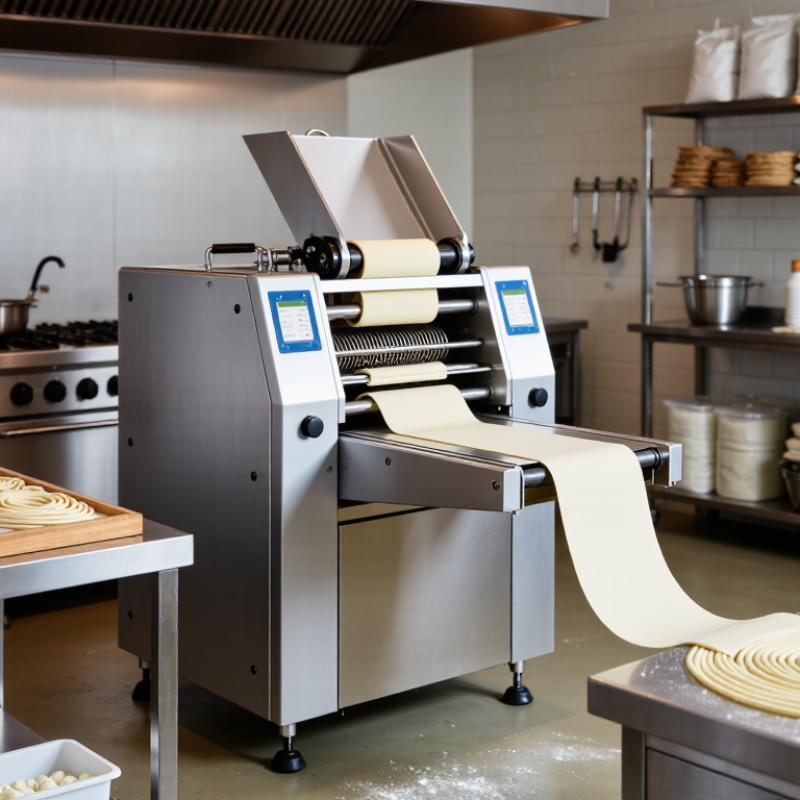
2026 Top Udon Noodle Machine Which Is Best for Buyers?

What Is an Udon Noodle Machine and How Is It Used?

An udon noodle machine turns flour, water, and salt into consistent strands through mixing, rolling, and cutting. Some units combine these steps; others require separate mixers and rollers. After mixing, the dough rests, then passes through rollers until it forms a smooth sheet. A cutter shapes that sheet into thick noodles. The result should feel springy, not brittle. It is a practical tool for restaurants and small producers, though setup and cleaning take time.

The machine does not cook the noodles. Operators portion ingredients, check dough texture, adjust roller gaps, and cut noodles to the desired width. Fresh udon is commonly boiled before serving; chilled noodles may be rinsed to remove surface starch.

The World Instant Noodles Association estimated global instant-noodle demand at 120.2 billion servings in 2023. That figure is not an udon sales estimate, but it shows the scale of worldwide noodle consumption.

Buyers should still test their own flour and recipes. A machine can improve uniformity, yet it cannot fix poorly hydrated dough.

Tips: Weigh water carefully and feed dough evenly. Keep hands clear of rollers. Clean flour from cutters after use. Small batches reveal problems quickly. And yes, results may vary.

How Does an Udon Noodle Machine Process Dough?

An udon noodle machine converts a crumbly flour-and-brine mixture into a smooth sheet, then cuts it into strands. Paddles distribute the salted water through the flour. Small dry pockets matter. The dough is then rested so moisture can spread through the flour particles, helping the sheet resist tearing. FAOSTAT records about 789 million tonnes of global wheat output in 2023. That is supply context, not an udon recipe; flour strength and moisture still affect each batch.

During sheeting, rollers compress the rested dough. Many machines reduce the roller gap in stages, rather than forcing thick dough through one narrow setting. Some fold and re-sheet it to build an even structure. The final rollers set thickness, and cutting blades form the familiar long strands. Flour dusting helps reduce sticking, but excessive dust can make the noodles dry. It is easy to over-trust the display. Check the dough itself: it should feel cohesive, not wet or brittle. A buyer should compare roller adjustment, mixing capacity, and cleaning access, because small changes in flour moisture can alter feeding and cutting. Real batches may behave differently than test dough. That deserves attention.

2026 Top Udon Noodle Machine: How Dough Is Processed

Typical udon production follows these stages. Depending on the machine, mixing and kneading may be manual or automated.

The bars show process order only, not processing time or machine performance. Actual settings and cycle times vary by recipe, batch size, and equipment.

What Types of Udon Noodle Machines Are Available?

Udon noodle machines generally fall into three groups: manual or tabletop sheeters, semi-automatic sheeting-and-cutting machines, and integrated production lines. A compact sheeter presses dough through adjustable rollers, then cuts it into thick strands. It suits small kitchens and shops where batches are modest. Semi-automatic models add powered feeding or cutting, reducing repetitive work while keeping some steps in the operator’s hands. Integrated lines combine mixing, sheeting, resting, cutting, and conveying. They need more floor space and consistent dough preparation.

Some suppliers also offer extruders, which push dough through a shaped die. They can support continuous output, but traditional udon texture often depends on sheeting and controlled dough resting. FAO’s 2023 Statistical Yearbook reports roughly 770 million tonnes of wheat produced worldwide in 2021. That scale signals broad flour availability, not guaranteed udon quality; flour strength and water absorption still vary. A neat catalog photo can mislead. Compare strand thickness, dough capacity, cleaning access, and output under your own recipe before choosing.

Tips: Ask for a live test using your flour and target dough hydration. Check whether one operator can feed, cut, and clean the machine safely. A small test batch may reveal more than a long feature list.

Which Features Matter Most When Choosing a Machine?

When comparing udon noodle machines, look beyond the advertised hourly output. Match capacity to your busiest service period, not an optimistic estimate. Start with the dough. A machine should mix evenly, then roll and cut it without tearing or leaving ragged edges. Ask whether thickness and noodle width can be adjusted. Small changes matter when you want a chewy center and consistent cooking times.

Check the finished noodles with your own dough recipe, if possible. A short trial can reveal sticking, uneven cuts, or flour collecting around the rollers. Watch the machine run. Is the feed opening easy to reach? Can one operator load dough and collect noodles without awkward movements? These details may seem minor. They affect daily work.

Cleaning and maintenance deserve equal attention. Look for accessible parts, clear cleaning instructions, and components that can be removed without special tools. Food-contact surfaces should be durable and simple to inspect. Also check the machine’s footprint, power needs, noise, and availability of replacement parts. A high-output model may sound ideal, yet feel oversized in a small kitchen. I would not rely on a feature list alone; some trade-offs only become clear during a real production test.

How Do Top Udon Noodle Machines Compare in 2026?

In 2026, the best udon noodle machine depends less on its headline speed than on how consistently it handles your dough. Compare output per hour, noodle width settings, and the amount of manual feeding required. A small kitchen may value a compact tabletop unit, while a busy production room needs a stable frame and a larger hopper. Numbers matter, but test them with your own flour blend and batch size.

Dough handling separates many machines. Look for adjustable rollers that produce even sheets without tearing, plus cutters that leave clean edges. Ask how quickly operators can change noodle thickness and whether the machine needs a warm-up period. Cleanup also deserves attention: flour can collect around rollers and cutting blades. A model that runs fast but takes ages to clean may slow the whole shift. Not every specification tells the full story.

Tips: Request a live trial with a dough recipe close to yours. Check the noodles after boiling, not just as they leave the cutter. Measure setup time, noise, and cleaning time, too. Leave room in your budget for training and replacement parts. I would still keep a simple manual backup; even a reliable machine can need adjustment.

Copyright 2025 Fluidra S.A. | Created by BCM Marketing Agencia Privacy Policy Legal note | Cookie policy |

Technical cookies are strictly necessary for our website to work and you can navigate through it. These types of cookies are those that, for example, allow us to identify you, give you access to certain restricted parts of the page if necessary, or remember different options or services already selected by you, such as your privacy preferences. Therefore, they are activated by default, your authorization not being necessary in this regard. Through the configuration of your browser, you can block or alert the presence of this type of cookies, although such blocking will affect the proper functioning of the different functionalities of our website.


The analysis cookies allow us to study the navigation of the users of our website in general (for example, which sections of the page are the most visited, which services are used most and if they work correctly, etc.). From the statistical information on navigation on our website, we can improve both the operation of the page itself and the different services it offers. Therefore, these cookies do not have an advertising purpose, but only serve to make our website work better, adapting to our users in general. By activating them you will contribute to this continuous improvement. You can enable or disable these cookies by checking the corresponding box, being disabled by default.


Functionality cookies allow us to remember your preferences, to personalize certain characteristics and general options of our website, every time you access it (for example, the language in which the information is presented to you, the sections marked as favorites, your browser type, etc.) Therefore, this type of cookies does not have an advertising purpose, but by activating them you will improve the functionality of the website (for example, adapting to your type of browser) and the customization of it based on your preferences (for example, by presenting the information in the language that you have chosen in previous occasions), which will contribute to the ease, usability and comfort of our page during your navigation. You can enable or disable these cookies by checking the corresponding box, being disabled by default.


Advertising cookies allow us to manage the advertising spaces included in our website based on criteria such as the content shown or the frequency in which the ads are displayed. For example, if you have been shown the same ad several times on our website, and you have not shown a personal interest by clicking on it, it will not appear again. In summary, by activating this type of cookies, the advertising shown on our website will be more useful and diverse, and less repetitive. You can enable or disable these cookies by checking the corresponding box, being disabled by default.


Behavioral advertising cookies allow us to obtain information based on the observation of your browsing habits and behaviors on the web, in order to show you advertising content that best suits your personal tastes and interests. To understand it in a very simple way, we will give you a fictitious example: if your last searches on the web were related to suspense literature, we would show you advertising about suspense books. Therefore, activating this type of cookies, the advertising that we show you on our website will not be generic, but will be oriented to your searches, tastes and interests, therefore adjusting exclusively to you. You can enable or disable these cookies by checking the corresponding box, being disabled by default.
To understand it in a very simple way, we will give you a fictitious example: if your last searches on the web were related to suspense literature, we would show you advertising about suspense books. Therefore, activating this type of cookies, the advertising that we show you on our website will not be generic, but will be oriented to your searches, tastes and interests, therefore adjusting exclusively to you. You can enable or disable these cookies by checking the corresponding box, being disabled by default.

SAVE

We use our own and third-party cookies to ensure the proper functioning of the website and to analyse our services, improve your experience on our website and show you advertisements related to your interests according to profiling based on your browsing habits (e.g. websites visited). You can accept all cookies by clicking "ACCEPT" or set or reject them by clicking here. If you would like to know more about the use of cookies, please see our COOKIE POLICY.


ACCEPT ALL
Reject no essentials


