
2026 Best POY Spinning and Winding Machine Manufacturers
FLUID HANDLING EXPERTS

Blog, all our news

2026 Best POY Spinning and Winding Machine Manufacturers

POY Spinning And Winding sits at a demanding point in the polyester value chain: a small tension variation can become a visible defect in the package. Textile Exchange’s Materials Market Report 2024 estimates global fiber production reached 124 million tonnes in 2023, with polyester representing about 57%. That scale makes machine selection more than a price comparison. Buyers must examine yarn quality, package build, energy use, automation, and service response under real production conditions.

This guide compares manufacturers against those practical demands. It considers spinning stability, winding precision, line integration, spare-parts access, and the ability to handle different production targets. A useful expert perspective comes from Dr. Seshadri Ramkumar, a textile and fiber technology researcher: his work highlights the importance of matching material properties with end use. The takeaway here is that process consistency matters as much as headline speed. This is a paraphrase, not a verbatim quotation about POY machinery.

There is no perfect machine. A supplier may offer excellent throughput yet provide limited local support; another may be dependable but less flexible during product changes. Those trade-offs deserve scrutiny. The rankings should therefore be read as a decision aid, not a universal verdict. Where published specifications lack comparable test conditions, buyers should request trial data and inspect actual packages before committing.
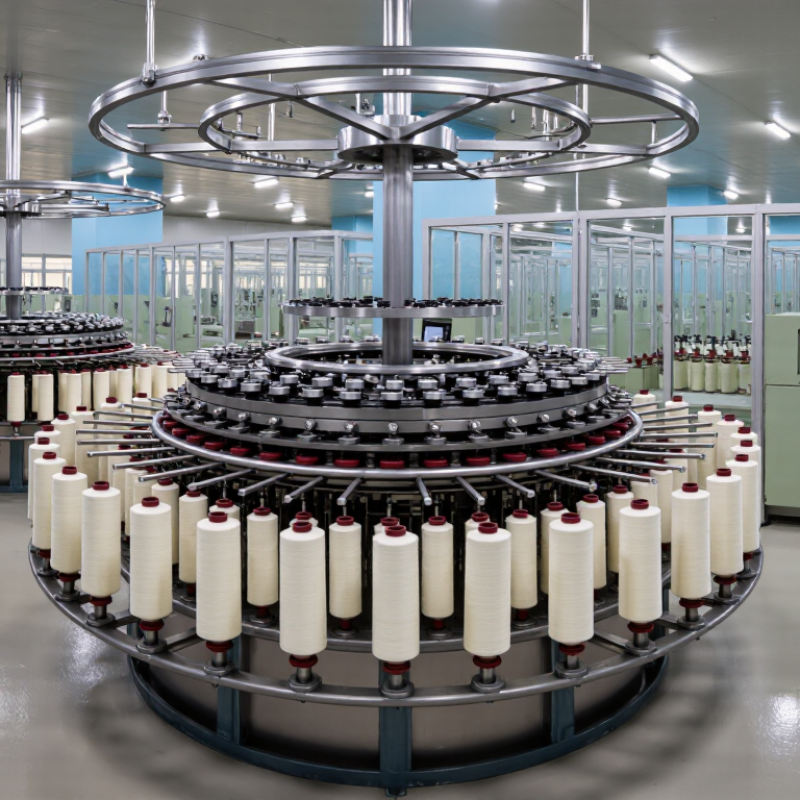
2026 Best POY Spinning and Winding Machine Manufacturers

What Is a POY Spinning and Winding Machine?

A POY spinning and winding machine converts molten polymer into continuous polyester filament yarn. POY means partially oriented yarn. Polymer chips are dried, melted, and pushed through a spinneret, forming fine filaments. Cooling air solidifies them before finish oil and controlled rollers guide the strands. The winding unit then lays yarn onto packages at a set speed and tension. A tiny defect travels. Uneven cooling, blocked spinneret holes, or unstable winding can create breaks and inconsistent packages. These may cause trouble during later drawing or texturing.

Textile Exchange’s Materials Market Report 2024 estimates global fiber production reached 124 million tonnes in 2023, with polyester representing 57% of total output. That scale helps explain why stable filament production matters, though the figure covers many fiber types and uses, not POY alone. When assessing a machine, engineers typically examine output per position, filament count, winding speed, package size, and energy use. They also check how quickly operators can thread filaments and clean the spinneret area. Real production conditions are less tidy than a specification sheet suggests. Small temperature shifts or inconsistent feedstock can affect yarn quality, so trial runs and measured operating data remain important.

How POY Spinning and Winding Processes Work

POY production begins when dried polymer chips melt and pass through a spinneret, forming fine continuous filaments. Cool air solidifies the strands as they descend. A metered finish applicator adds a thin lubricant layer to reduce friction during handling. Small changes matter.

Godet rollers guide the filaments at controlled speeds, creating partial molecular orientation without fully drawing the yarn. The winding unit then lays the yarn onto a tube, building a package with consistent density and stable edges. POY is commonly used in later drawing and texturing steps, so its properties affect downstream processing.

Operators monitor melt temperature, quench airflow, roller speed, and winding tension. A loose package may slip; excessive tension can deform the yarn or create hard edges. Not every run behaves alike. Room humidity, raw-material variation, and minor setup differences can shift results. A smooth-looking package alone does not confirm uniform filament quality. Checking package weight, unwinding behavior, and yarn consistency gives a more dependable picture, though no single check catches every defect.

2026 Best POY Spinning and Winding Machine Manufacturers - How POY Spinning and Winding Processes Work

A practical comparison framework for understanding the POY process and assessing spinning-and-winding equipment capabilities. No company or brand rankings are included.

Category Process or evaluation dimension What happens / what to assess Typical data or practical consideration
How POY Spinning and Winding Work
Feed preparation Polymer drying and melt preparation Polyester chips are dried to control moisture, then melted and conveyed to the spinning system. Moisture control helps limit polymer degradation during melt processing. Drying conditions depend on the polymer grade and supplier guidance; moisture limits and dryer performance should be verified for the intended material.
Melt spinning Extrusion and metering The polymer melt passes through an extruder, filtration components, and a metering pump before reaching the spinneret. Temperature profile, melt pressure, filtration, and throughput must be matched to the polymer, filament count, and target yarn specification.
Filament formation Spinneret and quenching The spinneret forms continuous filaments. Controlled cross-flow or radial quench air cools and solidifies them before they are gathered into a yarn bundle. Spinneret design, quench uniformity, and airflow stability influence filament consistency and yarn quality.
Yarn conditioning Finish application and yarn control A finish applicator adds a small amount of spin finish to help manage friction and downstream processing. Guides and godets control yarn path and tension. Finish type and application level should be selected for the polymer and intended downstream process; even application is important.
Partial orientation POY formation Take-up speed gives the filaments partial molecular orientation. POY is an intermediate yarn, commonly drawn or textured in a later process rather than treated as fully drawn yarn. For PET POY, take-up speeds are commonly in the approximate 2,500–3,500 m/min range; actual operating limits depend on line design and yarn specification.
Winding Package build and doffing The winding unit lays yarn onto a package while controlling traverse, contact, and winding tension. Packages are doffed for handling and subsequent processing. Package dimensions, yarn length, winding pattern, and doffing method are configuration-dependent and should be confirmed against the production plan.
Quality control Online monitoring and inspection Monitoring can identify yarn breaks, abnormal tension, package faults, or process deviations. Laboratory checks commonly include linear density and yarn evenness. Agree on test methods, sampling frequency, defect definitions, and acceptance limits before equipment acceptance testing.
How to Evaluate POY Spinning and Winding Machine Manufacturers
Product fit Yarn and polymer range Check whether the proposed line is designed for the intended polymer, filament count, linear-density range, and production mix. Request a written operating window for each target product rather than relying on a single maximum-capacity figure.
Line configuration Positions, ends, and layout Compare the number of spinning positions and yarn ends, equipment footprint, access for maintenance, and compatibility with the plant layout. Capacity depends on the complete configuration, operating hours, product mix, and planned maintenance—not just the number of positions.
Winder performance Package quality and changeover Assess winding stability, package density and shape, traverse control, yarn-break handling, doffing arrangements, and changeover time. Use sample packages or a supervised trial to verify package quality at the intended yarn specification and operating speed.
Automation Controls and process data Review recipe management, alarms, production records, data export, operator access levels, and integration with plant control systems. Confirm which functions are included, how data are stored, and whether interfaces meet the plant’s requirements.
Utilities and efficiency Energy, air, cooling, and exhaust Compare electrical load, compressed-air demand, quench-air requirements, cooling needs, and heat-management provisions. Request consumption figures with stated production conditions and system boundaries so proposals can be compared consistently.
Maintainability Spare parts and service access Check access to spinnerets, filters, godets, finish systems, and winding components, along with maintenance instructions and spare-parts availability. Clarify recommended spare-parts lists, lead times, training, warranty terms, and remote or on-site service arrangements.
Acceptance testing Performance verification Define how output, yarn quality, package quality, operating stability, and agreed utility measurements will be tested during commissioning. Set measurable acceptance criteria in advance, including test duration, product specification, sampling plan, and treatment of interruptions.

Note: Operating ranges are indicative, not universal specifications. Actual values vary with polymer grade, yarn construction, equipment configuration, ambient conditions, and process targets. Confirm limits and guarantees with the equipment supplier and polymer technical data.

Core Technologies and Performance Factors

POY spinning and winding performance depends on stable polymer flow, controlled cooling, and precise take-up. The Textile Exchange Materials Market Report 2024 estimates that polyester made up 57% of global fiber production in 2023. That scale makes consistency important: small variations in filament diameter or winding tension can affect downstream texturing and fabric quality.

Key technologies include accurate melt metering, uniform quench airflow, synchronized godet drives, and responsive tension control. On the winding side, traverse precision and package build matter as much as top speed. A practical check is to compare yarn denier variation, package hardness, broken-filament frequency, and downtime across positions during a full production shift.

One uncomfortable point: a fast line can still waste material if package edges collapse or tension drifts. Operators should review process data alongside physical package samples; neither tells the whole story.

Tips: Log temperature, pressure, and tension by position. Inspect package edges at regular intervals. Treat a single clean sample with caution. It may not represent an entire shift.

How to Evaluate POY Machine Manufacturers

When evaluating POY spinning and winding machine manufacturers, look beyond rated speed. The 2024 Textile Exchange Materials Market Report estimates global fiber production reached 124 million tonnes in 2023, with polyester making up 57 percent. That scale makes stable production and repeatable package quality essential. Ask manufacturers for test records showing denier variation, winding tension, package density, and yarn-break rates under comparable operating conditions. Numbers matter. So does seeing a full-speed trial with your own polymer and operating settings.

Check how clearly the supplier documents energy use, operator training, commissioning support, and spare-parts availability. Request references from plants running similar capacities, then ask about actual output after startup—not just the acceptance test. Inspect the control interface and maintenance access in person. A polished brochure cannot show how quickly a technician can reach a sensor behind a guard. I would also question unusually strong efficiency claims unless the measurement method and production conditions are stated.

Tips: Compare at least two trial reports using the same yarn specification and test duration. Record downtime, waste, and package defects; small differences can grow across continuous shifts. Be cautious: a machine that performs well in a demonstration may need adjustment in daily production.

Leading POY Spinning and Winding Machine Manufacturers in 2026

Leading POY spinning and winding machine manufacturers in 2026 should be judged by process fit, not brochure claims. A reliable supplier can explain how its spinning line controls melt delivery, quenching airflow, filament stability, and draw-off conditions. Ask for output ranges, denier flexibility, energy use, and changeover time under comparable polymer and yarn specifications.

Details matter.

A neat sample package cannot reveal long-run consistency. For winding systems, inspect package density, traverse performance, tension control, and automatic doffing at the intended speed. Request a factory acceptance test plan, sample production records, maintenance intervals, and a clear list of recommended spare parts.

Service response matters when a position stops; ask how remote diagnostics and technician training work in practice. Also compare utility needs, installation layout, and compatibility with downstream texturing equipment. A technically strong machine may still be a poor fit if space or operator skills are overlooked.

Not always obvious.

Manufacturer references should involve similar fiber types and operating schedules, while efficiency claims should be checked against documented test conditions. Even a careful comparison can miss practical issues that only appear during sustained production.

Copyright 2025 Fluidra S.A. | Created by BCM Marketing Agencia Privacy Policy Legal note | Cookie policy |

Technical cookies are strictly necessary for our website to work and you can navigate through it. These types of cookies are those that, for example, allow us to identify you, give you access to certain restricted parts of the page if necessary, or remember different options or services already selected by you, such as your privacy preferences. Therefore, they are activated by default, your authorization not being necessary in this regard. Through the configuration of your browser, you can block or alert the presence of this type of cookies, although such blocking will affect the proper functioning of the different functionalities of our website.


The analysis cookies allow us to study the navigation of the users of our website in general (for example, which sections of the page are the most visited, which services are used most and if they work correctly, etc.). From the statistical information on navigation on our website, we can improve both the operation of the page itself and the different services it offers. Therefore, these cookies do not have an advertising purpose, but only serve to make our website work better, adapting to our users in general. By activating them you will contribute to this continuous improvement. You can enable or disable these cookies by checking the corresponding box, being disabled by default.


Functionality cookies allow us to remember your preferences, to personalize certain characteristics and general options of our website, every time you access it (for example, the language in which the information is presented to you, the sections marked as favorites, your browser type, etc.) Therefore, this type of cookies does not have an advertising purpose, but by activating them you will improve the functionality of the website (for example, adapting to your type of browser) and the customization of it based on your preferences (for example, by presenting the information in the language that you have chosen in previous occasions), which will contribute to the ease, usability and comfort of our page during your navigation. You can enable or disable these cookies by checking the corresponding box, being disabled by default.


Advertising cookies allow us to manage the advertising spaces included in our website based on criteria such as the content shown or the frequency in which the ads are displayed. For example, if you have been shown the same ad several times on our website, and you have not shown a personal interest by clicking on it, it will not appear again. In summary, by activating this type of cookies, the advertising shown on our website will be more useful and diverse, and less repetitive. You can enable or disable these cookies by checking the corresponding box, being disabled by default.


Behavioral advertising cookies allow us to obtain information based on the observation of your browsing habits and behaviors on the web, in order to show you advertising content that best suits your personal tastes and interests. To understand it in a very simple way, we will give you a fictitious example: if your last searches on the web were related to suspense literature, we would show you advertising about suspense books. Therefore, activating this type of cookies, the advertising that we show you on our website will not be generic, but will be oriented to your searches, tastes and interests, therefore adjusting exclusively to you. You can enable or disable these cookies by checking the corresponding box, being disabled by default.
To understand it in a very simple way, we will give you a fictitious example: if your last searches on the web were related to suspense literature, we would show you advertising about suspense books. Therefore, activating this type of cookies, the advertising that we show you on our website will not be generic, but will be oriented to your searches, tastes and interests, therefore adjusting exclusively to you. You can enable or disable these cookies by checking the corresponding box, being disabled by default.

SAVE

We use our own and third-party cookies to ensure the proper functioning of the website and to analyse our services, improve your experience on our website and show you advertisements related to your interests according to profiling based on your browsing habits (e.g. websites visited). You can accept all cookies by clicking "ACCEPT" or set or reject them by clicking here. If you would like to know more about the use of cookies, please see our COOKIE POLICY.


ACCEPT ALL
Reject no essentials


