
2026 Best CNC Vertical Turning Lathes for Global Buyers
FLUID HANDLING EXPERTS

Blog, all our news

2026 Best CNC Vertical Turning Lathes for Global Buyers

Choosing among the 2026 Best Cnc Vertical Turning Lathes for Global Buyers requires more than comparing spindle power. A Cnc Vertical Turning Lathe may look impressive in a brochure, yet struggle with interrupted cuts, unstable foundations, or poor chip evacuation. Buyers should inspect the machine’s swing diameter, maximum workpiece weight, chuck design, spindle torque, tool capacity, and thermal stability. Small details matter. A hot bearing can change a precision job.

Peter Zelinski, a respected manufacturing technology editor, has repeatedly stressed a practical principle: “Automation cannot rescue a weak process.” That warning fits vertical turning. A reliable machine needs capable programming, repeatable workholding, verified tooling, and responsive service support. Ask suppliers for test-cut data, measured cycle times, energy information, and references from plants machining similar castings, rings, or large flanges. Video demonstrations help, but they do not replace an in-person acceptance test.

Global buyers should also examine controller familiarity, remote diagnostics, spare-parts access, operator training, and regional maintenance coverage. A low purchase price may become expensive when a critical encoder waits weeks for delivery. However, every ranking has limits. The “best” model depends on material, batch size, tolerance, floor space, and operator experience. I have seen technically advanced machines underperform because the fixture was poorly designed. That uncomfortable detail deserves attention. This guide compares leading options through practical capability, ownership risk, and measurable production value, helping buyers select a Cnc Vertical Turning Lathe with clearer expectations and fewer costly surprises.
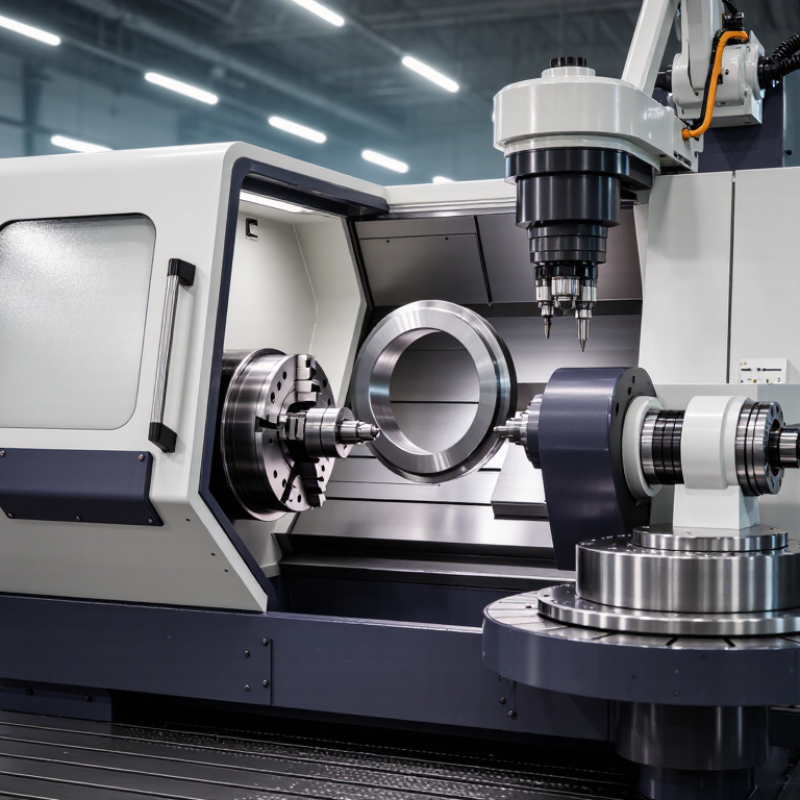
2026 Best CNC Vertical Turning Lathes for Global Buyers

What Is a CNC Vertical Turning Lathe?

A CNC vertical turning lathe is a computer-controlled machine for turning large, heavy, or wide workpieces. Its spindle holds the workpiece vertically, while cutting tools move across the rotating surface. This arrangement uses gravity to improve stability during machining. It also reduces the risk of a heavy part slipping from the chuck.

The machine commonly performs facing, outer-diameter turning, boring, grooving, and threading. A turret carries several tools and changes them according to the programmed sequence. Operators usually set cutting speed, feed rate, tool offsets, and workpiece coordinates before machining begins. Coolant helps control heat, especially when cutting steel or cast materials. On the shop floor, chip control matters more than many buyers expect. Long chips can damage surfaces and interrupt automatic operation.

For global buyers, the table diameter, maximum turning height, spindle load, and motor power deserve close attention. Accuracy also depends on foundation quality, thermal control, tool condition, and operator setup. A larger machine is not automatically better. It may consume more energy and require greater installation space. I have seen specifications look impressive while access around the turret remained awkward. That detail is easy to miss. Buyers should request test-cut data, inspection records, control compatibility, and service response times. A realistic evaluation should include the actual material, part weight, tolerance, and production volume.

2026 Best CNC Vertical Turning Lathes for Global Buyers

What Is a CNC Vertical Turning Lathe?

A CNC vertical turning lathe is a computer-controlled machine that rotates a workpiece on a vertical spindle while cutting tools perform turning, boring, facing, and grooving operations. The representative figures compare common machine-size categories by maximum turning diameter and maximum workpiece height. Actual specifications vary according to machine configuration, tooling, spindle power, and manufacturer design.

How CNC Vertical Turning Lathes Work

How CNC Vertical Turning Lathes Work

CNC vertical turning lathes hold large workpieces on a horizontal rotary table. Gravity helps seat heavy parts securely. A motor rotates the table while cutting tools move along programmed X and Z axes. The spindle encoder constantly reports rotational position. This feedback helps maintain accurate cutting speeds and synchronized movements.

A control system reads the machining program and directs each axis through servo motors. The turret selects tools for facing, boring, grooving, and turning operations. During cutting, coolant reduces heat and carries chips away from the work area.

In practical production, setup accuracy matters as much as machine capacity. A small error in chuck alignment can create visible taper, vibration, or uneven surfaces. That detail is easy to underestimate.

Tips: Check table cleanliness before clamping. Measure the workpiece twice. Use suitable jaws for its shape and weight. Confirm tool offsets with a test cut. Keep coolant flow steady. Review alarms instead of bypassing them. Operators should also inspect chips, tool wear, and surface finish during production. A perfect program can still fail when tooling is dull or the workholding is unstable. That is where careful judgment remains essential.

Key Features of the Best 2026 Models

The best 2026 CNC vertical turning lathes combine rigidity, speed, and dependable control. Their vertical layout supports heavy workpieces with less fixture stress. A broad spindle range helps machinists handle castings, flanges, and hardened steel parts. High-torque motors matter during roughing cuts. Fast acceleration reduces idle time between operations.

Look for direct-drive spindles, high-resolution encoders, and thermal compensation. These features improve positioning accuracy during long production cycles. A stable box-way or linear-guide design can reduce vibration at deeper cutting depths. Automatic tool changers should offer repeatable alignment and practical capacity. Chip evacuation also deserves attention. Wet chips around the chuck create maintenance problems quickly.

Safety and service access are equally important. Interlocked guarding, clear viewing panels, and reliable overload protection support responsible operation. Remote diagnostics may shorten downtime, but they cannot replace skilled inspection. Check spindle runout, backlash, coolant flow, and tool-change repeatability before purchase. A machine can look advanced and still perform poorly in an unsuitable workshop. Floor strength, power quality, operator training, and local service coverage often decide the real result. Some specifications seem impressive on paper. Actual test cuts may reveal heat drift, awkward access, or slower setup than expected.

How to Compare CNC Vertical Turning Lathes

2026 Best CNC Vertical Turning Lathes for Global Buyers

How to Compare CNC Vertical Turning Lathes

Comparing CNC vertical turning lathes requires more than checking maximum diameter. Start with the work envelope, chuck capacity, spindle speed, and continuous torque. A large table may look impressive, yet insufficient torque can reduce cutting stability on heavy steel parts. Check axis travel against your largest planned component, including tool clearance and fixture height. Thermal compensation also matters during long production cycles. Ask for measured accuracy results, not only brochure values.

Practical evaluations should include test cuts using similar materials, tooling, and tolerances. Inspect surface finish, chip control, tool changes, and cycle time. Review the machine’s electrical requirements, floor loading, coolant arrangement, and operator access. Global buyers should confirm documentation, training, spare-part availability, and local service response. A machine that performs well but lacks support can become expensive downtime.

Tips: Request a machining trial before purchase. Compare torque charts at working speeds. Check maintenance access around the spindle and enclosure. Verify software compatibility with your existing programs. Do not ignore noise, vibration, or chip evacuation. These details affect daily productivity. One common mistake is choosing maximum capacity over actual production needs. A smaller, rigid machine may perform better for repeated medium-sized parts. Still, specifications can be difficult to compare fairly, because manufacturers may use different test conditions. Ask clear questions, record assumptions, and have an experienced machinist review the final proposal.

Buying Considerations for Global Buyers

When buying a CNC vertical turning lathe in 2026, global buyers should match the machine to real production conditions. Check maximum turning diameter, workpiece height, table load, spindle torque, and tool capacity. A large swing is not enough if the table cannot hold heavy castings safely. Ask for test-cut results using material similar to yours. Steel, stainless steel, and heat-resistant alloys can expose weaknesses quickly.

Power supply deserves careful attention. Confirm voltage, frequency, grounding requirements, and local installation rules before signing a purchase order. Also review positioning accuracy, repeatability, coolant capacity, chip evacuation, and thermal stability. A machine that performs well in a showroom may behave differently in a hot workshop with continuous shifts. I have seen buyers focus on speed and underestimate maintenance access. That mistake becomes expensive.

Service capability can decide the purchase. Request electrical drawings, operating manuals, spare-parts lists, remote support procedures, and operator training details. Clarify response times, warranty coverage, packaging protection, shipping terms, and installation responsibility. Ask for references from factories with comparable workloads, not only impressive facilities. Calculate total ownership cost, including tooling, energy, software updates, inspection equipment, and downtime. The cheapest quotation may not be the safest choice. Still, premium features can remain unused. Review your process honestly, and leave room for future work without buying capacity you cannot justify.

Copyright 2025 Fluidra S.A. | Created by BCM Marketing Agencia Privacy Policy Legal note | Cookie policy |

Technical cookies are strictly necessary for our website to work and you can navigate through it. These types of cookies are those that, for example, allow us to identify you, give you access to certain restricted parts of the page if necessary, or remember different options or services already selected by you, such as your privacy preferences. Therefore, they are activated by default, your authorization not being necessary in this regard. Through the configuration of your browser, you can block or alert the presence of this type of cookies, although such blocking will affect the proper functioning of the different functionalities of our website.


The analysis cookies allow us to study the navigation of the users of our website in general (for example, which sections of the page are the most visited, which services are used most and if they work correctly, etc.). From the statistical information on navigation on our website, we can improve both the operation of the page itself and the different services it offers. Therefore, these cookies do not have an advertising purpose, but only serve to make our website work better, adapting to our users in general. By activating them you will contribute to this continuous improvement. You can enable or disable these cookies by checking the corresponding box, being disabled by default.


Functionality cookies allow us to remember your preferences, to personalize certain characteristics and general options of our website, every time you access it (for example, the language in which the information is presented to you, the sections marked as favorites, your browser type, etc.) Therefore, this type of cookies does not have an advertising purpose, but by activating them you will improve the functionality of the website (for example, adapting to your type of browser) and the customization of it based on your preferences (for example, by presenting the information in the language that you have chosen in previous occasions), which will contribute to the ease, usability and comfort of our page during your navigation. You can enable or disable these cookies by checking the corresponding box, being disabled by default.


Advertising cookies allow us to manage the advertising spaces included in our website based on criteria such as the content shown or the frequency in which the ads are displayed. For example, if you have been shown the same ad several times on our website, and you have not shown a personal interest by clicking on it, it will not appear again. In summary, by activating this type of cookies, the advertising shown on our website will be more useful and diverse, and less repetitive. You can enable or disable these cookies by checking the corresponding box, being disabled by default.


Behavioral advertising cookies allow us to obtain information based on the observation of your browsing habits and behaviors on the web, in order to show you advertising content that best suits your personal tastes and interests. To understand it in a very simple way, we will give you a fictitious example: if your last searches on the web were related to suspense literature, we would show you advertising about suspense books. Therefore, activating this type of cookies, the advertising that we show you on our website will not be generic, but will be oriented to your searches, tastes and interests, therefore adjusting exclusively to you. You can enable or disable these cookies by checking the corresponding box, being disabled by default.
To understand it in a very simple way, we will give you a fictitious example: if your last searches on the web were related to suspense literature, we would show you advertising about suspense books. Therefore, activating this type of cookies, the advertising that we show you on our website will not be generic, but will be oriented to your searches, tastes and interests, therefore adjusting exclusively to you. You can enable or disable these cookies by checking the corresponding box, being disabled by default.

SAVE

We use our own and third-party cookies to ensure the proper functioning of the website and to analyse our services, improve your experience on our website and show you advertisements related to your interests according to profiling based on your browsing habits (e.g. websites visited). You can accept all cookies by clicking "ACCEPT" or set or reject them by clicking here. If you would like to know more about the use of cookies, please see our COOKIE POLICY.


ACCEPT ALL
Reject no essentials


