
Choosing the 2026 best Chemical Blending Tank manufacturers requires more than comparing catalog prices. A reliable supplier should understand viscosity, temperature, corrosion risks, batch volume, and cleaning demands. These details directly affect tank design, mixer selection, and long-term operating costs.
Experienced manufacturers usually provide stainless steel or lined vessels, engineered agitators, accurate load cells, and practical control systems. They should explain material compatibility clearly. They should also offer drawings, weld inspection records, factory testing, and traceable component documentation. Strong technical support matters when a tank must blend powders, liquids, or temperature-sensitive formulations consistently.
Look closely at real project experience. Ask whether the manufacturer has handled similar viscosities and production scales. A photograph of a polished tank proves little. Process data, reference projects, commissioning support, and measurable mixing results offer stronger evidence. Hygienic designs, accessible spray balls, drainability, and validated cleaning procedures may be essential in regulated facilities.
Small details matter.
However, no manufacturer is automatically the best for every application. Some suppliers excel at custom engineering but provide slower delivery. Others offer competitive pricing but limited after-sales assistance. Buyers should question vague performance claims and incomplete quotations. Even experienced teams can overlook maintenance access or future capacity changes. A careful comparison of engineering quality, manufacturing discipline, documentation, service response, and total ownership cost can reveal the most suitable partner for 2026. This guide examines those factors with a practical and critical perspective.
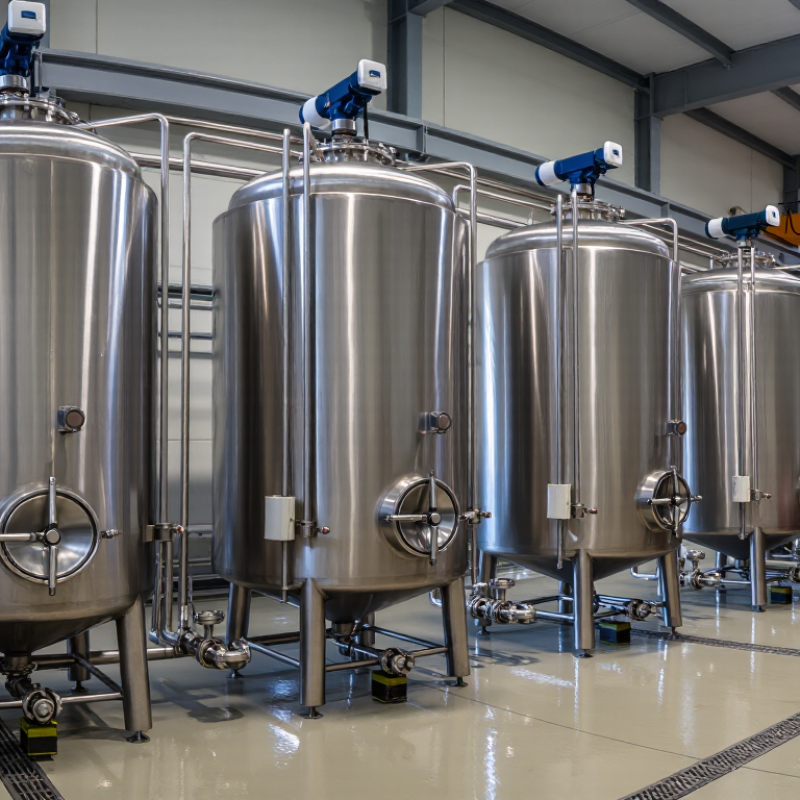
Chemical blending tanks are not one-size-fits-all equipment. Their design depends on viscosity, temperature, concentration, and mixing intensity. A low-viscosity solution may need a simple vertical tank with a pitched-blade impeller. Thick polymers or suspensions often require anchor agitators, baffles, and stronger drive systems.
Material selection deserves careful attention. Stainless steel suits many aqueous chemicals, while polypropylene, polyethylene, or fiberglass-reinforced plastic can resist specific corrosive environments. Compatibility charts help, but they should not replace real process testing. A small sample can reveal swelling, discoloration, or unexpected contamination. That detail is easy to miss.
For 2026 purchasing decisions, evaluate more than tank price. Ask manufacturers for weld inspection records, material certificates, pressure or leak-test results, and agitator performance data. Confirm usable volume, drainability, heating or cooling control, and access for cleaning. Digital sensor integration is increasingly valuable for tracking temperature, speed, level, and batch history.
Reliable manufacturers explain their assumptions. Be cautious when specifications look perfect but omit operating limits. One overlooked issue is scale-up: a mixer that performs well in a pilot tank may create dead zones in production equipment. Request process calculations, factory acceptance testing, installation guidance, and service response terms. Review the documentation with operators, not only purchasing staff. Their practical feedback often exposes maintenance problems before commissioning.

When comparing chemical blending tank manufacturers in 2026, mixing speed should not be judged alone. A 20 RPM test may suit gentle blending, but it can hide weak circulation near the tank wall. At 100 RPM, many water-like liquids mix efficiently with moderate power demand. Higher speeds can improve dispersion, yet they may also create foam, heat, and unnecessary shear.
Viscosity changes the entire calculation. Thin liquids often respond well to smaller impellers and lower torque. Thick syrups, gels, and polymer solutions need stronger shafts, wider blades, and more motor capacity. At 500 RPM, a high-viscosity batch may overload the drive quickly. Power demand rises with torque and speed. It is not a simple “faster is better” decision. Ask manufacturers for performance curves, motor service factors, and test results using a fluid close to your actual formula.
Real evaluation should include trials at 20, 50, 100, 250, and 500 RPM. Record blend time, temperature increase, current draw, and visible dead zones. Watch the bottom carefully. That is where incomplete mixing often hides. A polished datasheet can still mislead when the test fluid is too thin. I have seen apparently efficient systems perform poorly after scale-up. Tank diameter, liquid height, impeller position, and batch volume all matter. Reliable manufacturers explain these limits clearly and support recommendations with repeatable testing, not only attractive specifications.
| Configuration | Working Volume | Tank Diameter | Agitator Type | Speed Range | Test Speed | Process Viscosity | Motor Power | Specific Power | Blend Time | Mixing Assessment |
|---|---|---|---|---|---|---|---|---|---|---|
| A — Low-Shear Anchor | 500 L | 900 mm | Anchor with wall scrapers | 20–60 rpm | 20 rpm | 1,000 mPa·s | 2.2 kW | 4.4 kW/m³ | 18 min | Excellent for viscous products |
| B — Helical Ribbon | 500 L | 900 mm | Double helical ribbon | 20–80 rpm | 40 rpm | 2,500 mPa·s | 4.0 kW | 8.0 kW/m³ | 14 min | High-viscosity blending |
| C — Pitched-Blade Turbine | 1,000 L | 1,150 mm | Four-blade pitched turbine | 40–180 rpm | 80 rpm | 100 mPa·s | 5.5 kW | 5.5 kW/m³ | 9 min | Balanced solids suspension |
| D — Hydrofoil Impeller | 1,000 L | 1,150 mm | Three-blade hydrofoil | 60–220 rpm | 120 rpm | 25 mPa·s | 3.0 kW | 3.0 kW/m³ | 6 min | Low-power liquid blending |
| E — High-Shear Rotor-Stator | 250 L | 700 mm | Rotor-stator disperser | 500–3,000 rpm | 500 rpm | 50 mPa·s | 7.5 kW | 30.0 kW/m³ | 4 min | Rapid dispersion; high power demand |
| F — High-Speed Disperser | 500 L | 900 mm | Disc turbine disperser | 100–1,200 rpm | 500 rpm | 250 mPa·s | 11.0 kW | 22.0 kW/m³ | 7 min | Strong powder wet-out performance |
| G — Dual-Shaft Hybrid | 1,000 L | 1,150 mm | Anchor plus high-speed disperser | 20–500 rpm | 20 / 500 rpm | 1,500 mPa·s | 18.5 kW | 18.5 kW/m³ | 10 min | Wide viscosity and shear range |
| H — Vacuum Homogenizing Mixer | 300 L | 800 mm | Scraper anchor with bottom homogenizer | 20–500 rpm | 30 / 500 rpm | 5,000 mPa·s | 22.0 kW | 73.3 kW/m³ | 16 min | Suitable for demanding viscous batches |
| I — Marine-Propeller Mixer | 2,000 L | 1,450 mm | Axial-flow propeller | 20–120 rpm | 60 rpm | 10 mPa·s | 4.0 kW | 2.0 kW/m³ | 8 min | Efficient for low-viscosity liquids |
| J — Static-Dynamic Hybrid | 1,000 L | 1,150 mm | Low-speed anchor with recirculation loop | 20–180 rpm | 50 rpm | 800 mPa·s | 7.5 kW | 7.5 kW/m³ | 12 min | Good uniformity with moderate energy use |
| Indicative engineering comparison for water-based chemical formulations. Actual performance varies with tank geometry, fill level, impeller diameter, baffle design, temperature, density, solids loading, and rheology. Power values represent approximate installed motor ratings rather than guaranteed absorbed power. | ||||||||||
2026 Best Chemical Blending Tank Manufacturers?
The strongest suppliers should explain material selection clearly, not simply advertise capacity. In practical evaluations, tank life depends on chemical concentration, temperature, mixing speed, and cleaning routines.
HDPE offers good corrosion resistance and economical fabrication. It suits many ambient-temperature blending applications. However, it can deform under heat or heavy mechanical loads. That limitation is easy to overlook.
PP generally tolerates higher temperatures than HDPE and remains resistant to many aggressive chemicals. It is useful for process tanks requiring greater thermal stability.
FRP provides strong structural performance with a corrosion-resistant resin barrier. Its quality depends heavily on resin choice, laminate thickness, and workmanship. Poorly controlled fabrication can create hidden weaknesses. Inspection matters.
316L stainless steel supports demanding hygienic processes and repeated cleaning cycles. Its smooth surface is valuable where contamination control matters. Still, it is not universally resistant to every chemical, especially under chloride-rich conditions. Weld quality, passivation, and surface finish require documented checks.
A reliable manufacturer should provide material certificates, weld inspection records, load calculations, and relevant testing evidence. Ask for application references with similar chemistry and operating temperatures.
Details matter more than polished brochures. Fit matters. Measure twice.
During selection, I would also question maintenance access, agitator sealing, nozzle placement, and future capacity changes. These practical points are sometimes treated as minor, but they often determine whether the tank performs well after installation.
2026 Best Chemical Blending Tank Manufacturers?
A qualified chemical blending tank manufacturer should demonstrate more than polished documentation. ASME Section VIII certification supports pressure-vessel design, welding control, inspection, and traceable material records. Ask for the authorized inspection report, not only a certificate copy. ISO 9001 matters differently. It evaluates repeatable processes, corrective actions, supplier control, and customer feedback. The ISO Survey of Management System Standard Certifications 2022 recorded 1,265,216 ISO 9001 certificates worldwide. Quantity does not guarantee quality.
ATEX compliance is essential when tanks operate near flammable vapors or dust. The manufacturer should identify equipment zones, ignition risks, electrical ratings, and grounding methods. Request the explosion-protection assessment. Vague wording is a warning sign. GMP compliance becomes critical for pharmaceutical, biotech, and selected food applications. Look for hygienic welds, drainability, validated cleaning procedures, batch traceability, and documented change control. WHO Technical Report Series guidance emphasizes controlled production and reliable records.
Details reveal experience. Check whether the agitator seal, spray ball, temperature probe, and inspection port match the actual process. A tank may meet ASME requirements but still create dead legs during cleaning. That gap is easy to miss. Factory acceptance testing should include pressure checks, rotation tests, surface-finish verification, and document review. I would also question suppliers that promise universal ATEX or GMP suitability. Compliance depends on design, installation, use, and site conditions. Some manufacturers learn this too late.
This chart compares the primary scope of four qualification frameworks commonly reviewed when selecting chemical blending tank manufacturers. A value of 1 indicates that the framework directly addresses the listed qualification area; a value of 0 indicates that it is not the framework’s primary purpose.
References: ASME Boiler and Pressure Vessel Code Section VIII for pressure vessels; ISO 9001:2015 for quality management systems; ATEX Directive 2014/34/EU for equipment used in potentially explosive atmospheres; EU GMP requirements for medicinal-product manufacturing.
Selecting a chemical blending tank manufacturer in 2026 requires more than comparing catalog prices. For 50–100,000 L vessels, capacity changes transport, fabrication, installation, and inspection demands. Smaller 50–500 L tanks may ship within 8–12 weeks when standard fittings are available. Large tanks often require 16–28 weeks, especially with custom agitators, liners, heating coils, or load cells. These are planning ranges, not promises. Site visits and previous project records reveal more than polished brochures.
Cost should be separated into purchase price and operating cost. A 50 L unit may have a modest entry price, but inefficient mixing can raise power use and batch time. At 100,000 L, agitator geometry, motor efficiency, and cleaning access can influence total ownership cost for years. Ask for a signed scope covering weld quality, surface finish, material certificates, pressure limits, testing, spare parts, and commissioning. Suppliers that explain exclusions clearly are easier to audit. Vague quotations are a warning.
In practical evaluations, compare three like-for-like offers. Use identical volume, fluid viscosity, temperature, corrosion conditions, and delivery terms. Request references for tanks operating in similar service. One lesson from project reviews is uncomfortable: the lowest bid often excludes insulation, controls, or site support. Not always. Check the evidence. Review change-order history, factory acceptance procedures, and response times after delivery. Allow contingency for civil work and utilities. I would challenge every 2026 lead-time estimate twice, because supply conditions can shift.

Cepex is the brand for the fluid handling market belonging to the Fluidra group. One of the leading european manufacturer of valves and fittings in thermoplastic materials.
Dedicated to the swimming pool, irrigation and industrial markets, we distribute our products worldwide with the Fluidra commercial network and presence in 46 countries with 136 sales branches.


