
2026 Top Aluminium Melting Pot Types Which One Is Best?
FLUID HANDLING EXPERTS

Blog, all our news

2026 Top Aluminium Melting Pot Types Which One Is Best?

Choosing the right aluminium melting pot in 2026 is not simply a matter of price or maximum capacity. Foundries, workshops, and serious hobby users face different heat levels, alloy compositions, production volumes, and maintenance demands. A pot that performs well for small casting batches may fail under repeated industrial cycles.

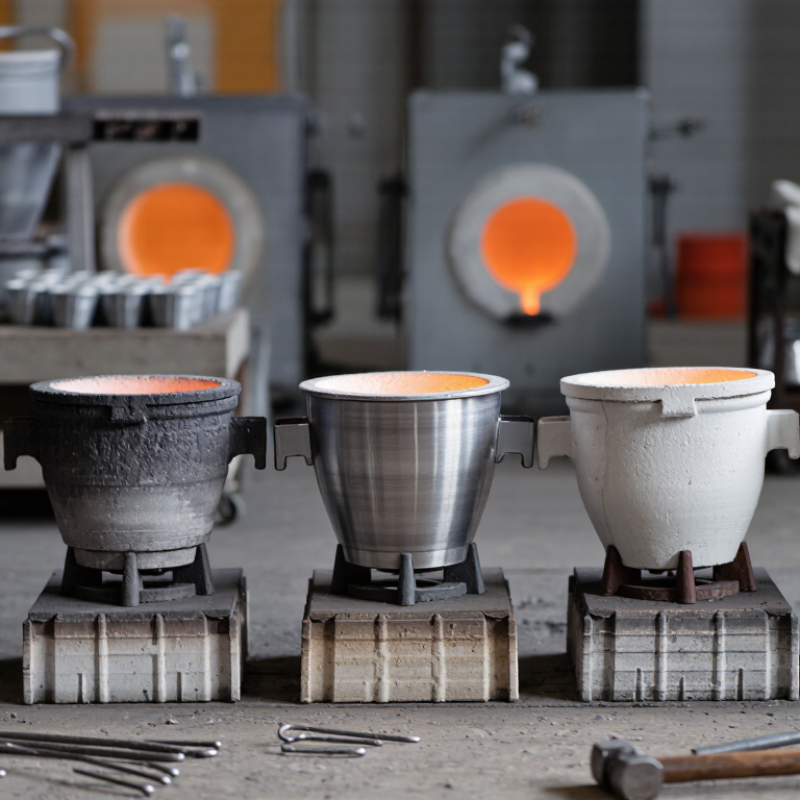
The main options include graphite, cast iron, steel, ceramic, and specialized refractory pots. Each material responds differently to thermal shock, oxidation, abrasion, and contamination. Graphite heats efficiently and supports clean pours, but it can crack when handled roughly. Steel offers strength and affordability, yet it may corrode faster when temperature control is poor. Ceramic provides excellent chemical resistance, although sudden heating can damage its structure.

John Campbell, a leading casting metallurgist and author, stated, “The quality of a casting is determined by the quality of the liquid metal.” His observation remains highly relevant when comparing every aluminium melting pot. A reliable choice must support stable temperature control, safe lifting, consistent wall thickness, and easy inspection. Capacity matters too. Oversizing a pot can waste energy and increase oxidation.

The perfect option does not exist.

My practical view is slightly less tidy. Users often focus on melting speed and ignore preheating, cleaning, or pouring technique. That mistake can shorten pot life and reduce casting quality. This guide compares each type through real operating conditions, including repeated heating, alloy cleanliness, operator experience, and total ownership cost. The best aluminium melting pot is the one that matches the process, not merely the advertised specification.
2026 Top Aluminium Melting Pot Types Which One Is Best?

2026 Aluminium Melting Pot Types: Materials, Uses, and the 660.3°C Melting Point

Choosing an aluminium melting pot starts with heat behavior, not appearance. Pure aluminium melts at about 660.3°C, but alloys melt across a wider temperature range. A working temperature near 700–750°C usually provides useful fluidity without excessive overheating.

Cast iron pots suit occasional melting and moderate production. They are tough, affordable, and resistant to rough handling. However, they heat slowly and may introduce iron contamination over time.

Graphite pots transfer heat efficiently and resist many aluminium alloys. They also help reduce sticking. Their weakness is brittleness, especially after sudden temperature changes. Handle them carefully.

Silicon carbide pots offer strong thermal shock resistance and good durability for repeated furnace cycles. Ceramic options can perform well at controlled temperatures, although poor preheating may cause cracking. I have found pot condition more important than a low purchase price. A hairline crack can become serious when the metal reaches 700°C.

Keep the charge clean and dry. Moisture can expand violently when trapped under molten metal. Fill the pot only to a controlled level, leaving space for movement and dross. Inspect the rim, base, and inner wall before every use. The “best” pot depends on alloy chemistry, batch size, heating method, and how often the furnace runs. That choice deserves careful testing.

Steel and Cast-Iron Pots: Performance at Aluminium’s 700–800°C Working Range

2026 Top Aluminium Melting Pot Types: Which One Is Best?

Aluminium melts at about 660°C, according to World Aluminium’s recycling data. Practical melting usually runs at 700–800°C. At this range, steel and cast iron both offer useful strength. Neither material is automatically superior.

Cast iron holds heat well. Its higher thermal mass can reduce temperature swings during repeated pours. ASM Handbook, Volume 15, notes that ferrous crucible materials must resist thermal shock, oxidation, and chemical interaction with molten metals. Cast iron performs steadily, but it is heavy and less forgiving. Rapid cooling may cause cracking. Surface wear can also release iron into the melt.

Steel pots are usually lighter and easier to handle. Their toughness helps absorb knocks and uneven heating. However, thin steel sections can lose heat quickly. Oxidation becomes more noticeable near the upper end of the working range. The International Aluminium Institute reports that aluminium quality depends strongly on temperature control and contamination management. That detail matters. A rough, oxidized interior may affect casting quality.

For long production cycles, cast iron often gives better thermal stability. Steel can suit smaller batches and frequent movement. I would not call either perfect. Pot thickness, alloy grade, preheating, and pouring speed can change the result more than the material name. Temperature monitoring remains essential. Celsius readings alone may not reveal local hot spots.

Graphite and Clay-Graphite Crucibles: Thermal Shock and Chemical Resistance

2026 Top Aluminium Melting Pot Types: Which One Is Best?

Graphite and clay-graphite crucibles remain strong choices for aluminium melting. Graphite transfers heat quickly, reducing cold spots around the charge. It also handles sudden temperature changes better than many ceramic alternatives. That matters when a cool ingot enters a hot furnace. Still, graphite can oxidize in open air, especially during repeated high-temperature cycles. Its surface may slowly thin. Small flaws can become serious after many heats.

Clay-graphite crucibles offer a useful balance between thermal shock resistance and chemical protection. Their clay content strengthens the structure, while graphite improves heat transfer. They usually resist molten aluminium well under controlled conditions. However, aggressive fluxes can attack the ceramic binder and create surface erosion. Excessive stirring can worsen this damage. Keep tools clean and avoid scraping the walls.

Dry storage is essential. Moisture can turn into dangerous steam during preheating. A gradual heat-up schedule is safer than placing a cold crucible into maximum heat. In practical furnace work, preheating also reveals hairline cracks before charging metal. Do not ignore them. I have seen service life vary widely, even with similar crucibles. Furnace atmosphere, handling habits, alloy chemistry, and flux use all matter. A thicker crucible is not automatically better. It may heat more slowly and increase fuel use. Check wall condition regularly, record each melt, and replace the vessel when cracking or deep erosion appears.

2026 Top Aluminium Melting Pot Types Which One Is Best? - Graphite and Clay-Graphite Crucibles: Thermal Shock and Chemical Resistance

Crucible Type Typical Material Structure Recommended Aluminium Service Range Thermal Shock Resistance Chemical Resistance to Molten Aluminium Oxidation Concern Best-Suited Application
Graphite High-purity or carbon-bonded graphite 700–1,200 °C Excellent Very good High in air Frequent melting cycles, rapid heat-up operations, and applications requiring strong resistance to thermal gradients
Clay-Graphite Graphite combined with fire clay and ceramic bonding phases 700–1,200 °C Very good Very good Moderate General-purpose aluminium melting, foundry work, and operations needing a balance of durability and cost
Silicon Carbide Silicon carbide grains with ceramic or carbon-based bonding 700–1,300 °C Excellent Excellent Moderate High-throughput foundries, repeated heating cycles, and applications demanding high mechanical strength
Cast Iron or Steel Ferrous metal body, often protected with a refractory coating 700–1,000 °C Good Fair to good Low Heavy-duty furnaces where impact resistance and structural strength are more important than maximum thermal efficiency
Refractory Ceramic Alumina, mullite, or other high-temperature oxide ceramics 700–1,200 °C Fair Excellent Very low Clean melting environments and processes where contamination control is more important than resistance to sudden temperature changes
Selection guide: Graphite is generally the best choice for maximum thermal-shock resistance and fast cycling. Clay-graphite is often the most balanced option for routine aluminium melting because it combines good thermal-shock performance, chemical resistance, and practical durability. Actual service life depends on crucible design, wall thickness, furnace atmosphere, fluxes, handling, heating rate, and operating temperature.
Temperature figures are typical aluminium-service ranges, not universal material limits. Aluminium melts at approximately 660 °C, while normal casting temperatures are commonly higher depending on alloy and process requirements.

Silicon-Carbide Crucibles: 1,400°C-Class Service and Aluminium Compatibility

2026 Top Aluminium Melting Pot Types: Which One Is Best?

For aluminium melting, silicon-carbide crucibles deserve serious attention. Their 1,400°C-class service rating provides broad thermal headroom, while aluminium melts near 660°C. This margin supports demanding furnace cycles and helps reduce damage from sudden temperature changes. However, the rating is not a permission to operate continuously at maximum heat. Real service life depends on furnace atmosphere, heating speed, metal cleanliness, and handling.

Silicon-carbide construction also offers useful thermal conductivity, helping heat move through the crucible wall more evenly. Aluminium generally works well with suitable silicon-carbide grades, but compatibility is never automatic. Flux residues, oxide buildup, and overheating can attack the surface. I would inspect the interior after every serious cycle. Small cracks, rough patches, or unusual metal sticking deserve attention. The choice is not perfect. A careless preheating routine can ruin a good crucible faster than normal production.

Tips: Preheat gradually and keep the crucible dry. Avoid dropping ingots into a hot vessel. Use clean aluminium, remove dross carefully, and never scrape the wall aggressively. Keep the crucible supported on a stable base. Record heating time and visible changes after each batch; those simple notes often reveal problems before failure. Temperature readings can also mislead when the sensor sits far from the crucible.

Choosing the Best Pot: Capacity, Efficiency, Safety, and EN 746-2 Criteria

2026 Top Aluminium Melting Pot Types: Which One Is Best?

Choosing the best aluminium melting pot starts with capacity, not price. A gas-fired crucible pot suits flexible, small-batch production. An electric resistance pot offers cleaner temperature control and quieter operation. An induction pot melts quickly, but it needs stable electrical supply and skilled maintenance. Tilting pots improve pouring control for heavier batches. Avoid filling the vessel completely. Headspace is necessary for dross, thermal expansion, and safer skimming.

Efficiency also depends on charge preparation. Clean, dry aluminium reduces heat loss and contamination. The International Aluminium Institute reports that recycled aluminium requires about 5% of the energy used for primary aluminium production. That figure does not mean every melting cycle is efficient. Poor insulation, open lids, and long holding times can erase the advantage. A smaller pot may perform better than an oversized one.

Tips: Check actual batch weight, melting time, holding demand, and available power. Record kilograms melted per kilowatt-hour or fuel unit. Then compare results. Safety deserves equal attention. EN 746-2 addresses combustion systems, fuel trains, flame supervision, purge sequences, and safety interlocks. Installations should also control fumes and prevent water contact with molten metal. A compliant design can still fail through weak training or skipped inspections. That is the uncomfortable part. Select a pot only after reviewing risk assessments, maintenance access, emergency isolation, and documented test records.

Article Source:

Copyright 2025 Fluidra S.A. | Created by BCM Marketing Agencia Privacy Policy Legal note | Cookie policy |

Technical cookies are strictly necessary for our website to work and you can navigate through it. These types of cookies are those that, for example, allow us to identify you, give you access to certain restricted parts of the page if necessary, or remember different options or services already selected by you, such as your privacy preferences. Therefore, they are activated by default, your authorization not being necessary in this regard. Through the configuration of your browser, you can block or alert the presence of this type of cookies, although such blocking will affect the proper functioning of the different functionalities of our website.


The analysis cookies allow us to study the navigation of the users of our website in general (for example, which sections of the page are the most visited, which services are used most and if they work correctly, etc.). From the statistical information on navigation on our website, we can improve both the operation of the page itself and the different services it offers. Therefore, these cookies do not have an advertising purpose, but only serve to make our website work better, adapting to our users in general. By activating them you will contribute to this continuous improvement. You can enable or disable these cookies by checking the corresponding box, being disabled by default.


Functionality cookies allow us to remember your preferences, to personalize certain characteristics and general options of our website, every time you access it (for example, the language in which the information is presented to you, the sections marked as favorites, your browser type, etc.) Therefore, this type of cookies does not have an advertising purpose, but by activating them you will improve the functionality of the website (for example, adapting to your type of browser) and the customization of it based on your preferences (for example, by presenting the information in the language that you have chosen in previous occasions), which will contribute to the ease, usability and comfort of our page during your navigation. You can enable or disable these cookies by checking the corresponding box, being disabled by default.


Advertising cookies allow us to manage the advertising spaces included in our website based on criteria such as the content shown or the frequency in which the ads are displayed. For example, if you have been shown the same ad several times on our website, and you have not shown a personal interest by clicking on it, it will not appear again. In summary, by activating this type of cookies, the advertising shown on our website will be more useful and diverse, and less repetitive. You can enable or disable these cookies by checking the corresponding box, being disabled by default.


Behavioral advertising cookies allow us to obtain information based on the observation of your browsing habits and behaviors on the web, in order to show you advertising content that best suits your personal tastes and interests. To understand it in a very simple way, we will give you a fictitious example: if your last searches on the web were related to suspense literature, we would show you advertising about suspense books. Therefore, activating this type of cookies, the advertising that we show you on our website will not be generic, but will be oriented to your searches, tastes and interests, therefore adjusting exclusively to you. You can enable or disable these cookies by checking the corresponding box, being disabled by default.
To understand it in a very simple way, we will give you a fictitious example: if your last searches on the web were related to suspense literature, we would show you advertising about suspense books. Therefore, activating this type of cookies, the advertising that we show you on our website will not be generic, but will be oriented to your searches, tastes and interests, therefore adjusting exclusively to you. You can enable or disable these cookies by checking the corresponding box, being disabled by default.

SAVE

We use our own and third-party cookies to ensure the proper functioning of the website and to analyse our services, improve your experience on our website and show you advertisements related to your interests according to profiling based on your browsing habits (e.g. websites visited). You can accept all cookies by clicking "ACCEPT" or set or reject them by clicking here. If you would like to know more about the use of cookies, please see our COOKIE POLICY.


ACCEPT ALL
Reject no essentials


