10 Best Biosafety Isolators for Global Buyers?
FLUID HANDLING EXPERTS

Blog, all our news

10 Best Biosafety Isolators for Global Buyers?

Choosing the right Biosafety Isolator is a practical decision, not a simple equipment comparison. Global buyers must examine containment performance, airflow stability, glove integrity, decontamination methods, and service support.

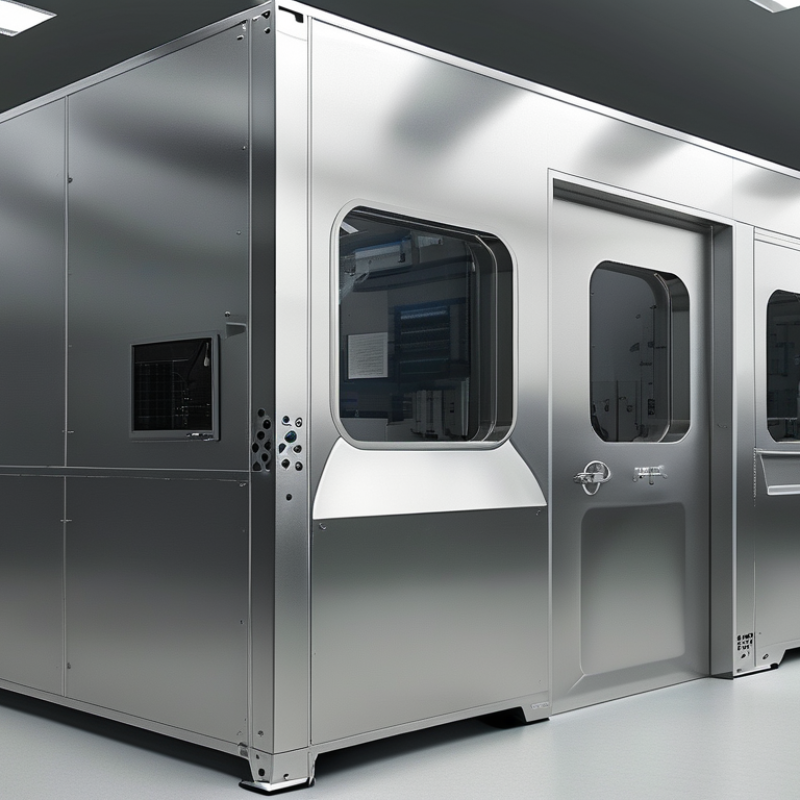
A useful principle from biosafety specialist Dr. Ronald L. St. John is: “Biosafety is a shared responsibility.” That idea matters inside every isolator. A stainless-steel chamber may look impressive, but protection depends on trained operators, validated procedures, and consistent maintenance. Even a strong model can fail when gloves are damaged or alarms are ignored.

This guide reviews 10 Best Biosafety Isolators for Global Buyers, with attention to real operating conditions. It considers pharmaceutical production, cell processing, diagnostic work, and research environments. Each application creates different pressures. A high-throughput laboratory may prioritize rapid transfer systems. A smaller facility may value simple controls and accessible servicing.

Look closely at the details. Can the viewing window remain clear during long runs? Are glove ports comfortable after repeated use? Does the isolator recover quickly after a door cycle? These questions reveal more than glossy specifications.

No ranking is perfect. Buyer priorities differ.

Some suppliers publish limited performance data. That deserves careful review. Independent testing, documented validation, and responsive technical support should influence the final decision. Price matters, but downtime, replacement gloves, filter changes, and operator training also shape the real cost.

The strongest Biosafety Isolator is not always the most expensive. It is the model that matches the hazard assessment, workflow, facility, and people using it. Reliable containment begins with honest evaluation.

10 Best Biosafety Isolators for Global Buyers?

Define Biosafety Isolators by BSL-2, BSL-3, and EN 12469 Requirements

10 Best Biosafety Isolators for Global Buyers?

Biosafety isolators should be defined by risk, not appearance or marketing claims. For BSL-2 work, buyers often need controlled access, HEPA-filtered airflow, sealed work zones, and reliable glove ports. A Class II cabinet may be sufficient for routine procedures, while an isolator can add protection during aerosol-generating tasks. Risk comes first.

BSL-3 applications demand tighter engineering controls. Look for inward airflow, monitored pressure differentials, secure transfer systems, and exhaust filtration suited to the facility design. The isolator should support validated decontamination, safe waste removal, and continuous alarm functions. Operators also need clear procedures for glove changes, filter replacement, and power failure. Small gaps matter.

EN 12469 provides performance requirements and testing principles for microbiological safety cabinets, including containment, airflow, and protection testing. It should not be treated as a universal certificate for every isolator configuration. Buyers should request independent test records, airflow visualization, filter integrity results, and commissioning data. Ask who performs annual verification. Then check the test method. Specifications can look precise but still miss practical details, such as awkward loading ports or difficult cleaning corners. That is where procurement decisions sometimes fail. A capable supplier should explain limitations openly, provide service documentation, and align the equipment with local facility requirements, user training, and documented biological risk assessments.

Compare HEPA H14 Filtration at 99.995% MPPS Efficiency

For global buyers, biosafety isolators should be judged by filtration performance, not appearance alone. A HEPA H14 filter offers 99.995% efficiency at the most penetrating particle size, commonly called MPPS. This test point matters because particles of different sizes behave differently in moving air. A higher rating does not automatically guarantee safe operation.

In practical evaluations, inspect the filter certificate, test method, and factory leak-test records. Ask whether the complete isolator, not only the filter media, has passed integrity testing. Airflow should remain stable around gloves, transfer chambers, and work surfaces. Watch the pressure gauge closely. A small pressure drift may signal loading, a poor seal, or maintenance needs.

Cabinet design also affects real protection. Smooth internal corners reduce residue collection, while clear viewing panels help operators notice spills quickly. Reliable alarms should identify low airflow and pressure changes without creating constant false warnings. Certification is valuable, but daily procedures matter more. A perfect number on paper is not enough. Operators still need documented cleaning, filter replacement, and response training. One imperfect detail deserves attention: replacement filters may match the H14 rating yet fit poorly. Buyers should verify dimensions, gasket compression, airflow direction, and post-installation testing before accepting delivery. Cost comparisons should include service access, testing tools, spare parts, and training over the equipment’s working life.

10 Best Biosafety Isolator Configurations for Global Buyers

Comparison of HEPA H14 filtration performance at the most penetrating particle size (MPPS).

All configurations shown use the EN 1822 H14 classification threshold: a minimum overall efficiency of 99.995% at MPPS, equivalent to a maximum penetration of 0.005% or 50 particles per million under the test conditions. Final suitability also depends on pressure regime, airflow design, integrity testing, and application-specific containment requirements.

Rank 10 Isolators by ISO 14644 Cleanroom Classification and Containment

10 Best Biosafety Isolators for Global Buyers?

Rank 10 Isolators by ISO 14644 Cleanroom Classification and Containment

A practical ranking starts with particle control, then checks containment performance. ISO 14644-1:2015 permits 3,520 particles of ≥0.5 µm per cubic meter in ISO Class 5 air. ISO Class 7 permits 352,000, while ISO Class 8 permits 3,520,000. Based on these limits, the ranking is:

  1. ISO 5 high-containment negative-pressure isolator
  2. ISO 5 closed aseptic isolator
  3. ISO 5 cytotoxic handling isolator
  4. ISO 6 high-containment isolator
  5. ISO 6 material-transfer isolator
  6. ISO 7 negative-pressure isolator
  7. ISO 7 glovebox isolator
  8. ISO 8 sampling isolator
  9. ISO 8 weighing isolator
  10. ISO 8 basic process isolator

Containment changes the buying decision. Negative pressure can help prevent hazardous leakage, but pressure alone does not prove protection. Buyers should review leak-test results, airflow visualization, filter integrity records, glove-change procedures, and validated transfer systems. The European Commission’s EU GMP Annex 1 identifies Grade A conditions for critical aseptic operations, while ISO 14644-1 measures airborne cleanliness, not biological containment. That distinction matters.

Clean air is not containment.

The ranking is useful, but not absolute. A poorly maintained ISO 5 unit may protect less effectively than a validated ISO 7 system. Industry assessments from the International Society for Pharmaceutical Engineering repeatedly emphasize risk-based qualification, operator training, and documented maintenance. Buyers should request independent test data, not attractive catalog claims. Even experienced teams can overvalue particle counts. Containment evidence deserves equal weight.

Verify WHO, EU GMP Annex 1, and NSF/ANSI 49 Compliance

10 Best Biosafety Isolators for Global Buyers?

Compliance should be verified before airflow, glove ports, or touchscreen features. WHO’s Laboratory Biosafety Manual, fourth edition, requires a documented, activity-based risk assessment. It does not treat one containment level as universally suitable. That matters because an isolator handling powders needs different evidence from one handling viable cultures. Ask for pressure maps, HEPA leak-test results, recovery data, and factory acceptance records. Do not rely on a certificate alone.

EU GMP Annex 1 provides measurable expectations for sterile operations. It sets maximum cleanroom requalification intervals of six months for Grade A and B areas, and twelve months for Grade C and D areas. The same discipline should guide isolator qualification, including particle counts, airflow visualization, glove integrity, and microbial monitoring. NSF/ANSI 49 is more specific than many buyers assume. It covers Class II biosafety cabinets, with tests for containment, inflow, downflow, HEPA integrity, noise, and lighting. It is not a universal isolator approval.

Tips: Request the exact standard edition and test scope. Confirm whether testing occurred at the final installation site. Compare sensor calibration dates. Keep raw reports, not only pass certificates. A useful warning: a strong-looking dossier can still hide weak glove-port validation or poor operator training. We have seen projects pass factory checks, then struggle during site acceptance. That gap deserves scrutiny. Reference sources include WHO Laboratory Biosafety Manual, 4th edition; EU GMP Annex 1, 2022; and NSF/ANSI 49.

10 Best Biosafety Isolators for Global Buyers? — Verify WHO, EU GMP Annex 1, and NSF/ANSI 49 Compliance

A practical, brand-neutral comparison of isolator configurations. “Best” depends on the risk assessment, product process, containment target, decontamination method, and local regulatory requirements.
Rank Isolator Configuration Best-Fit Application Pressure Strategy Typical Airflow and Filtration Transfer and Decontamination Features WHO / EU GMP Annex 1 Relevance NSF/ANSI 49 Relevance Critical Buyer Verification Documents
1 Negative-Pressure Aseptic Processing Isolator High-containment sterile filling where operator and product protection are both required. Negative pressure to the surrounding cleanroom; pressure cascade must be monitored and alarmed. Unidirectional airflow over exposed critical zones; terminal HEPA filtration; airflow visualization and recovery testing required. Validated rapid-transfer ports, interlocked doors, glove integrity testing, and validated bio-decontamination cycle. Highly relevant
Can support Annex 1 contamination-control objectives when the complete system is qualified and validated. WHO guidance may be used as a risk-management reference, not as a product certificate.
Not normally applicable
NSF/ANSI 49 primarily covers Class II biosafety cabinets, not pharmaceutical isolators.
URS, risk assessment, airflow qualification, HEPA integrity test, glove leak test, smoke study, pressure-alarm test, decontamination-cycle validation, and environmental-monitoring plan.
2 Positive-Pressure Aseptic Compounding Isolator Sterile compounding and small-batch aseptic preparation when product protection is the dominant requirement. Positive pressure relative to the surrounding room; unsuitable for uncontrolled hazardous powders unless the design includes additional containment controls. HEPA-filtered unidirectional or mixed airflow, depending on the validated process and internal layout. Glove ports, material airlocks, pass-through chambers, validated surface disinfection, and defined material-flow segregation. Highly relevant
May support EU GMP Annex 1 expectations for contamination control, personnel intervention reduction, and validated aseptic operations.
Not normally applicable
Do not claim NSF/ANSI 49 compliance unless a separately certified Class II cabinet is incorporated and assessed within its intended scope.
Cleanroom classification strategy, airflow-pattern study, pressure-cascade records, microbial-control strategy, cleaning validation, and aseptic-process simulation results.
3 Negative-Pressure Cytotoxic Compounding Isolator Preparation of hazardous drugs, cytotoxic medicines, and other pharmaceutical compounds requiring operator protection. Negative pressure relative to the room to reduce outward leakage during normal operation and foreseeable glove or door events. Dedicated exhaust or safe-return design; HEPA filtration may be used, but chemical compatibility and exhaust treatment must be assessed. Closed transfer devices, segregated waste routes, glove integrity testing, spill-management provisions, and validated decontamination. Process-dependent
Annex 1 applies when sterile medicinal products are manufactured; WHO requirements depend on the product and national implementation.
Generally outside scope
NSF/ANSI 49 is not a general hazardous-drug isolator standard.
Hazardous-drug risk assessment, containment-performance data, exhaust calculations, chemical-compatibility data, decontamination validation, and operator-exposure monitoring where required.
4 Sterility-Testing Isolator Pharmaceutical sterility testing and aseptic sample manipulation in a controlled enclosure. Usually positive pressure for product protection; negative-pressure arrangements may be selected for special containment risks. HEPA-filtered unidirectional airflow in the critical work zone; airflow velocity must be justified and validated for the design. Rapid-transfer ports, validated disinfection or vapor-cycle decontamination, glove leak testing, and controlled sample introduction. Highly relevant
Supports Annex 1 expectations when installed, qualified, and operated as part of a documented contamination-control strategy.
Not normally applicable
NSF/ANSI 49 should not be used as the primary compliance claim for this pharmaceutical isolator.
Installation and operational qualification, airflow visualization, recovery test, decontamination validation, media-fill strategy, environmental-monitoring qualification, and data-integrity controls.
5 Potent API Handling Isolator Weighing, dispensing, sampling, and charging of highly potent active pharmaceutical ingredients. Negative pressure with controlled airflow from cleaner areas toward the containment zone. Low-turbulence local extraction, HEPA-filtered exhaust where appropriate, and containment verification at operator access points. Split butterfly valves, contained transfer systems, bag-in/bag-out filters, glove ports, and validated cleaning procedures. Process-dependent
EU GMP Annex 1 is relevant only when sterile product manufacture is involved; other GMP chapters and occupational-exposure controls may be more central.
Outside normal scope
NSF/ANSI 49 is not a potency-containment standard.
Occupational exposure limit assessment, surrogate containment test, airflow and leakage test, filter-loading assessment, cleaning-validation report, and maintenance containment procedure.
6 Class III Gas-Tight Microbiological Safety Isolator Maximum personnel and environmental protection for high-risk biological agents and procedures requiring a sealed enclosure. Negative pressure relative to the laboratory; the enclosure is operated as a gas-tight system with controlled exhaust. Supply air is HEPA filtered; exhaust is normally HEPA filtered, often with redundant filtration depending on the risk assessment. Pass-through autoclave or chemical dunk tank, sealed gloves or glove sleeves, leak testing, and controlled waste removal. WHO-relevant
Risk-group, biosafety-level, and facility requirements must be determined from the agent and procedure. Annex 1 is generally not the governing standard.
Not covered as a Class II cabinet
NSF/ANSI 49 is primarily associated with Class II biosafety cabinets; Class III systems require different evidence and standards.
Leak-tightness test, pressure-decay or equivalent test, HEPA integrity test, exhaust verification, glove/sleeve integrity test, decontamination validation, and facility biosafety approval.
7 Cell and Gene Therapy Processing Isolator Open processing steps involving cells, viral vectors, or other advanced-therapy materials. Often positive pressure for product protection; negative or pressure-cascaded zones may be used for hazardous vectors or potent materials. HEPA-filtered airflow designed around critical open manipulations; airflow must be demonstrated not to disrupt cells or process materials. Closed-system connectors, rapid-transfer ports, single-use assemblies, validated decontamination, and electronic batch-record integration. Highly relevant when sterile
Annex 1 contamination-control principles apply to sterile operations; WHO guidance may inform biosafety and quality-risk management.
Not normally applicable
NSF/ANSI 49 is not a complete qualification framework for advanced-therapy isolators.
Process-specific URS, aseptic-process simulation, airflow visualization, material and personnel-flow study, decontamination validation, cyber/data-integrity controls, and change-control records.
8 Anaerobic or Low-Oxygen Research Isolator Culture, transfer, and incubation of anaerobic or oxygen-sensitive microorganisms. Usually controlled positive pressure with an airlock; pressure selection depends on whether product protection or containment is primary. Recirculating or once-through gas system; HEPA filtration may protect the room and internal process, but HEPA does not remove oxygen. Gas-tight transfer chamber, oxygen and humidity monitoring, catalyst or gas-purge system, and validated recovery after door opening. Limited relevance
WHO biosafety guidance may be relevant to the organisms; EU GMP Annex 1 applies only if the work forms part of sterile medicinal-product manufacture.
Not normally applicable
NSF/ANSI 49 does not certify anaerobic performance.
Oxygen-level mapping, leak test, gas-system qualification, alarm verification, biological containment assessment, and decontamination procedure.
9 Weighing and Dispensing Containment Isolator Contained weighing, sampling, and dispensing of powders or granules in pharmaceutical and laboratory environments. Negative pressure with inward airflow at glove ports and transfer openings. Low-velocity capture airflow, HEPA-filtered exhaust, and airflow balancing designed to minimize powder migration and turbulence. Contained docking systems, bag-in/bag-out filter change, continuous pressure monitoring, and cleanable internal surfaces. Process-dependent
Annex 1 is relevant only for sterile-product operations; general GMP and occupational-containment requirements may apply instead.
Outside normal scope
NSF/ANSI 49 is not a powder-containment or pharmaceutical dispensing standard.
Containment-performance test, pressure and airflow records, filter integrity test, powder-residue assessment, cleaning validation, and occupational-exposure evaluation.
10 Class II Type A2 Biosafety Cabinet with Isolator-Style Enclosure Routine microbiological, cell-culture, and low-to-moderate-risk laboratory work requiring personnel, product, and environmental protection. Negative-pressure work zone with an inward airflow barrier at the front opening. Vertical inflow and downflow air; supply and exhaust HEPA filtration; exhaust may be recirculated to the room or ducted according to the cabinet design and risk assessment. Front sash, removable work tray, service access, and validated decontamination; it is not a fully sealed pharmaceutical isolator. WHO-relevant
Appropriate selection depends on the biological risk assessment. EU GMP Annex 1 does not automatically apply to general laboratory cabinets.
Directly relevant
Class II Type A2 cabinets are within the principal scope of NSF/ANSI 49 when tested and certified under the applicable requirements.
Current NSF/ANSI 49 certification or equivalent recognized test evidence, onsite field certification, inflow/downflow measurements, HEPA integrity test, smoke-pattern test, and alarm verification.
Important compliance note: WHO publications generally provide biosafety and quality guidance rather than a universal product-certification mark. EU GMP Annex 1 applies to the manufacture of sterile medicinal products and requires a documented, risk-based contamination-control strategy. NSF/ANSI 49 is primarily a performance and certification standard for Class II biosafety cabinets; it should not be presented as a blanket certification for every type of pharmaceutical or microbiological isolator.

Select by Capacity, Validation Costs, Energy Use, and Global Service Support

For global buyers, a biosafety isolator should be selected by workflow, not brochure claims. Start with capacity. A compact chamber may suit small batch transfers, while larger units require more floor space, airflow control, and cleaning time. Measure the real load: container height, glove reach, waste path, and operator movement. Crowded work zones create avoidable errors. More volume is not automatically better.

Validation costs often surprise purchasing teams. Ask for airflow mapping, filter integrity testing, pressure recovery data, and software records in usable formats. Documentation should support installation and operational qualification without forcing your team to rebuild evidence. Local technical support matters here. Travel, language gaps, and delayed replacement parts can extend commissioning for weeks. Confirm response times, training scope, calibration options, and service coverage before signing. Low purchase cost can become expensive when validation is fragmented.

Energy use deserves a measured estimate, not a generic annual figure. Compare fan power, standby settings, heat load, and exhaust requirements under normal production conditions. Request readings at startup and during steady operation. A lower-power mode may reduce consumption, but it must not compromise containment or recovery. I would also test noise near the operator’s position; this detail is easy to overlook. Global buyers should score service continuity alongside specifications, because an isolator is dependable only when trained people can maintain it. Some assumptions will remain uncertain. Document them, then review them after the first operating quarter.

Copyright 2025 Fluidra S.A. | Created by BCM Marketing Agencia Privacy Policy Legal note | Cookie policy |

Technical cookies are strictly necessary for our website to work and you can navigate through it. These types of cookies are those that, for example, allow us to identify you, give you access to certain restricted parts of the page if necessary, or remember different options or services already selected by you, such as your privacy preferences. Therefore, they are activated by default, your authorization not being necessary in this regard. Through the configuration of your browser, you can block or alert the presence of this type of cookies, although such blocking will affect the proper functioning of the different functionalities of our website.


The analysis cookies allow us to study the navigation of the users of our website in general (for example, which sections of the page are the most visited, which services are used most and if they work correctly, etc.). From the statistical information on navigation on our website, we can improve both the operation of the page itself and the different services it offers. Therefore, these cookies do not have an advertising purpose, but only serve to make our website work better, adapting to our users in general. By activating them you will contribute to this continuous improvement. You can enable or disable these cookies by checking the corresponding box, being disabled by default.


Functionality cookies allow us to remember your preferences, to personalize certain characteristics and general options of our website, every time you access it (for example, the language in which the information is presented to you, the sections marked as favorites, your browser type, etc.) Therefore, this type of cookies does not have an advertising purpose, but by activating them you will improve the functionality of the website (for example, adapting to your type of browser) and the customization of it based on your preferences (for example, by presenting the information in the language that you have chosen in previous occasions), which will contribute to the ease, usability and comfort of our page during your navigation. You can enable or disable these cookies by checking the corresponding box, being disabled by default.


Advertising cookies allow us to manage the advertising spaces included in our website based on criteria such as the content shown or the frequency in which the ads are displayed. For example, if you have been shown the same ad several times on our website, and you have not shown a personal interest by clicking on it, it will not appear again. In summary, by activating this type of cookies, the advertising shown on our website will be more useful and diverse, and less repetitive. You can enable or disable these cookies by checking the corresponding box, being disabled by default.


Behavioral advertising cookies allow us to obtain information based on the observation of your browsing habits and behaviors on the web, in order to show you advertising content that best suits your personal tastes and interests. To understand it in a very simple way, we will give you a fictitious example: if your last searches on the web were related to suspense literature, we would show you advertising about suspense books. Therefore, activating this type of cookies, the advertising that we show you on our website will not be generic, but will be oriented to your searches, tastes and interests, therefore adjusting exclusively to you. You can enable or disable these cookies by checking the corresponding box, being disabled by default.
To understand it in a very simple way, we will give you a fictitious example: if your last searches on the web were related to suspense literature, we would show you advertising about suspense books. Therefore, activating this type of cookies, the advertising that we show you on our website will not be generic, but will be oriented to your searches, tastes and interests, therefore adjusting exclusively to you. You can enable or disable these cookies by checking the corresponding box, being disabled by default.

SAVE

We use our own and third-party cookies to ensure the proper functioning of the website and to analyse our services, improve your experience on our website and show you advertisements related to your interests according to profiling based on your browsing habits (e.g. websites visited). You can accept all cookies by clicking "ACCEPT" or set or reject them by clicking here. If you would like to know more about the use of cookies, please see our COOKIE POLICY.


ACCEPT ALL
Reject no essentials